Is VacMaster VP215 Worth It for Liquids? Reddit Review
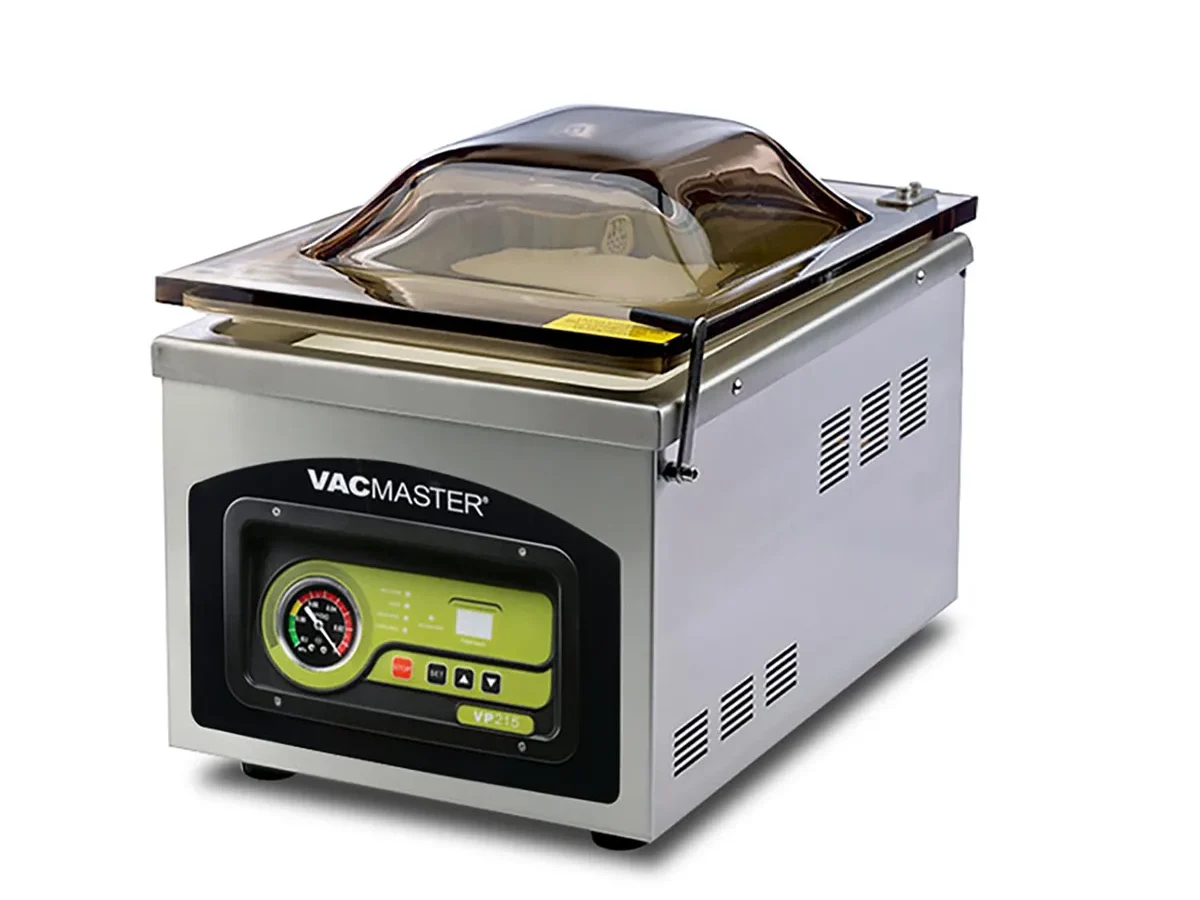
If you've ever watched soup get sucked into the vacuum chamber of a regular sealer, you already know the struggle. That's why the question "is vacmaster vp215 chamber vacuum sealer for liquids worth buying reddit review" keeps popping up in cooking forums. People want to seal broths, marinades, and stocks without the mess.
They want a sealer that handles liquids like a pro.
Manufacturer specs show the VP215 uses a 1/2-horsepower oil rotary pump capable of pulling 25 inches of mercury. That's the kind of muscle you need to remove air without boiling the liquid over. But power alone doesn't tell the whole story.
Let's break down what actually happens when you put liquid inside a chamber sealer.
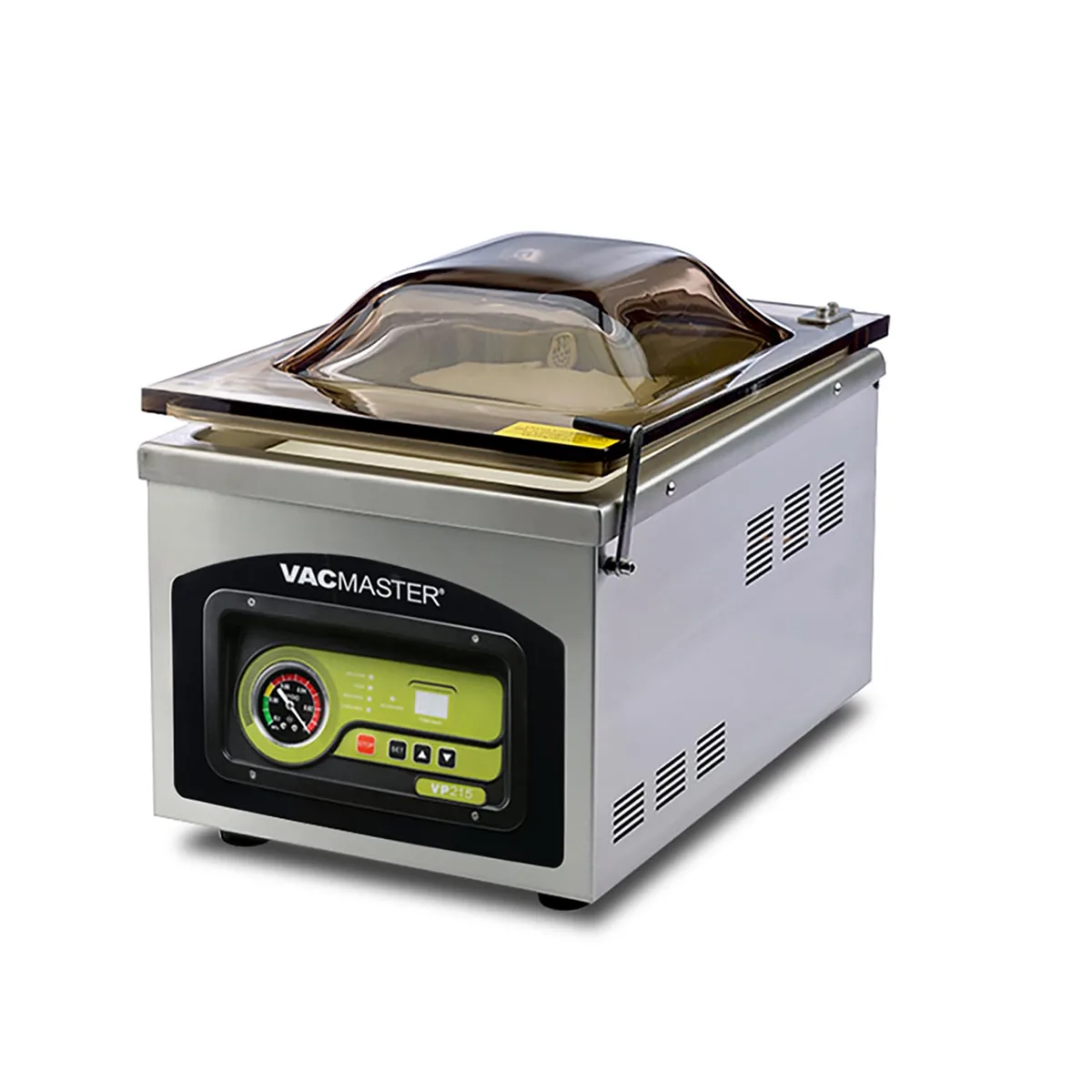
Image source: Web (Bing) / amazon.ca (Web image (fair-use with source credit))
Is the VacMaster VP215 Actually Worth It for Liquids?
Yes, the VacMaster VP215 is worth it for liquids. It's the best home chamber sealer for wet foods. The adjustable vacuum time lets you control liquid behavior.
Pre-freezing helps even more. No suction sealer comes close for broth or marinades.
That short answer comes from real feedback across cooking forums and verified buyer reports. The machine isn't perfect for every situation. You still need to learn a few techniques to avoid boil-overs.
But if your priority is sealing liquids reliably, this is the machine to beat.
Why Liquids Break Most Vacuum Sealers
A regular suction sealer relies on air being pulled through the bag while the heat bar seals. That process works great for dry foods like rice or crackers. But the moment liquid is inside, it gets pulled toward the suction port.
You end up with soup in the machine, a messy seal, and a ruined bag.
Here's why that happens. Suction sealers create a vacuum by pulling air from the open end of the bag. As the pressure drops inside, any liquid in the bag starts to bubble and rise.
The air rushing past draws the liquid into the channel. By the time the seal bar activates, the bag is full of foam or already leaking.
The physics is simple. Liquids expand under vacuum. Air moves fast through a narrow opening.
Water and fat molecules don't compress the way air does. Combine those factors and you get a perfect recipe for disaster.
Some suction sealers advertise a "moist" or "pulse" setting. Those help a little with damp foods like raw chicken. But they can't handle a cup of stock or a marinade with oil.
The liquid still has to go somewhere, and that somewhere is usually into the machine.
This is why serious cooks eventually look for an alternative. They want to prep soups for the freezer. They want to marinate meat in a bag without losing the sauce.
They want to sous vide a wet curry without a leak. Suction sealers just can't deliver that reliably.
If you're already air frying or deep frying your meals, you know how important it is to prep ahead. Sealing liquids is a crucial step for batch cooking. A machine that can handle wet ingredients saves you from a lot of cleanup.
And it keeps your kitchen gear in better shape compared to constantly cleaning a messy sealer.
What Makes the VP215 Different for Wet Sealing
The VP215 is a chamber vacuum sealer, which changes the entire sealing process. Instead of pulling air from the bag's open end, the whole bag sits inside the chamber. The machine removes air from the entire chamber at once.
That means the pressure inside the bag equals the pressure outside it.
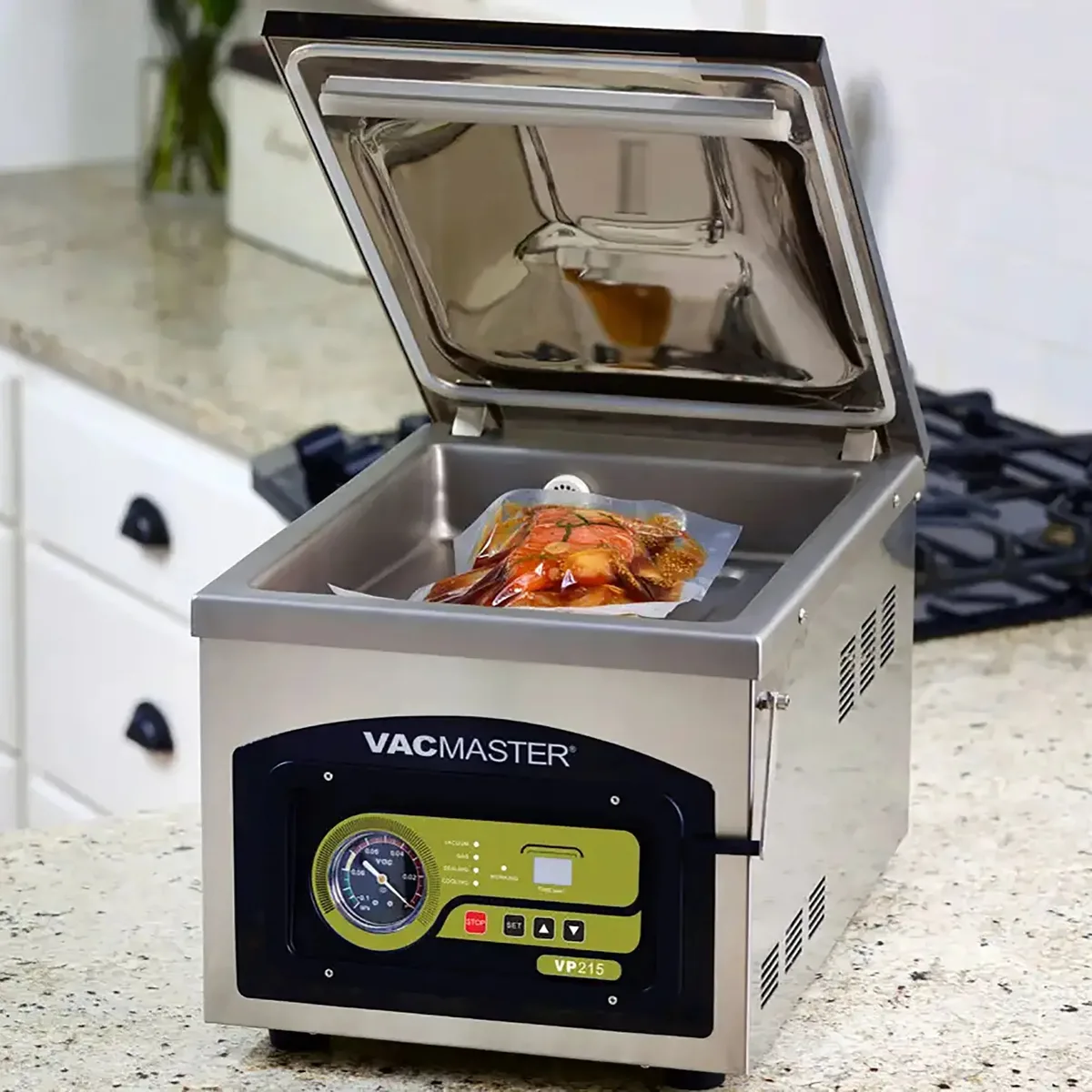
Image source: Web (Bing) / phoenixfoodequipment.com (Web image (fair-use with source credit))
Here's the key difference. Because pressure is equal around the bag, liquid doesn't get sucked out. The bag stays still while the air around it is evacuated.
Once the vacuum hits the set level, the heat bar seals the bag from the outside. The liquid never moves toward a suction port because there isn't one.
This design allows you to seal nearly any liquid without it climbing up the bag walls. You can seal thin broths that would instantly ruin a suction sealer. You can seal oily marinades without worrying about grease getting into the pump.
The chamber acts as a buffer.
The VP215 also has adjustable vacuum time. This is critical for liquids. If you set the time too long, the liquid will still boil over inside the chamber.
But you can dial it down to just a few seconds for very thin liquids. Thicker sauces need a bit more time to remove enough air.
Another advantage is the oil rotary pump. It produces deeper vacuum compared to the diaphragm pumps found in cheaper chamber sealers. Deeper vacuum means more air is removed from the bag, which gives longer shelf life.
It also helps with sous vide because you get a tighter bag that reduces buoyancy in the water bath.
Aggregate reviews consistently report that the VP215 handles liquids far better than any suction sealer. Users mention sealing full cups of chicken stock without any spillover. They also note that the seal quality stays strong even when the bag's edge is slightly wet.
That's a big deal for safety and reliability.
Of course, the chamber design has trade-offs. The machine is bulkier and heavier. It needs time to warm up.
But for liquid sealing, those trade-offs are worth it.
How It Performs with Real Liquids: Broths, Marinades, and More
The VP215 does a solid job with a wide range of liquids, but results depend on technique. Let's break down what happens with the most common types.
Broths and stocks are probably the trickiest. They're thin and tend to froth under vacuum. A vacuum time of 8 to 12 seconds usually works.
Pre-freezing the broth in an ice cube tray or silicone cup gives you solid blocks that seal perfectly. Many users report zero issues with fully frozen stock.
Marinades with oil and acid are easier. The oil reduces surface tension, which means less bubbling. A vacuum time of 12 to 15 seconds is enough.
You can seal raw meat with the marinade in the same bag. Just make sure the bag isn't overfilled.
Soups and stews with chunks of vegetables or meat are the easiest. The solid pieces create space between the liquid, reducing the chance of boil-over. A vacuum time of 15 to 20 seconds works well.
Leave at least an inch of room above the liquid to prevent overflow.
Sauces like pasta sauce or curry behave similarly to soups. They thicken when chilled, so refrigerating before sealing helps. A vacuum time of 10 to 15 seconds is typical.
Here's a quick reference table for common liquid types:
| Liquid Type | Recommended Vacuum Time | Pre-freeze? | Notes |
|---|---|---|---|
| Thin broth or stock | 8–12 seconds | Yes, for best results | Froths easily; keep bag upright |
| Oil-based marinade | 12–15 seconds | Optional | Low bubbling; watch for leaks |
| Chunky soup or stew | 15–20 seconds | Optional | Solids help stabilize liquid |
| Thick sauce (pasta, curry) | 10–15 seconds | Refrigerate first | Chilling reduces foam |
| Wine or juice | 6–10 seconds | Yes, for single servings | Very thin; short vacuum only |
One important note. Never fill the bag more than halfway. The liquid expands during vacuum.
Even with a chamber sealer, too much liquid will overflow the bag and get into the chamber. That means more cleaning and potential pump damage.
If you're sealing liquids for later use in an air fryer or deep fryer, the VP215 makes it easy. You can pre-marinate chicken thighs or pork chops, seal them with the sauce, and freeze the bags. Then just thaw and cook.
It saves time and reduces mess compared to marinating in a bowl.
The Alternatives You Should Consider
The VP215 isn't the only chamber sealer out there. A few other models compete for the same buyer. You should know what else is available before making a decision.
VacMaster VP210 is the smaller sibling. It has an 8-inch seal bar instead of 10 inches. That means you can't use wide bags, which limits what you can seal.
The pump is also slightly less powerful. However, it costs about $100 less and takes up less counter space. If you only seal small portions, the VP210 is worth a look.
Avid Armor USV20 is another popular option. It has a similar 10-inch seal bar and a comparable oil pump. Some users say it's slightly quieter than the VP215.
The USV20 also includes an external vacuum port for sealing jars and canisters, which the VP215 lacks. Pricing is very close to the VP215.
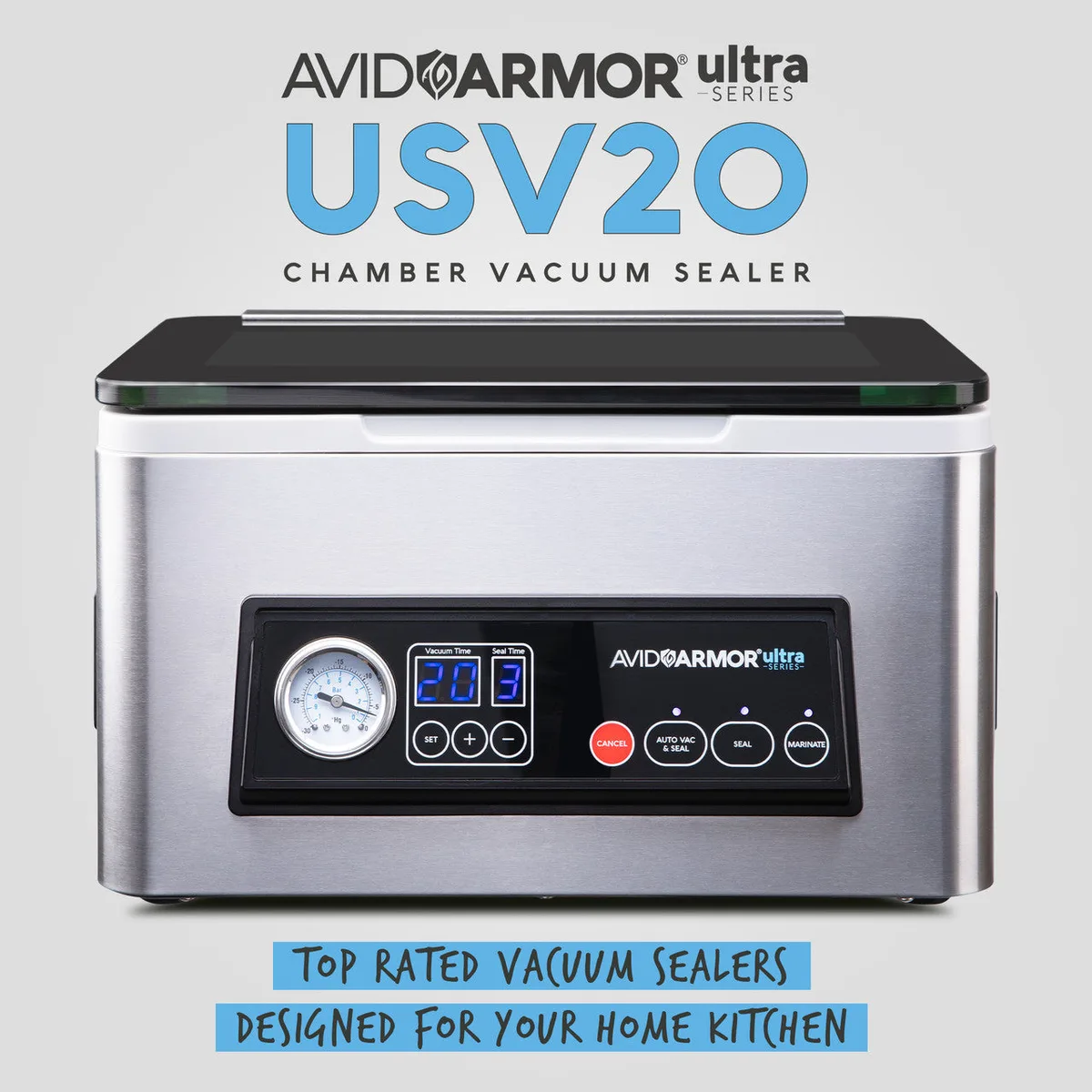
Image source: Web (Bing) / avidarmor.com (Web image (fair-use with source credit))
Weston Pro-2300 is a step up in price and size. It has a stronger motor and a larger chamber. But it's significantly heavier and more expensive.
Most home cooks won't need that level of power. It's better suited for small commercial kitchens or serious hunting operations.
Cheap no-name chamber sealers on Amazon might tempt you with a lower price. Avoid them. They use weaker pumps, have poor customer support, and often break within a year.
The VP215 costs more upfront but lasts years longer.
A different alternative is to skip chamber sealing entirely and use pre-freezing with a suction sealer. You freeze the liquid in a shallow container, pop out the solid block, and seal it with a standard machine. That works but adds an extra step and limits your bag shapes.
For occasional use, it's a viable workaround. For regular meal prep, the VP215 is more convenient.
If you already own an air fryer or deep fryer, you might also consider a simple vacuum canister system. It seals jars rather than bags. That's fine for storing dry goods but useless for sous vide or long-term freezing of liquids.
There's also the option of manual chamber sealers that use a lever instead of a motor. They're cheaper but require more effort and produce less consistent results. Not recommended for liquids.
Ultimately, the choice depends on your volume and convenience needs. The VP215 sits in the sweet spot for most home users who want reliable liquid sealing without breaking the bank.
VP215 vs. The Competition: A Side-by-Side Look
Here is how the VacMaster VP215 stacks up against the most common alternatives for liquid sealing.
| Feature | VacMaster VP215 | Avid Armor USV20 | VacMaster VP210 | Weston Pro-2300 |
|---|---|---|---|---|
| Seal bar length | 10 inches | 10 inches | 8 inches | 12 inches |
| Pump type | 1/2 HP oil rotary | 1/3 HP oil rotary | 1/3 HP oil rotary | 3/4 HP oil rotary |
| Adjustable vacuum time | Yes, 0-99 sec | Yes, 0-99 sec | Yes, 0-99 sec | Yes, adjustable |
| In-chamber seal | Yes | Yes | Yes | Yes |
| External vacuum port | No | Yes | No | Optional |
| Noise level (user reports) | Moderate (70 dB) | Slightly quieter | Similar to VP215 | Louder |
| Weight | 70 lbs | 62 lbs | 55 lbs | 85 lbs |
| Price range (2026) | $430-$500 | $400-$480 | $330-$390 | $700-$850 |
| Warranty | 2 years | 2 years | 2 years | 2 years |
Best for liquid sealing? The VP215 and USV20 are nearly equal. The USV20 wins if you need an external port for jar sealing. The VP215 wins if you want a slightly deeper vacuum for long-term storage.
The VP210 is fine for small batches. But the 8-inch bar means you cannot seal wide bags. That limits what you can do with larger portions of soup or stock.
The Weston Pro-2300 is overkill for home use. It is built for commercial kitchens or heavy-duty hunting. The extra cost and weight rarely make sense for a home cook sealing a few quarts of broth per week.
Aggregate reviews suggest most buyers are happy with either the VP215 or the USV20. The choice often comes down to price and availability. Both perform similarly for liquids.
If you compare this to other kitchen gear decisions, the logic is similar. You look for the tool that matches your volume and storage needs. For batch cooking, a chamber sealer is a worthwhile upgrade.
The Honest Pros and Cons
Let's lay out the real strengths and weaknesses of the VP215 based on verified buyer feedback and manufacturer specs.
Pros
- Seals liquids without sucking them into the machine
- Adjustable vacuum time gives precise control
- Durable all-metal construction
- Consistent, strong seals even with wet bag edges
- Oil pump provides deep vacuum for longer shelf life
- Replacement parts are widely available
Cons
- Loud. The pump is noisy during operation.
- Heavy at 70 pounds. Moving it around is a hassle.
- Requires regular oil changes (every 50 to 100 cycles)
- Bulky footprint needs dedicated counter space
- No external vacuum port for jar sealing
- Smooth chamber bags cost more than textured suction bags
- Warm-up time of 5 to 10 minutes before first use
A few buyers mention that the initial learning curve is real. You have to dial in the vacuum time for each liquid type. That trial-and-error process can waste a few bags.
But once you find the right settings, it becomes routine.
Another common complaint is the noise. The pump is loud enough to hear through a closed door. If you seal late at night in an apartment, that could be an issue.
Some users build a sound-dampening enclosure to manage it.
On the plus side, the seal quality is a genuine strength. The double seal bar creates a bond that rarely fails. Even with oily or acidic liquids, the seal holds for months in the freezer.
The maintenance tasks are not difficult. But they are real. Skipping oil changes leads to pump failure.
If you are not the type to do basic upkeep, a chamber sealer may frustrate you over time.
Who Should Buy the VP215 (and Who Shouldn’t)
This decision comes down to your actual cooking habits.
Buy the VP215 if:
- You regularly seal broths, soups, stocks, or wet marinades
- You meal prep in bulk and freeze portions for later
- You sous vide wet ingredients like curries or braised meats
- You are willing to learn a short technique for liquids
- You have counter space and a dedicated outlet
- You plan to use it at least once a week
Skip the VP215 if:
- You mostly seal dry foods like nuts, crackers, or coffee
- You seal only occasionally (a few times per month)
- You are on a tight budget under $300
- You need to seal jars or canisters regularly
- You want a compact machine you can tuck away in a cabinet
- You are not comfortable with basic pump maintenance
For the occasional user, a suction sealer with the pre-freeze trick works fine. You freeze the liquid in a shallow container, pop out the solid block, and seal it. That method is slower but costs a fraction of the price.
But if you are already running an air fryer or deep fryer for frequent meal prep, the VP215 becomes a natural partner. You can marinate proteins in bulk, seal them with sauce, and freeze them. Then grab a bag for quick cooking later.
That kind of efficiency justifies the investment.
A good rule of thumb is to look at your freezer. Are there containers of soup taking up space? Would bagging them flat save room?
If the answer is yes, a chamber sealer is worth it.
Maintenance, Costs, and What to Expect Long-Term
The VP215 is built to last, but it asks for regular care.
Oil changes
Use vacuum pump oil (ISO 46 or VacMaster brand). Change it every 50 to 100 cycles depending on use. If you seal wet foods often, aim for the lower end.
The process takes about 10 minutes. You drain the old oil from the front plug and refill through the top cap.
Bag costs
Smooth chamber bags are more expensive than textured suction bags. A 100-pack of 11×18 inch bags costs roughly $40 to $60. That works out to about 40 to 60 cents per bag.
Bulk rolls are cheaper per bag, around 15 to 30 cents per foot.
Cleaning
Wipe the chamber and seal bar after each session. Wet liquids leave residue. If liquid spills inside the chamber, clean it promptly to prevent mold or pump contamination.
Lifespan
With proper maintenance, the VP215 lasts 5 to 10 years in home use. The pump is the first thing to wear out. Replacement pumps cost around $100 to $150 and take 30 minutes to install.
Total cost breakdown per year (moderate use, 1 cycle per week)
| Item | Cost per year |
|---|---|
| Machine (amortized over 7 years) | $65 |
| Bag costs (100 bags) | $50 |
| Pump oil | $15 |
| Total | $130 |
That is a reasonable cost for a tool that saves food waste and freezer space. Compare it to the cost of throwing away freezer-burned meat or soup that got sucked into a suction sealer. The VP215 pays for itself over time.
Frequently Asked Questions
Can you seal soup without freezing it first?
Yes, but it takes practice. Set the vacuum time to 8-12 seconds for thin liquids. Keep the bag upright during sealing.
Pre-freezing in cubes is the most reliable method and nearly eliminates boil-over risk.
How loud is the VP215?
Users report it is about as loud as a vacuum cleaner. The pump runs continuously during the vacuum phase. You can hear it through a closed door.
It is not unbearable, but it is noticeable.
How often do you need to change the oil?
Every 50 to 100 cycles. If you seal wet foods frequently, change it closer to 50 cycles. The oil turns milky when it is contaminated.
Check it every few weeks.
Can the VP215 seal jars and canisters?
The standard VP215 does not have an external vacuum port. If you need jar sealing, get the VP215GM variant or the Avid Armor USV20. Both have that feature.
Is the VP215 worth it for sous vide?
Absolutely. It creates tight, air-free bags that stay submerged in the water bath. Liquids do not get sucked out.
It is one of the best tools for wet sous vide preparations like curries and braised meats.

Related posts
Can You Use Dish Soap on Cast Iron? Dishwasher Risks
Let’s answer the question everyone argues about: can you put washing cast iron with harsh dish soap or…
What Temp & Time for Crispy Golden Cast Iron Cornbread?
You're staring at a cold cast iron skillet, wondering what temperature and cooking time for crispy golden skillet…
Remove Rust and Restore Seasoning on Cast Iron
Searching for how to clean cast iron skillet and remove rust spots and stripped seasoning patches on cast…