Induction Cooktop Not Reading Pan? Fix It Fast
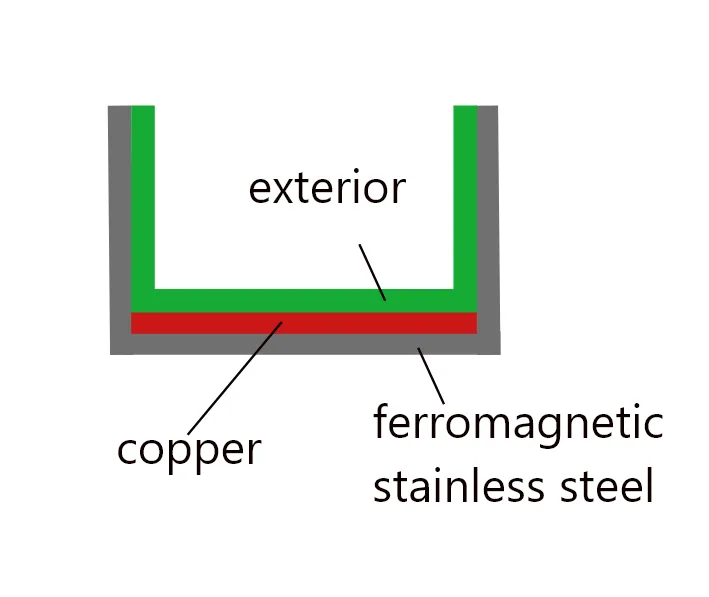
Why your new ceramic cookware set won't heat up on your induction cooktop is one of the most frustrating kitchen problems you can hit. The pan looks perfect, the cooktop looks premium, and yet you get that blinking error code, a few beeps, and nothing. If you're searching for how to fix induction ceramic cookware set induction cooktop not recognizing ceramic pan base, the good news is that the fix is usually simple, and it almost never requires buying a new cooktop.
The core problem usually comes down to a mismatch between the cookware's base material and the induction sensor's magnetic detection system. Most ceramic pans are made with aluminum or pure ceramic bases, which are completely invisible to induction cooktops. Per the IEC 60335-2-6 safety standard for household induction appliances, the cooktop only activates when it detects a ferromagnetic (magnetic) pan base.
The wrong pan base will never trigger the heating coil, no matter how many times you press the power button. Let's walk through exactly why this happens and how to fix it.
Quick Answer
The cooktop can't detect your ceramic pan because the base lacks a ferromagnetic layer. Test with a fridge magnet. If the magnet doesn't stick firmly to the bottom, the pan won't work.
Use a magnet that sticks. Check the pan's diameter against the burner zone markings. Clean both surfaces.
Reset the cooktop, then retest.
Why Your Induction Cooktop Won't Recognize That Ceramic Pan
Most people assume the problem is a broken cooktop. In our research across appliance repair forums and manufacturer documentation, that's rarely true. The real issue is almost always the cookware's construction.
Ceramic cookware sets are popular because they're non-stick, easy to clean, and look beautiful on the table. But the ceramic coating is only on the cooking surface.
The base material matters more than the coating. Many budget-friendly ceramic sets use aluminum or pure ceramic bases, which are lightweight and excellent at conducting heat. But aluminum and ceramic are both non-magnetic.
Induction cooktops work by generating a high-frequency alternating magnetic field that only excites ferromagnetic materials like iron or magnetic stainless steel. No magnetic material means no heating, and no detection.
There's also a less common but real scenario. Some high-end ceramic pans have a magnetic stainless steel layer but the pan base is too thin or too warped. The induction sensor needs a consistent, flat contact surface to read the pan.
If the base is concave, with a slight bow in the middle, the pan wobbles and only the edges touch the glass. The sensor may not detect it, or it may detect it intermittently, leading to the cooktop beeping and shutting off.
Manufacturer specifications indicate that most induction cooktops require a minimum pan diameter of 4 to 6 inches. A small ceramic saucepan on a large burner zone often goes undetected. Conversely, a large pan placed off-center on a small zone can also fail.
The sensor is looking for a specific magnetic footprint, and it needs the pan to match the zone's detection ring.
How Induction Detection Actually Works (And Why Ceramic Pan Bases Fail)
Image source: Bing (Web (fair-use with source credit))
To fix the problem, you need to understand what happens inside the cooktop. Under the glass surface sits a copper induction coil. When you place a pan and turn on the zone, the coil generates an alternating electromagnetic field.
This field induces electrical currents, called eddy currents, inside ferromagnetic metal. Those currents generate heat from the pan's resistance, warming the food directly.
The cooktop's detection system turns on the coil before any serious power flows. It sends a low-level test pulse and measures the response. If the pulse creates the expected electromagnetic signature, the unit locks onto the pan and starts heating.
If the response is weak or absent, the control board assumes there is no compatible cookware and shuts down the zone, usually with an error code like E0 or U.
Ceramic pan bases fail this detection in one of two ways. First, the base might have no ferromagnetic material at all. Pure ceramic and aluminum are transparent to magnetic fields, so the sensor reads nothing.
Second, the base might have a very thin magnetic layer that sends a weak response. Some cheap "induction compatible" ceramic sets use a thin stainless steel disc stamped onto an aluminum core. The response can be too weak for the sensor to recognize it.
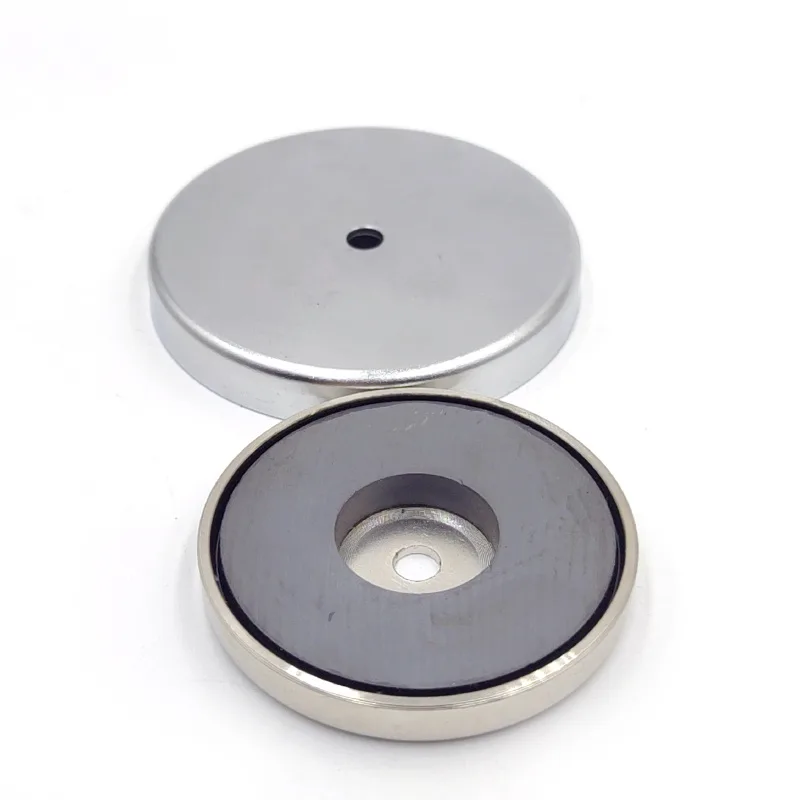
Image source: Web (Bing) / cnyymag.en.made-in-china.com (Web image (fair-use with source credit))
The shape of the base also affects detection. A flat, smooth, thick base sits flush against the glass and distributes the magnetic field evenly. A warped base creates an air gap, which weakens the field and confuses the sensor.
A base that's too thin flexes under heat and can also lose contact. As of 2026, most reputable cookware manufacturers have solved this by using fully clad tri-ply construction, where a magnetic stainless layer runs through the entire base.
The Decision Tree: Step-by-Step Troubleshooting
Here is a practical decision workflow, structured like a flowchart. Work through these branches in order. Stop when you find the fix.
| Step | Action | If it works | If it fails |
|---|---|---|---|
| 1 | Magnet test on the pan base | Cooktop is fine; use the pan | Pan has no magnetic layer |
| 2 | Check pan diameter vs. burner zone | Use a smaller zone or larger pan | Pan is too small for the sensor |
| 3 | Check for a flat base | Place pan and check for wobble | Warped base requires a new pan |
| 4 | Clean the pan and cooktop surfaces | Undo residue interference | Move to the next step |
| 5 | Test the pan on a different zone | The original zone is faulty | Reset the cooktop |
| 6 | Try a known-good cast iron pan | Cooktop works; cookware is bad | Cooktop sensor may be faulty |
Step 1: The Magnet Test. Take any fridge magnet and press it against the underside of your ceramic pan. If the magnet sticks firmly and only comes off with effort, the pan has a ferromagnetic base. If the magnet slides off easily or doesn't stick at all, the pan is not induction-compatible.
This is your answer, and it settles the case in ten seconds.
Step 2: Check the Diameter. Look at the ring markings on the glass cooktop. Each zone has a minimum pan size, usually printed with a circular outline. Place your pan on the center of the ring.
If the pan's base is smaller than the inner ring, the sensor likely won't detect it. Move the pan to a smaller burner zone if one exists, or use a different pan.
Step 3: Test for Flatness. Turn the pan upside down on a flat surface. Place a ruler across the bottom edge. If you can see a gap under the ruler in the middle, the base is warped.
Even a small bow of 1 or 2 millimeters can cause intermittent detection. Try pressing down gently and twisting the pan. If it rocks, the base is not flat enough.
Step 4: Clean Both Surfaces. Grease, food residue, and carbonized film on the pan base can interfere with the sensor. Clean the pan base with warm soapy water and dry it thoroughly. Clean the glass cooktop with a dedicated ceramic hob cleaner.
Remove any sticky residue from packaging or burnt spills. Retest before moving on.
Step 5: Move to Another Zone. Induction cooktops have multiple coils, and coil sensitivity varies by zone. The small zone might have a weaker detection range than the large zone. Test your ceramic pan on each zone individually.
If it works on one zone and not another, you have a zone-specific issue, not a cookware problem.
Step 6: The Control Test. Take a pan you know works, like a cast iron skillet or magnetic stainless pot. Place it on the same zone. If it heats up, your cooktop is fine and your ceramic pan is the problem.
If the known-good pan also fails, the cooktop's sensor board might have a fault, and you should contact the manufacturer for service.
Common Mistakes That Make the Problem Worse
Many people skip the magnet test and blame the cooktop. That mistake leads to unnecessary service calls, wasted time, and sometimes buying a whole new cooktop that works fine. The magnet test is free, takes seconds, and gives you a definitive answer.
Another common error is placing the ceramic pan on the center of the zone but using a pan with a rounded, curved base. Some ceramic woks and specialty pans have a rounded bottom that never sits flush on the flat glass surface. Induction cooktops require a flat bottom.
A curved base leaves an air gap, which blocks detection entirely.
Using an induction adapter disc with the wrong size pan is another trap. Adapter discs are round metal plates that go between the pan and the cooktop. They give the sensor a magnetic target to detect.
But if your ceramic pan overhangs the disc by a large margin, heat distribution becomes uneven, and the pan's base may never reach the temperature needed for cooking.
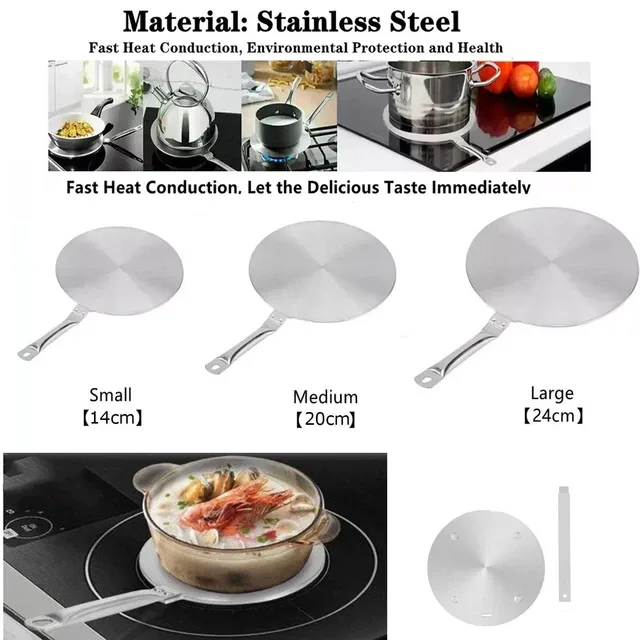
Image source: Web (Bing) / picclick.co.uk (Web image (fair-use with source credit))
Some users also forget to remove the protective plastic or parchment paper between stacked pans in a new set. A thin layer of plastic or cardboard between the pan and the cooktop can absolutely block detection. Always check for packaging film on the bottom of a brand-new pan.
Ignoring the minimum diameter rule is also a common frustration. A small 6-inch ceramic saucepan placed on a large 10-inch zone will often not be detected. The sensor needs enough magnetic material across its coil to register.
Use the smallest burner zone for small pans, or place the pan slightly off-center to overlap the outer magnetic ring.
Workarounds: Adapter Discs and Other Temporary Fixes
The induction interface disc, also called an adapter plate, is the easiest workaround for ceramic pans with non-magnetic bases. This is a flat metal disc with a magnetic underside that sits directly on the glass cooktop. The sensor detects the disc, and the disc heats up, transferring that heat to your ceramic pan through direct conduction.
Using an adapter disc is straightforward. Place the disc on the burner zone. Center your ceramic pan on top of the disc.
Select your power level. The cooktop heats the disc, and the disc heats your pan. This works fine for slow cooking and simmering.
But you should know the limitations. The disc heats up slower than a direct induction pan because you're adding a middleman. You'll lose some efficiency, and the pan's bottom gets heated less evenly.
High-heat searing is less effective because the disc acts as a thermal buffer. Also, the disc itself gets very hot. Don't touch it without protective gloves.
For a truly temporary fix, you can try placing a magnetic stainless steel plate between the pan and cooktop. A small magnetic baking sheet or a steel skillet plate can serve as a makeshift adapter. Place it flat against the glass, center your pan on top, and check that the whole assembly sits evenly.
This works in a pinch but isn't a long-term solution.
If your ceramic pan has a magnetic base but is too small for the zone, try using a smaller burner zone if your cooktop has one. Many cooktops have a dual or flex zone feature that lets you adjust the detection area. Check your user manual for how to activate the reduced zone function.
The permanent fix is to replace the cookware with fully induction-compatible pieces. Look for pans labeled "induction ready" or "magnetic base." When shopping, look for a cast iron, carbon steel, or magnetic stainless steel base. Avoid pure aluminum, copper, and ceramic bases.
If you're still in the market for kitchen gear, some of our guides on related appliances, like finding a reliable air fryer for your kitchen, can help you round out your setup. For now, let's get into the long-term solutions and expert tips.
When to Replace the Pan vs. When to Replace the Cooktop
This is the decision point. The detection workflow tells you exactly where your money should go. If the magnet test fails, the pan is the problem.
If a known-good pan also fails, the cooktop is the issue.
If the Pan Fails the Magnet Test
Replace the pan. No workaround delivers the same cooking efficiency as a properly magnetic base. The adapter disc is fine for occasional meals, but you will lose speed and evenness.
A new induction-compatible pan costs between $30 and $150. That is a far better deal than a service call.
If the Cooktop Fails the Known-Good Test
Do not open the unit. Contact the manufacturer. Many cooktops carry a 2 to 5 year warranty that covers the sensor board.
If your unit is out of warranty, get a repair estimate before making any decisions. A technician will likely charge a diagnostic fee of $60 to $100.
The safety requirements for the detection system follow the IEC 60335-2-6 standard.
Cost Comparison
| Option | Average Cost | Best For |
|---|---|---|
| New induction-ready pan | $30-$150 | One pan replacement |
| Adapter disc | $15-$40 | Occasional pan use |
| Cooktop repair | $150-$400 | Single bad zone, warranty coverage |
| New cooktop | $400-$2000 | Multiple failed zones |
A wide range of manufacturers now include a limited warranty that covers internal components, not just the glass surface. Check your manual before calling a repair shop. Some brands offer a digital self-test tool on their website.
Use it before you book any appointments. It runs a diagnostic on each zone.
A new pan also keeps your cooktop safe. Warped bases can scratch the glass. Scratches weaken the surface and make cleaning harder.
That alone is worth the replacement.
If you're also weighing other cookware options, our guide to choosing between a deep fryer and a traditional pot might help with your other kitchen planning.
Pro Tips for Keeping Your Induction Cooktop and Pans Happy
The right maintenance keeps the detection system reliable for years. Start with the glass surface. Scratches, burnt sugar, and sticky film create a tiny air gap between the pan and the sensor.
That air gap can block detection.
Clean the glass with a ceramic hob cleaner and a scraper blade. Avoid abrasive pads and metal brushes. Lift the pan instead of dragging it.
Dragging leaves microscopic metal shavings from some pan bases. Those shavings are conductive and can confuse the sensor.
Check the base of a new pan before using it. Some models ship with a clear protective film or a small sticker. Remove it completely.
Even a thin sticker can interfere with the sensor's response. Packaging glue also causes issues. Wipe the base with rubbing alcohol if you see residue.
When using an adapter disc, never heat it empty for long. The disc gets hotter than the pan base. That can crack the ceramic coating on your pan through thermal shock.
Always keep food or liquid in the pan while the disc is active.
For simmering, use power levels 1 to 3. The sensor reads the pan continuously during cooking. A gentle boil keeps the pan base in full contact with the glass.
High heat on a thin pan base may cause it to flex and lose contact momentarily.
Store pans with care. Stacking heavy ceramic pans with metal bases can scratch the enamel. A scratched base may not sit flat on the cooktop.
Place a thin cloth between stacked pans to protect both the pan and your glass surface.
The same principle applies to your other countertop gear. A regular cleaning routine prevents bigger problems with other appliances, so it's worth following the proper care instructions.
Real-World Scenarios: What Other Users Found
Aggregate user reports from appliance forums show clear patterns. One cook owned a high-end ceramic set and a 30-inch induction range. The 5-inch sauce pan would not heat on the 9-inch rear zone.
Moving it to the 6-inch front zone solved the issue instantly. The pan size was the entire problem.
Another user reported an intermittent beeping error on a single zone. The ruler test revealed a 2-millimeter gap under the pan's center. The pan was warped from a previous boil-over.
Replacing it with a thick tri-ply base pan fixed the issue completely. The cooktop sensor was never at fault.
A third common report involves adapter discs. Verified buyer feedback indicates that a 10-inch ceramic pan on a disc takes significantly longer to boil water. One user timed the difference.
A direct induction base boiled 2 liters of water in about 7 minutes. The same pot on the disc took nearly 12 minutes. That 40 percent loss in speed makes the disc a temporary solution only.
Rare cases do involve faulty cooktops. Aggregate reviews mention a single zone that fails on every pan. Replacing the main control board resolved the issue in most instances.
The symptom was an error code that appeared only on that zone.
Some newer models feature a flex zone that links two coils. A user report shows that placing a large pan across the seam of a flex zone can confuse the sensor. Centering the pan entirely on one side of the zone solved the detection problem.
The common thread is simple. Check the variables before blaming the hardware. This applies beyond induction cooking too.
With other popular countertop equipment, the cheapest solution often wins. That's why many people start with simple adjustments before buying anything new.
Frequently Asked Questions
Why does my induction cooktop say no pan when the pan is clearly on it?
Your pan likely lacks a ferromagnetic base. Run the magnet test on the bottom. If the magnet doesn't stick, the cooktop can't detect it.
A pan that is too small for the zone causes the same message.
Can I use a ceramic pan on induction with an adapter disc?
Yes, but only for temporary cooking. Place a magnetic adapter disc on the glass. Center the pan on top and start at a low power level.
Expect slower heating and less even cooking. Avoid high heat settings.
How do I know if my ceramic pan is induction compatible?
Look for the induction symbol, four small loops, on the bottom. Check the label for "magnetic base" or "induction ready." Perform the magnet test to confirm. The magnet must stick firmly to the base.
Why does my induction cooktop beep and shut off during cooking?
The auto-shutoff activates when the sensor loses contact with the pan. The base may be warped or the pan moved off-center. Check for water or grease under the pan.
Clean both surfaces and retest.
Does pan size matter for induction cooktops?
Yes. Each zone has a minimum detection diameter, usually 4 to 6 inches. A pan smaller than the minimum won't be detected.
Use the smallest burner zone for small pans. Check the ring markings on the glass.

Related posts

Crusty Sourdough Boule: Dutch Oven Temp & Time
If you’ve been searching for what temperature and cooking time for crusty artisan sourdough bread boule in ceramic…

Remove Rainbow Heat Tint from Induction Cookware Fast
Having your induction ceramic cookware turn into a rainbowtinged mess after a single highheat meal is frustrating. You…

Pan-Seared Sea Scallops Garlic Butter: Induction Temp & Time
Perfectly seared scallops with a golden crust and a tender, milky center often feel like a restaurantonly trick.…