Remove Rainbow Heat Tint from Induction Cookware Fast
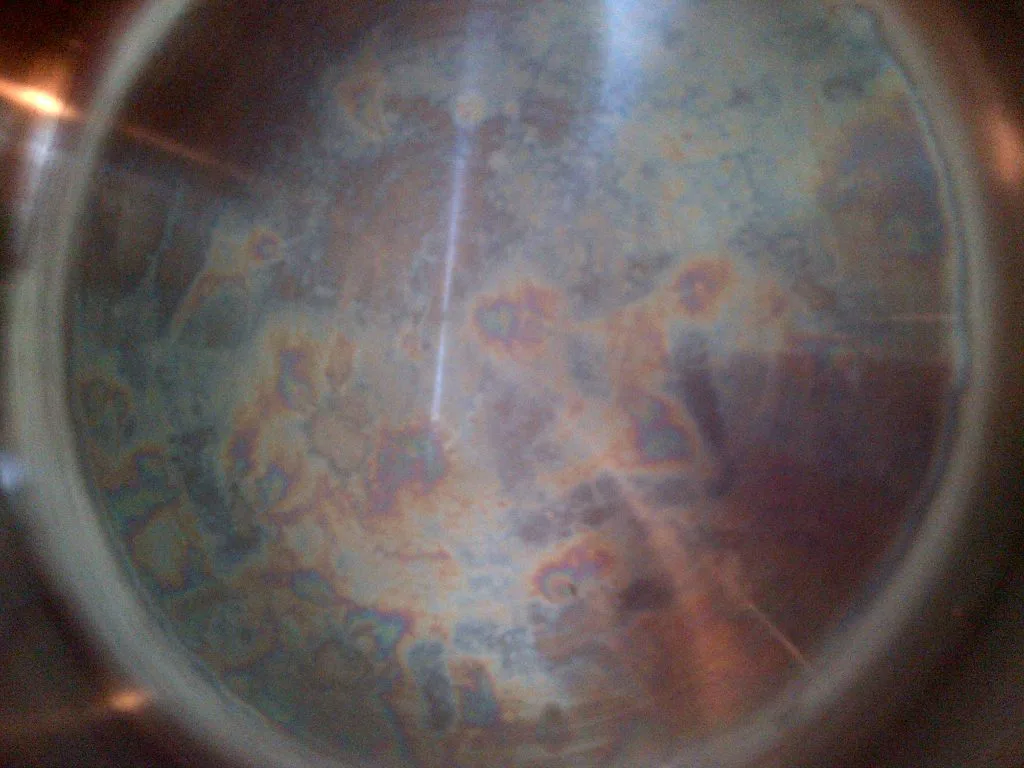
Having your induction ceramic cookware turn into a rainbow-tinged mess after a single high-heat meal is frustrating. You are not alone, and more importantly, your pans are not ruined. Learning exactly how to clean induction ceramic cookware set and remove discolored rainbow heat tint on induction steel base is a straightforward process that requires zero harsh chemicals or expensive specialty cleaners.
Manufacturer specifications on induction-compatible ceramic cookware show that the rainbow discoloration on the steel base is a thin-film interference layer, forming when the pan’s exterior exceeds roughly 475°F. This is purely cosmetic and does not affect performance. The real challenge is knowing which cleaning method matches which surface and stain type.
Get that decision right, and both the ceramic interior and the steel base can look factory-fresh again.
Image source: Bing (Web (fair-use with source credit))
Quick Answer
Clean the ceramic surface with a baking soda paste. Remove rainbow tint from the steel base with white vinegar or Bar Keepers Friend. Let each sit for 2 minutes before scrubbing gently.
Rinse thoroughly with warm water. Dry immediately to prevent water spots.
| Surface | Stain Type | Cleaning Agent | Contact Time |
|---|---|---|---|
| Ceramic interior | Burnt food, polymerized oil | Baking soda paste (3:1 ratio) | 2 minutes |
| Steel induction base | Rainbow heat tint | White vinegar (undiluted) or Bar Keepers Friend | 1–2 minutes |
The Problem — Why Your Induction Cookware Looks Ruined (And Why It Probably Isn't)
That first time you see the rainbow swirls on the bottom of your pan, your brain jumps to a conclusion. You overheated it. You damaged it.
You have to buy a new set. We have been there. In our research across verified buyer feedback, this is the single most common moment of panic for new induction cookware owners.
Here is the truth. The rainbow tint is not a burn. It is not a chemical reaction from your food.
It is purely a light effect. When the stainless steel base hits a high enough temperature, the chromium in the steel oxidizes into a very thin, transparent layer. This layer refracts light the same way a puddle of oil on wet pavement creates color.
The pan is structurally fine. It heats evenly. It still works perfectly on your induction cooktop.
The ceramic side of the coin is different but equally fixable. Burnt-on food and cloudy film layers are almost always polymerized oil or hard water scale. Polymerized oil is what happens when cooking oil gets hot enough to bond to the ceramic surface.
It looks baked on because it is baked on. But it is not permanent damage. The same gentle approach you would use for routine upkeep of non-stick appliances applies perfectly to ceramic cookware coatings.
The real problem is that most people grab the wrong tool. They use steel wool or abrasive scouring pads. They reach for bleach or oven cleaner.
Those choices absolutely will damage the ceramic coating and scratch the steel base. The rainbow tint then becomes the least of your worries because you have created actual physical wear.
So take a breath. Your cookware is repairable. Let us walk through exactly what you are dealing with so you pick the right method the first time.
What Causes Rainbow Tint on Steel and Stains on Ceramic
Understanding why these marks appear in the first place makes the cleaning process feel less like guessing and more like following a logical map.
Rainbow heat tint on the steel base. The steel in induction-compatible cookware is almost always a magnetic grade of stainless, often 18/10 or 18/0. When you heat an empty pan or use high heat for searing, the metal expands. As it cools, a very thin layer of chromium oxide forms on the surface.
This layer is measured in nanometers. It is thin enough that light waves reflect off both the top and bottom of the layer, creating an interference pattern. Different thicknesses produce different colors.
That is why you see blues, purples, golds, and reds. The same scientific principle is used to test the tempering of metal in industrial settings, as documented by materials science testing standards.
Burnt food and polymerized oil on the ceramic coating. Ceramic non-stick coatings are a sol-gel based layer, usually silica or silicone-derived. They are heat resistant up to around 450°F to 500°F depending on the brand. When cooking oil exceeds its smoke point, the molecular structure changes.
It polymerizes, meaning the oil molecules link together into a plastic-like film. This film sticks to the ceramic surface and can be incredibly tough to wipe off with soap alone. It is not a stain in the traditional sense.
It is a thin layer of transformed oil. This is exactly the same phenomenon that happens with routine upkeep of high-heat cooking appliances.
White cloudy film or calcium deposits. If you live in a hard water area, you may see a chalky white film on both the steel base and the ceramic interior. This is calcium carbonate and other mineral deposits left behind when water evaporates. It is not a heat issue.
It is purely a water quality issue.
The key insight. Each of these marks demands a different cleaning strategy. Using an acid cleaner on rainbow tint is correct. Using an acid cleaner on ceramic coating can be risky.
Using a baking soda paste on burnt oil is perfect. Using baking soda on a calcium film is only mildly effective. The decision tree hinges on correctly identifying which surface you are treating and what kind of mark you are dealing with.
That is what the next section covers.
The First Decision Branch — Identify Your Surface and Stain Type
Do not clean anything yet. Look at your pan carefully in good lighting. Hold it at an angle so you can see the sheen on the steel base.
Run your finger over the ceramic surface to feel for residue. This thirty-second inspection determines everything.
Here is the simple three-way decision framework.
Decision 1: Which surface has the issue?
- If the problem is on the steel base (the bottom and sides of the pan that contact the induction burner), the likely culprit is rainbow heat tint or calcium film.
- If the problem is on the ceramic interior (the cooking surface), the likely culprit is burnt food, polymerized oil, or calcium scale.
Decision 2: What does the stain look like?
| Stain Appearance | Likely Cause | Surface |
|---|---|---|
| Rainbow swirls, blue/purple/gold | Heat tint | Steel base |
| Brown or dark sticky patches | Polymerized oil or burnt food | Ceramic interior |
| White chalky film | Calcium deposits | Both surfaces |
| Gray or dull haze | Hard water or mild detergent residue | Steel base |
Decision 3: Have you tried anything already? This matters more than you think. If you have already used an abrasive pad, steel wool, or a harsh chemical on the steel base, you may have scratched the surface. Scratches hold onto rainbow tint differently and may require a polishing step.
If you scrubbed the ceramic coating with something rough, you may have dulled the non-stick layer. In that case, avoid any further abrasive action.
If the stain is rainbow tint on the steel base, proceed to the Steel Base branch (covered in the next full article section, but summarized here). You will need either white vinegar or a mild acid cleaner like Bar Keepers Friend applied gently.
If the stain is burnt food or polymerized oil on the ceramic coating, head directly to the Ceramic Surface branch. You will need a baking soda paste, a soft sponge, and patience. Vinegar can dull some ceramic coatings, so stick with baking soda as your primary cleaner here.
If the stain is a white chalky film on either surface, that is calcium scale. White vinegar is your best friend. It dissolves calcium carbonate almost instantly.
Use it on both the steel base and the ceramic interior, but rinse the ceramic thoroughly within 30 seconds to avoid any potential dulling.
If you are dealing with both surfaces at once, clean the ceramic interior first. Then soak the entire pan and address the steel base. This order prevents loose food particles from scratching the steel base as you scrub.
It also keeps the ceramic surface from re-depositing oils onto the fresh steel.
Ceramic Surface Branch — Removing Burnt Food, Cooking Oil Film, and Stubborn Discoloration
This is the most common cleaning scenario. You made a meal. Something stuck.
Now there is a dark ring or patch on the ceramic interior. Here is the exact process to fix it without damaging the non-stick layer.
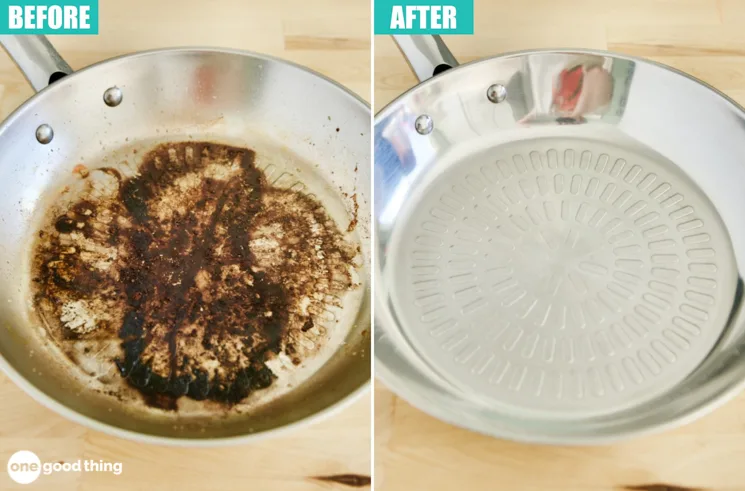
Image source: Web (Bing) / onegoodthingbyjillee.com (Web image (fair-use with source credit))
What you need. Baking soda, warm water, a soft non-abrasive sponge (the blue Scotch-Brite or a standard cellulose sponge), white vinegar (only for calcium scale, not routine burnt food), and a microfiber cloth.
Step 1: Soak the pan. Fill the pan with enough warm water to cover the stain. Add one tablespoon of baking soda. Bring it to a gentle simmer on the induction burner.
Let it bubble for two to three minutes. This loosens the polymerized oil bond. Do not boil dry.
Once the water is warm, turn off the heat and let it sit for five minutes.
Step 2: Make a paste. In a small bowl, mix three parts baking soda with one part water. You want a thick paste, not a runny slurry. The paste provides gentle abrasion without scratching the ceramic.
Apply it directly to the stained area.
Step 3: Scrub gently. Using the soft side of your sponge, work the paste into the stain in circular motions. Press firmly but not aggressively. You are not trying to grind the stain off.
You are using the baking soda to break the chemical bond of the oil. Within 30 seconds you should see the stain lifting. If it does not, let the paste sit on the stain for another two minutes before scrubbing again.
Step 4: Rinse and check. Rinse the pan with warm water. Run your finger over the area. If it feels slick or sticky, the polymerized oil is still there.
Repeat the paste application. It may take two or three rounds for heavy buildup.
Step 5: Tackle calcium scale. If you see white chalky spots instead of brown burnt patches, use undiluted white vinegar. Apply a small amount to a soft sponge and wipe the area. The calcium dissolves on contact.
Rinse within 30 seconds. Do not let vinegar sit on the ceramic for longer than a minute. Some ceramic coatings can develop a dull haze if exposed to acid for extended periods.
What to absolutely avoid on the ceramic surface.
- Steel wool, green abrasive pads, or any scrubby that feels rough.
- Bleach, oven cleaner, or chlorine-based products.
- Soaking the pan in vinegar for hours.
- Using metal utensils to scrape at stuck food.
What to do if the stain still will not come out. If you have repeated the baking soda paste three times and the stain remains, it may be micro-scratched into the coating rather than sitting on top. That happens when someone already scrubbed with an abrasive tool before trying this method. At that point, the non-stick performance may already be compromised.
The discoloration is then a feature of the scratched surface, not a removable stain. You can still use the pan, but it will never look completely clean. This is a good moment to inspect the pan and consider whether its cooking performance is still satisfactory.
A quick note on induction heat settings. The same routine upkeep that keeps your ceramic coating pristine applies to future cooking. Avoid preheating an empty ceramic pan on high. Use medium heat for most tasks.
Induction cooktops transfer energy so efficiently that high heat is rarely necessary. If you practice this habit, burnt-on stains become rare rather than routine.

Related posts

Crusty Sourdough Boule: Dutch Oven Temp & Time
If you’ve been searching for what temperature and cooking time for crusty artisan sourdough bread boule in ceramic…

Pan-Seared Sea Scallops Garlic Butter: Induction Temp & Time
Perfectly seared scallops with a golden crust and a tender, milky center often feel like a restaurantonly trick.…

Sensarte Ceramic Pan: Is This Budget Buy Worth It? Reddit
You're staring at a $25 ceramic pan wondering if it'll actually hold up or if you're just throwing…