Will Dishwasher Oxidize Aluminum Core in Budget Cookware?
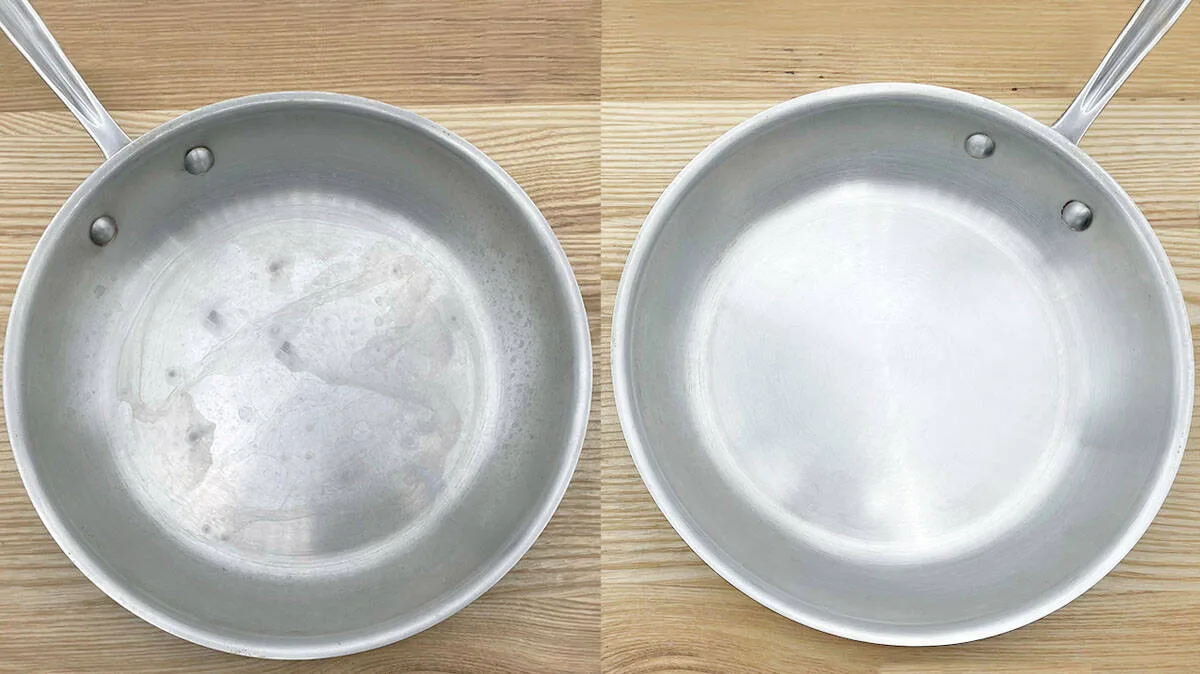
You're pulling a saucepan out of the dishwasher, and the bottom looks like it aged ten years in one cycle. The exact question you're asking, can you put putting in dishwasher causing dull oxidized aluminum core in a budget stainless steel cookware set safely, has a conditional answer. It depends on how the pan was built, what detergent you use, and how much you care about a flawless finish.
Dishwasher detergents are formulated to run at a pH between 10 and 12. That's alkaline enough to break down food proteins and, unfortunately, to attack aluminum. Most budget cookware manufacturers specify hand washing in the care instructions for this reason.
Knowing how that chemistry works tells you exactly where to draw the line.
Image source: Bing (Web (fair-use with source credit))
Quick Answer
Yes, but only when the aluminum core is fully sealed and you accept cosmetic wear. Fully clad budget pans with stainless steel rims generally survive dishwasher cycles. Pans with exposed aluminum edges will oxidize, turning dull and rough.
Hand washing remains the safest option. If you do use a dishwasher, choose a low-alkaline detergent, run a shorter cycle, and dry the pans right away.
How the Aluminum Core Reacts in a Dishwasher
Aluminum is a reactive metal. That's not a flaw, it's a material property. When exposed to air, it forms a thin protective oxide layer that's actually tougher than the metal underneath.
That layer is what gives aluminum cookware its natural corrosion resistance. The problem is that dishwasher detergent strips that oxide layer away, leaving fresh aluminum exposed to react again.
Here's what happens inside a typical cycle:
| Stage | What's happening | Visible result |
|---|---|---|
| Pre-rinse | Food residue softens | No damage yet |
| Main wash | High-pH detergent dissolves grease and attacks the oxide layer | Gray cloudiness appears |
| Rinse | Fresh water removes detergent | Dull surface stays |
| Drying | Heat and steam linger | Oxidation continues until dry |
Detergents rely on sodium metasilicate and other highly alkaline compounds. At pH 10 to 12, those compounds convert the protective oxide layer into soluble aluminum salts. That's why the pan turns dull instead of staying shiny.
On a fully sealed stainless steel surface, the alkaline chemistry never reaches the aluminum. On exposed rims, the reaction happens every single wash.
As of 2026, material science summaries and aggregate buyer reviews still point to the same conclusion. Dishwashing an exposed aluminum core is a chemical process, not a one-off accident. Most budget cookware sets sold in North America are impact-bonded, which means the aluminum core is visible at the rim.
Fully clad sets, where stainless steel wraps completely over the core, are more expensive and relatively rare at the low end.
There's also an electrolytic reaction happening under the surface. The aluminum core and stainless steel are different metals, and dishwasher water acts as an electrolyte. That combination accelerates corrosion around the rim.
The darker and rougher the edge gets, the more surface area is exposed to the next cycle.
The good news is about health, not looks. The European Food Safety Authority has reviewed dietary aluminum exposure and considers normal cookware use low risk. So the dull layer is an aesthetic and performance issue, not a safety alert.
Still, the same research approach we use when evaluating budget kitchen gear applies here. Construction quality matters, and cheaply bonded pans show their limits quickly.
What to Look For: Sealed vs. Exposed Rims
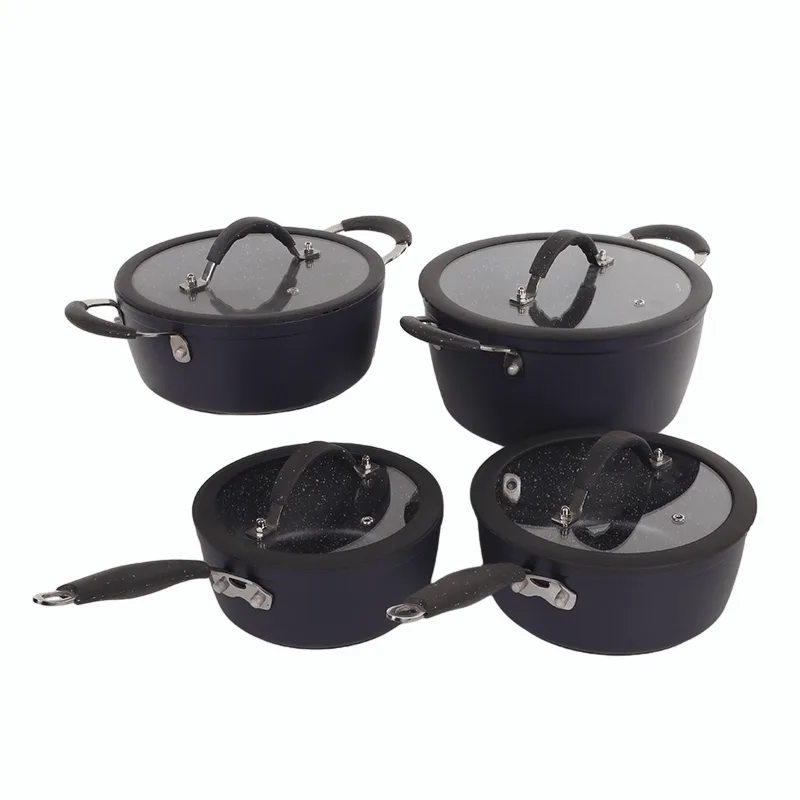
Image source: Web (Bing) / qycookware.en.made-in-china.com (Web image (fair-use with source credit))
Before deciding anything, grab a pan and look at the top and bottom edges. The rim tells you everything. A fully sealed rim has stainless steel wrapping completely over the aluminum core.
The edge looks like a clean, continuous silver line with no gray or matte band. An exposed rim shows a visible aluminum layer, often lighter gray or chalky, between the inner and outer stainless layers.
Here's how to check your pan in about thirty seconds:
- Run your fingernail across the rim. Smooth and metallic means sealed. Rough or slightly gritty means exposed.
- Hold the pan under bright light. Aluminum has a muted white tone, while stainless steel is brighter and more reflective.
- Check the product listing for the words "fully clad" or "encapsulated edge." Budget sets that say "impact-bonded" almost always leave the aluminum core exposed.
If you see a dark hairline where the stainless layers meet, that's the aluminum core peeking through. It may be perfectly smooth on day one. After three or four dishwasher cycles, it'll start looking like fine sandpaper.
That's the oxide layer forming and flaking off repeatedly.
Rivets are another spot to inspect. Even on a sealed-rim pan, the rivets that hold the handle are often aluminum. Those rivets will oxidize no matter how good the pan edge looks.
They won't touch food directly, but they'll dull, darken, and collect food residue over time.
The visual difference is easy to miss on a quick glance. That's why comparing spec sheets before buying matters. If you're someone who checks features ahead of time, you already know how important small details can be.
Settling a similar appliance debate, like choosing between two Ninja air fryer models, comes down to the same habit of reading construction notes carefully.
The Decision Tree: Can You Dishwasher It Safely?
Here's the simplified version. If the edge is sealed and stainless steel touches the food, dishwashing is safe. If the aluminum core is exposed at the rim, dishwashing is safe for your health but not for the pan's appearance.
If the pan has a nonstick interior or an anodized surface, follow that specific care label, because anodized aluminum behaves differently.
Branch 1: Fully sealed rims
You can keep using the dishwasher. Use a low-alkaline detergent to reduce etching, and add rinse aid to prevent spotting. Expect minor water spots over time, but not gray oxide.
This branch applies to a small portion of budget sets, mostly tri-ply models from a few brands.
Branch 2: Exposed aluminum rims and you care about appearance
Hand wash only. Once oxidation begins, you can't fully restore the surface. A sealed-rim pan is a better long-term investment for you.
The choice is about priorities, not panic, because the pan still works.
Branch 3: Exposed aluminum rims and convenience matters more
You can use the dishwasher, but lower your expectations. The rims will oxidize, darken, and feel rough. The pans will still cook fine.
The aluminum oxide that forms is stable and insoluble in water, so it won't leach into food in meaningful amounts. This is the "function over looks" path.
Branch 4: Pans with aluminum rivets
Even on a sealed-rim pan, exposed rivet heads will oxidize. They'll look dull and collect residue, but they won't ruin the cooking surface. If you can't stand that look, hand wash or buy pans with stainless steel handles and no exposed rivets.
The way you handle this decision is similar to choosing kitchen tools by intent. The right tool for the meal changes the outcome, and the right care method changes the pan's lifespan. A dedicated deep fryer and a stockpot both have their place, but neither should be treated the same way in the sink or dishwasher.
Step-by-Step: Minimizing the Damage If You Choose to Dishwash
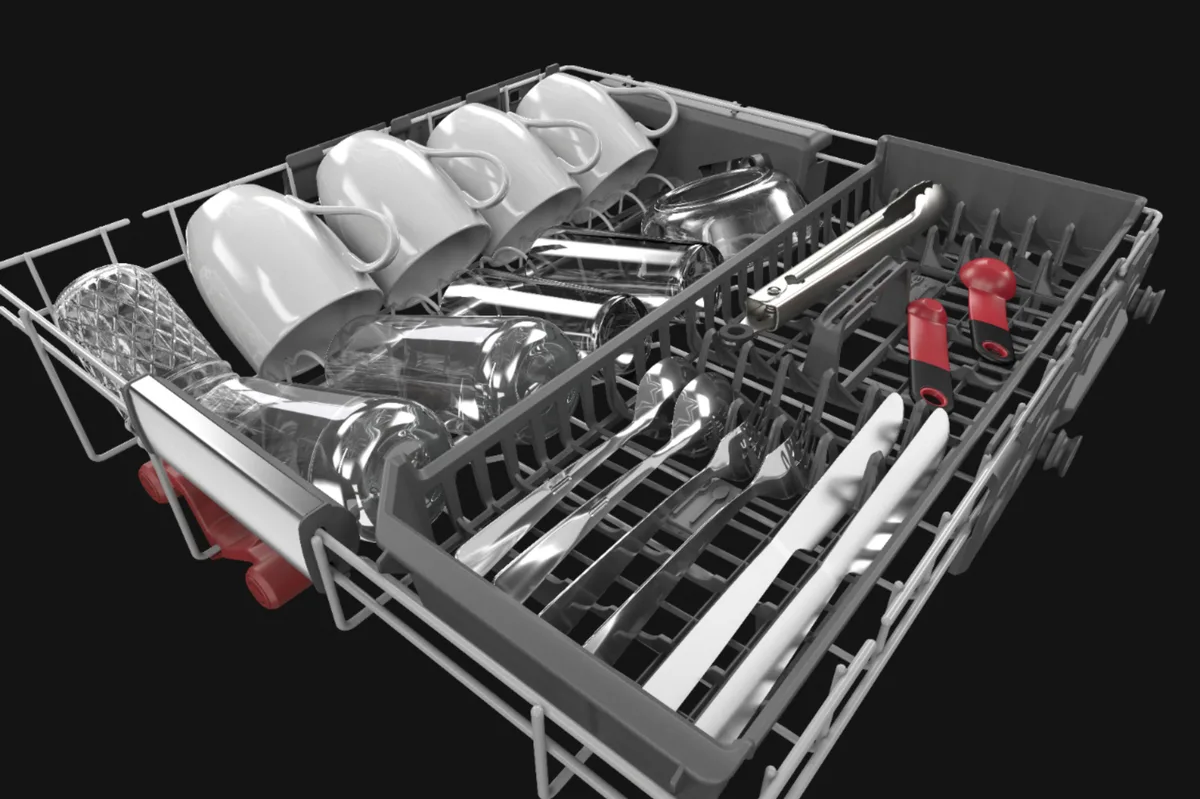
Image source: Web (Bing) / storage.googleapis.com (Web image (fair-use with source credit))
Some pans are going in the dishwasher no matter what. That's fine. Follow this process to slow down oxidation and keep the damage cosmetic rather than structural.
Step 1: Scrape all food debris
Leftover food creates localized acidity and salt concentration. A simple paper towel wipe removes most of the problem. This is the same habit you'd use when keeping a countertop fryer clean, because residue always reacts with high heat and moisture.
Step 2: Pick a gentler detergent
Powdered detergents usually contain less aggressive builders than pods. Pods are concentrated and often harsher on metals. Look for a label that says "mild" or "phosphate-free," though those terms don't guarantee low alkalinity.
The goal is to reduce chemical attack, not eliminate it.
Step 3: Add rinse aid
Rinse aid helps water sheet off the surface instead of pooling. Less pooling means less chemical contact time and fewer hard water spots. It won't stop oxidation, but it slows it down noticeably.
Step 4: Choose the shortest gentle cycle
The less time the pan sits in alkaline water, the better. Skip the heavy-duty, sanitize, or steam-cleaning options. A normal or eco cycle is the least destructive.
Step 5: Open the door immediately
The steam that collects after a wash is still chemically active. Pull the pans out while they're warm. Letting them sit traps moisture against the exposed metal.
Step 6: Towel dry by hand
Do not let them air dry inside the dishwasher. The thin water film left behind accelerates oxidation and leaves spotting. A quick dry with a soft kitchen towel takes less than a minute and makes a serious difference over time.
Every countertop appliance has its own care rules. An electric deep fryer needs oil management, and a stainless pan needs moisture control. The same logic applies to the rest of your kitchen routine.
If you already maintain a dedicated fryer for busy nights, you know the drill. Handle each tool according to its materials, and it lasts longer.
Fixing the Problem: Restoring Dull or Oxidized Pans
You can reverse light oxidation. Heavy damage is permanent. The distinction depends on how deep the reaction has gone.
Surface-level gray cloudiness, where the aluminum feels slightly rough but not pitted, usually responds to a simple acid treatment. Deep pitting or flaking means the aluminum has eroded away permanently.
Here's a quick test. Wipe the oxidized area with a white paper towel. If gray residue transfers to the towel, the oxide layer is loose and removable.
If nothing transfers and the surface remains dull and gritty, the damage is structural.
Method 1: Vinegar soak for light oxidation
White vinegar contains acetic acid, which dissolves aluminum oxide without harming stainless steel. Fill a sink or basin with equal parts white vinegar and warm water. Submerge the affected pan for 30 to 60 minutes.
Scrub gently with a non-abrasive sponge. Rinse thoroughly and dry immediately.
This method restores the original metallic luster on pans with one to ten dishwasher cycles of exposure. Pans with more damage will look better but not perfect.
Method 2: Cream of tartar paste for stubborn spots
Cream of tartar is a mild acid that works well on localized oxidation. Mix one tablespoon of cream of tartar with enough water or lemon juice to form a thick paste. Apply the paste to the dull spots and rub with a soft cloth in circular motions.
Let it sit for 15 minutes. Rinse and dry.
This method is effective on rivet heads and small rim patches. It takes a few minutes of gentle elbow grease, but the payoff is immediate.
Method 3: Barkeeper's Friend for deeper cleaning
Barkeeper's Friend is an oxalic acid cleaner specifically formulated for stainless cookware. It removes oxidation without scratching stainless steel surfaces. Apply a small amount to a damp sponge, rub the affected area, and rinse within one minute.
Do not let it dry on the pan, because oxalic acid can etch stainless steel if left too long.
This is the most effective method for restoring uniform appearance on budget pans that have seen moderate dishwasher use. It will not fix pitted aluminum, but it will remove the powdery gray layer and restore a smooth feel.
When restoration is not possible
Pitting is the point of no return. Once the aluminum surface has small craters, no cleaner will fill them back in. The pan remains safe to cook with, pitted aluminum is not a health hazard, but it will catch food residue and become harder to clean in the future.
If the oxidation extends around the entire rim and the pan loses its structural tightness, the core may be degrading. That's rare on budget pans under normal home use. It usually takes hundreds of dishwasher cycles or improper stacking that traps water against the edge.
The same principle applies to maintaining other kitchen gear through regular care. Knowing how to clean a countertop deep fryer the right way prevents the same kind of surface breakdown on that unit.
A Real-World Reality Check: What Happens After 50 Washes
Let's talk timelines. A budget stainless steel set with exposed aluminum rims put through a standard dishwasher cycle once or twice per week will show visible oxidation within the first month. At three months, the rims look uniformly dull and rough to the touch.
At six months, the oxide layer stabilizes and stops getting worse, but the pan never looks new again.
Here's what typically happens across three common budget price points:
| Price point | Rim type | Visible oxidation at 50 washes | Reversible? | Best care |
|---|---|---|---|---|
| $40 to $70 | Exposed aluminum core | Heavy, uniform, rough texture | Partially with acid cleaner | Hand wash only |
| $70 to $120 | Partial seal or thin cladding | Moderate, mostly at rivets and inner rim | Light improvement with cleaning | Dishwasher safe with precautions |
| $120 to $150 | Fully sealed rims on most pieces | Minimal, only at handle attachment points | Fully reversible with mild cleaner | Dishwasher safe with rinse aid |
Pans from the cheapest tier develop a gray-white powdery surface that transfers to food on contact. This looks alarming but is chemically inert aluminum oxide. Rinsing the pan before cooking removes the loose surface material.
Pans from the mid tier develop a permanent dark gray ring at the rim. The ring becomes smoother over time as the outer layer stabilizes. These pans are fine for everyday use, but they don't show well if you entertain guests.
Pans from the upper end of the budget range, the ones with fully sealed rims, come out of the dishwasher looking nearly new. They may develop minor hard water spotting, but no gray oxidation. That's the difference a proper seal makes.
After about fifty washes, the quality gap between a bonded pan and a fully clad pan becomes obvious. The bonded pan's rim is rough, the clad pan's rim is clean. That physical difference matters for comfort and cleaning, not for cooking results.
The long-term cost calculation matters here too. A $50 set replaced every two years costs more than a $120 set that lasts a decade. That's a consideration built into the same decision process you'd use when comparing a dedicated deep fryer to a multi-cooker for regular use.
When to Just Buy a Better Set
If you've read this far and realized your current pans are already showing oxidation, you have a choice. Keep them and hand wash going forward, or upgrade to a set that handles the dishwasher without issue.
The sweet spot for fully sealed rims on a stainless steel set starts around $120 to $150 at retail. Brands like Tramontina and Cuisinart offer fully clad tri-ply sets in that range. The price gets you a 100 percent stainless steel food contact surface with no exposed aluminum edge.
The rivets may still be aluminum on some models, but the main cooking surface stays sealed.
Here's what to look for in the product description:
| Feature | What it means | Why it matters |
|---|---|---|
| Fully clad | Stainless steel wraps over the entire core | No exposed aluminum anywhere |
| Tri-ply | Three layers: stainless + aluminum + stainless | Even heating and sealed edges |
| Encapsulated rim | The edge is folded and welded | No bare metal exposed to detergent |
| Induction compatible | Usually indicates thicker construction | Less likely to warp or separate |
A set with these features costs more upfront, but it eliminates the dulling problem entirely. You stop worrying about the dishwasher. You stop needing to inspect rims after every cycle.
The pans stay presentable for years.
If you already own a solid outdoor cooking setup and keep a quality air fryer on the counter, a good cookware set is the missing link in an efficient kitchen. Knowing how to clean both the air fryer basket and the stainless frying pan the right way saves you from separate headaches.
What not to do
Do not buy a cheap nonstick-coated stainless set and assume it solves the problem. The coating eventually wears off, and the aluminum core becomes exposed. Then you're back to the same situation.
Do not buy a set that says "dishwasher safe" without checking the rim. Dishwasher safe for stainless steel often means the stainless surface itself is safe, but the manufacturer makes no claim about the aluminum core. That distinction is critical.
Do not buy an anodized aluminum set thinking it's the same as stainless. Anodized aluminum is treated to resist oxidation, and it holds up better in the dishwasher, but it scratches and discolors differently. It's a separate category with its own care rules.
Frequently Asked Questions
Can I eat from pans with a dull aluminum core?
Yes. The dull gray layer is aluminum oxide, a stable compound that does not react with food at normal cooking temperatures. The European Food Safety Authority sets a tolerable weekly intake for aluminum that far exceeds what a cookware surface could leach.
Your food is safe.
Does the dishwasher void the warranty?
Usually yes. Most budget cookware manufacturers specify hand washing in the care instructions. Dishwasher damage is considered user error and is not covered.
Check your specific warranty language. Some higher-end fully clad sets explicitly allow dishwasher use.
Will the oxide layer get worse over time?
It stabilizes after about 20 to 30 cycles. The initial reaction is fast, but once the outer layer of aluminum converts to oxide, the reaction slows down. The pan will not dissolve completely.
It will just look consistently dull and feel slightly rough.
Can I use baking soda to prevent oxidation?
No. Baking soda is mildly alkaline and will not prevent the reaction. It may even accelerate it.
An acidic rinse aid like one containing citric acid is more effective at reducing mineral deposits and slowing chemical attack.
Is the damage permanent or reversible?
Surface-level oxidation is reversible with an acid cleaner like vinegar, cream of tartar, or Barkeeper's Friend. Deep pitting is permanent. If the aluminum has craters or visible erosion, no cleaner will restore the original surface.
The pan remains usable, just not cosmetically perfect.

Related posts
Fix Thin Edge Burning on Budget Stainless Steel Pans
You open your email, frustrated. Dinner plans ruined again by a pan that scorches everything except the center.…
Pan-Roasted Chicken: Herb Butter Temp & Time (Budget SS)
Ask around and you'll get ten different answers for what temperature and cooking time for panroasted chicken breast…
Clean & Shine Budget Stainless Steel with Bar Keepers Friend
You followed the directions. You scrubbed. You rinsed. And now your budget stainless steel pan looks worse than…