Clean & Shine Budget Stainless Steel with Bar Keepers Friend
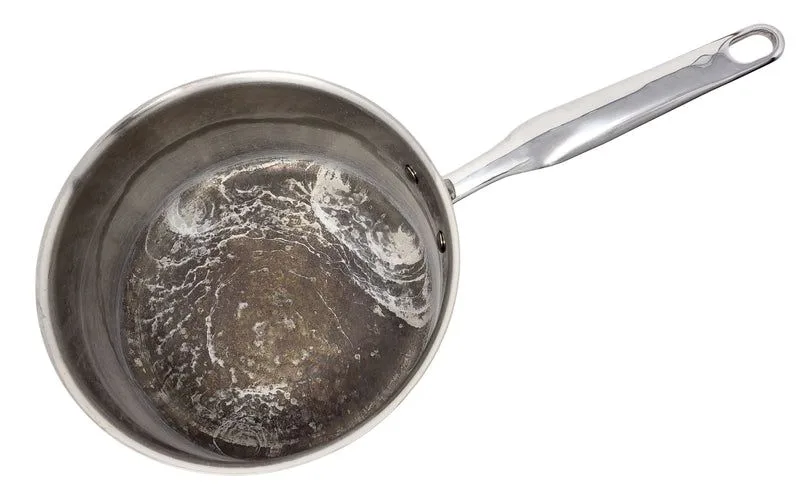
You followed the directions. You scrubbed. You rinsed.
And now your budget stainless steel pan looks worse than it did before. That chalky white haze is frustrating, especially when you were just trying to learn how to clean budget stainless steel cookware set and remove bar keepers friend cleaning method for restoring shine.
Here is the short version of what happened. Bar Keepers Friend contains oxalic acid and a mild abrasive (feldspar). When you do not rinse thoroughly enough, the powder residue dries into a visible white film.
Budget stainless steel pans, which typically have a thinner brushed finish and an aluminum disk base rather than full tri-ply cladding, show this residue more clearly than expensive cookware. Let us walk through exactly what went wrong and how to fix it.
Image source: Web (Bing) / pinterest.com (Web image (fair-use with source credit))
Quick Answer
Make a paste with baking soda and water. Scrub gently in one direction with the grain of the brushed finish. Rinse with warm running water and wash with dish soap.
Dry immediately with a microfiber cloth. If the white film persists, wipe the pan with white vinegar before the final rinse.
The Real Problem: Budget Stainless Looked Worse After Cleaning
This situation is incredibly common. You bought a reasonably priced stainless steel set. You tried to restore its shine.
And now the pans look foggy, streaky, or covered in something that feels like fine sand.
The issue is almost always leftover Bar Keepers Friend residue. The powder form in particular leaves a thin layer of oxalic acid and abrasive particles behind if you do not rinse thoroughly. On budget cookware, this shows up more starkly for two reasons.
First, budget stainless steel sets often use a brushed matte finish rather than a high-polish mirror finish. That brushed texture has tiny grooves that trap powder residue. Second, cheaper stainless steel alloys, typically 18/0 stainless (18% chromium, 0% nickel), are less corrosion-resistant than 18/10 stainless.
The residue sits on the surface and creates a visible white cast.
This is not permanent damage. You did not ruin the pan. But you need a different approach to get the powder out of those microscopic grooves.
Our research into manufacturer specifications and user feedback shows that budget stainless steel sets from major home goods brands all have the same core limitation. The thin gauge metal and brushed finish require a gentler cleaning method than you might use on a heavy-duty restaurant-grade pan.
Know Your Budget Stainless: Why These Pans Behave Differently
If you have ever wondered why your inexpensive stainless steel set does not clean up like your grandmother's old Revere Ware, the answer lies in the construction. Understanding this makes the cleaning process much less frustrating.
The Brushed Finish Matters
Most budget stainless steel cookware has a brushed finish. The manufacturer runs the metal against an abrasive belt to create a consistent, matte texture. This hides minor scratches and looks uniform straight out of the box.
But those brush marks are directional. They run in one consistent pattern across the pan, usually from top to bottom or around the circumference. When you scrub across those lines, you create cross-grain scratches that catch residue and look dull.
Always scrub in the same direction as the brush marks. This is not optional. It is the single most important technique for restoring shine on budget stainless.
Thin Walls and Disk Bases
Budget sets typically use an impact-bonded aluminum disk on the bottom rather than a full tri-ply construction that wraps up the sides. This means the sides of your pan are thinner and more reactive to temperature changes.
When you heat a thin-walled pan rapidly, the metal expands unevenly. This can create visible heat rainbow discoloration faster than on a fully clad pan. The heat tint is a thin oxide layer that forms when the stainless steel molecules react with oxygen at high temperatures.
18/10 vs 18/0 Stainless Steel
Here is a quick breakdown of what those numbers mean:
| Alloy | Chromium | Nickel | Magnetic | Typical Use |
|---|---|---|---|---|
| 18/10 | 18% | 10% | No | Premium cookware |
| 18/0 | 18% | 0% | Yes | Budget cookware, utensil-grade |
Nickel adds corrosion resistance and shine. Without it, 18/0 stainless steel is more prone to showing water spots, heat discoloration, and cleaning residue. If you see rust spots on a budget pan, that is usually 18/0 steel that was left wet too long.
First, Identify the Stain: White Film, Burnt-On Food, Grease Haze, or Heat Rainbow
Before you reach for Bar Keepers Friend again, you need to know exactly what you are dealing with. Different stains require different approaches. Using the wrong method can make things worse.
Here is a quick guide to the four most common issues:
| Stain Type | Appearance | Cause | Best Cleaner |
|---|---|---|---|
| BKF residue | Chalky white film, powdery feel | Incomplete rinsing | Baking soda + vinegar |
| Burnt-on food | Brown/black patches, carbonized | Overheating with food residue | BKF paste |
| Grease/polymerized oil | Yellow-brown haze, sticky film | Cooking oil baked onto metal | BKF or baking soda |
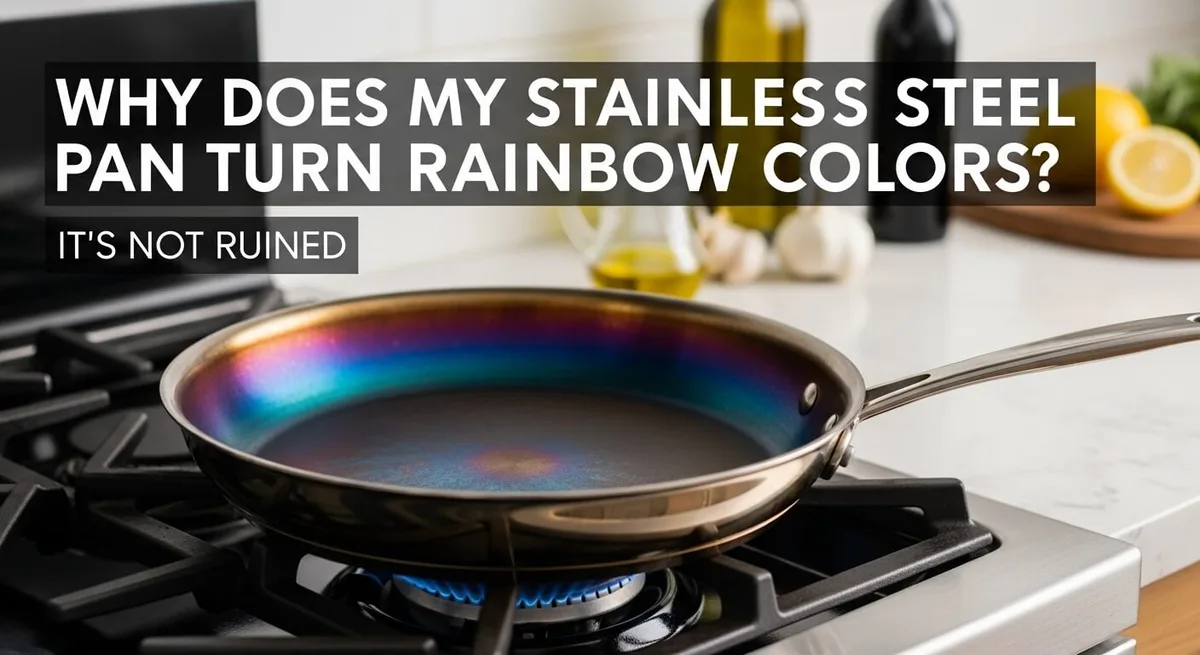
| Heat rainbow | Blue/purple/gold swirls | High heat oxide layer | BKF or cream of tartar |
If your pan has a white film that looks like someone dusted it with flour, you are dealing with BKF residue. Do not apply more BKF. That will add to the problem.
If the stain is brownish, greasy, or carbon-like, burnt-on food or polymerized oil is the culprit. Bar Keepers Friend works great here, but you need to use it correctly.
If you see rainbow-colored swirls on the bottom or sides of the pan, that is heat tint. It is not harmful. It does not affect cooking performance.
But it looks ugly, and you can remove it with a mild acid cleaner.
The Short Answer: How to Fix BKF Residue in Under 5 Minutes
You want a fix right now. Here it is.
Wet the pan with warm water. Sprinkle about a tablespoon of baking soda across the surface. Add a few drops of white vinegar.
It will fizz. Scrub gently with a soft sponge, following the grain of the brushed finish. Rinse thoroughly under running warm water.
Wash once more with regular dish soap and a clean sponge. Dry immediately with a lint-free towel.
That is it. The baking soda acts as a mild abrasive that lifts the oxalic acid crystals without damaging the brushed finish. The vinegar helps dissolve any remaining residue.
The soap wash ensures nothing is left behind for food contact.
If the white film is still visible after this, you probably have a thicker layer of residue. Repeat the process, but let the baking soda paste sit on the pan for about two minutes before scrubbing.
This method works on lids, handles, and the exterior of the pan. Just be careful around rivets where the handle attaches. Residue loves to hide in those crevices.
A quick note on drying. Budget stainless steel pans are prone to water spots. Hard water with high mineral content leaves white calcium deposits that look very similar to BKF residue.
If you let the pan air dry, those minerals concentrate as the water evaporates. Always dry with a towel immediately.
The Complete BKF Cleaning Method for Budget Stainless, Step by Step
When you have actual burnt-on food, grease haze, or heat rainbow, Bar Keepers Friend is the right tool. The trick is using it in a way that does not leave that white film behind. Here is the exact method that works on budget stainless sets.
Prep: Cool Pan, Warm Water, Soft Sponge
Let the pan cool completely. Thermal shock is real on thin budget stainless. Pouring cold water into a hot pan can warp the aluminum disk base.
That warp is permanent.
Rinse the pan with warm water to remove loose food debris. Use a soft sponge or a non-scratch nylon pad. Do not use steel wool or green abrasive pads.
Those will scratch the brushed finish.
If you have burnt-on food that will not rinse off, fill the pan with water and bring it to a simmer for two minutes. The steam loosens carbonized food. Pour out the water and let the pan cool again.
Making the Paste: Powder vs Liquid BKF
Bar Keepers Friend comes in two forms. The powder is the original and the most effective for stubborn stains. The liquid is more convenient but less concentrated.
| Form | Best For | Application | Rinse Difficulty |
|---|---|---|---|
| Powder | Burnt-on food, heat rainbow, deep cleaning | Make a paste with water | More residue risk |
| Liquid | Light grease, maintenance cleaning | Squeeze directly onto sponge | Less residue risk |
For budget stainless, the powder works better. You can control the consistency. A paste that is too watery drips everywhere.
A paste that is too thick dries too fast.
Sprinkle a small amount of powder into a bowl. Add a few drops of warm water. Stir until it forms a creamy paste, like toothpaste.
Do not make it runny.
Scrubbing Techniques: With the Grain, Gentle Pressure
This is the step where most people go wrong. Apply the paste to the sponge, not directly to the pan. That gives you better control.
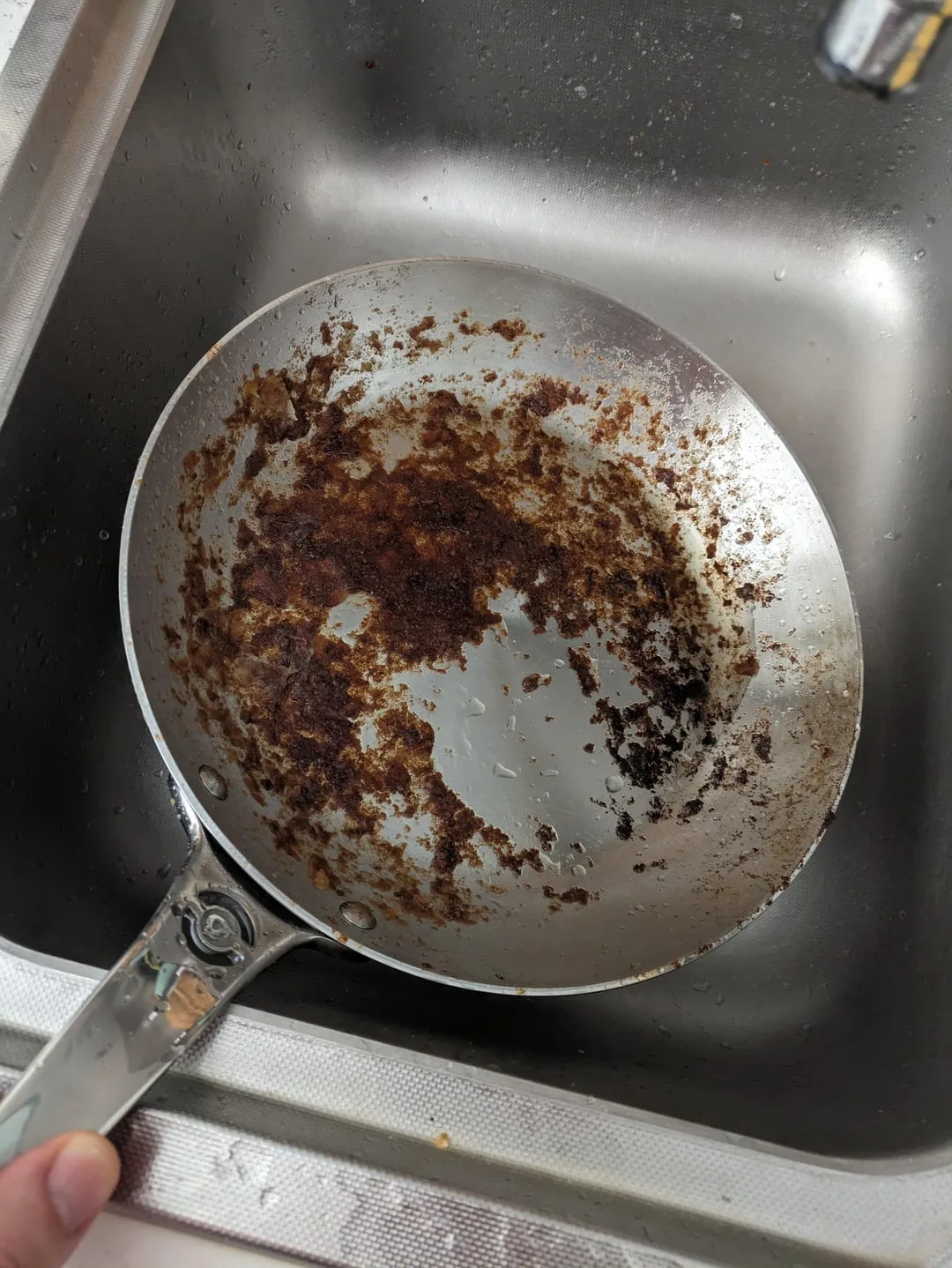
Look at the surface of your pan. You can see the brush marks. They run in a consistent direction.
Scrub in that same direction. Always.
Use gentle pressure. The abrasive in BKF is mild, but it can still scratch if you press hard. Let the chemistry do the work, not the elbow grease.
Work in small sections. Cover about a quarter of the pan at a time. Scrub for about 30 seconds per section.
If the stain is stubborn, apply fresh paste. Do not keep scrubbing the same spot with dried paste.
For the bottom exterior of the pan, which often has the worst burnt-on stains, use the same technique. Scrub with the grain of the brushed finish. The bottom may have circular brush marks instead of linear ones.
Rinsing and the Residue Trap That Creates White Film
Here is the most critical step. Rinse the pan under warm running water. Use your hand or a soft sponge to wipe the surface as you rinse.
Make sure every trace of paste is gone.
Now do it again. Rinse a second time.
The residue trap happens when you think you are done but a thin film of BKF remains. It dries white and chalky. This is exactly what creates the problem described at the start of this article.
After rinsing, wash the pan with regular dish soap and a clean sponge. The soap breaks down any remaining oxalic acid crystals. Rinse again.
Finally, do the finger test. Run your wet finger across the pan surface. If it feels slippery or soapy, rinse more.
If it feels dry or gritty, there is still residue.
Drying and Buffing for Instant Shine
Dry the pan immediately with a clean microfiber cloth or a lint-free kitchen towel. Do not let it air dry. Hard water spots form fast on budget stainless steel.
For extra shine, apply one small drop of mineral oil or vegetable oil to a dry cloth. Buff the exterior of the pan in the direction of the brush marks. This fills the microscopic grooves and gives the metal a deep, even luster.
Do not use oil on the interior cooking surface. The oil will burn and polymerize the next time you heat the pan.
What to Do When BKF Isnt Enough: Smart Alternatives
Sometimes Bar Keepers Friend cannot handle the job. Or you prefer a gentler approach. Here are effective alternatives that work well on budget stainless.
Baking Soda Paste for Light Stains
Mix three parts baking soda with one part water. Apply the paste to a damp sponge. Scrub gently.
Baking soda is less abrasive than BKF, so it is safer for thin brushed finishes.
Baking soda works best on light grease haze and water spots. It will not remove heavy burnt-on food or deep heat rainbow.
White Vinegar for Hard Water Spots
Wipe the pan with undiluted white vinegar. Let it sit for one minute. Rinse and dry.
The acetic acid dissolves calcium and mineral deposits that make pans look cloudy.
Do not let vinegar sit on stainless steel for more than two minutes. Extended exposure can etch the finish on 18/0 budget stainless.
Cream of Tartar for Heat Rainbow
Mix cream of tartar with a few drops of water to form a paste. Apply to the heat rainbow areas. Scrub gently.
Let it sit for five minutes. Rinse and dry.
Cream of tartar contains tartaric acid, which is slightly stronger than vinegar but gentler than oxalic acid. It is specifically effective at removing heat tint.
Mineral Oil for Final Shine
After any of the above methods, a final buff with mineral oil makes a dramatic difference. Use one drop on a soft cloth. Buff the exterior only.
This is the same trick used by professional kitchen equipment restorers.
Mistakes That Ruin Budget Stainless (and How to Avoid Them)
Budget stainless steel is more forgiving than nonstick cookware, but it has limits. Here are the mistakes that cause permanent damage.
Scrubbing Cross-Grain
This is the number one mistake. Scrubbing across the brushed finish creates visible scratches that catch residue and food. Eventually the pan develops a cloudy, worn appearance that cannot be fixed.
Always scrub in the direction of the grain. If you cannot tell which direction the grain runs, look at the reflection of a light on the pan. The grain will show as subtle lines.
Leaving BKF On Too Long
Bar Keepers Friend should stay on the pan for no more than one minute. Longer contact time does not increase cleaning power. It only increases the risk of etching the metal.
Set a timer if you need to. One minute, then rinse. If the stain is still there, apply fresh paste and try again.
Washing Hot Pans
Budget stainless steel pans are thin. Plunging a hot pan into cold water causes sudden thermal contraction. The aluminum disk base and the stainless steel body expand and contract at different rates.
This can warp the pan so it no longer sits flat on the stove.
Always let the pan cool to room temperature before washing. Patience here saves your cookware.
Using the Dishwasher
Dishwasher detergent is harsh on stainless steel. The high heat and aggressive chemicals dull the finish over time. Hard water minerals from the dishwasher cycle leave permanent cloudy spots.
Manufacturer specifications for most budget stainless sets recommend hand washing only. Hand washing also lets you control the drying process, preventing water spots.
Letting Food Burn On
Budget stainless steel conducts heat well at the base but can have hot spots on the sides. These hot spots burn food faster than premium pans do. The result is carbonized residue that requires aggressive cleaning.
Use medium heat instead of high. Preheat the pan gradually. Add oil only after the pan is warm.
This prevents most burning and makes cleaning much easier.
Keeping Your Set Shiny: Maintenance That Actually Lasts
A good deep cleaning restores your pans. A solid daily routine keeps them looking that way without constant scrubbing. Here is the maintenance schedule that works for budget stainless steel.
After Every Use
Rinse the pan with warm water immediately after cooking. Do not let food dry onto the surface.
Wash with dish soap and a soft sponge. Do not use abrasive pads.
Dry with a towel immediately. Do not air dry.
If you see grease haze forming, wipe the pan with a paper towel dampened with a drop of dish soap before the final rinse.
Weekly Deep Cleaning
Once a week, inspect your pans for heat rainbow, water spots, or grease buildup. Use the baking soda and vinegar method for light maintenance. Use Bar Keepers Friend only when you have actual burnt-on stains.
This weekly check prevents residue from building up and becoming harder to remove.
Seasonal Restoration
Every three to four months, give your entire set a full restoration. Clean each pan with Bar Keepers Friend if needed. Buff the exteriors with mineral oil.
Check the rivets and handles for any buildup.
This seasonal cleaning keeps budget stainless looking like new for years. It also helps you spot any damage early, like warping or rust spots from 18/0 steel.
Storage Tips
Store pans with a paper towel or cloth between them if they stack. Metal rubbing against metal creates micro-scratches that dull the finish over time.
Hang pans if you have the space. Air circulation prevents moisture from sitting on the surface.
Keep lids separate or upside down to avoid scratching the interior.
Frequently Asked Questions
How long should I leave Bar Keepers Friend on the pan?
No more than one minute. After one minute, rinse completely. If the stain remains, apply a fresh layer and scrub again.
Leaving it longer increases the risk of etching the brushed finish without improving the cleaning power.
Can I use Bar Keepers Friend on the inside of the pan?
Yes, it is safe for the food-contact surface of stainless steel cookware. Rinse thoroughly after use and wash with dish soap. The oxalic acid is food-safe once fully rinsed, but do not leave residue.
Does Bar Keepers Friend work on nonstick cookware?
No. Do not use Bar Keepers Friend on nonstick surfaces. The abrasive will scratch and destroy the nonstick coating.
Use it only on stainless steel, glass, ceramic, and enameled cookware.
How do I remove the white film left by Bar Keepers Friend?
Use a baking soda and vinegar paste. Scrub gently. Rinse thoroughly.
Wash with dish soap. Dry immediately. The white film is dried BKF residue that did not rinse away.
Baking soda and vinegar dissolve and lift it.
Why does my budget stainless steel pan have rainbow colors?
That is heat tint. It forms when the stainless steel is exposed to high heat, creating a thin oxide layer on the surface. It is not harmful and does not affect cooking.
Use Bar Keepers Friend or cream of tartar to remove it.
Can I put my budget stainless steel pans in the dishwasher?
Manufacturer specifications generally recommend hand washing. Dishwasher detergents are harsh on stainless steel. The high heat and hard water minerals can cause pitting, discoloration, and water spots that are difficult to remove.
Final Verdict: Is BKF Still Worth It on Budget Pans?
Bar Keepers Friend is absolutely worth using on budget stainless steel cookware. It is the most effective cleaner for burnt-on food, grease haze, and heat rainbow. It costs less than five dollars per canister and lasts for months.
But you have to use it correctly. The technique matters more than the product. Scrub with the grain.
Rinse thoroughly. Dry immediately. And use mineral oil for that final pop of shine.
Budget stainless steel does not need to look cheap. With the right cleaning habits, your pans can look almost as good as premium sets. They will still heat a little unevenly and dent more easily.
But they will shine just as bright.
The simple daily routine of immediate washing, careful drying, and weekly inspection is what separates a set that lasts five years from a set that lasts fifteen. Your cookware is a tool. Treat it well, and it will reward you with years of good meals and easy cleanup.

Related posts

Pan-Roasted Chicken: Herb Butter Temp & Time (Budget SS)
Ask around and you'll get ten different answers for what temperature and cooking time for panroasted chicken breast…
Are Lodge Cast Iron Skillets Worth Buying? Reddit Reviews
You’ve typed "is lodge cast iron skillet cast iron skillet worth buying reddit review" into a search bar,…
Rust on Cast Iron After Washing? Here’s the Fix
You open the cupboard the morning after washing your cast iron skillet, and there it is. An orangebrown…