Vinegar & Tomato Sauces in New Carbon Steel: Safe?
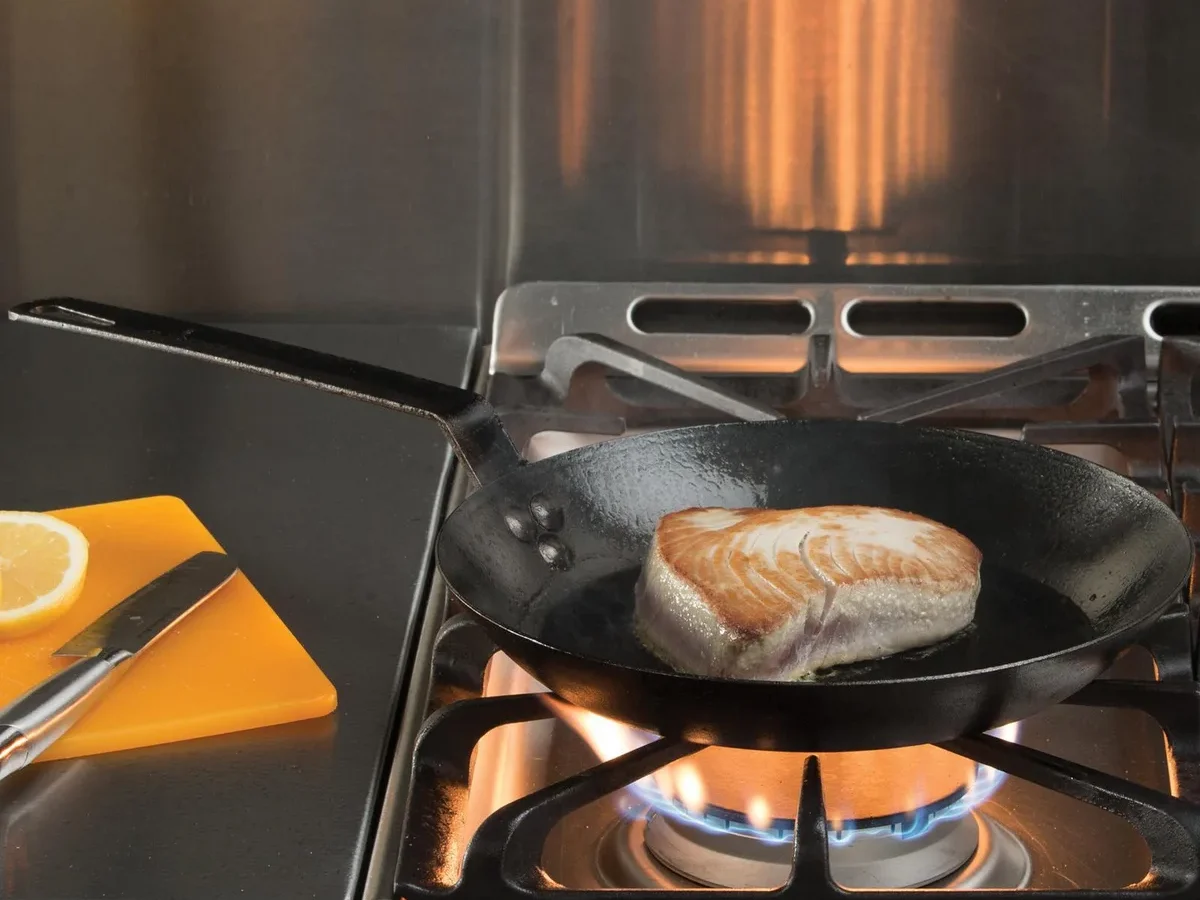
Can you put cooking vinegar or tomato sauces in newly seasoned carbon steel in a carbon steel skillet safely? It's the first question every new owner asks, usually after a tomato dish comes out tasting faintly metallic. The honest answer is qualified: yes, but only for a short window and at the right temperature.
The trick is learning to read the pan instead of guessing.
Cooking vinegar has a pH between 2.4 and 3.0, while most tomato sauces sit close to pH 4.0 to 4.5. That difference changes how quickly the acid attacks your seasoning. As of 2026, carbon steel makers still give the same advice: protect the young layer, earn the right to go acidic.
The decision tree below makes that simple.
Image source: Web (Bing) / zola.com (Web image (fair-use with source credit))
The Pan Anxiety Problem: What Happens When Acid Hits a Young Seasoning
You've just spent an afternoon seasoning a new carbon steel skillet. You wiped on thin layers of oil, heated until smoke rose, cooled the pan, and repeated until the surface turned glossy. Then dinner calls for a splash of red wine vinegar.
That's when the panic starts. The fear is justified.
Carbon steel is raw iron with a barely-there coating. The coating is polymerized oil, which forms when fats are heated past their smoke point. It's tough, but it's not invincible.
Acidic liquids attack the bonds between those oil molecules, and the thinner the layer, the faster the damage spreads.
A freshly seasoned pan usually has a pale gold or light copper color. That's a sign the seasoning is still young. A pan that has seen weeks of use turns dark bronze and almost black.
There's a huge difference in acid tolerance between those two stages. Aggregate reviews report that one bad acidic meal is the top reason new owners think their pan is defective.
Watch for these signs after an acidic cook:
- Pale grey or silver patches in the center
- A faint metallic or iron taste in the food
- Food sticking to spots that were smooth before
- Orange or brown rust forming within 24 hours
If you notice any of these, the seasoning got stripped in its weakest spots. The pan isn't ruined, but it needs to be re-seasoned before the next use. That's a setback, not a disaster.
The good news is that avoiding it is mostly a matter of timing.
Quick Answer: Yes, But Only Under These Conditions
Cooking vinegar or tomato sauces in a newly seasoned carbon steel skillet is safe. The pan must be young and the contact time short. Vinegar has a pH near 2.4 and strips faster than tomato sauce.
Wait until the seasoning darkens before long simmers.
What does "short" actually mean? Here's the safe zone on a freshly seasoned pan:
- Deglazing with vinegar: up to 2 minutes
- Simmering tomato sauce: under 5 minutes
- Leaving acidic food to cool in the pan: never
- Waiting until the pan turns bronze or dark copper: worth it
The longer acid sits on the steel, the more it eats away. A quick splash of vinegar adds flavor without damaging the pan. A 20 minute tomato simmer on a young seasoning is a coin flip.
You won't know which side you got until you see grey spots.
The temperature matters too. A pan at medium heat with a splash of vinegar for a pan sauce is one thing. A pan filled with crushed tomatoes and left bubbling for half an hour is another.
These rules don't transfer to modern countertop cooking routines, where the cooking surface starts out non-stick from day one.
How Seasoning Actually Protects (and Fails) Against Acid
Seasoning starts when fat meets high heat. The heat drives oxygen into the oil, turning it into a tough film called polymerized oil. This film shields the iron from moisture and stops food from bonding to the metal.
A well-seasoned pan looks dark, smooth, and almost glossy.
The problem is that a new pan hasn't built that layer yet. After the first few cooks, the coating is thin and uneven. Acid finds the weak spots quickly.
It reacts with both the oil and the bare iron underneath, lifting patches of seasoning as it goes.
Here's how the pan's stage changes what it can handle:
| Pan stage | Typical cook count | Acid tolerance |
|---|---|---|
| Fresh season | 1 to 2 cooks | Very low; avoid all acid |
| Early seasoning | 3 to 5 cooks | Quick splash only, under 2 minutes |
| Moderate seasoning | 6 to 15 cooks | Short simmer, under 10 minutes |
| Mature seasoning | 15+ cooks | Longer sauces, but still not a stainless pot |
The numbers are a guide, not a guarantee. Some pans with frequent thin oil coats will handle acid sooner. Others stay fragile for a month.
The visible texture and color are better signals than a count alone. As with any cookware, thorough washing after a reactive meal is smart. The federal food safety guidance on food-contact surfaces backs that up.
Temperature changes how acid behaves. High heat with liquid in the pan is safer than it sounds, because the acid cooks into the food instead of sitting on the steel. The worst case is a warm pan with cold acid left off the heat.
That slow soak gives the acid time to work through the seasoning.
The Decision Tree: Should You Add Acid to Your Newly Seasoned Pan?
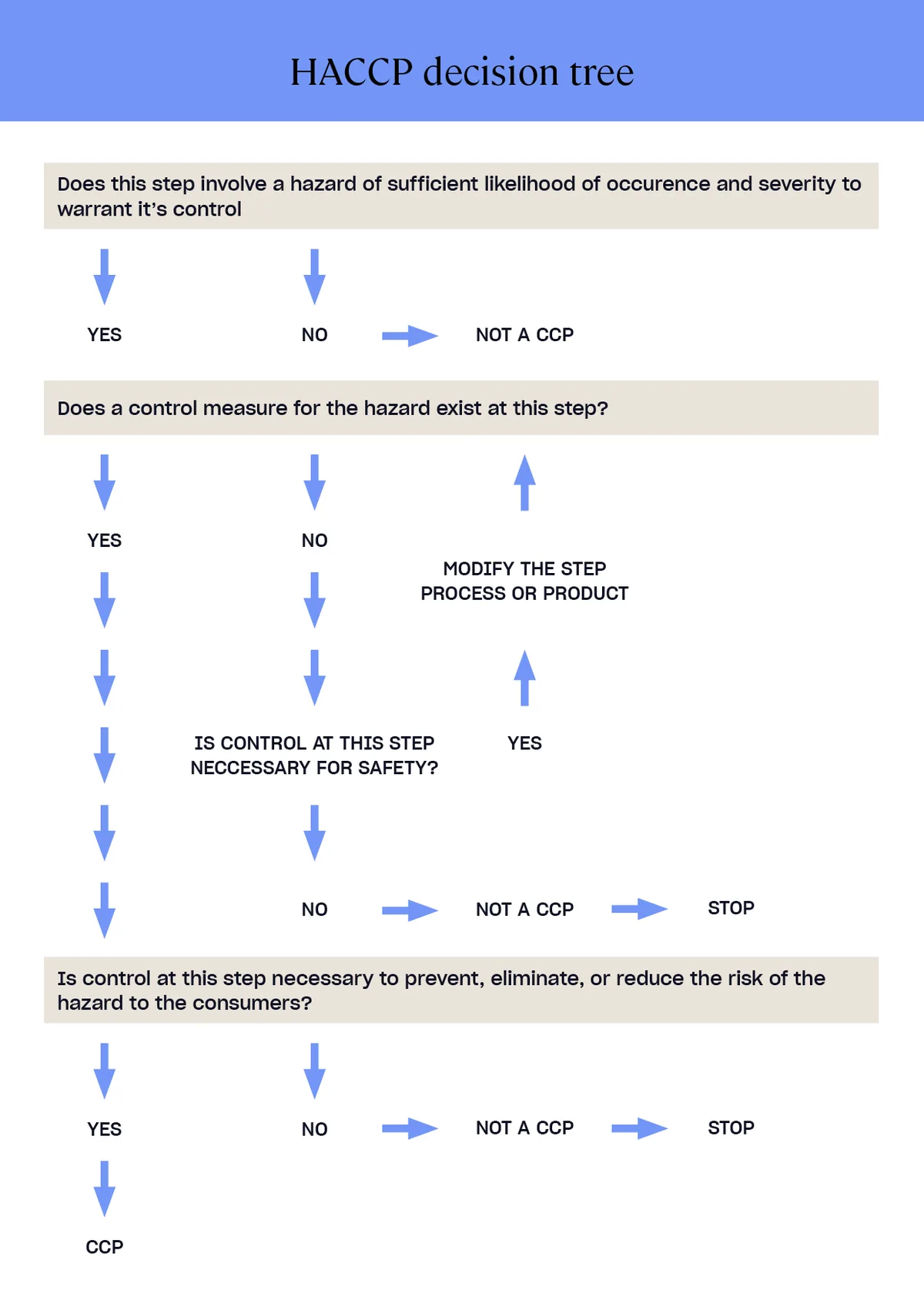
Image source: Bing (Web (fair-use with source credit))
Work through these four branches in order. If the answer at any branch says "wait it out", skip the acid for now. The pan won't suffer from patience.
Branch 1: How Many Cooks on Your Pan?
If the pan has seen at least five cooks and has a bronze or copper color, move forwardto Branch 2. If the surface still looks pale gold or patchy, stop here. Young seasoning is thin and fragile.
Acid will eat through it in under a minute.
A quick glance test works better than counting cooks. Hold the pan under a bright light. Does the center reflect a warm bronze tone?
That means the seasoning has started to build. Is the cooking surface still shiny silver in spots? That means the steel is bare.
No amount of acid is safe on bare steel.
Branch 2: What Type of Acid and How Much?
Vinegar, citrus, wine, and tomatoes all behave differently on a young pan. Distilled white vinegar is the harshest. It has a pH around 2.4 and strips seasoning almost instantly.
Tomato sauce sits between 4.0 and 4.5, which is mild enough for short contact on a pan with some seasoning.
For a newly seasoned pan, think of acid in terms of volume too. A tablespoon of vinegar to deglaze after searing a steak is different from pouring in a full jar of marinara. Small amounts of acid cook off quickly and touch only the fond.
Large amounts of liquid pool over the whole surface, so the acid reacts everywhere at once.
Your pan can handle these at five to ten cooks:
- 1 to 2 tablespoons of vinegar for deglazing
- A splash of wine or lemon juice at the end of cooking
- About half a cup of tomato paste stirred into a dish
- Cooking vinegar splashes that evaporate quickly
Wait a bit longer before attempting these:
- A full 24-ounce jar of marinara
- Stewed tomatoes left to simmer
- Balsamic reductions that need 10 minutes or more
Branch 3: How Long Will It Be in Contact?
Time is the variable that matters most. Acid on a young seasoning is a race. A 30 second splash is fine.
A 5 minute simmer is risky. Anything longer on a pale still-maturing seasoning will lift the polymer layer.
Use a timer for the first few acidic cooks. Once the liquid hits the pan, count the minutes. If you need the sauce to cook longer, shift it to a stainless steel saucepan after deglazing.
The carbon steel pan has already contributed its flavor. You don't need to keep the sauce in it.
Here's the safe window for a pan at the 5 to 10 cook stage:
| Time in contact | What's safe |
|---|---|
| Under 2 minutes | Deglazing, finishing splash |
| 2 to 5 minutes | Quick tomato toss, acidic stir-fry |
| 5 to 10 minutes | Moderate simmer on a pan with dark spots |
| Over 10 minutes | Not recommended until seasoning is mature |
If you plan to let the pan cool with the sauce in it, the clock keeps ticking. Acidity doesn't stop when the heat goes off. It actually works slower at low heat, but it keeps working.
Transfer the food out and rinse the pan while it's still warm.
Branch 4: What Temperature Are You Cooking At?
Medium heat is the sweet spot for any acidic cook. The liquid bubbles gently, the food simmers just enough, and the seasoning stays safe. Blasting the pan on high heat with acidic liquid inside can cause a different problem.
The acid bubbles and spatters, and the seasoning softens unevenly.
Cold temperatures are just as tricky. Letting vinegar or tomatoes sit in a pan that's off the stove creates a long soak at perfect acid strength. That's the fastest route to stripped seasoning.
Here's what works at each heat level:
- Medium heat: safe for short acidic sauces and deglazing
- Low heat: safe for keeping food warm, but don't let it linger
- High heat: avoid with acidic liquids; the pan gets unevenly hot
- Cold pan, acidic liquid: never leave it sitting
If the pan has a dark bronze color and enough seasoning, a medium simmer with tomatoes for 10 minutes will work. Watch the pan the whole time. When a few grey spots appear on the surface, that's your cue that the seasoning is still too young for longer cooks.
Common Mistakes That Kill a Young Seasoning
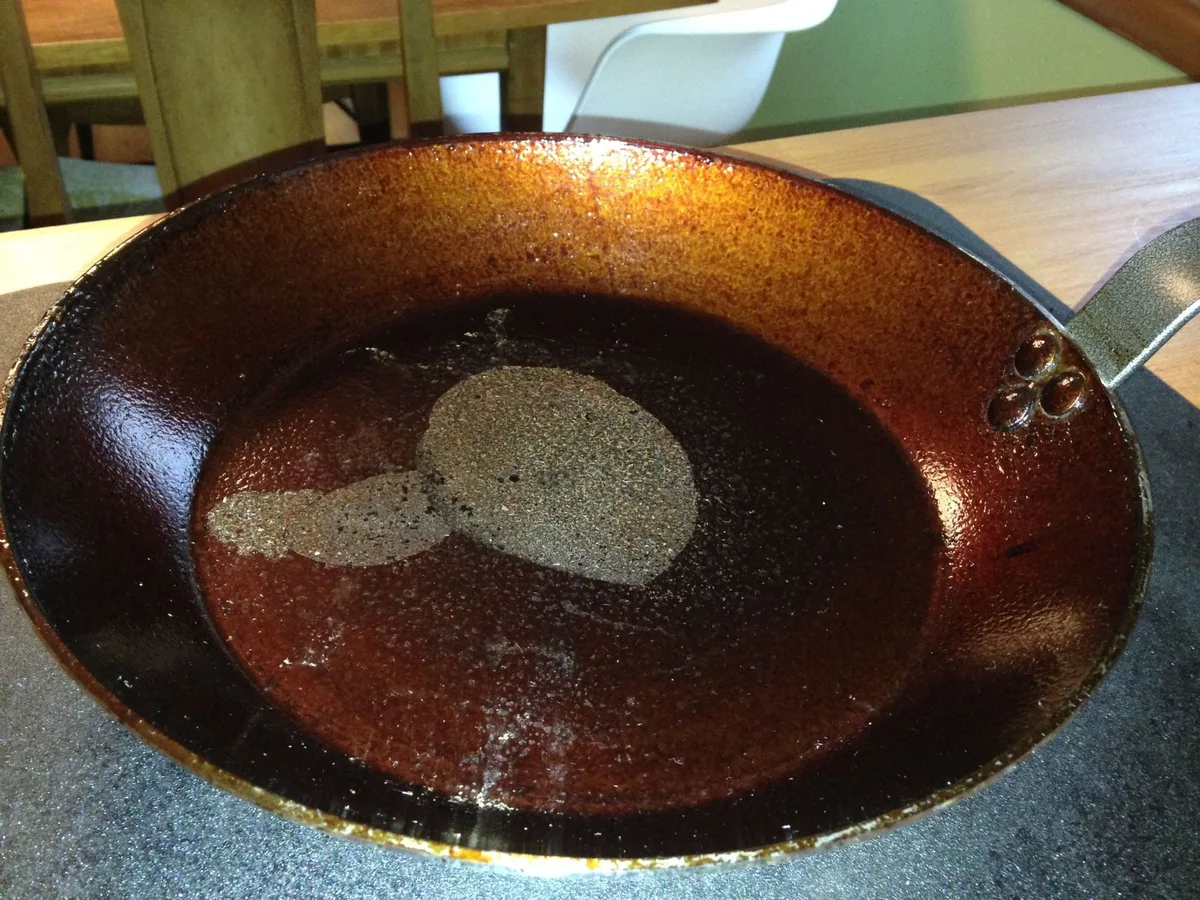
Image source: Bing (Web (fair-use with source credit))
The first mistake is cooking acidic food with a pan that has only been seasoned two or three times. The seasoning is still too thin to handle any kind of acid. Five to ten cooks is the right time to start testing it.
The second mistake is leaving acidic food to cool in the pan. A loaded tomato sauce left sitting for an hour slowly eats through the seasoning. Transfer the food right after cooking, then wash the pan immediately.
A rinse with warm water and a quick dry keeps rust from forming.
The third mistake is confusing a small deglaze with a long simmer. Both are acid-on-steel moments, but they're completely different in effect. Deglazing uses very little liquid for under a minute.
Simmering covers the whole pan in acid for many minutes. A young pan can handle the first, not the second.
Here are the other mistakes that show up often:
- Using too much oil when seasoning, leaving sticky patches that acid loosens
- Cooking tomatoes at high heat, which makes the liquid splash and attack unevenly
- Running the pan through the dishwasher after an acidic meal
- Scrubbing with steel wool after a strip and exposing raw iron
- Storing a stripped pan without oiling it, causing rust spots by morning
The fix for all of these is the same: catch the strip early, clean the pan gently, and re-season that spot. A thin layer of oil and time on the stove fixes most damage. Remember that proper cleaning habits will keep your pans working longer in the long run.
Real-Life Scenarios: What Works and What Strips
The decision tree is useful, but real kitchens aren't always tidy. Here's how the rules play out in actual cooking situations. We've pulled these from aggregate owner reports and standard carbon steel care guides.
Scenario A: Quick Deglaze After Searing
You sear a steak in a pan that has seen six cooks. The fond is dark and stuck to the bottom. You remove the steak, pour in two tablespoons of red wine vinegar, and scrape the bottom with a wooden spoon.
The vinegar sizzles and lifts the fond immediately. Within 30 seconds, it's mostly evaporated. This is the safest way to use acid on a young pan.
The liquid touches the surface briefly, does its job, and leaves. Even a pale-gold seasoning handles this without visible damage.
Scenario B: Simmering Tomato Sauce for Dinner
You've used the pan four times. You add a full jar of marinara and let it bubble at medium heat while the pasta boils. Twenty minutes pass.
This is where pans get stripped. Acid covers the whole cooking surface and sits for a long time. The result is usually grey or silver patches in the center of the pan, plus a faint metallic taste in the sauce.
If you notice the color change halfway through, transfer the sauce to another pot immediately.
Scenario C: Splash of Vinegar in a Stir-Fry
You're cooking vegetables in a carbon steel wok over high heat. You add a splash of black vinegar at the end, toss everything, and serve within a minute.
The vinegar hits a screaming-hot surface and steams off fast. There's little contact time, so the seasoning stays intact. This works even on a fairly young wok, as long as the oil layer isn't visibly patchy.
Here's a quick risk comparison:
| Scenario | Contact time | Pan stage required | Likely outcome |
|---|---|---|---|
| Deglazing | Under 30 seconds | Early (3+ cooks) | Safe, no visible change |
| Stir-fry splash | Under 1 minute | Early (3+ cooks) | Safe, no visible change |
| Quick tomato toss | 3 to 5 minutes | Moderate (6+ cooks) | Slight lightening, recoverable |
| Full sauce simmer | 15+ minutes | Mature (15+ cooks) | Stripped patches if young |
What to Do After You Cook with Acid in Carbon Steel
So you took the chance and cooked something acidic. Now what? The recovery steps depend on how the pan looks right after cooking.
First, transfer the food out immediately. Don't let the sauce sit in the pan while you eat. Acid keeps working even without heat.
Next, rinse the pan with hot water while it's still warm. No soap needed unless the pan is greasy. Use a soft sponge or chainmail scrubber to remove stuck bits.
Steel wool will scrape off seasoning along with the food.
Dry the pan thoroughly with a towel, then put it over low heat on the stove for two minutes. This evaporates any moisture in the pores of the steel. Apply a paper-thin layer of oil and rub it in with a clean cloth.
If you see grey or silver patches, check how deep the damage goes. A light change in color just needs a stovetop touch-up. Heat the pan, add a drop of oil, and work it into the affected spot until it smokes.
Let it cool and repeat once.
A full strip with visible rust or bare silver steel needs the whole seasoning process again. Stick to a simple routine and your pan will come back fast. Plenty of home cooks find that keeping up a cleaning pattern saves them from constant re-seasoning.
Frequently Asked Questions
Will a splash of lemon juice ruin my carbon steel pan?
No, not if it's a quick splash at the end of cooking. Lemon juice has a pH around 2.0, so it's harsher than tomato sauce. Use it for less than 30 seconds on a pan that has at least five cooks behind it.
Longer contact will leave cloudy spots.
How long can tomato sauce simmer in a seasoned carbon steel skillet?
It depends on the seasoning's age. On a pan with six to ten cooks, keep it under five minutes. On a mature dark pan, you can push to 15 minutes.
Beyond that, transfer the sauce to a stainless pot. The carbon steel pan has already given its flavor.
Can I cook balsamic reduction in carbon steel?
Balsamic vinegar is roughly pH 3.0, which makes it aggressive on young seasoning. A reduction takes 10 minutes or more and concentrates the acid as it thickens. This is a mature-pan-only job.
If your pan still shows copper tones, use a stainless saucepan instead.
What do grey spots after cooking tomatoes mean?
Those spots are exposed iron where the acid lifted the seasoning. The pan is still functional, but it needs a touch-up before the next use. Clean it, dry it, and give the grey patches a thin layer of oil over medium heat until they darken.
Is it safe to use vinegar to clean a carbon steel skillet?
Yes, but only on bare or stripped steel. Soaking the pan in vinegar removes rust quickly. Once the steel is clean, you need to re-season it completely.
Do not use vinegar as a regular cleaner on a seasoned pan, since it will strip the coating you worked to build.
Your Decision Guide: When to Add Acid and When to Wait
Let's tie everything together into a simple rule you can remember. The answer isn't "never" and it isn't "always". It's "not yet" for a young pan, and "in moderation" for a seasoned one.
Ask yourself three quick questions before adding acid:
- How many cooks has this pan seen? Under five means wait, or keep the acid under one minute.
- What color is the cooking surface? Pale gold is fragile, bronze is ready, dark brown is mature.
- How long will the acid be in contact? Minutes are fine, hour-long simmers are not.
If you answered "over five cooks", "bronze or darker", and "under ten minutes", then go ahead. Use medium heat, watch the pan, and never leave acidic food unattended. If any of those questions gives a warning, save the acid for later.

Related posts
Is the Lodge Carbon Steel Skillet Worth Buying?
Searching "is lodge carbon steel skillet carbon steel skillet worth buying reddit review" probably means you want real…
How to Fix a Gummy Carbon Steel Skillet
You pull out your carbon steel skillet for a quick stirfry, and there it is: a sticky, gummy…
Crispy Wok Beef in Carbon Steel: Temp & Time
If you've ever asked what temperature and cooking time for crispy wokstyle beef stir fry in carbon steel…