How to Fix a Gummy Carbon Steel Skillet
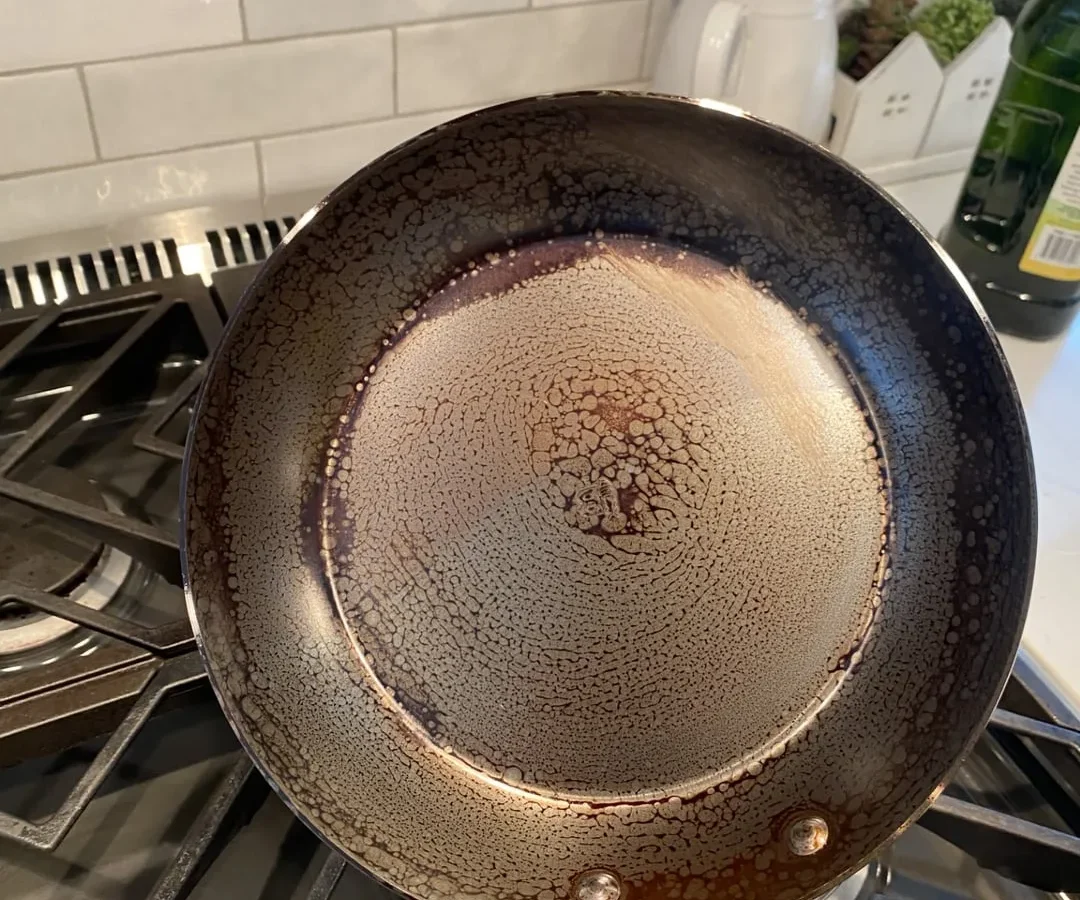
You pull out your carbon steel skillet for a quick stir-fry, and there it is: a sticky, gummy amber layer that grabs your spatula and leaves a mark on your paper towel. Learning how to clean carbon steel skillet and remove sticky gummy amber oil layer from over-oiling seasoning is one of those kitchen problems that feels bigger than it actually is. It happens to nearly everyone who seasons a pan for the first few times.
The good news? You're one quick fix away from a slick, non-stick cooking surface.
Most carbon steel skillets, like the ones from De Buyer or Matfer Bourgeat, are 2 to 3 millimeters thick and season best between 350 and 500 degrees Fahrenheit. As of 2026, the same guidance holds true: a carbon steel skillet needs a barely-there layer of oil, not a puddle. That sticky amber layer is what happens when the oil never fully polymerized into the hard seasoning you're after.
With the right diagnostic step and a little elbow grease, you can fix it in anywhere from ten minutes to an overnight soak. Let's break down why it happened first, because the cause tells you exactly which fix to use.
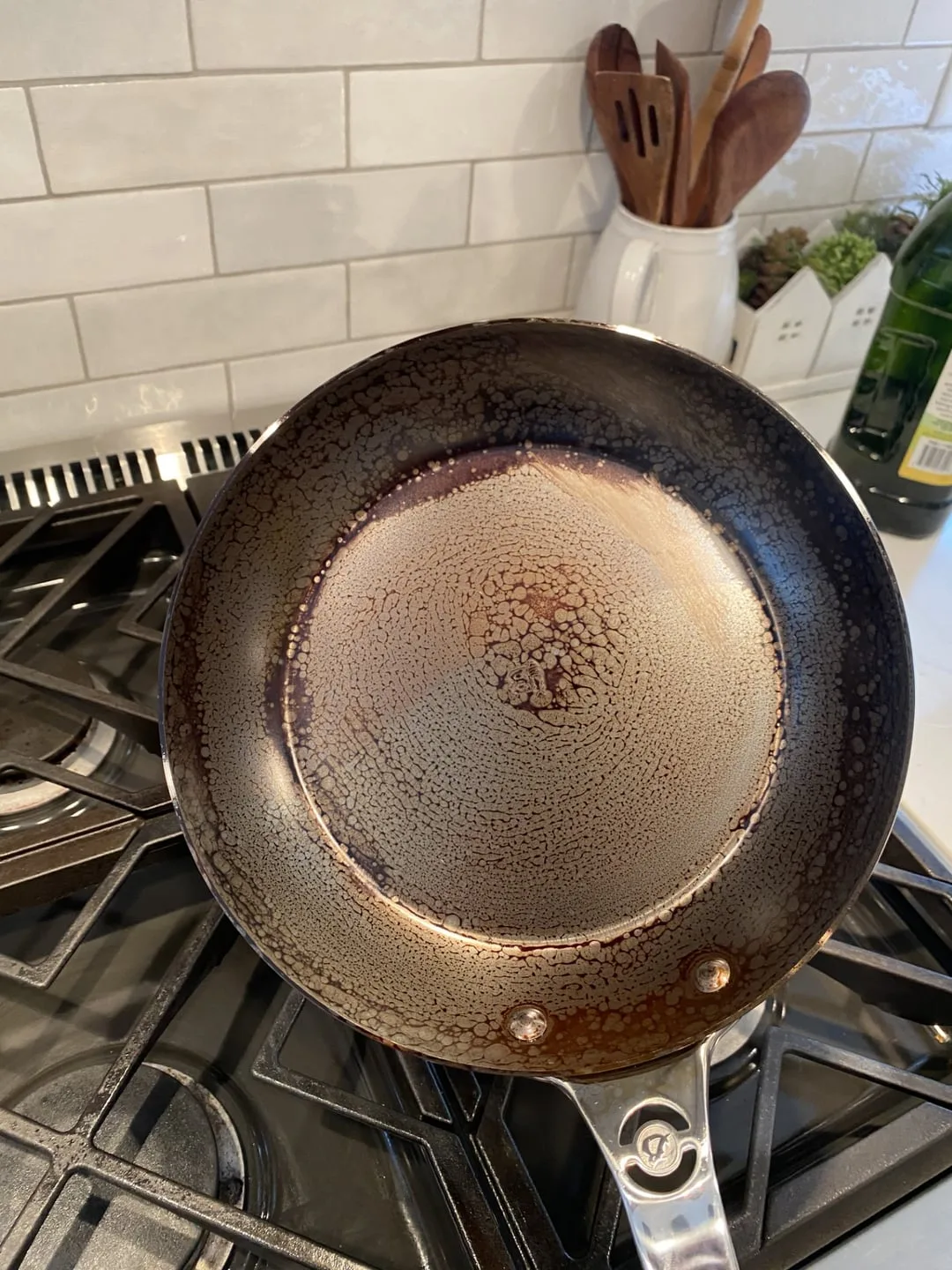
Image source: Bing (Web (fair-use with source credit))
Quick Answer
To remove a sticky gummy amber oil layer from over-oiling, scrub the pan with coarse salt, wash it with hot water and a chainmail scrubber, or strip it fully with lye-based oven cleaner. Choose based on how thick the residue is. Always dry and re-oil immediately after.
Why Your Carbon Steel Skillet Is Sticky and Amber-Colored
When you season a carbon steel skillet, you're not just coating it in oil. You're building a polymerized layer: a hard, plastic-like surface that bonds to the steel. That reaction only happens when the oil is heated to its smoke point and held there long enough to break its molecular chains and bond with the pan.
Too much oil interrupts that reaction. The top layer might polymerize, but the oil underneath stays wet and soft. Over the next few hours, that un-polymerized oil oxidizes, turns tacky, and pulls moisture from the air.
That's exactly the sticky, amber-colored layer you're seeing. It's not rust, and it's not a failed coating. It's simply oil that never cured.
There are also a few other causes:
- Low heat: Below 350°F, most oils won't polymerize at all.
- Short cook time: Even at the right temperature, it takes 10 to 15 minutes of heat to set the seasoning.
- Too much oil in the pan: If you can see a shine, the layer is too thick.
- Adding more coats before the previous one cures: That traps wet oil between layers.
- Humid storage: Water vapor softens the polymerized coating and gives the sticky layer more time to form.
One oil that deserves a special callout is flaxseed oil. It polymerizes into a very hard, glossy finish, which sounds great. But it's brittle and flakes easily, and it's highly prone to over-oiling because it's so thin.
Many experienced cooks avoid it for daily carbon steel use, and manufacturer specs often warn against it for exactly this reason.
The takeaway? A sticky layer is not a sign that the pan is ruined. It just means the seasoning process needs to be restarted.
The only real question is how much of the pan you need to strip. That's what the ten-second diagnosis is for.
The 10-Second Diagnosis: How to Tell If It's Just Wet Oil or Baked-On Goo
Touch it. Rub your finger across the sticky spot. That simple test tells you which cleaning path to take.
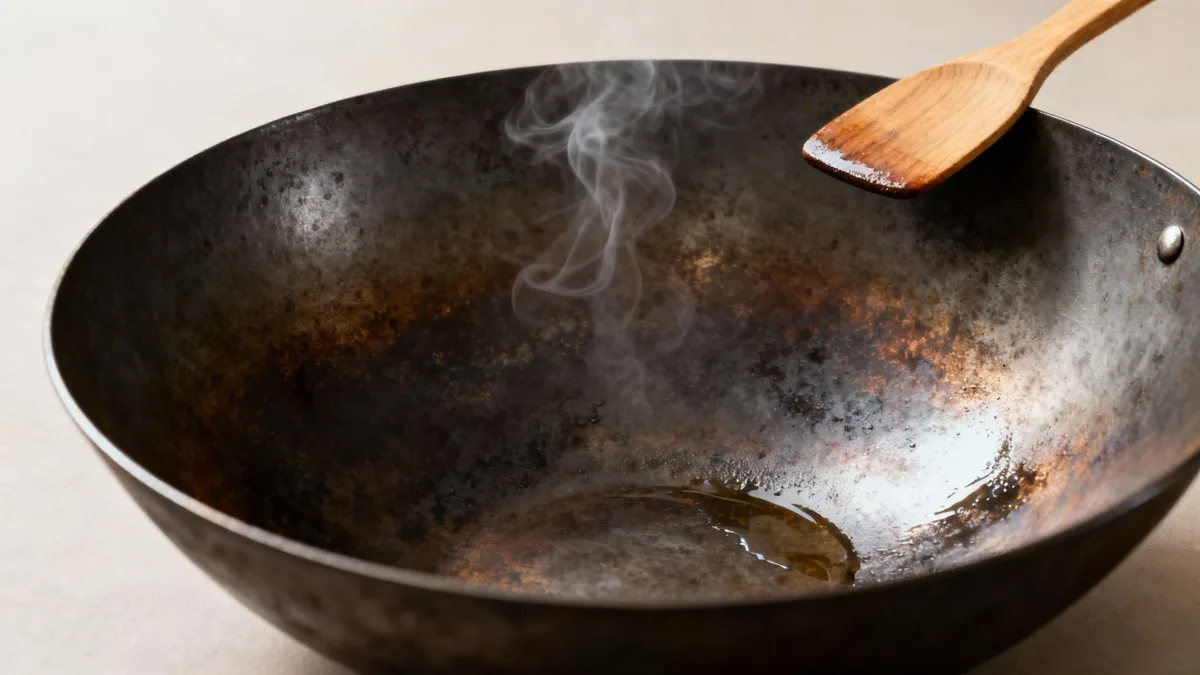
Image source: Web (Bing) / cookwarereviewhub.com (Web image (fair-use with source credit))
| What you feel | What it means | How to fix |
|---|---|---|
| Slightly tacky, leaves a fingerprint | Oil that didn't polymerize | Hot salt scrub + reseason |
| Gummy, soft, spongy | A thicker un-cured layer | Hot water + soap + chainmail |
| Hard amber crust, almost like glass | Multiple un-cured layers caked on | Strip with oven cleaner or burn-off |
If the pan still feels mostly smooth and the sticky spots are thin, you don't need to remove all the seasoning. The sticky layer is sitting on top, and a salt scrub will lift it while leaving the good seasoning below. If the sticky layer is thick and gummy, and you can push a fingernail into it, then you're dealing with multiple layers of un-polymerized oil.
You'll need to strip the whole pan.
There's also a third condition: a hard, amber-colored crust that feels like a candy shell. That's what happens when you season again and again on top of a sticky layer, building a thick layer of baked-on, semi-cured oil. It looks smooth, but it's not non-stick.
It will grab food and leave residue. In this case, a full strip is the only reliable fix.
One thing to keep in mind: the moment you strip the pan, bare iron will begin to flash rust. Keep a dry towel and a bottle of high-smoke-point oil close by. You'll need them within seconds.
The Decision Tree: Which Cleaning Method Matches Your Pan's Condition?
Think of this as a three-branch switcher. You only need to follow the branch that matches the feel test from the last section.
Branch 1: Light Sticky Layer — Use the Hot Salt Scrub
If the sticky layer is light and your fingerprint is barely visible, a hot salt scrub is the fastest fix. Heat the pan on the stovetop over medium for about 90 seconds, until it's just warm to the touch. Sprinkle a generous tablespoon of coarse salt over the surface.
Use a folded paper towel or a scouring pad to rub the salt in circles, focusing on the sticky spots. The salt acts as a mild abrasive that lifts the residue without scratching the steel. Wipe out the salt, rinse with hot water, dry immediately, and reseason with a super-thin coat of oil.
This method works well because it preserves the seasoning underneath. You're only removing the soft, un-polymerized top layer.
Branch 2: Moderate Gummy Residue — Reach for Hot Water, Soap, and Chainmail
If the layer is gummy and leaves a clear indent when you press it, use hot water and mild dish soap with a chainmail scrubber. Fill the sink with hot water, add a drop of dish soap, and scrub in circular motions. The soap helps break down the sticky film, while the chainmail mechanically removes the gummy bits without damaging the pan.
This can take up to 15 minutes depending on how heavy the layer is. Once it's smooth to the touch, rinse thoroughly and dry the pan over medium heat. Then apply a micro-layer of oil.
Some people worry that soap will ruin a carbon steel pan. As long as you use a mild dish soap and rinse it all off, it won't. The same principle applies to cleaning oil residue off a deep fryer, where hot water and mild soap handle the job without damaging the metal.
Branch 3: Heavy Amber Goo — Full Strip with Oven Burn-Off or Lye-Based Cleaner
If the surface is hard, amber-colored, and nothing you do makes a dent, you have two reliable options: oven burn-off or lye-based oven cleaner. Oven burn-off is the smoke-heavy route. Place the pan upside down on the middle rack and set the oven to 450 to 500°F.
Leave it for one to two hours. You'll see smoke and possibly a little odor. That's the oil carbonizing.
Let the pan cool completely, then scrub off the ash with hot water and steel wool. The pan will be bare and gray.
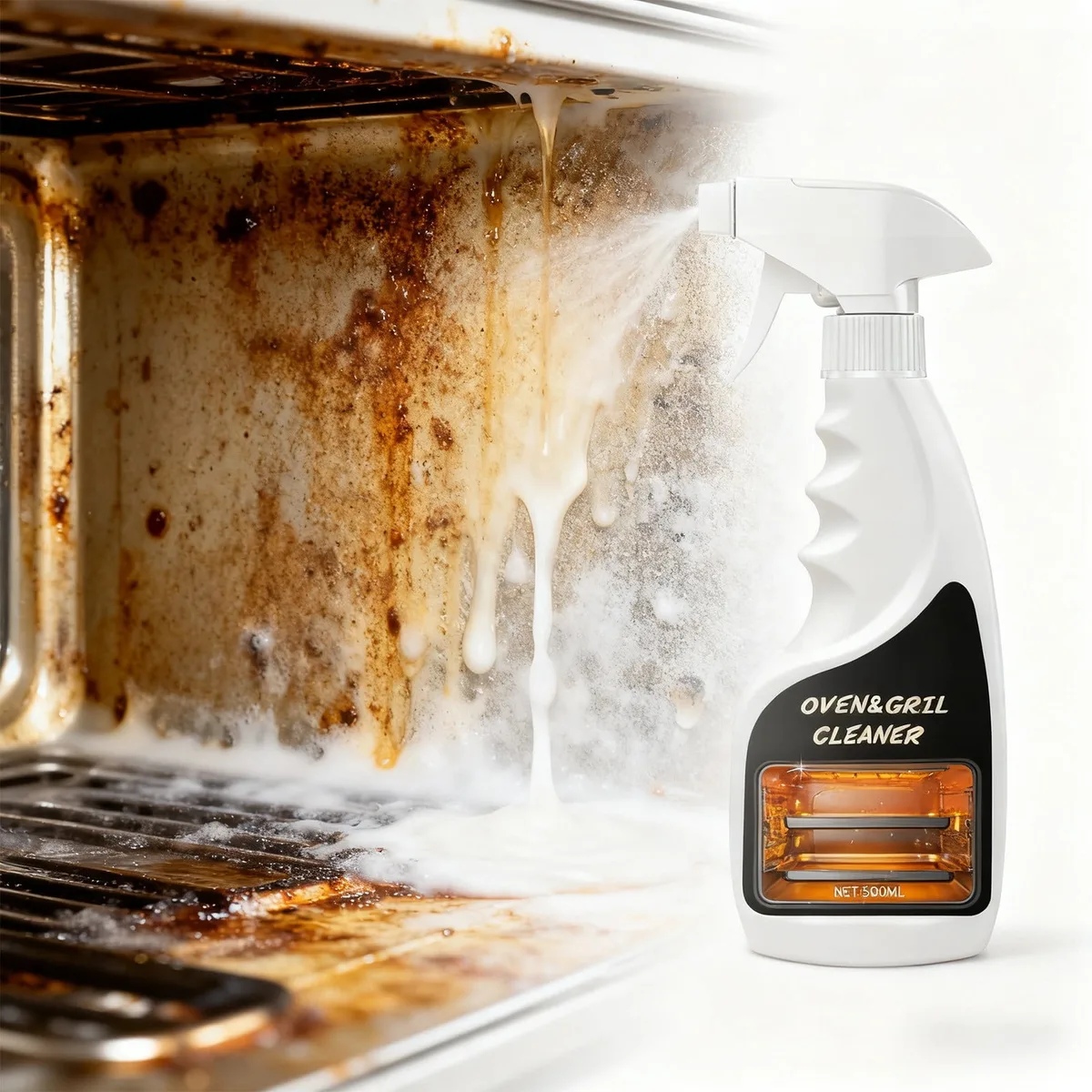
Image source: Bing (Web (fair-use with source credit))
If you'd rather avoid the smoke, use a lye-based oven cleaner (look for sodium hydroxide on the label). Spray the pan thoroughly, place it in a sealed plastic bag, and let it sit for 12 to 24 hours. The lye dissolves the polymerized oil, and the pan will wipe clean with a sponge.
Rinse several times, dry over heat, and reseason immediately.
Wear gloves and goggles with lye cleaner. Also, never put a thin carbon steel pan in an oven on the self-clean cycle, because the high heat can warp it permanently.
| Condition | Method | Time |
|---|---|---|
| Light tacky layer | Hot salt scrub + reseason | 5 to 10 minutes |
| Moderate gummy layer | Hot water + dish soap + chainmail | 10 to 15 minutes |
| Heavy amber crust | Oven burn-off OR lye-based oven cleaner | 1 to 2 hours or 12 to 24 hours |
Step-by-Step: Reseasoning Your Carbon Steel Skillet from Scratch
Once the pan is clean and dry, you're ready to build the seasoning back up. Here's the order of operations.
- Wash the pan with hot water and a drop of dish soap. Rinse thoroughly.
- Dry it on the stovetop over medium heat until every drop of water evaporates. Don't skip this step.
- Apply 1/4 teaspoon of oil or less to the pan. Use a paper towel to rub it over the entire surface, inside and out. Then grab a clean paper towel and wipe it off again. You want virtually no visible oil.
- Heat the pan over medium-high heat until it just starts to smoke. Keep it there for 10 to 15 minutes. Or place it in the oven at 450°F for one hour.
- Let the pan cool completely. Repeat the oil-and-heat process two to four more times.
That last wipe-off step is where most people go wrong. The goal is to leave a micro-layer of oil so thin you can't see it. If the pan looks shiny, that's too much oil and you'll end up back at the sticky layer again.
The same principle applies to keeping the correct fluid level in a deep fryer: too much oil causes more problems than too little.
If you see orange rust form while the pan is drying, that's flash rust. Wipe it down with a little white vinegar to remove the rust, quickly re-dry, and oil right away.
| Oil | Smoke point | Good for seasoning? |
|---|---|---|
| Avocado oil | 520°F | Best, but expensive |
| Grapeseed oil | 420°F | Very good, common choice |
| Canola oil | 400°F | Solid, cheap |
| Vegetable oil | 400°F | Fine, easy to find |
| Flaxseed oil | 225°F | Avoid; chips and flakes |
Per De Buyer's official care instructions, a carbon steel skillet should never be left to soak in water. That will save you from flash rust and pitting every time.
Mistakes to Avoid When Cleaning and Reseasoning Carbon Steel
- Leaving the pan wet after washing. It takes seconds for flash rust to appear. Dry on the stovetop, then oil.
- Using the self-cleaning oven cycle to strip seasoning. That cycle typically exceeds 800°F, which can warp thin carbon steel pans permanently.
- Scrubbing so hard you gouge the surface. Coarse salt and chainmail are enough. Steel wool is fine, but skip anything with a gritty abrasive pad.
- Adding another coat of oil on top of a sticky layer. That's the original mistake, and it makes things worse.
- Using a lye-based cleaner without gloves and goggles. It's caustic. It works, but treat it like the chemical it is.
- Skipping the final wipe-down before heating. If you can see the oil, it's too much.
Mild dish soap is fine for carbon steel. Lye-heavy detergents or dishwasher detergent aren't. If you're used to maintaining non-stick cookware, some habits need adjusting.
A carbon steel skillet is closer to cast iron than to a Teflon pan. Regular cleaning, immediate drying, and a thin oil rub are the core habits. The same approach applies to other kitchen gear you use daily, like maintaining an air fryer basket or keeping a deep fryer clean.
One more thing: don't panic if your first reseason isn't perfect. The pan will smooth out with use. If it gets sticky again, you already know the fix.
The method is simple, the tools are cheap, and the skillet will last a generation.
How to Prevent the Sticky Amber Layer from Ever Coming Back
Remember that one rule from the reseasoning steps? If you can see the oil, it's too much. That's the whole secret to avoiding the gummy layer forever.
A few habits to lock in:
- Wipe until it looks dry. After applying oil, take a clean paper towel and wipe the surface like you're trying to remove a stain. The layer left behind is the one that'll polymerize properly.
- Heat slowly. Sudden high heat on a thin carbon steel pan can cause hot spots that polymerize the oil unevenly, leaving sticky patches. Ramp the temperature gradually to the oil's smoke point.
- Use the right oil. Grapeseed, canola, and vegetable oils are solid choices. Flaxseed is pretty but brittle. If you want that deep blue-black finish, know that flaxseed takes more patience and more wiping.
- Store dry and uncovered. After cooling, keep the pan in a dry spot. Don't stack another pan on top of it without a paper towel layer in between. Moisture trapped between pans is a recipe for the sticky layer coming back. University Extension publications on iron cookware stress the same drying discipline.
- Cook fatty foods early on. Bacon, fried eggs, or a pan of onions help build seasoning while you cook. That's real-world use feeding the polymerization process.
Also monitor the pan during the first few uses. If it feels tacky while cooling down, that's your early warning sign. A quick stovetop salt scrub and a new thin layer of oil will take care of it.
Same logic applies to other kitchen gear where getting the oil level right matters, like a deep fryer.
One more note on oil choice: thicker oils like avocado can tolerate more heat, but they also take longer to polymerize. If you're in a hurry, canola or grapeseed cure faster and give you a slicker result. Avoid extra virgin olive oil for the initial seasoning passes.
It's too prone to leaving that sticky brown residue.
The goal is a pan that looks matte, slightly dry, and feels smooth to touch. Shiny means trouble. Wet-looking means too much oil.
Once you learn that visual cue, the sticky amber layer stops being a problem you fix and becomes a mistake you never make.
Real-World Rescue: Two Sticky Carbon Steel Skillet Stories
Pull up any carbon steel cooking forum and you'll find the same two rescue stories repeated. Here's what the aggregate experience looks like.
Case one: the over-oiled new pan. A home cook picked up a new Matfer Bourgeat skillet, followed the manufacturer's seasoning instructions to the letter, then added one extra coat of grapeseed oil. Twenty-four hours later, the surface felt tacky and left orange residue on a paper towel. The fix took about ten minutes: a warm salt scrub, a hot water rinse, and a single thin reseasoning coat.
After that, the pan cooked eggs without sticking. The lesson is that one extra coat of oil is enough to ruin the finish, not improve it.
Case two: the seven-layer mistake. Another common story involves a week of continuous reseasoning without ever wiping the oil off completely. Each coat baked on top of the previous one, building a hard, amber-colored shell. Scraping with salt did nothing.
The solution was a lye-based oven cleaner, sealed in a plastic bag for 18 hours. The coating slid right off. After a vinegar rinse to kill flash rust and three fresh seasoning coats, the pan came back to life.
In both cases, the pan survived. Carbon steel is forgiving. The same approach applies to cleaning out a deep fryer, where heavy residue needs the right combination of heat, soap, and scrubbing to reset the surface.
A few patterns stand out across the reports. The first is that pans fail because people season with visuals, not weight. That means visible oil instead of oil measured in grams.
A quarter teaspoon is about 1.2 grams.
That scale puts you in the safe zone every time. The second pattern is that a quick fix is almost always the right call. Fewer than one in ten reported cases needed a full chemical strip.
Those usually involved seven or more seasoning passes.
The salt scrub cost roughly 10 cents of table salt. The lye strip cost about $6 of oven cleaner. Either way, it's cheaper than replacing a $50 skillet, and the timeline, from diagnosis to a working pan, never stretched beyond two days.
FAQs About Sticky Seasoning and Carbon Steel Skillet Care
Why does my carbon steel skillet smell like paint thinner?
That smell is the oil polymerizing. It's normal during seasoning, especially with flaxseed or walnut oil. The odor fades as the coating cures.
If the smell is sharp and chemical, you might be heating the oil too high, causing it to break down into fumes that can irritate your lungs.
Is the sticky amber layer safe to cook with?
It's not toxic, but it's not pleasant either. The sticky layer is just oil that hasn't polymerized. It can catch, smoke, and leave an off taste on food.
Better to scrape it off and reseason than to keep cooking on it.
Can I use dish soap on carbon steel?
Yes. Mild dish soap is fine. It won't eat away the seasoning.
Avoid lye-heavy detergents or dishwasher tabs, which can strip the coating. Rinse thoroughly and dry the pan immediately to avoid flash rust.
My skillet is sticky even after I reseasoned. What did I miss?
The likely culprit is too much oil per coat, or the pan didn't reach the oil's smoke point. Run a salt scrub, then apply a micro-layer of oil, no more than a quarter teaspoon. Heat it past the smoke point and hold for 10 to 15 minutes.
Repeat twice more. If it's still sticky, the pan may be dirty underneath. Wash with soap and water first.
When will my carbon steel skillet look perfectly black and smooth?
After months of regular use. The first seasoning coat is usually blotchy and pale. That's normal.
It'll even out as you cook. Wash and oil it after each use. The same patience applies to keeping any cooking surface in good shape, whether it's a carbon steel pan or an air fryer basket.
What oil should I use for seasoning carbon steel?
Use high-smoke-point oils like grapeseed, canola, vegetable, or avocado oil. Extra virgin olive oil burns too quickly, and flaxseed makes a brittle layer. Each oil differs in smoke point, but any of these will polymerize into a slick, hard surface if applied thinly.
Final Decision Guide: Scrub, Strip, or Just Keep Cooking?
Here's your quick reference for the next time the pan feels tacky, gummy, or looks like someone spilled honey on it.
| Condition | Best fix | Time |
|---|---|---|
| Slightly tacky | Hot salt scrub, then wipe with thin oil | 5 to 10 minutes |
| Gummy residue | Hot water, dish soap, and chainmail | 10 to 15 minutes |
| Hard amber crust | Lye-based oven cleaner overnight | 12 to 24 hours |
| Blotchy seasoning | Don't strip. Just cook with more fat | Ongoing |
If you're still unsure, try the easiest fix first. A salt scrub won't hurt a moderately gummy pan. Only move to the lye strip when scrubbing fails twice.
And when in doubt, here's the loose test: if the sticky layer comes off on a paper towel, it's light. If it holds your fingerprint, it's moderate. If it doesn't budge under a fingernail, it's heavy.
The pan will survive any of these steps. Carbon steel is built to take a beating. It's the same resilience that makes it a favorite in professional kitchens, and the same oil-discipline lesson applies when you're choosing the right vessel for frying.
A carbon steel skillet asks for just one thing: a clean, dry surface and a whisper-thin layer of oil. Give it that, and it'll keep cooking for decades.
The same oil discipline shows up when operating a deep fryer properly. Control the oil, and you control the outcome. Your skillet will reward you with the slickest, most reliable cooking surface you've ever owned.

Related posts
Is the Lodge Carbon Steel Skillet Worth Buying?
Searching "is lodge carbon steel skillet carbon steel skillet worth buying reddit review" probably means you want real…
Crispy Wok Beef in Carbon Steel: Temp & Time
If you've ever asked what temperature and cooking time for crispy wokstyle beef stir fry in carbon steel…
Vinegar & Tomato Sauces in New Carbon Steel: Safe?
Can you put cooking vinegar or tomato sauces in newly seasoned carbon steel in a carbon steel skillet…