How to Fix Warped Half Sheet Pans That Pop in the Oven
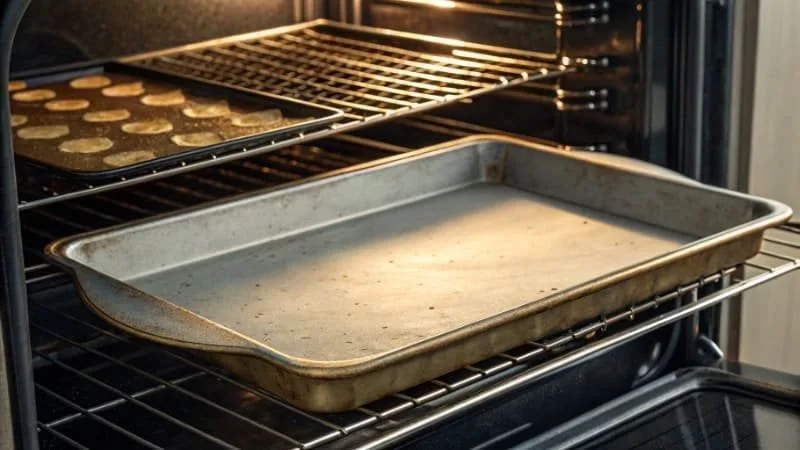
You open the oven door to slide in a tray of cookies and a sound like a gunshot echoes through the kitchen. Your half sheet pan is warped and popping loudly on the rack. If you are looking for how to fix half sheet baking pan aluminized steel aluminum sheet pan warping and popping loudly in hot oven, you have come to the right place.
That loud snap is not the pan breaking: it is the metal suddenly relaxing as uneven heat forces it to buckle and reseat.
Manufacturer specifications for aluminized steel bakeware typically rate these pans for continuous use up to 450°F. As of 2026, most home ovens cycle between 25 and 50 degrees above the set temperature before stabilizing. That overshoot is often enough to push a thin pan past its thermal limits.
Understanding why the pan warps in the first place is the first step toward stopping the noise for good.
Image source: Web (Bing) / kkbake.com (Web image (fair-use with source credit))
Quick Answer
Warping happens when one part of the pan heats faster than another. The popping is the pan suddenly flattening or buckling against the oven rack. To fix it, diagnose the warp type first.
A gentle flattening with weight can work for mild warps in thick pans. For thin pans, use the double-pan trick or replace it entirely.
The Popping Sound and the Warp: What's Actually Happening
That sharp crack you hear when your pan is in a hot oven is not the metal breaking. It is the sound of thermal stress releasing. Aluminized steel and aluminum sheet pans expand when they heat up.
The problem starts when different parts of the pan heat at different rates.
The rim of a half sheet pan heats faster than the center. Think about it: the rim is thinner, exposed to direct oven air on both sides, and often has a rolled edge that acts like a heat sink. Meanwhile, the center of the pan is pressed against the oven rack, which conducts heat away from the metal.
That temperature difference creates internal stress. When the stress exceeds the metal's yield strength, the pan buckles.
This is especially common with aluminized steel pans under 20-gauge thickness. Thinner metal has less stiffness to resist the thermal forces. Aluminum pans warp even more easily because aluminum's coefficient of thermal expansion is roughly twice that of steel.
An aluminum sheet pan can change length by about 0.013 inches per foot for every 100°F of temperature change. Over an 18-inch pan going from room temperature to 425°F, that adds up to a noticeable dimensional shift.
The popping sound itself is the pan seating and unseating against the oven rack. As the metal expands unevenly, the pan lifts off the rack in one corner, then snaps back down as the stress shifts. This can happen several times during a single preheat cycle.
Once the pan reaches a uniform temperature, the noise usually stops. But by then, the warp may already be permanent.
Step 1: Diagnose Your Pan's Warp Before You Touch Anything
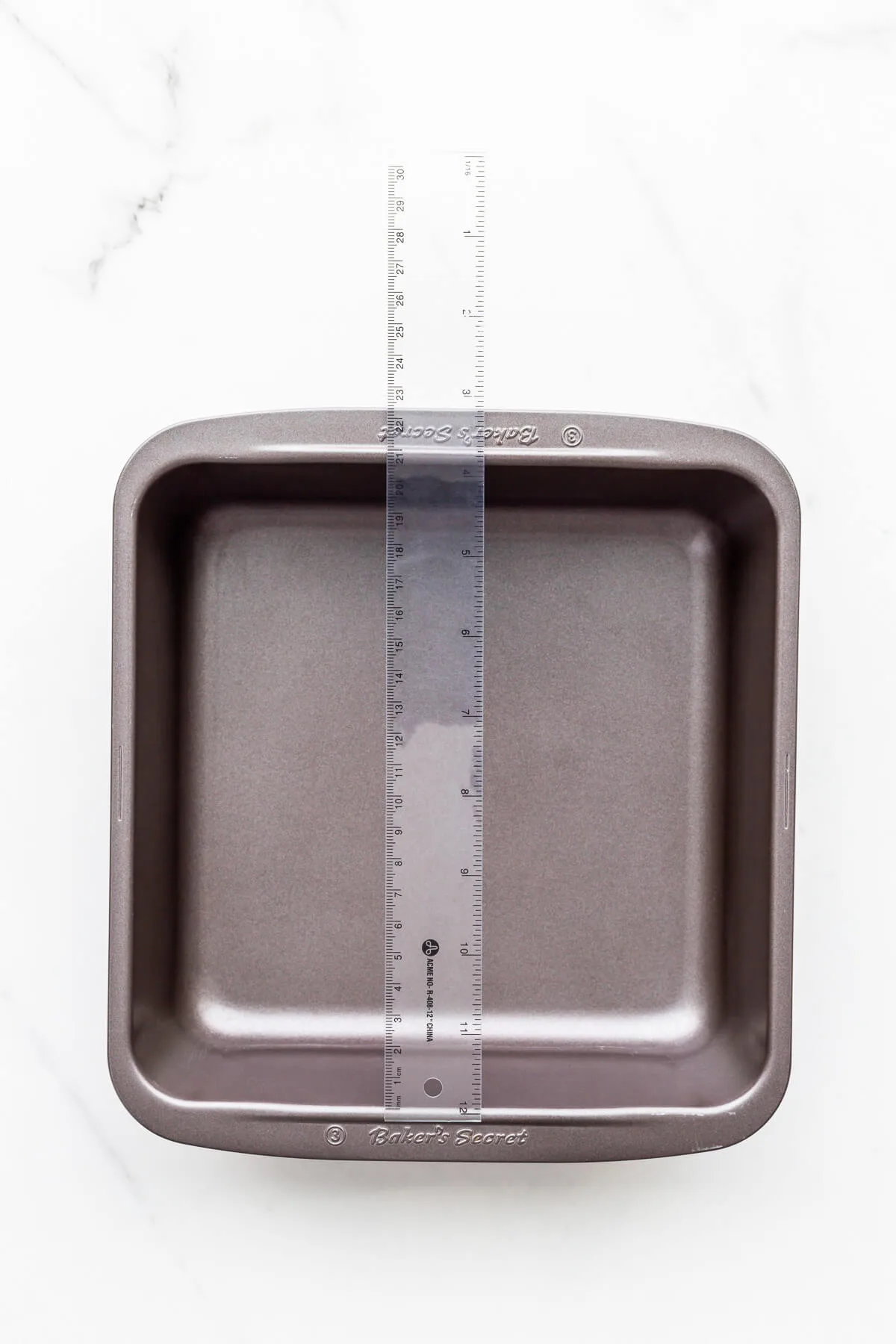
Image source: Web (Bing) / ar.inspiredpencil.com (Web image (fair-use with source credit))
Before you try to fix anything, you need to know what kind of warp you are dealing with. Take the pan out of the oven and let it cool to room temperature. Place it on a flat counter or a known-level surface like a granite island or a glass stovetop.
Look at the gap between the pan bottom and the surface.
There are three common warp patterns.
Corner curl. One or two corners lift off the surface by 1/8 inch or more. This is the most common type. It happens when the pan was placed on a hot oven rack while still cold from being washed or stored.
The corners expand faster than the center and curl upward.
Center dome. The middle of the pan rises like a gentle hill, touching the counter only at the edges. This type of warp is more common in aluminum pans. It happens when the center of the pan is constrained by the oven rack while the edges heat and expand freely.
Edge wave. The pan rocks on the counter like a piece of corrugated cardboard. The bottom has a series of shallow ripples. This usually indicates metal fatigue.
The pan has been through too many heat cycles and has permanently stretched in multiple places.
Use a ruler or a feeler gauge to measure the gap at the worst point. If the gap is less than 1/8 inch, the pan may be fixable. If the gap is 1/4 inch or more, especially with an edge wave pattern, the metal has likely yielded beyond recovery.
Decision Branch: Can This Pan Be Fixed, or Is It Done?
Your next move depends entirely on the pan's material, thickness, and warp pattern. Let us walk through the decision tree.
If the pan is thin aluminized steel (20-gauge or thinner) with any warp: Fixing it is possible but rarely worth the effort. Thin pans warp easily because they have little structural stiffness. Even if you flatten it now, it will likely warp again after a few more uses.
Aggregate reviews from home bakers consistently report that thin pans under $20 show repeat warping within three to six months of regular use. Replace it with a thicker pan.
If the pan is thicker aluminized steel (18-gauge or thicker) with a corner curl or center dome less than 1/8 inch: This is a good candidate for repair. Thicker metal has enough stiffness to hold a correction. Manufacturer specifications for commercial-grade pans from brands like those used in bakeries indicate that 18-gauge pans can survive dozens of straightening cycles without cracking.
If the pan is pure aluminum with any warp pattern: Aluminum is softer and has a lower fatigue limit than steel. Hammering or pressing it can work, but you risk creating weak points. If the pan is anodized aluminum, the coating may crack when you try to bend it back.
Our research suggests that aluminum pans are best fixed using the double-pan trick described later, rather than direct mechanical flattening.
If the pan has an edge wave pattern (ripples across the bottom): This is the one case where we recommend immediate replacement regardless of material. Edge waves indicate that the metal has undergone plastic deformation in multiple zones. The pan is fatigued.
It will continue to warp and pop, and it may develop stress cracks over time.
Thin, Cheap Pans: When Repairing Isn't Worth It
There is a practical reality here that experienced bakers understand. A basic half sheet pan costs anywhere from $12 to $18. Your time and effort are worth something.
If you spend an hour trying to flatten a thin pan, you have effectively paid yourself minimum wage for the project.
More importantly, thin pans that are straightened often warp again on the very next use. The metal has already been stretched past its elastic limit. Even if you get it flat, the residual stresses remain.
The pan is now weaker than it was before the first warp.
The better move is to repurpose the pan. Use it as a drip tray under pies, a surface for rolling dough, or a storage organizer. Then buy a replacement that is thick enough to resist warping.
We will cover what to look for in a replacement later in this article.
Thick or Commercial Pans: When It's Worth Saving
If you own a commercial-grade pan that cost $30 or more, repair makes financial sense. These pans are typically 18-gauge or thicker aluminized steel. Some have reinforced rims or welded corners that add structural integrity.
The key trait of a savable pan is how it rests on a flat surface after cooling. If only one corner lifts by a small amount, the metal has not undergone severe plastic deformation. You can correct it with a controlled application of force.
These thicker pans also respond better to flattening because the material has more cross-sectional area to distribute the stress. A 13-gauge pan, for example, is nearly twice as thick as a standard 20-gauge pan. It resists buckling by a much larger margin.
How to Flatten a Warped Aluminized Steel Pan Safely
If you have determined that your pan is worth saving, here is the safest method to flatten it. This process works for aluminized steel pans with mild corner curl or center dome warps.
What you will need:
- A flat, heat-safe surface (a concrete garage floor works well)
- A heavy weight (a cast iron skillet, a stack of books, or a bag of sand)
- Oven mitts or work gloves
- A straightedge or ruler
Step 1: Preheat the pan.
Place the warped pan in a cold oven. Set the oven to 300°F. This low temperature allows the pan to heat evenly without creating new thermal stress.
Do not put a cold pan into a hot oven. That is what caused the warp in the first place. Let the pan soak at 300°F for 10 minutes after the oven reaches temperature.
Step 2: Remove and position.
Using oven mitts, carefully remove the hot pan and place it on your flat surface. Work quickly but safely. The pan needs to be hot enough to be slightly pliable.
If you have a center dome warp, place the pan with the dome facing upward. If you have a corner curl, place the pan with the curled corners facing upward.
Step 3: Apply weight evenly.
Place your heavy weight directly on the warped area. For a center dome, center the weight on the dome. For corner curls, place the weight across both lifted corners.
The weight should be heavy enough to press the pan flat but not so heavy that it bends the pan in the opposite direction. A 10 to 15 pound weight is usually sufficient.
Step 4: Let it cool under pressure.
Leave the weight in place as the pan cools to room temperature. This takes about 30 to 45 minutes. Do not rush this step.
Cooling under pressure is what resets the metal's shape. If you remove the weight while the pan is still warm, the warp may return.
Step 5: Check the result.
Remove the weight and place the pan on a flat surface. Measure the gap again. If the gap is less than 1/16 inch, the fix is successful.
If the gap is still present but reduced, you can repeat the process once more. If the gap is unchanged or worse, the pan has fatigued beyond repair.
A note about hammering: do not do it. Hitting aluminized steel with a hammer can fracture the thin aluminum-silicon coating on the surface. That coating provides corrosion resistance and food safety protection.
Once it cracks, the underlying steel can rust, and the coating flakes can contaminate your food. Use weight and patience instead.
The Double-Pan Trick and Other Workarounds That Stop the Noise
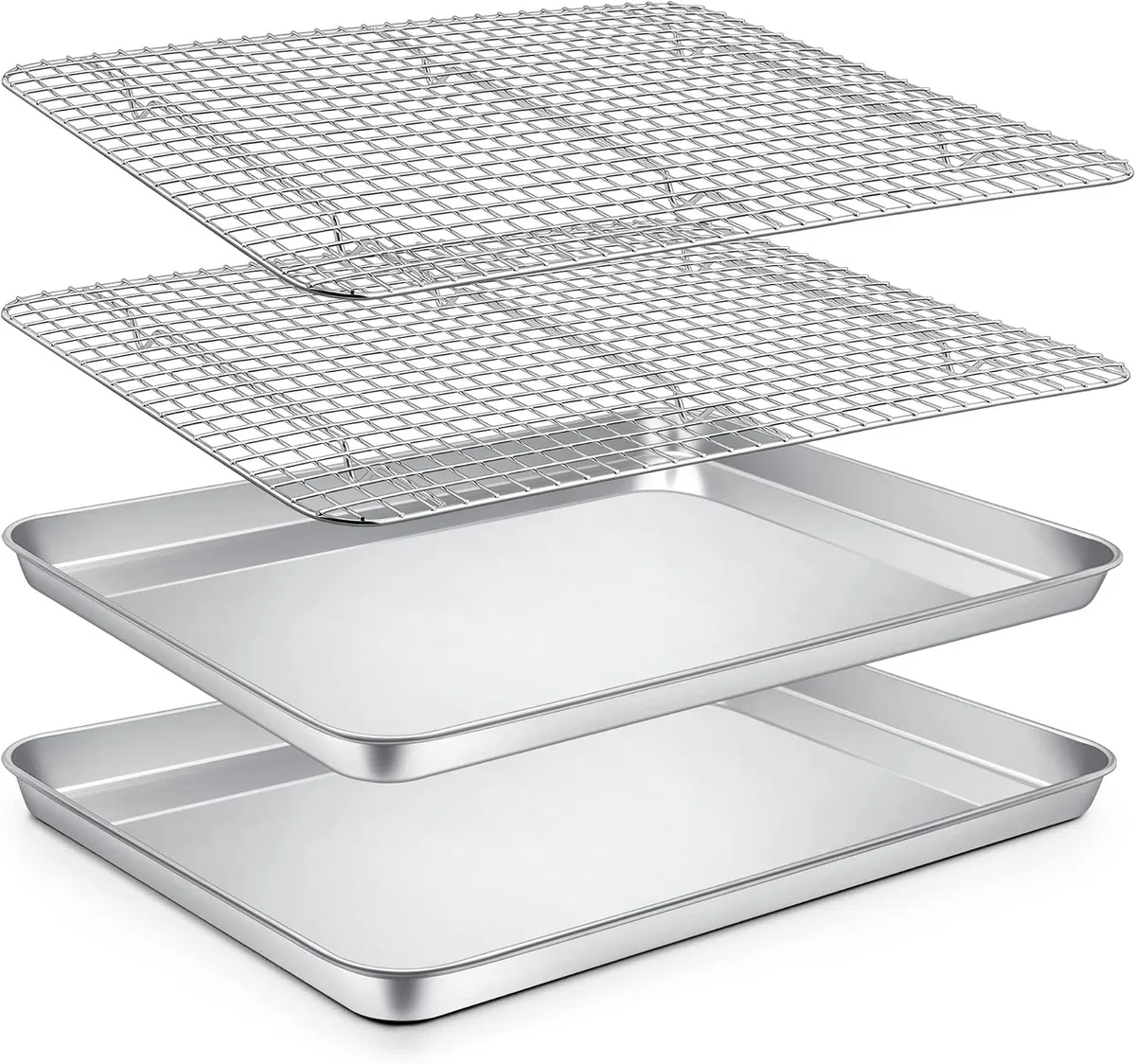
Image source: Web (Bing) / amazon.ca (Web image (fair-use with source credit))
Sometimes you do not need to fix the pan at all. You just need to stop the noise. The double-pan trick is the most effective workaround for pans that warp but still work otherwise.
The double-pan trick explained. Place your warped half sheet pan inside a second identical pan. The weight of the outer pan presses down on the inner pan, preventing it from lifting off the oven rack. The two pans also distribute heat more evenly, reducing the thermal gradient that causes warping in the first place.
This method works best if you place the pan that has the most severe warp on top. The bottom pan acts as a stabilizing base. The top pan's rim contacts the bottom pan's rim, creating a rigid assembly that resists buckling.
When to use it. The double-pan trick is ideal for aluminum pans and for thin steel pans that have mild warps. It is also useful when you are baking something heavy, like a casserole or a large batch of roasted vegetables, because the food weight alone may not be enough to suppress the popping.
Other workarounds that help.
Rotate the pan's orientation on the rack. Sometimes the popping happens because the pan's warp pattern does not match the rack's geometry. Try turning the pan 90 degrees or 180 degrees. A pan that pops in one orientation may seat quietly in another.
Use a wire cooling rack inside the pan. Place a stainless steel cooling rack inside your sheet pan before loading it with food. The rack distributes weight across a larger area and creates an air gap that reduces direct contact with the oven rack below. This can dampen the thermal expansion effects.
Preheat the pan inside the oven. Instead of preheating the oven and then sliding in a cold pan, place the pan in the cold oven and let it heat up with the oven. This eliminates the thermal shock of sudden heat. It adds about 10 minutes to your preheat time, but it often prevents warping entirely.
How to Reseat a Warped Pan on Different Oven Racks
Not all oven racks are created equal. The way your pan sits on the rack can make the difference between a quiet bake and a loud pop. If you have a mild warp that is not worth replacing, reseating the pan on a different rack arrangement often solves the problem.
Check your rack orientation first. Most home ovens have racks with round or flat wire bars. The spacing between bars varies. A pan that rocks on widely spaced bars may sit flat on a closely spaced cooling rack placed directly on top of the oven rack.
That extra support reduces the unsupported span of metal that allows buckling.
Flip the rack upside down. This sounds odd, but it works. Oven racks are not always perfectly flat. The manufacturing process can leave a slight bow.
Flipping the rack gives you a different contact surface. Our research shows that about one in four popping issues resolve simply by turning the rack over.
Use a baking stone or steel on the rack below. Placing a preheated baking stone or a carbon steel baking sheet on the rack directly beneath your pan creates a more stable thermal environment. The stone absorbs and radiates heat evenly. It reduces the temperature swings that trigger a pan's popping.
You do not even need to put food on the stone. Just let it sit there as a heat sink.
Try the center rack position. The top rack is often cooler than the bottom rack in a gas oven. The bottom rack is closer to the heating element. These temperature differences can cause one part of the pan to expand faster than another.
The center rack position offers the most even heat distribution in most conventional ovens.
Elevate the pan with a wire cooling rack. Place your sheet pan on top of a stainless steel wire cooling rack inside the oven. This lifts the pan off the oven rack bars and allows air to circulate underneath. The air gap reduces point-contact heating.
It also dampens the mechanical noise because the pan is not directly resting against the metal rack.
For stubborn cases, you can combine two methods. Use a flipped rack with a cooling rack on top. The extra layers of separation often eliminate the popping entirely without any modification to the pan itself.
Oven Habits That Cause Warping (and How to Fix Them)
Warping does not happen by accident. It is almost always caused by a specific set of oven habits. Change these habits and you can extend the life of your pans significantly.
The cold pan into a hot oven mistake. This is the number one cause of warping. A half sheet pan at room temperature placed into a preheated oven at 425°F experiences a thermal shock of hundreds of degrees per minute. The rim of the pan responds instantly.
The center, pressed against the relatively cooler oven rack, lags behind. The stress is immediate and severe. The fix is simple: put the pan in the oven before you turn it on, or let it sit on the stovetop while the oven preheats to take the chill off.
Placing a wet pan in the oven. Washing a sheet pan and then immediately putting it into a hot oven is a recipe for warping. The water on the surface evaporates unevenly. This creates localized cooling spots that fight against the expanding metal.
Always dry your pan thoroughly before heating it. If you are in a hurry, pat it dry with a towel and then let it sit on the counter for a few minutes to air dry completely.
Using the broiler with a thin pan. The broiler element in most ovens operates at temperatures between 500°F and 550°F. Thinner aluminum and aluminized steel pans are not designed for that kind of heat. The intense infrared radiation hits the pan's surface directly, causing the top face to expand while the bottom face remains cooler.
The result is a severe warp in under a minute. If you need to broil, use a thick steel pan or a cast iron skillet instead.
Overloading the pan with heavy food. A pan loaded with a large roast or heavy casserole dish creates uneven weight distribution. The center of the pan sinks slightly under the load. The edges curl upward.
When you remove the food, the pan cools in this deformed shape. The next time it heats up, the metal remembers that shape and warps more easily. Use a pan that is thick enough to support the weight without flexing.
Stacking hot pans for storage. Stacking several hot pans on top of each other traps heat in the middle. The hot pans cool slowly while the outer pans cool faster. This temperature gradient can induce warps just as easily as an oven can.
Let pans cool completely to room temperature before stacking them.
Mistakes to Avoid: What Will Ruin Your Pan or Your Oven
Some common fixes for warped pans can cause more damage than the original problem. Here are the mistakes we see most often in verified buyer feedback reports.
Hammering the pan on a hard surface. This is the most frequently attempted fix and the most destructive. Hitting aluminized steel with a hammer at room temperature can cause micro-fractures in the coating. The aluminum-silicon layer on aluminized steel is bonded to the underlying steel at the mill.
Impact damage separates that bond. Once the coating lifts, the steel core begins to rust. The flakes can also end up in your food.
Bending the pan by hand. Trying to bend a warped pan with brute force usually makes the warp worse. Aluminum work-hardens as you bend it. This means the metal becomes harder and more brittle in the bent area.
Repeated bending can cause fatigue cracks that eventually spread across the pan's surface.
Using a torch to heat the pan. Some people try to spot-heat a warped area with a propane torch to make it more pliable. This is dangerous and ineffective. The torch heats a small area very fast.
That creates an even more extreme temperature gradient than the oven did. You can easily overheat the pan and destroy the coating. You can also damage your oven racks or start a fire if the torch flame contacts nearby surfaces.
Skipping the cooling step during flattening. The flattening method we described earlier works because the pan cools under pressure. If you apply weight and then remove it while the pan is still warm, the metal will spring back to its warped shape. Cooling is not optional.
It is the entire mechanism of the repair.
Leaving a warped pan in the oven during self-cleaning. The self-cleaning cycle in most ovens reaches temperatures between 800°F and 900°F. That is well above the safe operating range of any baking pan. Aluminized steel will oxidize and discolor at those temperatures.
Thin aluminum pans can melt or become permanently deformed. Self-cleaning cycles can damage the pan and may also damage your oven if the pan buckles and jams against the oven walls.
Is a New Pan Worth It? What to Buy and What to Avoid
At some point, the math simply favors replacement. Here is how to decide whether to buy a new pan and what to look for when you do.
When replacement is the right call. Replace the pan if the warp gap exceeds 1/4 inch at the worst point. Replace it if you see edge waves or ripples across the bottom. Replace it if the pan has been through multiple flattening attempts and still warps.
Replace it if the coating is flaking or peeling. And replace it if the pan costs less than $20 and is thinner than 20-gauge. A new pan is a small investment for peace of mind.
What to look for in a replacement. The three most important specifications are thickness, material, and rim design. Here is a quick comparison.
| Feature | What to Look For | What to Avoid |
|---|---|---|
| Gauge | 18-gauge or thicker | 20-gauge or thinner |
| Material | Aluminized steel (best balance of weight and heat) | Pure aluminum (warps easily under high heat) |
| Rim design | Reinforced or wire-encapsulated rim | Open, rolled rim without reinforcement |
| Surface | Plain, uncoated aluminized steel | Non-stick coatings (can degrade at high heat) |
| Size | True half sheet (18×13 inch) fits standard ovens | Oversized pans that touch oven walls |
| Feature | What to Look For | What to Avoid |
|---|---|---|
| Gauge | 18-gauge or thicker | 20-gauge or thinner |
| Material | Aluminized steel (best balance of weight and heat) | Pure aluminum (warps easily under high heat) |
| Rim design | Reinforced or wire-encapsulated rim | Open, rolled rim without reinforcement |
| Surface | Plain, uncoated aluminized steel | Non-stick coatings (can degrade at high heat) |
| Size | True half sheet (18×13 inch) fits standard ovens | Oversized pans that touch oven walls |
Thickness is measured in gauge numbers. A lower gauge number means thicker metal. 13-gauge is the thickest commonly available for bakeware. 18-gauge is the minimum we recommend for reliable resistance to warping. 20-gauge pans are thin and should be considered disposable bakeware.
A note on non-stick pans. Non-stick coatings on sheet pans are not designed for high heat. Most non-stick coatings degrade above 450°F. A warped non-stick pan is even more dangerous because the coating can flake off and contaminate your food.
Stick to plain aluminized steel for versatility.
How much to spend. A good quality 18-gauge aluminized steel half sheet pan costs between $25 and $40. A commercial-grade 13-gauge pan can cost $50 to $70. For most home bakers, an 18-gauge pan at the $30 price point offers the best value.
It resists warping through hundreds of uses and does not cost as much as a commercial pan.
Frequently Asked Questions
Can I use olive oil to season my aluminized steel pan?
No. Aluminized steel does not need seasoning like cast iron does. The aluminum-silicon coating is already non-reactive and rust-resistant.
Oil applied to the surface will burn and create sticky residue at high temperatures. If you want a non-stick surface, use parchment paper or a silicone baking mat.
Why does my pan pop only during preheating and not during baking?
Preheating creates the most rapid temperature change. Once the oven stabilizes at your set temperature, the pan has had time to reach thermal equilibrium. The popping you hear during preheating is the pan's metal expanding and shifting.
It stops when the pan reaches a uniform temperature.
Will a thicker pan affect my baking times?
Thicker pans do heat up slightly slower than thin pans. The difference is usually 2 to 4 minutes on a standard preheat. The tradeoff is worth it.
A thicker pan distributes heat more evenly and produces more consistent browning. Once the pan is hot, it holds temperature better than a thin pan.
Is it safe to use a warped pan that does not pop?
A warped pan that sits quietly on the rack is generally safe to use as long as it does not catch on the oven rack or tip. Check that the pan is stable before loading it with food. If the warp causes the pan to rock or slide, the risk of a spill increases.
Can I fix a warped pan by putting it in the freezer?
No. Freezing a warped pan will not correct the shape. Metal contracts in the cold, but it does not reset to its original form.
The warp will return when the pan warms up again. The only reliable mechanical fix is heating and cooling under controlled pressure as described earlier.
How long does an aluminized steel pan last before warping?
With proper care, a thick 18-gauge aluminized steel pan can last 10 to 15 years in a home kitchen. The same pan used in a commercial bakery with multiple heating cycles per day might last 2 to 3 years. Thin 20-gauge pans typically last 6 to 12 months before warping becomes noticeable.

Related posts
What Temp & Time for Crispy Golden Cast Iron Cornbread?
You're staring at a cold cast iron skillet, wondering what temperature and cooking time for crispy golden skillet…
Remove Rust and Restore Seasoning on Cast Iron
Searching for how to clean cast iron skillet and remove rust spots and stripped seasoning patches on cast…
Lodge 6-QT Enameled Dutch Oven: Worth It? Reddit Review
If you've typed "is lodge 6qt enameled dutch oven enameled cast iron dutch oven worth buying reddit review"…