Crispy Onion Rings & Funnel Cakes: Dual Fryer Temp & Time
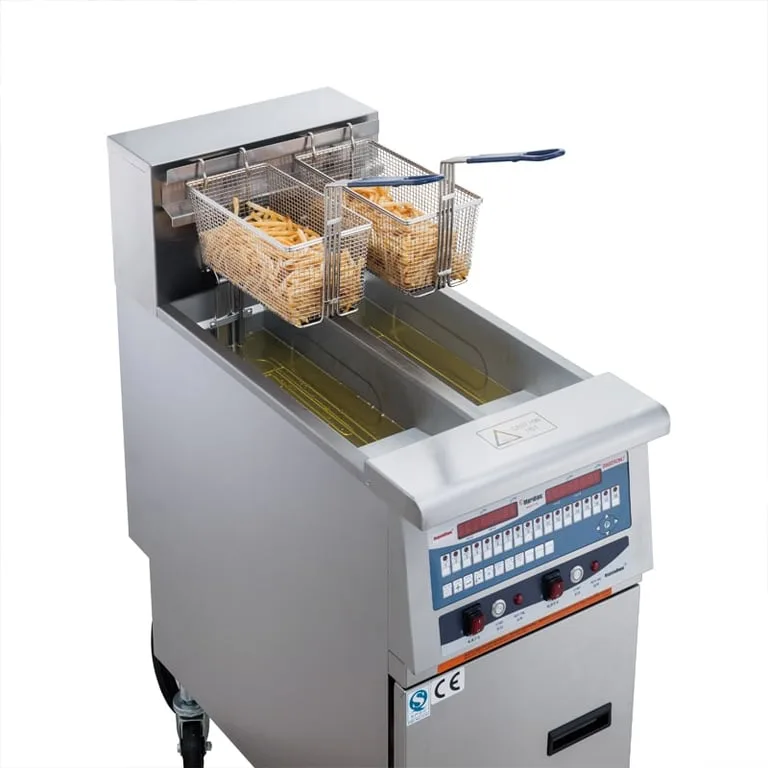
If you've ever searched for what temperature and cooking time for crispy fried onion rings and funnel cakes in commercial style dual basket deep fryer, you already know the internet gives you a dozen different answers. The real problem is that most of those answers assume you're using a home fryer or a single basket, not a commercial dual-basket unit with real heat recovery and two independent loads.
That's the key difference. Commercial fryers hit and hold temperature differently than a countertop model. Manufacturer specifications for most gas and electric dual-basket fryers show a recovery time of 2 to 5 minutes between batches, depending on BTU output or wattage.
That recovery window changes how you time your drops, especially when you're running onion rings in one basket and funnel cakes in the other. Let's walk through the real numbers and the decision points so you can get consistent crispy results every shift.
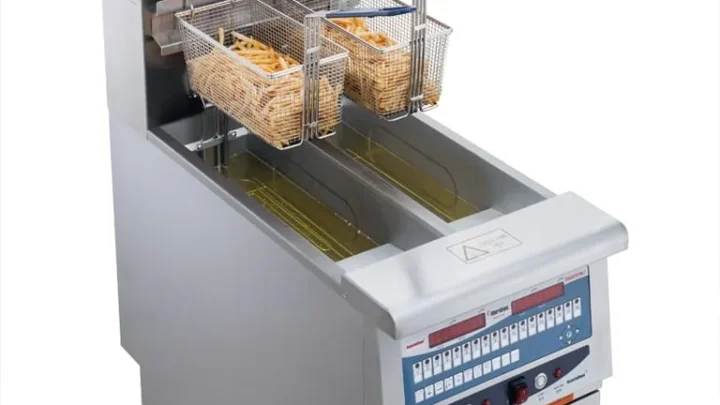
Image source: Web (Bing) / chefmaxequipment.com (Web image (fair-use with source credit))
Quick Answer
Fry onion rings at 350°F to 365°F for 2 to 4 minutes. Fry funnel cakes at 370°F to 375°F for 1 to 2 minutes per side. These are starting points.
The true answer depends on your batter thickness, basket load, and oil recovery rate. Always adjust based on visual cues: golden brown and bubbling means done. A lower temperature with a longer soak gives you crisper rings.
A higher temperature with a fast flip gives you lighter funnel cakes.
The Short Answer: Use a Cooler Temp for Rings, a Hotter One for Cakes
It sounds simple, but the reason behind the split matters. Onion rings need time for the batter to cook through and the moisture inside the onion to steam off and create that crunchy shell. If the oil is too hot, the outside burns before the inside cooks and you get a raw batter mess.
Funnel cakes are the opposite. They are mostly batter with no moisture core, so a higher temperature sets the structure fast and keeps the cake from soaking up too much oil.
| Food | Target Temperature | Cook Time | Key Cue |
|---|---|---|---|
| Onion rings | 350°F – 365°F | 2 – 4 minutes | Deep golden brown, batter bubbles slow |
| Funnel cakes | 370°F – 375°F | 1 – 2 minutes per side | Lacy edges brown, batter stops bubbling |
Commercial dual-basket fryers let you run both at once if you have independent temperature controls. If your unit has a single thermostat, you have to compromise. In our research, most operators choose 365°F as the middle ground.
It's hot enough for funnel cakes to set quickly and cool enough for onion rings to cook through. It is not perfect for either, but it works for high-volume service where you cannot wait between batches.
If you have a single temperature unit, adjust your batter. Use a thinner batter for onion rings so they cook faster at the higher temperature. Use a slightly thicker funnel cake batter so it holds up to the lower heat without getting greasy.
That is the decision tree approach. You choose one variable to modify based on your equipment limits.
Before You Fry: Know Your Fryer's Power and Your Batter's Personality
This is where most people go wrong. They pick a temperature from a recipe and drop the food in without thinking about their specific fryer load. A commercial dual-basket fryer can hold anywhere from 30 to 60 pounds of oil.
The heating element or burner has a specific power rating. If you load both baskets at once with cold food, the oil temperature drops instantly. That drop is what makes food greasy.
Manufacturer specifications from brands like Pitco and Frymaster indicate that a 50-pound oil capacity fryer with 30,000 BTUs will recover temperature in about 3 minutes after a 2-pound basket load. That is fast. A smaller unit with 15,000 BTUs might take 5 minutes.
You need to know your recovery time to plan your drops.
For a step by step guide on general deep fryer operation, including how to load baskets and manage oil levels, it helps to understand how the equipment functions across different models. Some of the same principles apply whether you are using a commercial unit or a home model like the Presto Frydaddy, which operates on similar thermal principles but at a much smaller scale.
Your batter consistency is the second big variable. A beer batter that is too thin will slide off the onion ring before it sets. A funnel cake batter that is too thick will not spread evenly in the oil and will cook unevenly.
Think of it as a flow test. For onion rings, the batter should coat the ring in a thin even layer and drip off in a steady stream, not a glob. For funnel cakes, the batter should be thin enough to pour through a funnel in a continuous stream without clogging.
Step-By-Step: Dialing In Crispy Onion Rings (350°F–365°F / 2–4 Minutes)
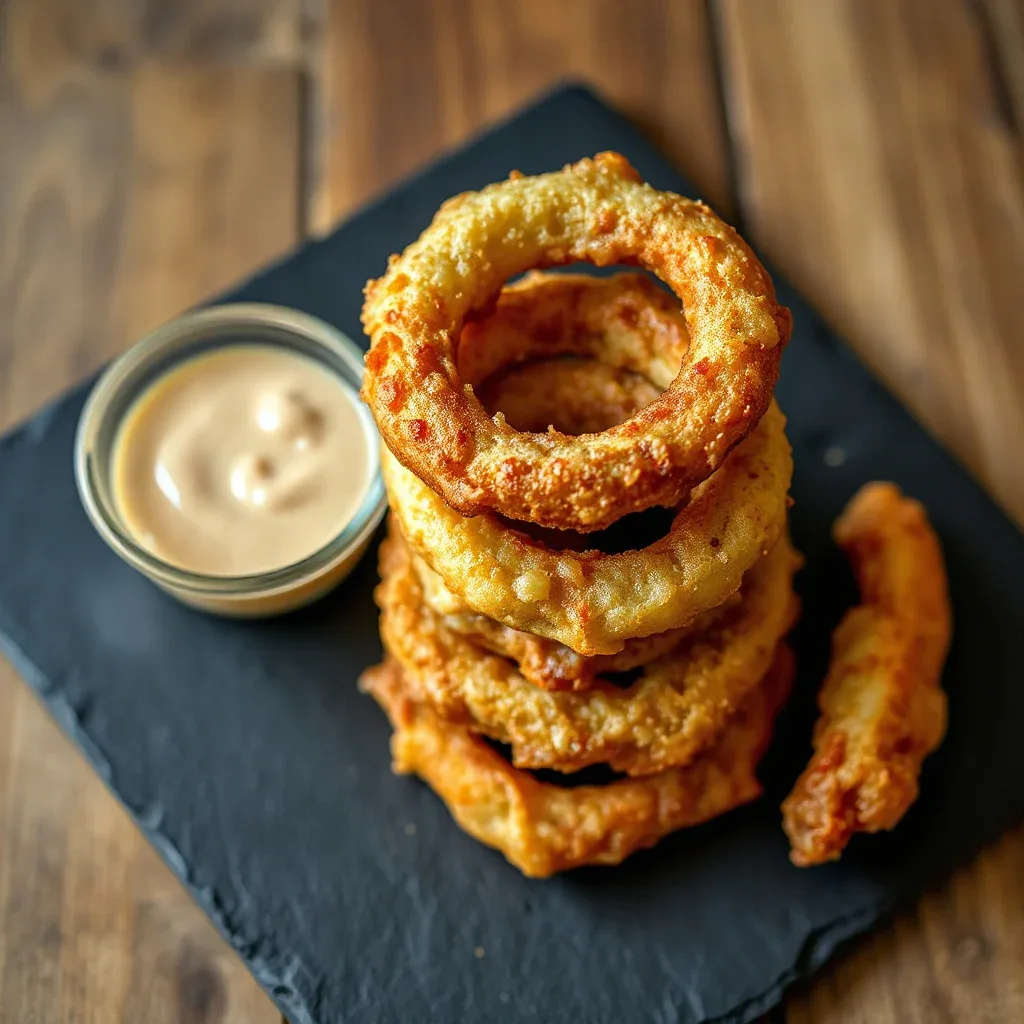
Start with the oil at 350°F if you are running a full basket. If you are only loading half a basket, you can go up to 365°F. The less food you drop, the less the temperature drops, so you can run a higher temperature without burning.
Your onion rings should be cut about 1/4 to 1/2 inch thick. Thicker rings need the lower end of the temperature range and the longer cook time. Thin rings cook fast and can handle the higher temperature.
Soak the slices in buttermilk or salted water for at least 30 minutes before battering. That step helps the batter stick and pulls out some moisture so the ring stays crispy.
Dredge each ring in seasoned flour first, then dip into the batter. Let excess batter drip off before lowering into the oil. Drop the basket slowly to avoid splashing and to minimize the temperature shock.
Set your timer for 2 minutes and check the color. Flip the rings if your basket has a solid bottom. If it is open mesh, you may not need to flip.
If the rings are pale after 2 minutes, let them go another minute. If they are dark brown and the batter looks puffy, your oil is too hot. Drop the temperature by 5 degrees for the next batch.
The goal is a deep golden brown with a visible crispy shell that crackles when you bite. The texture should not feel greasy or heavy.
One common mistake is overcrowding the basket. A single layer of rings with space between them is the rule. If they touch, they steam instead of fry and you lose the crisp.
Run a smaller batch at the correct temperature instead of a large batch that crashes the oil. That is the workflow choice that separates good results from great ones.
Step-By-Step: Perfect Funnel Cakes (370°F–375°F / 1–2 Minutes Per Side)
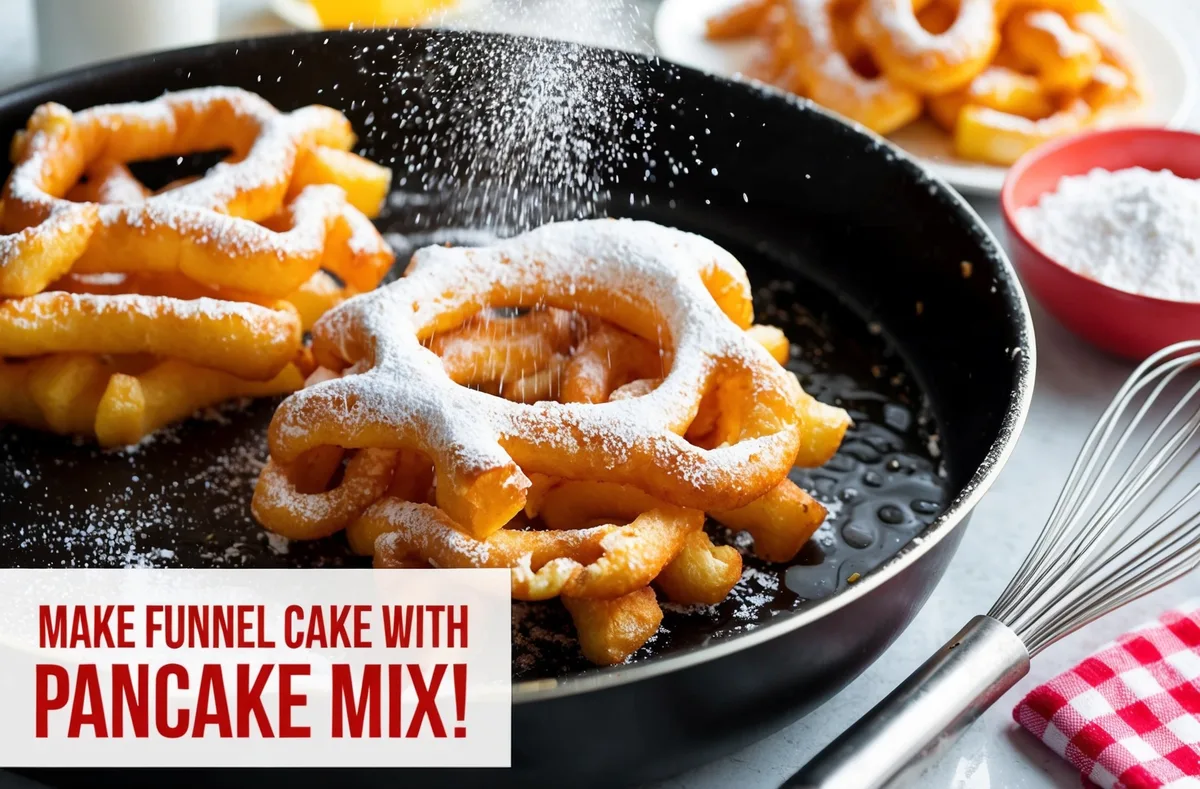
Funnel cakes are a different animal. The batter needs to be thin enough to flow through a funnel or squeeze bottle but thick enough to hold together when it hits the oil. A standard ratio is 1.5 cups of flour to 1 cup of milk or water with one egg and a teaspoon of baking powder.
Let the batter rest for 10 minutes so the gluten relaxes. That makes the cake tender, not tough.
Heat the oil to 375°F for the first basket. Drop the temperature to 370°F if you are running back to back batches and the oil is already hot. Higher than 375°F and the outside sets too fast and the inside stays raw.
Lower than 370°F and the batter absorbs oil like a sponge.
Hold the funnel or squeeze bottle about 6 inches above the oil. Pour the batter in a continuous spiral or crisscross pattern. Do not pile it in one spot.
The batter should hit the oil and spread immediately. Let it cook for 1 minute before attempting to flip. The edges will turn golden brown first.
Use a thin metal spatula or two chopsticks to flip the cake gently. The cake is fragile at this stage. If it tears, your oil is too hot and the outside set before the inside was stable.
Flip and cook for another 30 seconds to 1 minute on the second side. Remove when both sides are evenly golden brown.
Drain on a wire rack or paper towels immediately. Do not stack them. The steam from stacking will soften the crust.
Funnel cakes crisp up as they cool, so do not overthink the texture when they first come out.
The same batter can be piped into different shapes or made into smaller cakes by reducing the pour size. That keeps you consistent across different menu items and portion sizes.
Using a Dual Basket: Managing Two Different Foods at the Same Time
The promise of a dual-basket fryer is that you can run two different items at once. The reality is that you have to manage the temperature drop differently for each basket. If you drop both baskets at the same time, the oil temperature drops once but recovers twice as slowly because of the total food load.
Here is the decision tree. If your fryer has independent temperature controls, set one side to 355°F for rings and the other side to 375°F for funnel cakes. Drop the rings first because they need a longer cook time.
Wait 30 seconds, then drop the funnel cakes. They finish at about the same time.
If your fryer has a single temperature control, set it to 365°F. Drop one basket of rings first. Let them cook for 2 minutes, then drop the funnel cake basket.
The funnel cakes will finish in about 1 minute. The rings may need an extra 30 seconds after the funnel cakes are done. This staggered approach keeps the oil temperature more stable than dropping everything at once.
A common pain point is flavor transfer. Onion rings leave savory residue in the oil. Funnel cakes pick up that flavor if the oil is shared.
Run a dedicated fryer for sweet items if volume allows. If you only have one fryer, fry the funnel cakes first, then the rings. The savory flavor is harder to remove from the oil than sweet flavor is to cover.
Using a wire rack to finish both types together works well for holding. You can keep funnel cakes warm under a heat lamp without losing crisp. Onion rings hold better in a ventilated basket.
Do not cover them with a lid or wrap. They will steam and get soft within minutes. Serve immediately for best texture.
If you are running a high-volume fair setup, batch sequencing is your best tool. Prep all your rings and batter ahead. Drop the rings, start the funnel cakes halfway through the ring cook time, and serve both hot.
That is the workflow that keeps lines moving and customers happy.
Common Mistakes That Sabotage Crispy Results
The difference between a soggy failure and a crispy winner is usually one of these five errors. Here is what goes wrong and how to fix it before your next batch.
Dropping the basket into oil that is not hot enough. This is mistake number one. If the oil temperature is below 325°F when you lower the basket, the batter absorbs oil like a sponge instead of setting into a shell. Always preheat to at least 350°F and confirm with a probe thermometer.
Do not trust the dial alone. Many commercial fryer thermostats drift over time.
Overcrowding the basket. When rings or cakes touch each other, they trap steam between them. Steam softens the batter instantly. The rule is a single layer with visible gaps.
If your basket holds 2 pounds of rings in theory, load 1.5 pounds. You will get more crispy pieces per batch than if you overfill and get half soggy pieces.
Using the wrong batter consistency for the temperature. Thick batter needs lower oil temperatures to cook through. Thin batter can handle higher heat. If you mix a thick funnel cake batter and fry it at 375°F, the outside will burn before the inside sets.
Thin the batter slightly or drop the temperature. This is a classic if/then tradeoff.
Flipping funnel cakes too early. The first side needs at least 60 seconds to set before you can touch it. If you try to flip at 30 seconds, the cake tears and collapses. The oil rushes into the tear and makes that spot greasy.
Wait for the edges to turn golden brown before attempting the flip.
Stacking finished food. This is the easiest mistake to fix and the most common one we see in concession setups. Funnel cakes and onion rings need airflow. Stacking them traps steam.
Use a single layer on a wire rack or a basket with good ventilation. Serve immediately or hold under a heat lamp without covering.
| Mistake | Result | Fix |
|---|---|---|
| Oil too cool | Greasy, heavy food | Preheat to 350°F+ |
| Overcrowding | Steamed, soft crust | Single layer only |
| Thick batter at high temp | Burnt outside, raw inside | Thin batter or lower temp |
| Early flip on funnel cake | Torn, oil-soaked | Wait for golden edges |
| Stacking fried food | Soggy within minutes | Single layer on wire rack |
Read the Cues: A Hands-On Troubleshooting Guide
Your eyes and ears tell you more than a timer ever will. The right temperature and cooking time work only if you pay attention to what the food is doing in the oil.
If the oil bubbles aggressively when you drop the basket, it is too hot. The batter will set fast but the inside will not cook. The ring or cake will look done on the outside but taste raw. Drop the temperature by 5 degrees and try again.
The bubbles should be steady and moderate, not furious.
If the rings float immediately to the top, they are done or close to it. Rings sink at first because the batter is heavy. As the moisture inside the onion turns to steam, the ring becomes buoyant. When most of the batch is floating, start checking color.
Pull them at deep golden brown.
If the funnel cake batter spreads too thin and turns into a lacy mess, your oil is too hot. It sets before the batter can hold its shape. Lower the temperature by 5 degrees and try again. The batter should spread about 1/4 inch thick and bubble evenly across the surface.
If the batter slides off the onion ring during frying, your initial dredge was insufficient. The wet batter needs something to grip. A dry flour coating creates that grip. Double dredge if necessary.
Flour, then batter, then into the oil. No skipping steps.
Aggregate feedback from commercial operators suggests that the first batch of the day is always a test batch. Do not trust the first basket. Fry one small batch, check the results, adjust the temperature, and then run your production batch.
That 90 second test saves you from wasting a full basket.
For general frying principles that apply across different equipment, the same considerations about oil temperature management and batch loading that you use with a commercial unit also apply when you are choosing between different types of fryers for your setup. Understanding these fundamentals helps you stay consistent regardless of the machine.
Keeping Your Oil Clean and Your Fryer Safe
Oil quality is the hidden factor that determines whether your food stays crispy or turns greasy. Old oil smokes at lower temperatures and loses its ability to transfer heat evenly. The batter on the outside sets slower and the inside absorbs more oil.
Change your oil when it starts to darken noticeably, when it smokes below 375°F, or when it develops a stale smell. For a commercial dual-basket fryer running daily, that is usually every 3 to 5 days depending on volume. Filter your oil at the end of each service day.
A simple gravity filter removes food particles that burn and accelerate oil breakdown.
The NFPA sets clear guidelines for commercial deep fryer safety. Keep at least 16 inches of clearance between the fryer and any combustible surface. Install a fire suppression system above the unit.
Do not leave hot oil unattended. These are not suggestions. They are code requirements in most jurisdictions.
Water is the enemy of hot oil. Never drop wet food into the fryer. The water flash vaporizes and can cause the oil to erupt.
Dry your onion rings after washing them. Shake excess water off your batter bowl before mixing. One drop of water in 375°F oil can send hot oil splashing out of the vat.
Keeping your equipment clean is just as important for food safety. If you are looking for detailed guidance on cleaning methods that protect the non-stick surfaces and heating elements, the same basic principles apply whether you are maintaining a commercial vat or a home model.
Proper oil management also means using the correct volume. Too little oil causes uneven cooking and faster breakdown. Too much oil increases the risk of overflow when you drop the basket.
Check your manufacturer specifications for the fill line.
Frequently Asked Questions
Why are my onion rings always greasy instead of crispy?
Your oil temperature is too low when you drop the basket. The batter absorbs oil instead of setting into a shell. Preheat to at least 350°F and confirm with a probe.
Also check that your batter is not too thick. Thin batter crisps faster.
Can I reuse oil after frying onion rings to make funnel cakes?
You can, but the funnel cakes will taste faintly of savory onion. Fry the funnel cakes first if you must share oil. Change the oil if you serve both items daily.
The flavor transfer is subtle but detectable to customers.
What is the ideal batter consistency for onion rings?
The batter should coat the ring in a thin even layer and drip off in a steady stream. It should not hold a peak when you lift the whisk. If it is too thick, add a splash of milk or beer.
If it is too thin, add a tablespoon of flour.
How do I keep funnel cakes from tearing when I flip them?
Wait until the edges turn golden brown before attempting the flip. That takes about 60 seconds at 375°F. Use a thin metal spatula or two wooden skewers.
Slide the spatula under the center of the cake, lift gently, and turn it over in one motion.
How often should I change the oil in a commercial dual-basket fryer?
For daily service, change the oil every 3 to 5 days. Filter it at the end of each service day. If you fry batter heavy foods like funnel cakes and onion rings, the batter particles break down faster than with whole foods.
Dark color, smoking, or off odor means it is time to change.
Do I need to flip onion rings in a dual-basket fryer?
Not if your basket has an open mesh design. The oil circulates around the rings evenly. If your basket has a solid bottom, flip the rings halfway through the cook time using tongs.
That ensures even browning on both sides.

Related posts
Perfect Crispy Beer-Battered Cod: Temp & Time for Deep Fryer
If you've been searching for what temperature and cooking time for crispy beerbattered cod fish in deep fryer…
Is Caraway Ceramic Cookware Worth Buying? Reddit
If you have spent any time in cookware subreddits, you have seen the question pop up again and…
Fix Commercial Dual Basket Fryer High-Limit Reset Button
That little red reset button is the most frustrating button in a commercial kitchen. If you're trying to…