Can You Overfill an Electric Deep Fryer Past the Max Line?
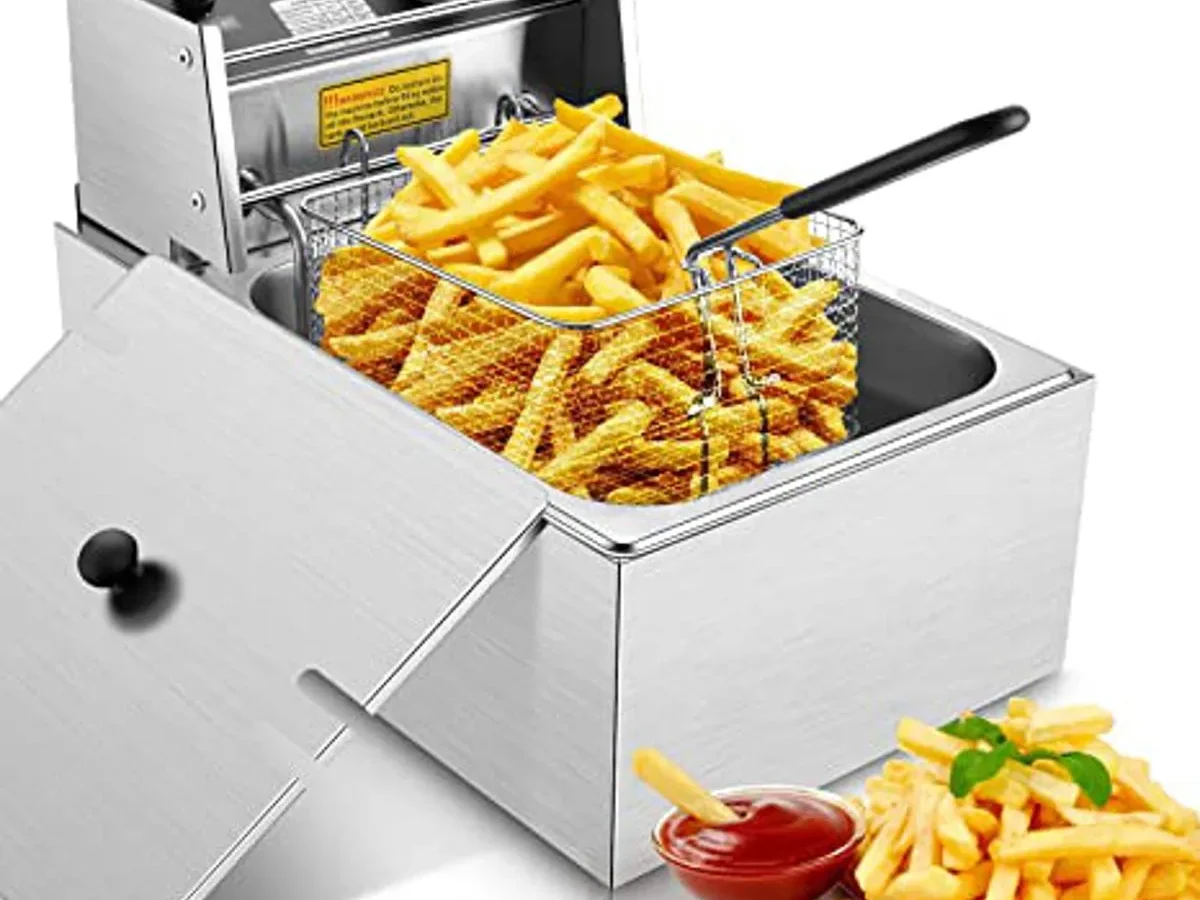
Can you put overfilling oil past max fill line in a electric deep fryer safely? The short answer is no. Overfilling an electric deep fryer past its max fill line creates a serious fire and burn hazard.
Manufacturers design that line to account for hot oil expanding during cooking. In our research, the standard recommendation from appliance engineers and safety organizations is to never exceed the marked fill line.
As of 2026, most consumer electric deep fryers hold between one and four liters of oil. The max fill line sits well below the rim to leave headroom for expansion. NFPA kitchen fire safety guidance also identifies hot oil overflow as a leading cause of household grease fires.
Let's walk through why the line matters and what happens if you cross it.
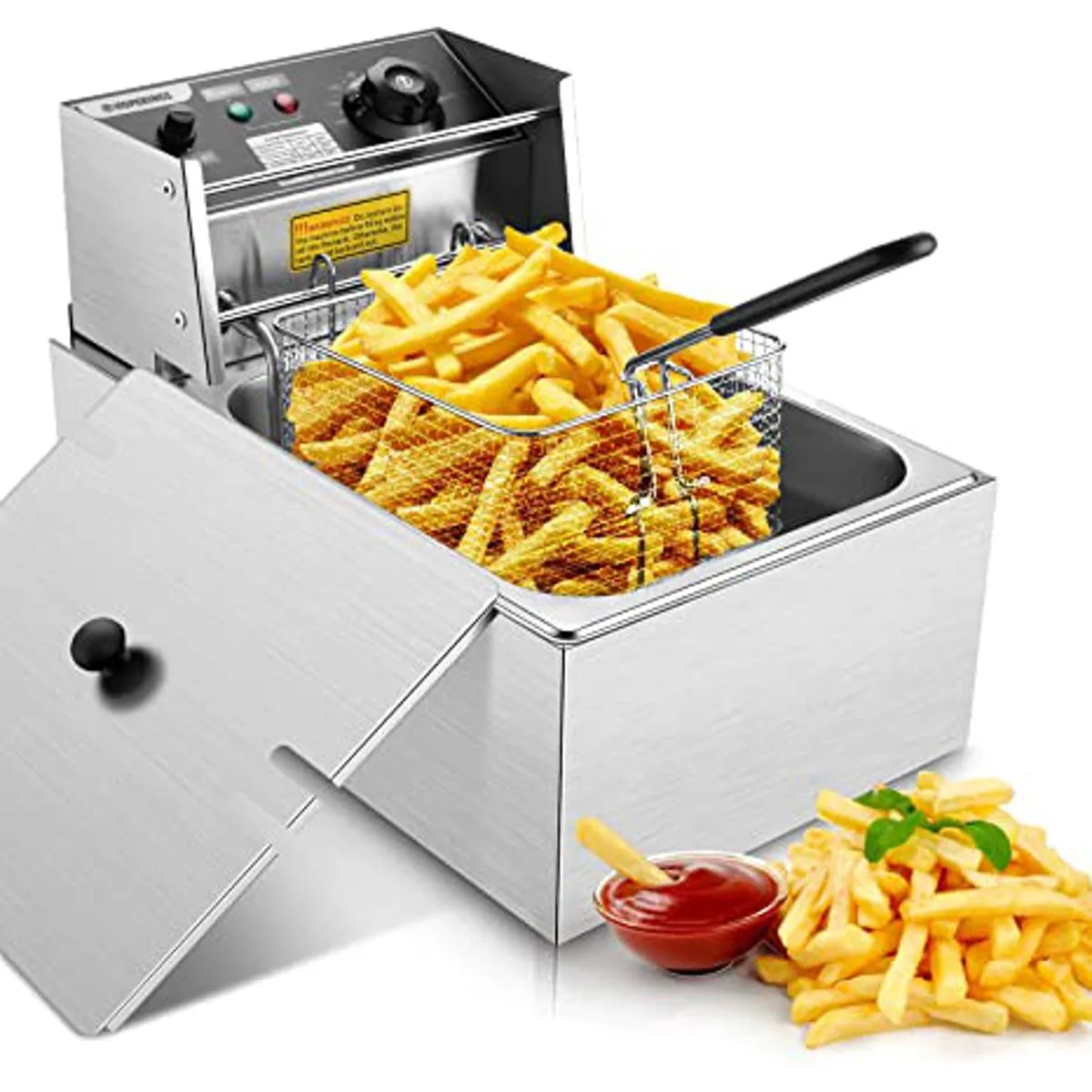
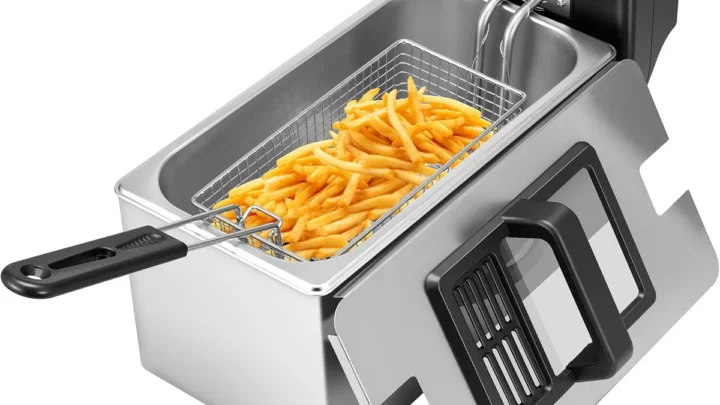
Image source: Bing (Web (fair-use with source credit))
The Short Answer: No, You Should Not Overfill
No, you should not put overfilling oil past max fill line in a electric deep fryer. It is dangerous. The extra oil can overflow when heated.
That overflow can ignite or cause severe burns. Always keep oil at or below the max fill line.
That's the clear-cut answer. Once you understand the physics, you'll see why there's no safe workaround. Overfilling removes the safety buffer that every manufacturer builds into their design.
Why the Max Fill Line Exists
The max fill line is not a suggestion. It's a carefully calculated safety mark. Every electric deep fryer's manufacturer determines that position based on the fryer's shape, heating element placement, and oil capacity.
When oil heats, it expands. Most common frying oils expand by roughly 10 to 15 percent between room temperature and 350, 375°F. A fryer filled to the line leaves enough room above the surface for that expansion without reaching the rim.
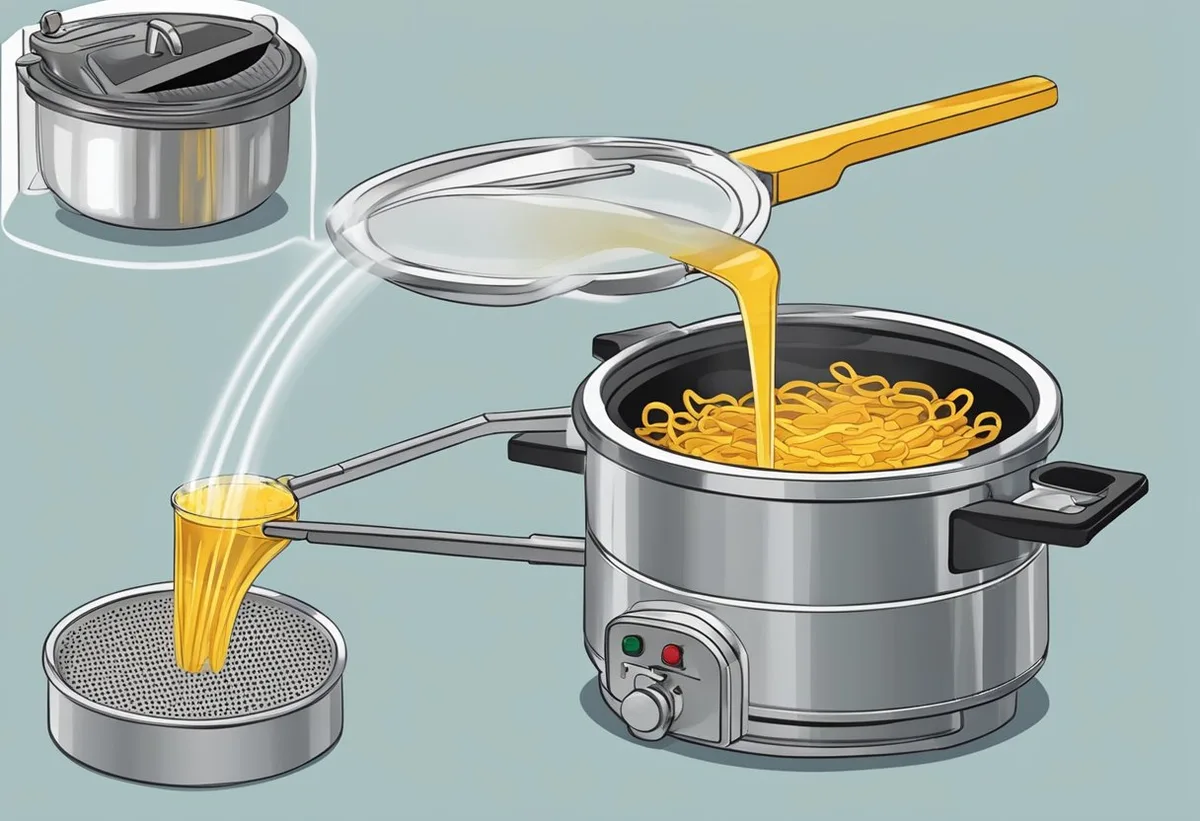
Image source: Bing (Web (fair-use with source credit))
There's also the food displacement factor. When you lower a loaded basket into hot oil, the food pushes oil upward. Moisture in the food instantly produces steam bubbles, which can make the oil rise even more.
The fill line accounts for all of that.
Consider a typical two-liter countertop fryer. At room temperature, oil at the fill line occupies about 1.6 liters because the mark leaves a gap. Heat that to 375°F and the oil expands to roughly 1.76 liters.
That's a 160-milliliter change, enough to swallow a layer of froth without spilling.
You might notice the max line sits significantly below the rim. That's not a design flaw. That vertical gap is your safety margin.
It protects you from the initial burp of bubbles when breaded food touches hot oil.
If you're unsure how much oil your specific model needs, a quick check of the owner's manual or online spec sheet helps. Many compact fryers also have clear measuring guides built into the reservoir. The right amount is what sits between the min and max lines while cold.
That's exactly the kind of detail that matters when you're trying to figure out how much oil a countertop fryer needs for regular use.
What Actually Happens When You Overfill
Let's walk through the exact sequence when you fill past the line.
First, you start with a cold fryer. You pour oil straight from a bottle until it clearly sits above the max fill mark. It looks fine because the surface is below the rim.
Turn the fryer on. As the heating element warms the oil, the oil's volume increases. In a three-liter fryer overfilled by 500 milliliters, the surface can climb a full inch.
You may not notice until it's too late.
Then comes the food. You lower a basket of coated chicken or fries into the oil. The food displaces volume, and the hot oil surges upward.
Combined with the preheated expansion, the oil reaches the rim and spills over the sides.
Water from the food starts boiling instantly. That's the splatter you see. When water turns to steam, it expands 1,600 times in volume, forcing oil droplets and foam upward.
An overfilled fryer turns that reaction into an overflow event.
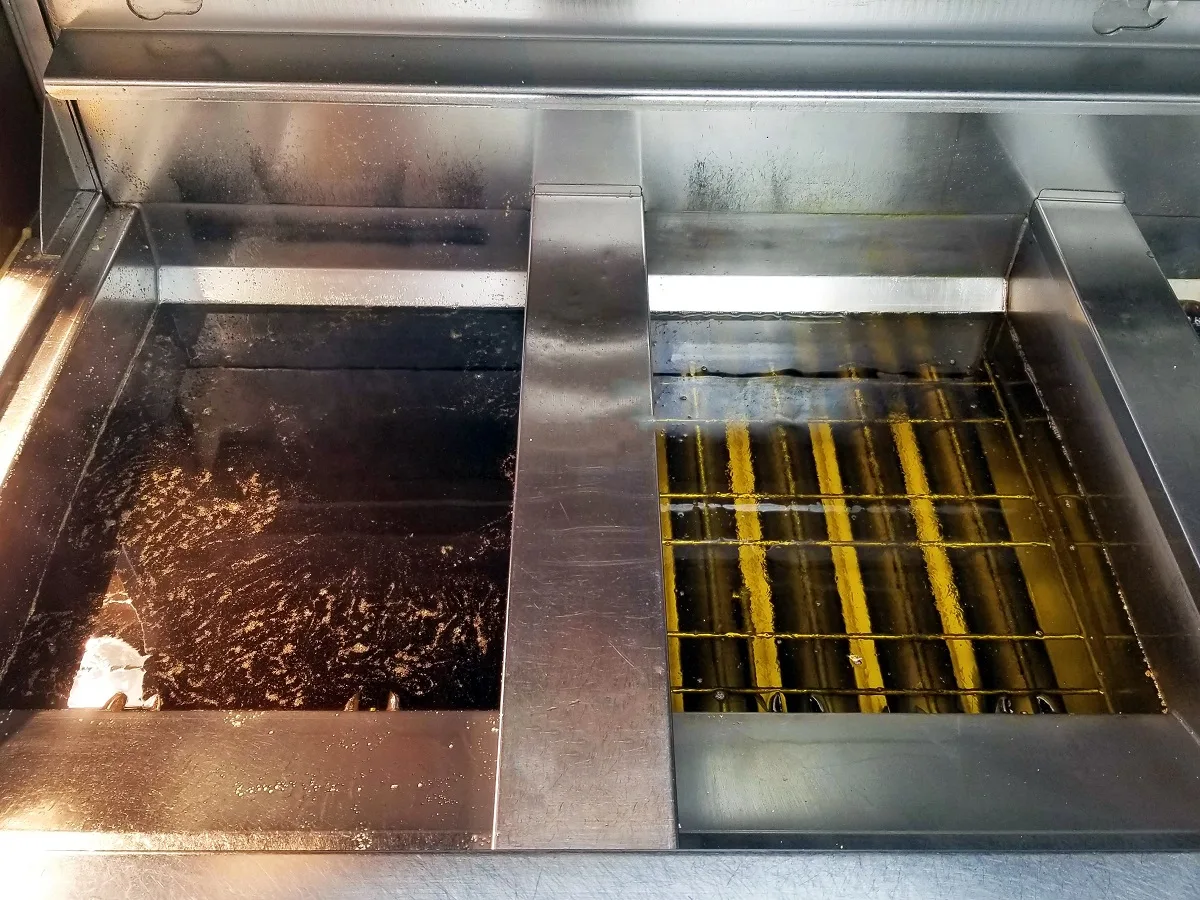
Image source: Web (Bing) / ar.inspiredpencil.com (Web image (fair-use with source credit))
In a worst-case scenario, the spill flows down toward the heating element and into inner compartments. If any oil reaches the exposed wiring or collects near the base, the risk switches from a mess to a fire.
Here's a simple comparison table to show how overfilling changes the outcome.
| Condition | Oil level when cold | Surface rise when heated | Result when food added |
|---|---|---|---|
| Correct fill | At max line | Stays below rim | Light foaming, no overflow |
| Slight overfill | 1/2 inch above line | Reaches rim | Spills over, splatters |
| Heavy overfill | 1+ inches above line | Surpasses rim | Immediate overflow, likely burns |
The table makes it obvious: the margin between success and a grease fire is measured in fractions of an inch. That's also why comparing deep fryers to stovetop pots matters if you're weighing which method actually keeps you safer. An overfilled stovetop pot is dangerous.
An overfilled electric fryer adds hot surfaces and a sealed heating element to the equation.
The Real Dangers: Fire, Burns, and Equipment Damage
This isn't about a hard-to-clean kitchen. Overfilling an electric deep fryer can cause serious injury and property damage. The stakes are high enough that the National Fire Protection Association publishes guidance on fryer oil safety that applies just as clearly to home countertop units.
The most urgent danger is fire. Cooking oil doesn't burn in liquid form. But when it overflows onto a hot surface, it forms a thin film that heats quickly.
If the oil reaches its flash point, usually above 600°F for fresh oil, it can ignite into a fireball. By the time you smell smoke, you may have seconds to react.
Burns are just as real. Spilled oil at 375°F will cause second-degree burns on contact. If the fryer tips from the pressure of a large batch, you're dealing with a splash pattern across your arms, torso, and floor.
Emergency rooms treat more deep-fryer scalds than most people expect.
Equipment damage is the third issue. Oil that runs into the base can damage the heating element, thermostat, and wiring. Even a small spill can permanently ruin the unit.
Most warranties explicitly exclude damage caused by overfilling. You could be left with a dead fryer and no claim.
That's why safe operating habits matter long before you plug in the unit. Knowing how to preheat, load, and lower the basket correctly reduces the odds of a spill even if you do hit the line. The NFPA also recommends never leaving a fryer unattended, because most grease fires happen in the gap between "I'll just step away for a second" and "I smell smoke."
Common Mistakes People Make at the Fill Line
One of the most common errors is treating the max line as a rough guide instead of a hard limit. People pour oil quickly, look at it, and think "close enough." That's how overfills happen.
Here are the mistakes that show up again and again:
- Filling while the fryer is cold. The oil expands when hot, so a level that looks safe cold can overflow at temperature.
- Checking the level immediately after cooking. The oil is fully expanded, so it looks like it's at the right height. Once it cools, it drops below the line, and you may top it off too far next time.
- Dropping in large frozen batches. Ice and frost react violently with hot oil. The splatter alone can push you past the point of no return.
- Loading the basket too full. More food means more displacement and more foam.
- Using a slippery pour spout. A missed pour can easily send a half cup of oil over the line.
- Assuming a small overfill is fine. Even a quarter inch above the line reduces your safety buffer significantly.
- Ignoring the min line. Running below the minimum can overheat the heating element, but the max line is the one that prevents overflow. Both marks exist for different reasons.
The fix is almost always the same. Use a measuring cup or a funnel with a narrow spout. Pour slowly and stop when the oil reaches the line.
If you need to confirm, let the oil cool completely and check again.
Cleaning your fryer properly also helps. A clean interior makes it easier to see the fill lines before they fade or get coated with residue. Built-up grease and carbon can even hide the markings completely, which is why regular maintenance is more than an aesthetic chore.
How to Check and Correct Your Oil Level Safely
The safest time to check oil level is when the fryer is cold, unplugged, and completely cool. That's when the oil is at its minimum volume. If the level is correct cold, it will be correct (and safe) when heated.
Here's the step-by-step process to verify and fix your oil level:
- Unplug the fryer and wait until the oil reaches room temperature.
- Remove the lid and lift out the basket.
- Look for the min and max marks on the interior wall.
- If the oil sits between the two marks, you're fine.
- If it's below the min line, add oil slowly using a measuring cup.
- If it's above the max line, remove oil using a turkey baster or a small siphon pump.
- Wipe the rim and interior edge with a paper towel to catch any drips.
That process takes about two minutes. It prevents the "guessing game" that leads to most overfills. For solid evidence on how much oil a typical countertop fryer should hold, checking the owner's manual is always the most reliable reference.
One more thing. Never check the level while the oil is hot. The surface moves as the oil expands and circulates.
You'll get a false reading. Let it cool, check it, adjust if needed, then heat it back up.
If you've inherited a fryer with faded markings, use a ruler to measure the distance from the rim. The oil surface should sit roughly 1 to 2 inches below the rim when cold. That's the same safety margin manufacturers build into their fill lines.
This works as a backup when the original markings are gone.
How Oil Type and Temperature Affect Expansion
Different oils expand at slightly different rates. The 10 to 15 percent expansion range we mentioned earlier applies to most common frying oils. But the exact number depends on the oil's composition and the final temperature.
Here's how common frying oils compare:
| Oil type | Smoke point | Typical fry temp | Expansion behavior |
|---|---|---|---|
| Peanut oil | 450°F | 350–375°F | Stable, minimal foaming |
| Canola oil | 400°F | 350–375°F | Moderate expansion, light foam |
| Vegetable oil | 400°F | 350–375°F | Similar to canola |
| Corn oil | 450°F | 350–375°F | Moderate, some foaming |
| Sunflower oil | 440°F | 350–375°F | Stable, low foam |
The higher the temperature, the more the oil expands. At 375°F, the expansion is near its maximum. At 350°F, it's slightly less.
That's why preheating to a lower temperature gives you a little more safety margin, though not enough to justify overfilling.
Frozen food is the real wildcard. Ice crystals on frozen chicken or fries turn to steam instantly in hot oil. That steam creates foam and splatter.
The colder the food, the more violent the reaction. That's why every safety guide recommends patting food dry before frying.
A heavily breaded batch also absorbs oil. That can drop the oil level mid-cook. Newer oils tend to foam more than older, well-used oils.
Fresh oil has a higher surface tension, which creates more bubbles around food.
What does all this mean for you? Choose a high-smoke-point oil for deep frying. Keep the temperature dial at the manufacturer's recommended setting.
And always leave that headroom below the rim. If you're wondering whether an air fryer can replace a deep fryer and remove this risk entirely, there are good comparisons out there, but a full-size countertop fryer is still the right tool when you want that immersion-fried texture.
What to Do If You Accidentally Overfill
If you catch the overfill before plugging in the fryer, you're in the best position. The oil is cold, it's contained, and the fix takes seconds. Just remove the excess oil and move on.
If you've already heated the oil and notice it's riding close to the rim, act immediately. Turn off the fryer. Unplug it.
Do not attempt to scoop out hot oil with a ladle. The movement can slosh it over the edge.
Give the oil a few minutes to cool below the boiling point of water. Then use a turkey baster to extract the excess into a heat-safe container. Never pour hot oil into plastic.
Use a glass measuring cup or a metal container.
Here's the emergency sequence if oil spills onto the counter:
| Situation | Safe response | Dangerous response |
|---|---|---|
| Sizzling on counter but not burning | Turn off fryer, unplug, let surface cool, then absorb with paper towels | Wiping with a wet cloth (spreads the oil) |
| Oil smoking heavily | Turn off fryer, move it away from curtains, cover with a metal lid if possible | Pouring water on it (causes a grease fire burst) |
| Oil is on fire | Smother with a metal lid or baking soda, use a Class K or BC extinguisher | Throwing flour or water (both can explode the flames) |
The NFPA is crystal clear on this: never use water on a grease fire. Water sinks under the oil and vaporizes instantly, spraying burning oil in every direction. A small contained fire can become a full kitchen fire in two seconds.
If the fryer is tilting or unstable because of the bulk and weight of extra oil, don't try to move it. Turn off the heat source and let it cool completely. Moving a full fryer of hot oil is how most severe burns happen.
Frequently Asked Questions
Can I fill an electric deep fryer above the max line if I cook at a lower temperature?
No. Lower cooking temperatures reduce expansion slightly, but food displacement and steam still push oil upward. The fill line already accounts for normal temperature ranges.
Fill above it and you lose the safety buffer that protects against splatter and overflow.
What happens if I put too much oil in my deep fryer?
The oil expands when heated and can spill over the sides. That overflow creates a slip hazard, a burn risk, and a potential fire starter. It can also damage the heating element, thermostat, and internal wiring.
Most warranty claims triggered by overfilling are denied.
Does the oil really expand that much when heated?
Yes. Most frying oils expand by roughly 10 to 15 percent between room temperature and typical frying temperatures. In a two-liter fryer, that's a difference of about 200 to 300 milliliters.
That's why the max line sits well below the rim.
Is it safe to top up the oil while the fryer is hot?
No. Adding cold oil to hot oil can cause spitting and thermal shock to the heating element. Always let the oil cool, check the level, then add oil while the fryer is unplugged.
If you need to add oil mid-session, add it very slowly.
How do I know if my deep fryer has too much oil?
Wait for the oil to cool completely. The surface should sit between the min and max marks on the interior wall. If you can't see the marks, the oil surface should be about 1 to 2 inches below the rim.
Anything above that is too much.
Can overfilling cause my deep fryer to catch fire?
Yes. If oil overflows onto the hot heating element or the base, it can reach its flash point and ignite. Grease fires spread rapidly.
The single most effective prevention is keeping the oil at the correct level. Always follow the manufacturer's fill line.
Final Verdict: Overfilling Is Never Worth the Risk
Every safety guideline, manufacturer warning, and real-world incident points the same way. Overfilling an electric deep fryer past the max fill line is dangerous. There's no benefit to doing it.
The extra oil doesn't cook food better, faster, or crispier. It just adds risk.
The fill line is a precise engineering calculation. It accounts for thermal expansion, food displacement, steam foaming, and safe clearance from the rim. Crossing that line removes the margin that keeps hot oil inside the fryer where it belongs.
If you're worried about a fryer that doesn't seem to hold enough oil, the answer is a bigger fryer, not a fuller one. Many compact models hold just two liters, and knowing how much oil your specific model needs helps you pick the right unit in the first place. A larger capacity fryer gives you more room for bigger batches without compromising safety.
The final takeaway is simple. Respect the fill line. Check the level cold and clean.
Keep an extinguisher or metal lid nearby when frying. And never, ever leave a hot fryer unattended. Deep frying is fun, fast, and delicious when done right.
Done wrong, it's one of the more dangerous things in a normal kitchen. The choice is easy, and the line exists for a reason.

Related posts
Stop Deep Fryer Smoking & Boiling Over: Fix Now
If you've ever wondered how to fix electric deep fryer oil smoking heavily or boiling over when adding…
How to Clean Sticky Oil from Deep Fryer Aluminum Bucket
That sticky, greasy film on your electric deep fryer isn't just ugly. It’s polymerized oil bonded to the…
Slow Fryer Fix: Speed Up Temp Recovery
If you’re dealing with a triple basket family size deep fryer heating element that’s taking 25 minutes to…