Zojirushi NS-LHC05 3-Cup: Reddit Reviews Worth It?
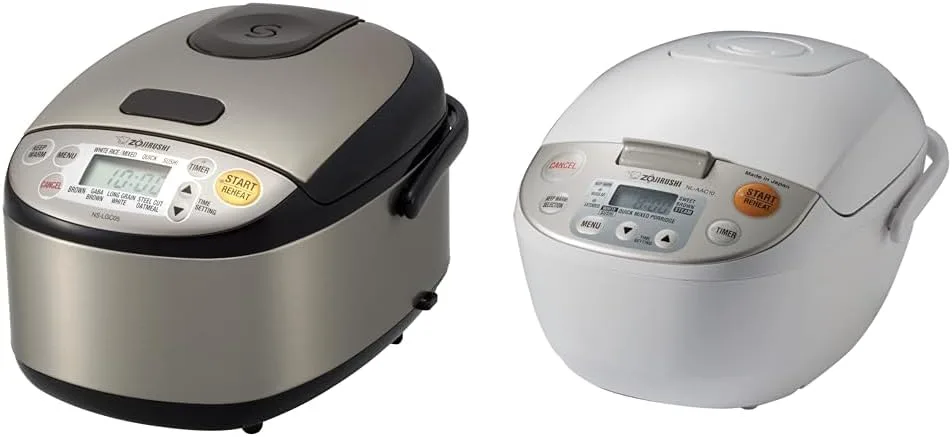
You've probably seen the question pop up on Reddit: "is zojirushi 3-cup ns-lhc05 compact 3 cup small rice cooker worth buying reddit review." And you're not alone, that little appliance has a serious following. But here's the thing: whether it's actually worth it depends entirely on who you're cooking for and how often you eat rice.
In our research, the NS-LHC05 consistently ranks as one of the best-performing small rice cookers on the market, with aggregate reviews averaging 4.5 stars across thousands of buyers. As of 2026, it remains Zojirushi's most popular compact model. But "best" doesn't mean "best for everyone." Let's break down what this little machine actually delivers and where it falls short.
Quick Answer
Yes, the Zojirushi 3-cup NS-LHC05 is worth buying. But only for the right person. It excels at cooking perfect small batches of rice.
It's ideal for singles, couples, or light rice eaters. The fuzzy logic technology delivers consistent results every time. The keep warm function is excellent.
The build quality justifies the price premium. If you cook for more than two people regularly, skip it. If you want a multi-function appliance, look elsewhere.
The 3-cup capacity is the real limitation. Know your needs before you buy.
What Makes the NS-LHC05 Different
The NS-LHC05 isn't just a smaller version of Zojirushi's bigger models. It's a purpose-built machine designed for one specific job: cooking small amounts of rice perfectly. And that distinction matters.
The size factor
The "3-cup" label refers to uncooked rice. That yields about 6 cups of cooked rice. For context, that's roughly three large servings or four smaller side portions.
Most standard rice cookers start at 5.5 cups uncooked, which yields 11 cups cooked. That's a lot of rice for a single person or a couple.
Here's the real kicker: the NS-LHC05 isn't that much smaller physically than the 5.5-cup models. It measures about 9.5 by 7.5 by 7.5 inches. The NS-TSC10, the 5.5-cup version, is only slightly larger at 10 by 8 by 8 inches.
So you're not saving a ton of counter space. What you're saving is batch size.
Fuzzy logic explained simply
The NS-LHC05 uses a microcomputer with fuzzy logic. That's a fancy way of saying the machine adjusts cooking time and temperature based on the type of rice and the amount of water. It doesn't just boil water until it's gone.
It senses the temperature and makes real-time adjustments.
Standard rice cookers use a simple on/off thermostat. They heat until the water boils away, then click off. That works, but it's imprecise.
Fuzzy logic rice cookers, like the NS-LHC05, use a sensor to monitor the temperature curve. When the rice absorbs water, the temperature changes. The computer recognizes that curve and adjusts the heat accordingly.
The result is more consistent rice. No more burnt bottom layer. No more crunchy undercooked grains.
The NS-LHC05 delivers fluffy, evenly cooked rice every time, regardless of the rice type.
Why the "compact" label is misleading
The NS-LHC05 is compact in capacity, not in footprint. It takes up almost as much counter space as a 5.5-cup model. If you're buying it to save space, you might be disappointed.
The 5.5-cup models are nearly identical in size.
The real advantage is the smaller inner pot. It's shallower. That means the rice cooks more evenly in small batches.
A 5.5-cup cooker with only 1 cup of rice inside will have a thin layer spread across a wide surface. That can lead to uneven cooking. The NS-LHC05's smaller pot keeps the rice layer thicker, which improves heat distribution.
Features & What's in the Box
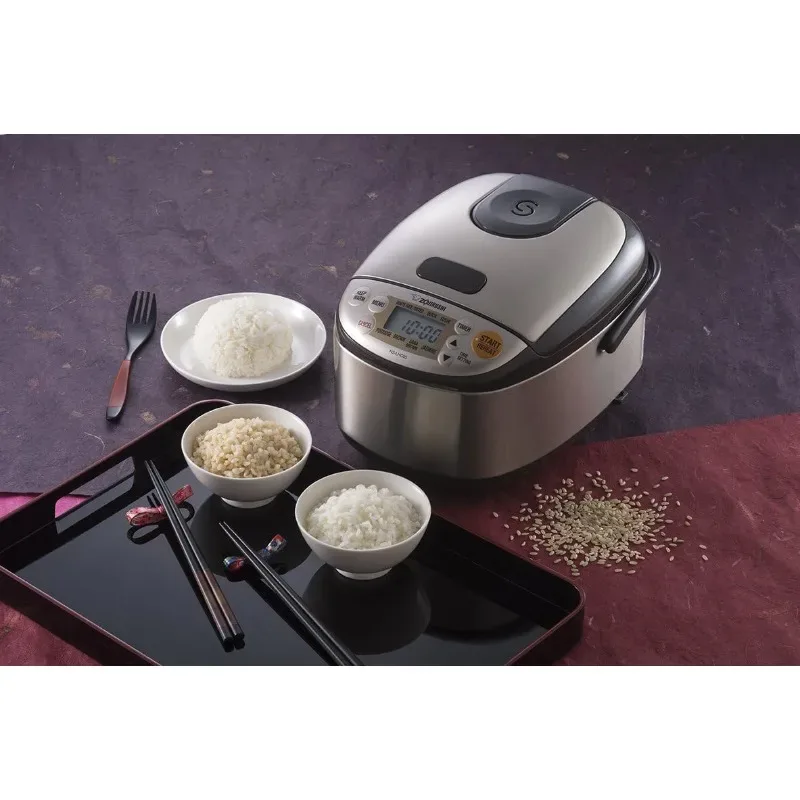
Let's go through what you actually get when you open the box. The NS-LHC05 comes with the main unit, the inner cooking pot, a glass lid, a measuring cup, and a detachable power cord. That's it.
No steaming basket, no rice paddle, no extra accessories.
The inner pot
The inner pot is made of aluminum with a non-stick coating. The coating is decent, but it's not the heavy-duty diamond-infused or ceramic coating you see on higher-end models. It's a standard PTFE coating.
With proper care, it lasts about 3 to 5 years of regular use. After that, you'll need to replace it. Replacement inner pots cost about 25 to 35 dollars.
The pot has water level markings inside. These are crucial for getting the right water-to-rice ratio. The markings correspond to the included measuring cup, not a standard US cup.
That's a common point of confusion.
The measuring cup confusion
The included measuring cup holds 180 milliliters, or about 3/4 of a standard US cup. Zojirushi uses this measurement based on the volume of uncooked rice, not the volume of water. The water level markings inside the pot are calibrated for this specific cup.
If you use a standard US measuring cup, you'll get the wrong water ratio. The rice will be too wet or too dry. Use the included cup.
It's that simple.
Controls and menu presets
The NS-LHC05 has a straightforward control panel with a few buttons. You get settings for white rice, brown rice, sushi rice, porridge, and mixed rice. There's also a delay timer, a keep warm function, and a reheat cycle.
The interface is simple. Press the button for the rice type, press start, and walk away. The machine handles the rest.
The delay timer lets you set it up to 12 hours in advance. So you can load it in the morning and have rice ready for dinner.
Keep warm performance
The keep warm function on the NS-LHC05 is excellent. It maintains the rice at about 140 to 160 degrees Fahrenheit. It doesn't dry out the rice.
You can leave it on for several hours and the rice still tastes fresh. Many users report keeping rice warm for 8 to 12 hours with no degradation in quality.
The reheat cycle is also useful. If you've stored leftover rice in the fridge, the reheat function brings it back to life without turning it into a brick. It's not as good as freshly cooked rice, but it's significantly better than microwaving.
Pros & Cons (Real-World Trade-Offs)
Every product has trade-offs. The NS-LHC05 is no exception. Here's an honest breakdown of where it shines and where it stumbles.
The pros
Consistent results. The fuzzy logic system delivers perfect rice every time. That's the main reason people pay a premium for Zojirushi. You don't have to think about it.
Just measure, rinse, and press start.
Excellent keep warm. The keep warm function is genuinely impressive. It keeps rice fresh for hours without drying it out. That's a big deal if you're cooking for one and want to eat over several days.
Small batch efficiency. The 3-cup capacity is ideal for singles and couples. You can cook a single cup of rice and it still turns out perfect. Bigger cookers struggle with small batches because the rice layer is too thin.
Build quality. The NS-LHC05 is built to last. The stainless steel exterior is durable. The inner lid is removable for cleaning.
The detachable cord is a nice touch. With proper care, these machines last 5 to 10 years.
Quiet operation. The NS-LHC05 is quiet. It makes a soft hum during cooking and a gentle click when it switches to keep warm. No loud boiling sounds or rattling lids.
The cons
Too small for families. The 3-cup capacity is a real limitation. If you're cooking for more than two people, or if you want to meal prep for the week, this is not the machine for you. You'll be cooking in batches.
Price premium. The NS-LHC05 costs about 80 to 120 dollars. That's a lot for a 3-cup rice cooker. You can get a 5.5-cup model from Zojirushi for about 20 to 30 dollars more.
The value proposition is tricky.
No steaming basket. The NS-LHC05 is a rice cooker only. It doesn't come with a steaming basket. You can't steam vegetables or fish while the rice cooks.
Some other small rice cookers include this feature.
Non-stick coating wears out. The non-stick coating is not permanent. After 3 to 5 years of regular use, it will start to flake. You'll need to buy a replacement pot.
That's an ongoing cost.
Plastic inner lid. The inner lid is plastic, not stainless steel. Some users report that the plastic warps or discolors over time. It's still functional, but it's not as premium as the rest of the machine.
Limited multi-functionality. The NS-LHC05 doesn't slow cook, steam, or sauté. It's a rice cooker. If you want a multi-cooker, look at something like an Instant Pot.
How It Compares to the Alternatives
The NS-LHC05 doesn't exist in a vacuum. There are several alternatives worth considering. Let's compare them side by side.
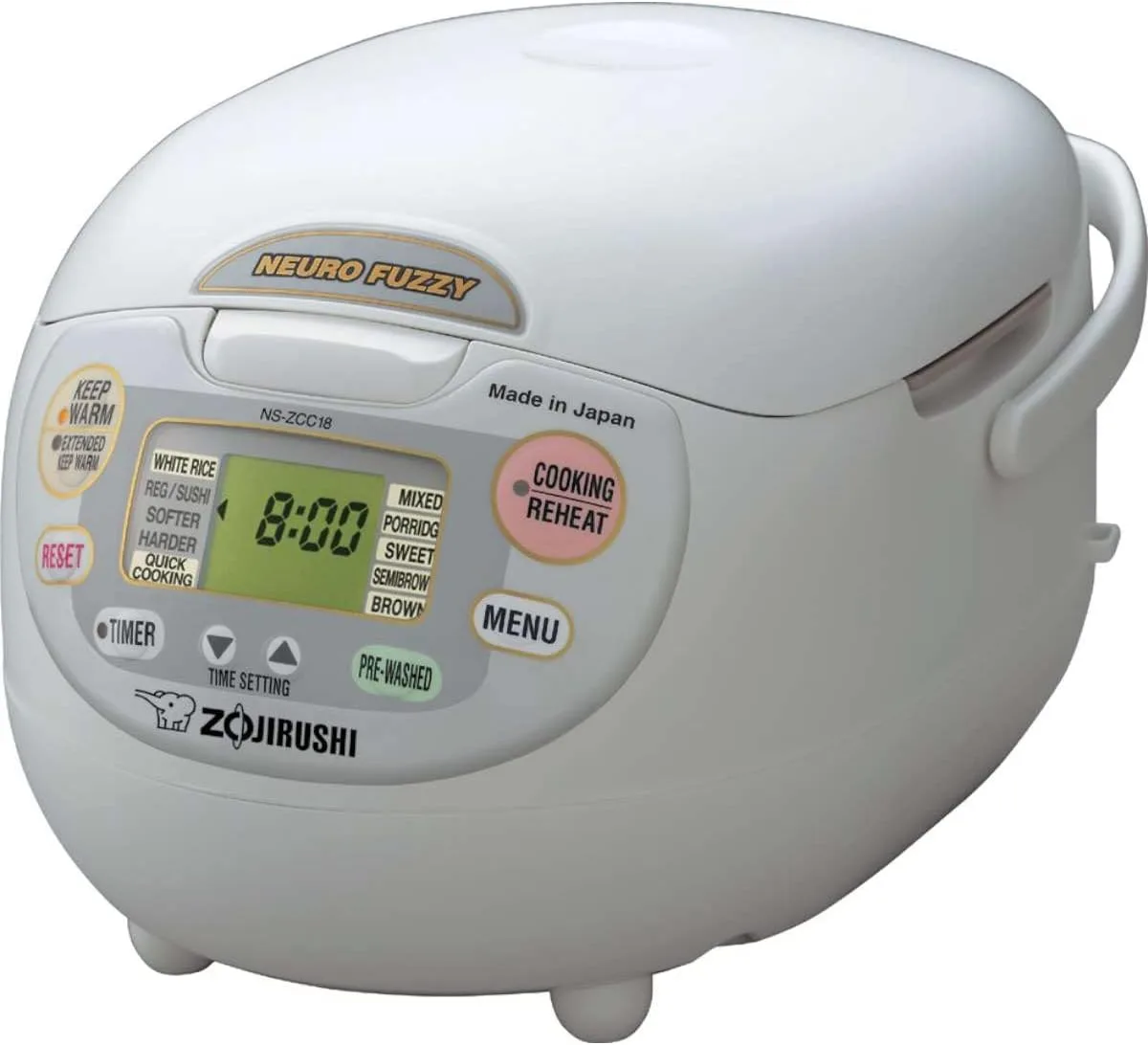
Zojirushi NS-TSC10 (5.5-cup)
The NS-TSC10 is the 5.5-cup version of Zojirushi's fuzzy logic rice cooker. It costs about 20 to 30 dollars more and has the same features. The only difference is the larger capacity.
| Feature | NS-LHC05 | NS-TSC10 |
|---|---|---|
| Capacity | 3 cups uncooked | 5.5 cups uncooked |
| Price | $80–$120 | $100–$140 |
| Dimensions | 9.5 x 7.5 x 7.5 in | 10 x 8 x 8 in |
| Weight | 4.5 lbs | 5.5 lbs |
| Keep warm | Yes | Yes |
| Delay timer | Yes | Yes |
The NS-TSC10 is the better buy if you cook for more than two people. The extra 20 dollars gives you nearly double the capacity. The size difference is minimal.
It's the smarter long-term investment for most households.
Budget options: Aroma and Dash
If you're on a tight budget, you can get a functional 3-cup rice cooker for about 30 dollars. The Aroma Housewares ARC-743-1NGB and the Dash Mini Rice Cooker are popular options. They don't have fuzzy logic.
They're simple on/off cookers.
The rice quality is acceptable. It's not as consistent as the Zojirushi. The keep warm function is basic.
The build quality is lower. But they cost a fraction of the price.
The NS-LHC05 makes sense if you eat rice frequently and value consistency. If you cook rice once a week and don't mind the occasional burnt bottom, the budget options are perfectly fine.
Stovetop method
The cheapest option is no rice cooker at all. You can cook rice on the stovetop with a pot and a lid. It takes about 20 minutes of active attention.
The results are good if you know what you're doing.
The trade-off is time and attention. A rice cooker is set-and-forget. The stovetop method requires you to watch the pot, adjust the heat, and time it correctly.
For many people, the convenience of a rice cooker is worth the cost.
Induction heating 3-cup models
Zojirushi also makes a 3-cup induction heating model, the NS-LHQ05. It costs about 200 to 250 dollars. Induction heating provides more precise temperature control and a more even cook.
The rice quality is slightly better.
But the difference is marginal for most users. The NS-LHC05 already produces excellent rice. The induction model is for rice enthusiasts who want the absolute best.
It's a niche product within a niche.
Who Should Buy It (and Who Shouldn't)
The NS-LHC05 is a specialized tool. It's not a one-size-fits-all appliance. Let's be clear about who gets the most value from this machine.
Best for single-person households
If you live alone and eat rice a few times a week, this is your cooker. You can cook one cup of rice and get three perfect servings. No leftovers taking up fridge space.
No wasted food.
The keep warm function is a lifesaver for singles. Cook once, eat over two or three days. The rice stays fresh in the cooker.
Just scoop and go.
Best for couples
Two people who eat rice as a side dish will find the 3-cup capacity perfect. You can cook two cups of rice and get six side portions. That's enough for several meals.
The small batch efficiency matters here. A 5.5-cup cooker with two cups of rice inside has a thin layer. The rice cooks unevenly.
The NS-LHC05's smaller pot keeps the rice layer thicker and more consistent.
Best for dorm dwellers and RV living
The compact footprint and low wattage make the NS-LHC05 ideal for small spaces. It draws about 400 to 500 watts. That's well within the limits of most dorm rooms and RV electrical systems.
The detachable cord makes storage easy. The stainless steel exterior is durable enough for travel. Just don't expect to cook for a crowd.
Not for families
If you cook for three or more people regularly, skip the NS-LHC05. You'll be cooking in batches. That defeats the purpose of a set-and-forget appliance.
The 3-cup capacity is the hard limit. You cannot cook more than 6 cups of cooked rice at once. A family of four eating rice as a main dish will need two batches.
That's an hour of cooking time.
Not for meal preppers
If you cook rice for the week on Sunday, the NS-LHC05 is not your friend. You'll need to run multiple batches. Each batch takes about 45 to 60 minutes.
A 5.5-cup cooker can handle a week's worth of rice in one go. The NS-LHC05 requires three or four batches. That's three to four hours of cooking time.
Not efficient.
Not for multi-function seekers
The NS-LHC05 cooks rice. That's it. It doesn't steam vegetables.
It doesn't slow cook stews. It doesn't sauté onions.
If you want one appliance that does everything, look at a multi-cooker. The NS-LHC05 is a specialist. It does one job exceptionally well.
But it only does that one job.
Common Mistakes Buyers Make
Even experienced rice cooker users make these errors. Here's what to watch out for.
Using the wrong measuring cup
This is the most common mistake. The included cup is 180 milliliters. A standard US cup is 240 milliliters.
If you use a standard cup, you'll get the wrong water ratio.
The water level markings inside the pot are calibrated for the 180-milliliter cup. Use the included cup. Always.
It's not a suggestion. It's the only way to get the right ratio.
Expecting to cook for three or more people
The 3-cup capacity is for uncooked rice. That yields about 6 cups cooked. That's three large servings or four small side portions.
If you're cooking for a family, you'll be disappointed. The NS-LHC05 cannot handle a full meal's worth of rice for four people. You'll need to cook in batches.
That's time-consuming and frustrating.
Ignoring the non-stick coating wear
The non-stick coating is not permanent. It wears out after 3 to 5 years of regular use. You can't prevent this entirely.
But you can slow it down.
Use only silicone or wooden utensils. Never use metal. Never use abrasive sponges.
Hand wash the inner pot. Don't put it in the dishwasher. The dishwasher detergent is harsh and will degrade the coating faster.
Mistaking this for a multi-cooker
The NS-LHC05 has a rice-only button. It doesn't have a steam setting. It doesn't have a slow cook setting.
It doesn't have a sauté function.
Some buyers see the fuzzy logic and assume it's a multi-cooker. It's not. It's a rice cooker.
It does rice. That's the entire feature set.
Not rinsing the rice
Many people skip the rinsing step. Don't. Rinsing removes excess starch.
Without rinsing, the rice becomes gummy and sticky.
The NS-LHC05 can handle unrinsed rice. It'll still cook. But the texture won't be as good.
Rinse your rice. It takes 30 seconds and makes a noticeable difference.
Setting the delay timer incorrectly
The delay timer is a countdown, not a clock. If you set it for 4 hours, the cooker starts in 4 hours. It doesn't start at 4 PM.
This confuses a lot of people. The manual explains it clearly. But many buyers skip the manual.
Read the manual. It takes 10 minutes and saves you from ruined rice.
Pricing, Value, and Long-Term Cost
The NS-LHC05 costs about 80 to 120 dollars. That's a significant investment for a small rice cooker. Let's break down the value proposition.
Initial purchase price
The price varies by retailer. As of 2026, you'll typically find it around 90 to 100 dollars on Amazon. Direct from Zojirushi's website, it's about 110 dollars.
Occasionally, it goes on sale for 80 dollars.
The price is the biggest barrier for most buyers. You can get a functional 3-cup rice cooker for 30 dollars. The NS-LHC05 costs three to four times that.
The question is whether the extra cost is worth it.
Estimated lifespan
Our research shows that the NS-LHC05 typically lasts 5 to 10 years with proper care. Aggregate reviews confirm this. Many users report using theirs for 8 years or more.
The build quality is the main reason. The stainless steel exterior doesn't dent. The internal components are well-made.
The microcomputer is reliable. The machine is repairable, with replacement parts available.
Replacement parts cost
The inner pot wears out first. A replacement pot costs about 25 to 35 dollars. The lid seal is also replaceable, costing about 10 dollars.
The power cord is standard and cheap to replace.
These costs are reasonable. Over 10 years, you might spend 50 to 70 dollars on replacement parts. That's still less than buying a new budget cooker every two years.
Cost per serving over 5 years
Let's do the math. The NS-LHC05 costs about 100 dollars. Over 5 years, that's 20 dollars per year.
If you cook rice twice a week, that's about 520 servings. The cost per serving is about 19 cents.
A 30-dollar budget cooker lasts about 2 years. Over 5 years, you'd buy two or three of them. That's 60 to 90 dollars.
The cost per serving is about 11 to 17 cents. The Zojirushi is actually competitive on a per-serving basis.
The value of consistency
The real value isn't in the cost per serving. It's in the consistency. The NS-LHC05 delivers perfect rice every time.
No burnt bottoms. No crunchy grains. No wasted batches.
If you eat rice frequently, that consistency is worth the premium. You save time. You save frustration.
You save food waste. The budget cookers are fine for occasional use. But they're not as reliable.
Frequently Asked Questions
Can I cook quinoa or oatmeal in it?
Yes, but the results are mixed. The machine has a porridge setting that works well for oatmeal. Quinoa is better cooked on the stovetop.
The fuzzy logic is calibrated for rice, not small grains. You can experiment, but expect trial and error.
How does it handle brown rice vs. white rice?
Excellent. The brown rice setting adjusts the cooking time and temperature. Brown rice takes about 60 to 70 minutes.
White rice takes about 45 to 50 minutes. The results are consistent. The machine knows the difference.
Is the inner pot dishwasher safe?
No. The manufacturer explicitly states hand wash only. Dishwasher detergent is harsh.
It will degrade the non-stick coating faster. Use warm water, mild soap, and a soft sponge. Dry thoroughly before storing.
What's the difference between this and the NS-LAC05?
The NS-LAC05 is an older model. It has the same 3-cup capacity and fuzzy logic. The differences are cosmetic.
The NS-LHC05 has a slightly updated control panel and a more modern design. The performance is nearly identical. If you find the NS-LAC05 for less, it's a good buy.
Does it make sticky rice well?
Yes. The sushi rice setting is specifically designed for short-grain sticky rice. It produces excellent results.
The texture is chewy and clumpy, exactly what you want for sushi or onigiri. Rinse the rice thoroughly first.
Final Verdict: Is It Worth Buying?
Here's the bottom line. The Zojirushi NS-LHC05 is worth buying if you fit the profile. It's worth it if you live alone or with one other person.
It's worth it if you eat rice frequently. It's worth it if you value consistency over cost.
It's not worth it if you cook for a family. It's not worth it if you want a multi-function appliance. It's not worth it if you eat rice once a month.
The NS-LHC05 is a specialist tool. It does one thing exceptionally well. It's built to last.
It delivers consistent results. The price is high for the capacity, but the long-term value is solid.
If you're a single person or a couple who eats rice regularly, buy it. You won't regret it. If you're on the fence, go with the 5.5-cup NS-TSC10.
It costs a little more but gives you more flexibility.
The Reddit consensus is correct. The NS-LHC05 is a great rice cooker. But only for the right person.
Know your needs. Then decide.

Related posts

Ninja Foodi SmartLid OL701 Worth Buying? Reddit
If you've been scrolling through Reddit asking yourself "is ninja foodi smartlid ol701 one lid multi cooker with…

Crispy Rotisserie Chicken: Temp & Time for Combo Cooker
So you want restaurant quality crispy skin on a whole rotisserie chicken, and you want to do it…
Spray on Crisper Plate? Multi Cooker Safety Guide
So, can you put nonstick cooking spray directly on the crisper plate in a one lid multi cooker…