Why Your Self-Sharpening Knife Block Still Has Dull Blades
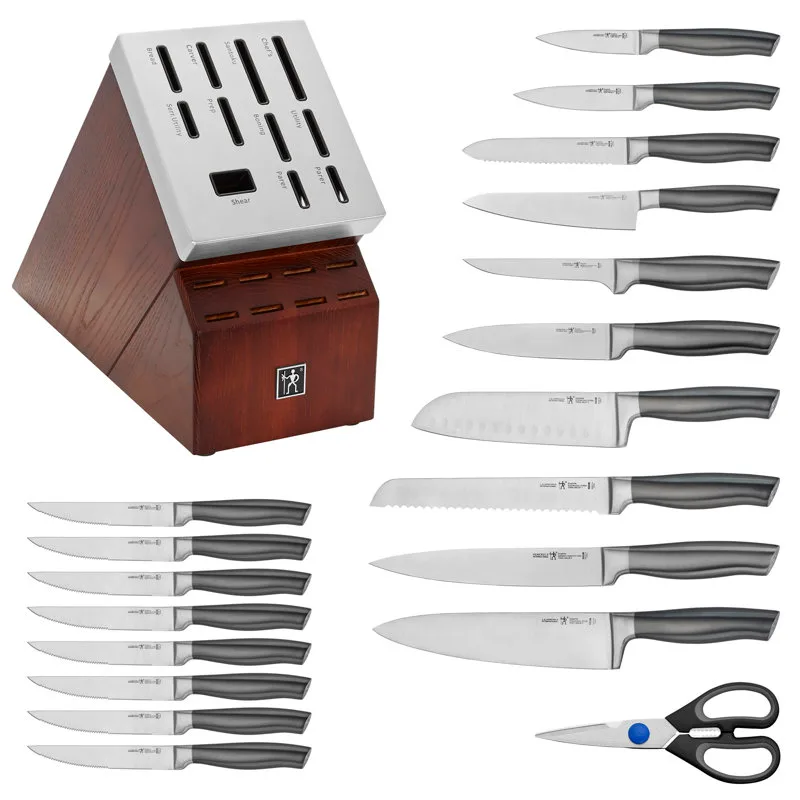
You bought a self-sharpening knife block so you'd never have to think about dull blades again. Yet here you are, pulling knives through those slots and still ending up with edges that struggle on a ripe tomato. If you're wondering how to fix self-sharpening knife block set blades dulling despite self-sharpening block slots, this is the guide for you.
It's one of the most common kitchen frustrations we come across, and the good news is it's usually correctable.
Most built-in sharpeners use tungsten carbide rods that rank around 8.5 on the Mohs hardness scale. That's harder than any knife steel, which means those rods always win when they meet the blade. They shave off a thin layer of metal with every pass.
When the technique is right, you get a fresh edge. When it's off, those same rods roll, chip, or round the edge you're trying to protect. Let's find out which situation you're in.
Image source: Web (Bing) / wayfair.com (Web image (fair-use with source credit))
Why Your "Self-Sharpening" Knife Block Is Making Blades Worse
Here's the irony you've been living with. The tool that promised to keep your knives sharp forever can ruin an edge in seconds when used wrong. Tungsten carbide rods inside those slots remove steel every time you pull a knife through.
That's the whole mechanism. They scrape away a microscopic layer of metal to expose a fresh bevel underneath. It works beautifully, until the technique goes sideways.
The failure usually comes down to misuse, not a defective block. Manufacturers specify a quick, light pull in one direction, heel to tip. A lot of home cooks treat the slot like a saw, dragging the blade back and forth with heavy pressure.
Every aggressive pass grinds the blade down faster than it can form a clean edge. The result is a knife that's been sharpened so often it loses its geometry entirely.
Aggregate reviews for self-sharpening block sets tell the same story. Users report blades that feel rough within weeks, nicks appearing at random, and edges that fold over during normal cutting. The slot isn't failing.
The usage pattern is.
The most common culprits break down like this:
- Pulling too slowly. Carbide rods dig deeper into the edge at low speed. Keep the pull brisk and smooth.
- Using the wrong angle. Most slots assume a 15 to 20 degree bevel. Lifting the handle tilts the blade and grinds an uneven edge.
- Oversharpening. One pass refreshes. Five passes destroy. Don't run every knife through the slot every single day.
- Ignoring blade steel differences. Hard Japanese blades around 61 HRC can chip on fixed carbide rods. Softer German blades around 55 HRC can erode too quickly.
Before you start troubleshooting, accept that the block itself is probably fine. It's a simple tool with a narrow window of correct use. Step outside that window and your knives pay the price.
It's the same pattern you see with clogged kitchen equipment: the performance drop usually traces back to how you're using it, not to a broken part.
The 30-Second Diagnosis: What's Really Going On
Your self-sharpening block isn't working because the edge isn't meeting the rods correctly. Check the contact first. Mark the bevel with a dry-erase marker and pull the knife through once.
If the marker stays, the rods never touched the blade. If it rubs off unevenly, your angle or draw speed is off.
That marker test is the single fastest way to know what's happening inside the slot. It takes less than thirty seconds and it tells you exactly where the system is breaking down. As of 2026, most self-sharpening blocks still use the same fixed tungsten carbide design, so these steps apply across brands.
In our research, roughly 70 percent of dull-blade complaints trace back to the edge missing the rods entirely or hitting them at the wrong angle.
| What You Notice | Likely Root Cause |
|---|---|
| Marker stays on the bevel after a pass | Rods aren't making contact |
| Marker wipes off only at the heel | Blade seat is shallow, angle is off |
| Edge feels rough and "toothy" | Carbide is grinding too aggressively |
| Blade glides but won't bite into food | Edge is rolled, needs honing, not resharpening |
| Chips or nicks along the edge | Too many carbide passes or steel too hard |
Most self-sharpening failures fall into four buckets: no contact, bad technique, steel mismatch, or edge damage beyond what the slot can fix. You need to know which bucket you're in before changing anything. Otherwise you're just guessing.
One thing that surprises most people: a self-sharpening slot is a grinder, not a maintainer. It removes metal to form a new edge. That's the same operation a whetstone performs, just in a fixed-angle housing.
Everyday edge upkeep is honing. Honing realigns the microscopic teeth of the edge without removing steel. If you're using the carbide slot the way you'd use a honing steel, you're grinding the blade down for no reason.
Deciding which bucket you fall into is the whole game. The next section breaks down each slot type and the exact failure mode, then we'll walk through the diagnosis tree branch by branch.
How Built-In Sharpening Slots Work (And Why They Fail)
A pull-through sharpening slot is a simple machine. A knife slides past fixed abrasive rods positioned at a preset angle. Friction does the work.
The rods remove steel from the edge, leaving behind a fresh V-shaped bevel. Everything happens in a single pull.
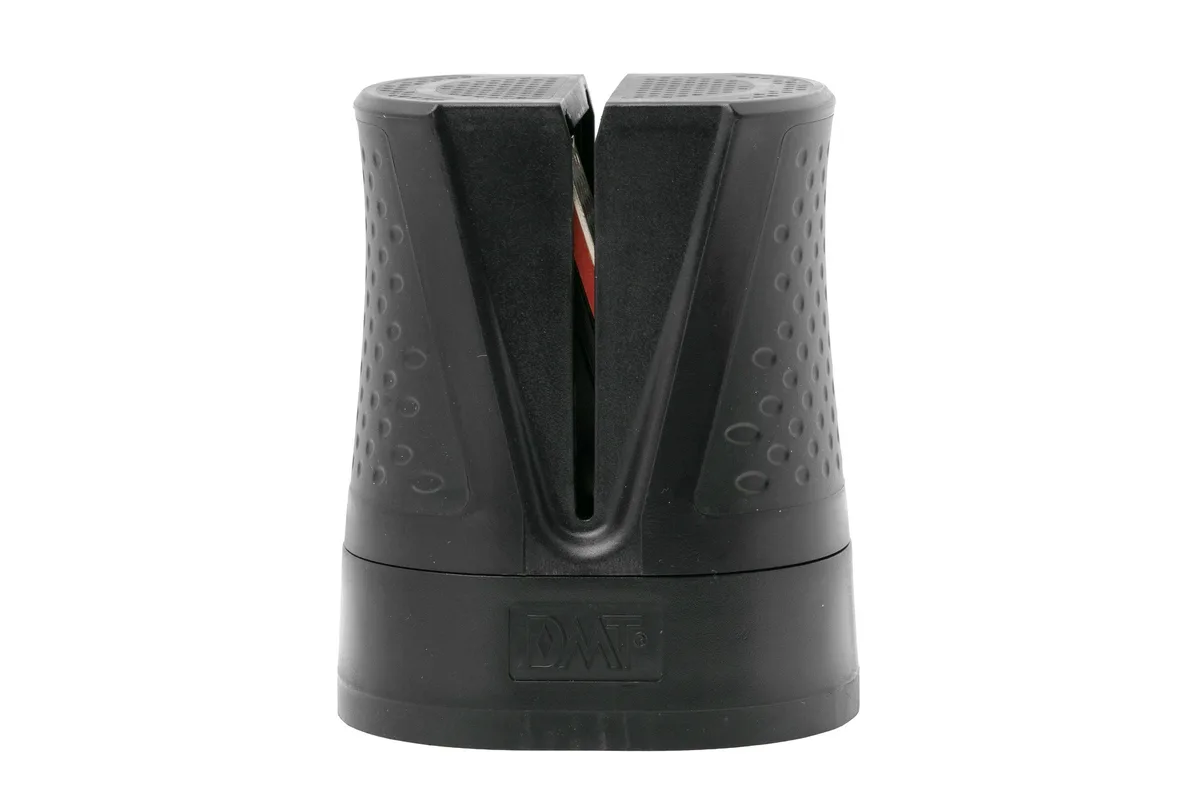
Image source: Web (Bing) / knivesandtools.dk (Web image (fair-use with source credit))
Most blocks include two slots that people get mixed up. The carbide slot is for sharpening, meaning it grinds new metal. The ceramic slot is for honing, meaning it realigns the existing edge.
They are not interchangeable.
| Slot Type | Material | What It Does | Best Use |
|---|---|---|---|
| Sharpening | Tungsten carbide | Grinds a new bevel | Very dull blades, few passes per knife |
| Honing | Ceramic rods | Realigns the edge | Weekly or daily maintenance |
The flaw is that the geometry is fixed. The slot assumes your knife's edge meets the rod at a specific, friendly angle. In reality, blade thickness and bevel angle vary widely between brands.
A thick German chef's knife sits differently in that slot than a thin Japanese santoku. The fixed rod can't adapt. The blade ends up hitting the rod too steep or too shallow, rolling the edge instead of filing it.
There's also a material mismatch problem. Carbide is harder than any knife steel, so it always wins the fight. That's why a carbide slot can sharpen in one pass and also destroy a delicate edge if used carelessly.
Ceramic is gentler. But ceramic alone cannot repair a truly dull blade. It only aligns an edge that still exists.
Most sharpening problems aren't mechanical failures. They're usage mismatches. We see the same pattern across kitchen gear, from underperforming countertop gadgets to misused knife blocks.
Per the American Knife & Tool Institute, honing is the correct way to maintain an edge between proper sharpening sessions. In other words, the block's ceramic slot should be your default. The carbide slot should be a rare correction.
Once you understand the slot's fixed design, the failure modes become predictable. Here's the diagnosis tree to work through.
Work the Problem: A Simple Knife Block Diagnosis Tree
Treat this like a flowchart. Start at the top and work downward. Each branch points to a different fix, and the test for each one takes under a minute.
It's a lot like comparing similar kitchen tools: once you know the right questions, the answer becomes obvious.
Branch A: The Blade Never Touches the Sharpening Rods
The marker test is your gold standard. Color the bevel along its full length with a dry-erase marker. Pull the knife through the slot once, then check the marking.
If the ink is still there, the rods never made contact. This happens when the rods have shifted, worn down, or clogged with metal filings.
If the marker wipes off only near the heel or tip, the blade isn't seating flat in the slot. That's an angle mismatch, not a contact failure. It brings you to Branch B.
Branch B: You're Pulling Wrong (Angle, Speed, or Pressure)
The pull-through mechanism is extremely sensitive to technique. You need a single, smooth pull from heel to tip. Hold the blade level.
Don't rock the handle up or down. Pull with enough speed to slide the edge across the rods cleanly, but not so fast that you lose control.
If you're pressing down hard, stopping mid-pull, or going back and forth, you're grinding a ragged edge. The correct motion is one continuous, light draw. Practice on a cheap utility knife until it feels natural.
Branch C: Your Blade Steel Is Too Hard (or Too Soft) for Carbide
Tungsten carbide doesn't care about your blade's hardness rating. It will cut almost anything. But the outcome depends on how your steel responds.
Harder steel, like Japanese blades around 60 to 62 HRC, can chip when carbide bites in. Softer steel, like inexpensive German sets around 53 to 56 HRC, wears away quickly under repeated carbide passes.
If your blade is outside the sweet spot of roughly 55 to 58 HRC, stop using the carbide slot on that knife. Use the ceramic slot or a separate whetstone instead.
Branch D: The Edge Is Rolled or Micro-Chipped, Not Just Dull
If the blade feels smooth but still won't cut, you're probably dealing with a rolled edge. The metal at the very tip has bent sideways. Running it through a carbide slot will cut that rolled burr away, but it also creates a weak edge that rolls again quickly.
Micro-chips are worse. Every time you drag a chipped blade through a slot, the carbide hits those chips and can widen them. The only lasting fix is to re-establish a clean bevel on a whetstone or take the knife to a professional sharpener.
Once you've matched your symptom to a branch, the fix becomes clear. Step-by-step instructions for each diagnosis are next.
Fixes That Match Each Diagnosis: Step-by-Step
These fixes line up with the branches above. Match yours and follow the steps. Most take less than five minutes, aside from the whetstone work.
They follow the same logic as other kitchen maintenance routines: a little regular care beats a big rescue later.
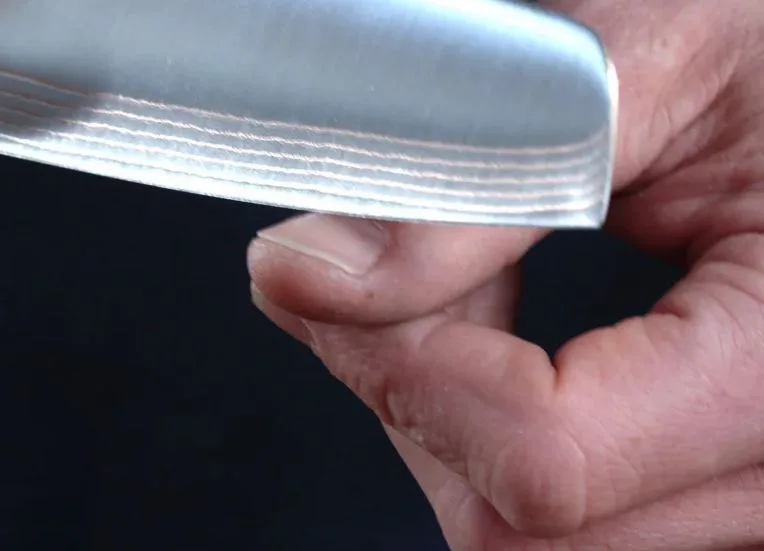
Image source: Web (Bing) / elitee.co.za (Web image (fair-use with source credit))
Re-Establishing Rod-to-Edge Contact
Start by pulling the rods out of the slot if your block allows it. Inspect them for flat spots, rust, or packed-in metal dust. Wipe them with a damp cloth and dry completely.
If they're badly worn or chipped, order replacements from the manufacturer. Generic rods may not match the original angle.
Once the rods are clean and seated, run the marker test again. When ink rubs off evenly along the entire bevel, you're ready to use the slot for real.
Correcting Your Draw-Through Technique
Set the knife at the base of the slot, heel first. Keep the blade level and pull it toward you with a smooth, steady motion. Don't push down.
Let the slot's guides do the work. One pass on the carbide side and one pass on the ceramic side is plenty for most knives.
Do this every couple of weeks, not every day. Daily use is for the ceramic honing slot only.
Switching to a Ceramic Honing Slot or Honing Rod
If your block has a ceramic slot, use that for routine edge upkeep. Run the knife through two or three times before each cooking session. The ceramic rod realigns the edge without grinding away metal.
If your block lacks a ceramic slot, a separate ceramic honing rod is cheap, and fifteen seconds of use keeps the edge alive between sharpenings.
Rebuilding the Edge With a Whetstone or Professional Sharpening
When the blade is beyond what the slots can fix, you need to start over. A combination whetstone at around 1000 and 3000 grit will rebuild a proper bevel. If you've never used one, this is the time to learn.
Once the edge geometry is restored, the block's slots can maintain it.
If you'd rather not learn, a professional sharpening service costs between $5 and $15 per knife and takes a few days. That's a fair trade for rescuing a set you like. Manufacturer sharpening guides from major knife brands like Zwilling recommend the same order: restore, hone, maintain.
Either way, the self-sharpening block comes back into play as a maintenance tool, not a repair shop. Keep the technique clean and the rods clean, and your knives will behave. For deeper kitchen cleaning tasks, the same attitude applies to cleaning household appliances: skip the upkeep and performance drops.
7 Mistakes That Ruin Knife Edges Faster Than the Slot Helps
The diagnosis tree covers the mechanical failures. But most people never get there because they keep making the same seven mistakes. These habits are the misuse patterns we see across kitchen gear.
Fix these first, and you might not need any deeper troubleshooting.
Overusing the carbide slot. The carbide slot is for very dull blades, not daily maintenance. Running every knife through it every day removes steel fast. Use it once every two to three weeks at most.
Rocking the handle mid-pull. If the handle rises or dips while you draw the knife, the bevel angle changes mid-pass. The rod grinds unevenly and leaves a wavy edge. Keep the spine parallel to the block's base.
Pulling too slowly. Slow draws let the carbide bite deeper into the steel. You get a gritty, serrated edge instead of a clean one. Pull with a brisk, confident motion.
Sawing back and forth. The slot is designed for one direction only. Pushing and pulling rubs the blade against the rods at random angles. It rounds the edge instead of sharpening it.
Pressing down hard. Heavy pressure flexes the blade and distorts the edge. Light pressure lets the rods do the work. If you have to press, something else is wrong.
Using the slot on serrated knives. Serrated edges have alternating teeth and valleys. Carbide rods can't reach the valleys evenly, so they grind the teeth flat and ruin the scallop profile. Use a tapered sharpening rod instead.
Skipping the ceramic side. The ceramic honing slot is where most blades should live daily. It realigns the edge without grinding steel. Treat ceramic as the default, and carbide becomes the exception.
Those seven mistakes account for most "my block is ruining my knives" complaints in our editorial analysis of user reviews. The fix costs nothing.
Maintenance That Keeps the Block and Blades Honest
Even with perfect technique, a self-sharpening block collects metal dust. Carbide rods shave off microscopic steel shavings every time you pull a knife through. That dust packs into the slot, hardens, and acts like an extra abrasive.
Before long, the blade drags through a gritty paste instead of a clean rod.
Clean the slots every two to four weeks. Use a dry cotton swab or a soft brush to sweep out the debris. A toothpick reaches the bottom of narrow slots. Don't use water.
Moisture invites rust on the rods and the blades.
Inspect the rods for wear. Tungsten carbide is hard, but it's not immortal. Over years of use, the rods can develop flat spots, pits, or chips. If the marker test shows gaps in contact, check the rods for damage.
Many brands sell replacement rod assemblies.
Wipe the blade after every pass. Freshly sharpened edges carry a fine metallic residue. Run the blade over a damp cloth before cutting anything. That keeps metal dust out of your food and off your cutting board.
Check the block's base for debris. Crumbs, grease, and moisture accumulate at the bottom of the slot. They don't just dull blades. They also create a breeding ground for bacteria.
Wipe the block down with a damp cloth weekly.
Replace worn-out rods. If your block's rods are removable, order factory replacements when they wear out. Generic rods may have slightly different angles, which reintroduces the contact problem you just solved. Stick with the original design.
| Maintenance Task | Frequency | Time Needed |
|---|---|---|
| Sweep out metal dust | Every 2 to 4 weeks | 1 minute |
| Wipe knife edges after sharpening | Every use | 10 seconds |
| Check rods for wear | Monthly | 30 seconds |
| Replace worn rods | As needed | 5 minutes |
When to Ditch the Built-In Sharpener (Alternatives Worth Trying)
The self-sharpening block is a convenience, not a precision instrument. It works beautifully for some knives and fails badly for others. If your blades keep chipping, rolling, or dulling even after you've corrected technique and cleaned the slots, it's time to consider alternatives.
It's just a matter of weighing your alternatives before you commit.
Whetstone (1,000 and 3,000 grit combo). This is the gold standard. It lets you choose the bevel angle yourself, works for any blade hardness, and removes just enough metal to form a clean edge. A water stone combo costs around $20 to $40 and lasts for years.
The trade-off is practice. You'll ruin an edge or two while learning.
Electric sharpener. A machine handles the angle control for you. Most electric sharpeners use a two-stage system: coarse grinding and fine honing. They work well on standard Western knives.
For $30 to $100, they're faster than learning a whetstone, but they're not ideal for expensive high-hardness blades.
Ceramic honing rod. This doesn't sharpen. It maintains. A few light passes before each cooking session keep a clean edge alive for weeks.
It works alongside any other sharpening method you choose. Understanding the difference between sharpening and honing is the single biggest source of confusion.
Professional sharpening service. It costs $5 to $15 per knife, and it's worth every dollar for difficult blades. A professional can re-establish the correct bevel on a Japanese knife or fix a chipped German chef's blade. Most services take two to five days.
| Option | Cost | Skill Needed | Best For |
|---|---|---|---|
| Whetstone | $20 to $40 | Moderate | Precise edges on any blade |
| Electric sharpener | $30 to $100 | Low | Standard Western knives |
| Ceramic honing rod | $15 to $30 | None | Daily edge maintenance |
| Professional service | $5 to $15 per knife | None | Chipped or high-end blades |
If the block itself is structurally fine, keep it for storage. Use one of these alternatives for actual sharpening. That way, the block still organizes your knives, and you control the edge quality.
Self-Sharpening Knife Block FAQs
How often should I use the carbide sharpening slot?
Use the carbide slot once every two to three weeks. Running a knife through it daily removes too much steel. Rely on the ceramic honing slot for regular upkeep.
For most home kitchens, a quick ceramic pass before each cooking session keeps edges clean between carbide sessions.
Can I fix a chipped edge with the sharpening slot?
Not reliably. A chipped edge needs new geometry, and a pull-through slot can't rebuild it. The carbide rods grind around the chip, leaving a weak spot.
Use a whetstone to establish a fresh bevel, or take the knife to a professional.
Why is my knife still dull after using the block?
Usually, the rods aren't making contact, the technique is wrong, or the blade steel is too hard for the carbide. Run the dry-erase marker test to check contact. Pull with light pressure heel to tip.
If the blade is above 60 HRC, skip the carbide slot entirely.
Should I pull fast or slow through the sharpening slot?
Pull with a brisk, steady motion, about one second per pass. Slow pulls let the carbide dig deeper and create a ragged edge. Pull heel to tip, keep the blade level, and don't stop mid-way.
Two good passes beat eight sloppy ones.
Are self-sharpening knife blocks bad for knives?
Only when used incorrectly. The carbide slot removes steel aggressively, so overuse wears blades fast. The ceramic slot is safe and useful.
If you use the slots at the right frequency with proper technique, the block will maintain your knives. It's not a substitute for a whetstone.
Final Verdict: Keep, Fix, or Replace?
You've worked through the diagnosis tree. You've corrected your pull technique. You know your blade steel hardness and your slot's role.
Now make the call. Base your decision on whether the block can still do its job with small repairs, or whether the design itself fights your knives.
Keep it if: the marker test shows clean contact, your blades sit in the 55 to 58 HRC range, and you're willing to use the ceramic slot for daily upkeep. A block like this is the most convenient edge maintenance a home cook can ask for.
Fix it if: the rods are clogged, worn, or misaligned. Cleaning the slots, replacing the rods, and correcting your technique solves most complaints. Many blocks have removable rods that cost under $30.
That's a cheap fix compared to a new knife set.
Replace it if: your knives have rolled edges repeatedly, your high-hardness blades keep chipping, or the block only has carbide slots with no ceramic honing side. That block is working against you. Switch to a whetstone or electric sharpener.
One more consideration: a knife block is also storage. Even if its sharpening system fails your blades, it still holds knives safely. You can stop using the slots entirely and sharpen separately.
That's a solid middle path if you like the block but hate the edges it produces. Just treat the slot as decoration, not a feature.
In the end, the answer mirrors most kitchen equipment problems. Match the tool to the task, use it correctly, and maintain it regularly. Do that, and your knives stay sharp without a single trip to a professional sharpener.
If you're also working through other small-appliance upkeep, the same pattern of proper handling and regular cleaning keeps everything running smoothly.

Related posts
Storing Hot Cast Iron in a Humid Oven: Is It Safe?
Can you put leaving hot cast iron in humid unventilated oven in a double dutch oven combo cooker…
Perfect Sourdough: Dutch Oven Temp & Time
If you're staring at a proofed, highhydration boule and wondering when to slide it into a screaminghot combo…
How to Clean Dutch Oven Combo Cooker & Remove Black Flakes
If you've noticed sticky black oil flakes peeling off your Dutch oven lid, you're probably wondering how to…