Remove Mineral Scale & Salt Pitting from 12-Qt Stockpot
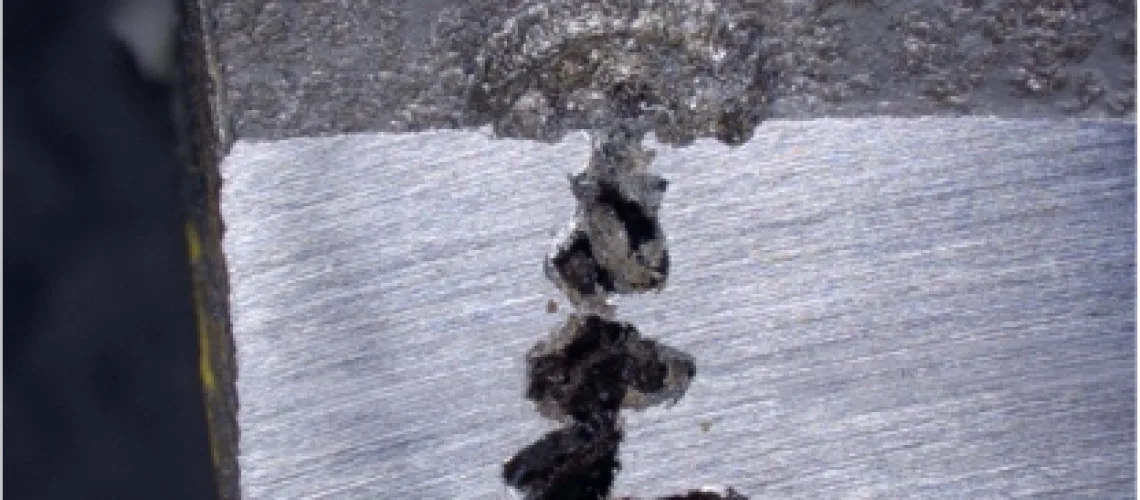
How to clean a stainless steel stockpot 12 quart and remove mineral scale film and salt pitting on stockpot interior isn't one process. It's two completely different problems that need opposite approaches. The white chalky film is mineral scale from hard water.
The small brown or black craters are salt pitting, which is actual corrosion.
Stainless steel cookware is typically made from 304-grade steel containing 18% chromium and 8% nickel, per ASTM A240 specifications. That chromium layer is what resists rust and staining, but it can't hold up forever against chlorine, salt, and acid. As of 2026, the most reliable cleaning guidance comes from understanding how that passive layer behaves.
Let's start by checking what you're actually dealing with.
Image source: Web (Bing) / telescopictube.com (Web image (fair-use with source credit))
Quick Answer
Run a fingernail over the marks. If your nail catches and flakes white material, that's mineral scale. Soak it with a 1:1 white vinegar and water mix.
If your nail drops into a recessed crater, that's salt pitting. Stop scrubbing. Clean gently, dry thoroughly, and oil the interior.
First, Find Out What You're Dealing With: Mineral Scale vs. Salt Pitting
The fingernail test
This test takes five seconds and immediately tells you which cleaning path to take.
Lightly drag your fingernail across the cloudy area. If you feel a raised, chalky texture, that's mineral scale. It sits on top of the steel surface.
It will flake or scrape away with mild effort.
If your nail dips into a small recess, that's pitting. The metal itself is gone. Pits feel smooth at the bottom because they're holes etched into the alloy.
Try the same test with the flat edge of a plastic spatula. Same result, just a bit more pressure. Scale will crumble slightly at the edges.
Pits won't change at all.
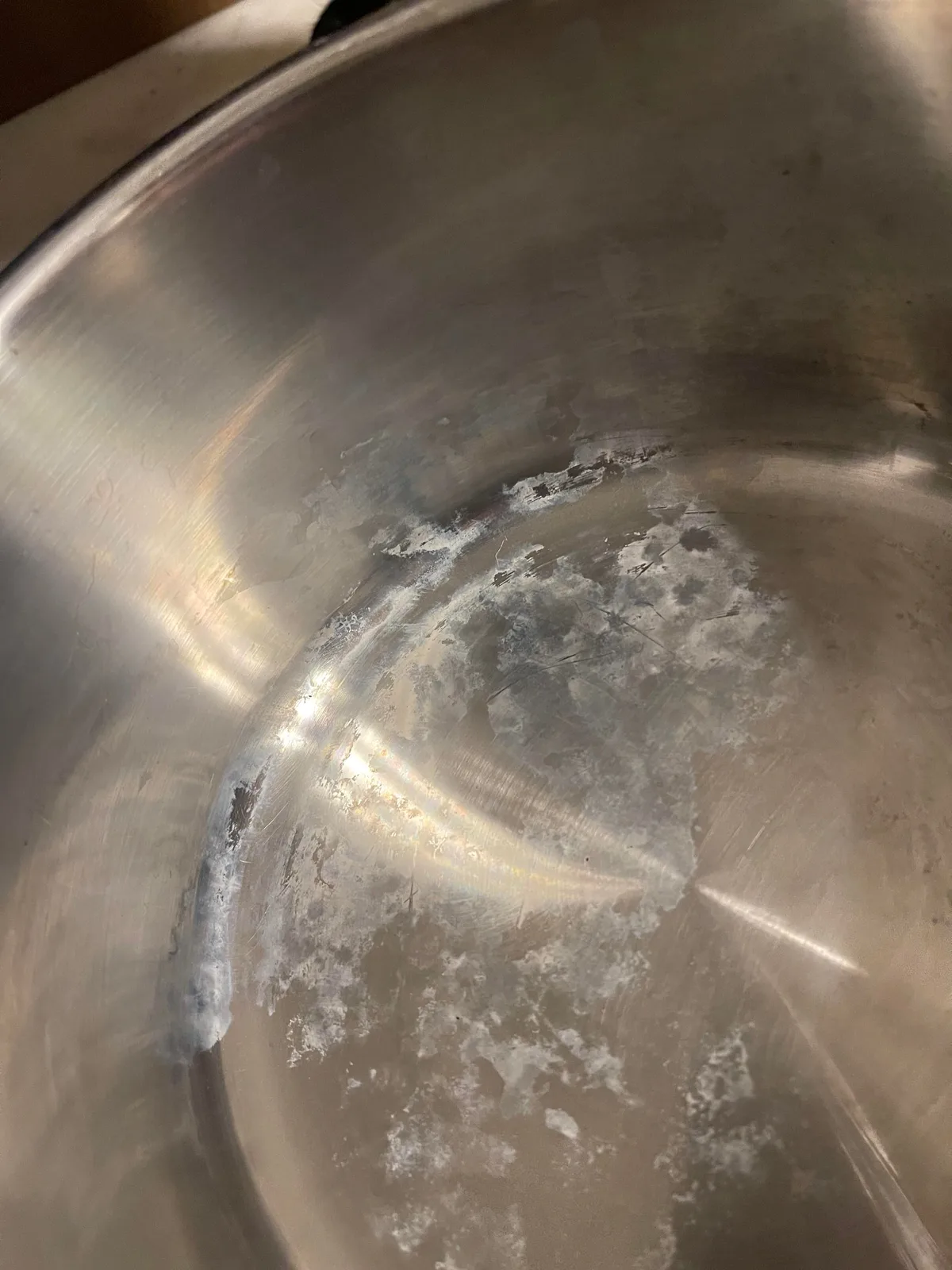
Image source: Web (Bing) / reddit.com (Web image (fair-use with source credit))
Visual differences worth knowing
Mineral scale looks white, gray, or light beige. It can appear as a light haze over a large area or as distinct ring-shaped deposits where water sat after boiling. It often looks chalky or matte when the pot is dry.
Salt pitting looks different. Small rust-colored spots, dark brown dots, or black specks cluster along the bottom or the waterline. These craters often have a tiny rust halo around them when they first form.
Why this distinction matters
The two problems have opposite treatments. Scale sits on the surface, so you dissolve it with acid and wipe it away. Pitting is physical corrosion that has eaten into the steel.
No soak or scrub can rebuild that metal.
Aggressive scrubbing on a pitted pot makes things worse. Every pass with an abrasive pad opens the pit, exposes fresh metal, and spreads corrosion faster. That's why the same gentle approach you'd use on other kitchen cookware matters here.
The if/then decision branch
If the fingernail catches and leaves a white mark, proceed to the vinegar soak section below.
If your nail drops into a crater, skip the descaling entirely and jump to the salt pitting section for how to handle permanent corrosion.
If you see both marks in the same pot, handle the scale first. Then dry and oil the pit areas.
That's the entire decision tree in three sentences. The rest of this guide just walks through the execution.
Why a 12-Quart Stockpot Gets That Cloudy Film (Hard Water 101)
What hard water actually leaves behind
Hard water contains dissolved calcium and magnesium carbonates. When you boil water in a large stockpot, heat drives off the dissolved gases and leaves those minerals behind. They bake onto the stainless steel surface as a gray-white scale film.
The chemistry is simple. Calcium bicarbonate in water breaks down under heat into calcium carbonate, water, and carbon dioxide. Calcium carbonate is the same stuff that forms limestone.
And limestone doesn't rinse off easily.
The USGS tracks hard water levels across the country, and their data shows that over 85% of American homes have hard water. If you live in a mineral-heavy region, an unrinsed stockpot can show a visible haze after just a few boils.
Why a 12-quart pot makes it worse
Bigger pot, bigger problem. A 12-quart stockpot holds roughly 3 gallons of water. Every gallon of hard water deposits a measurable mineral layer when boiled off.
Small pots boil water and get used quickly. Large stockpots often simmer for an hour or more, which vaporizes more water and leaves more scale behind. That's why the film always shows up worst on the bottom and along the waterline.
The salt connection
Salt doesn't cause scale, but it accelerates the whole mess. When pasta or brining salt is added to hard water, the sodium chloride interacts with the calcium minerals. You get a stickier, denser deposit that's harder to wipe off.
Why stainless steel is usually resistant
Under normal conditions, 304-grade stainless steel resists all of this. The chromium in the alloy forms a thin, invisible chromium oxide layer that protects the metal underneath. That's why "stainless" steel doesn't easily rust.
But that protective layer assumes you dry the pot. Leave hard water to evaporate without drying, and the minerals cement themselves onto the steel. Leave salt sitting on the surface, and chloride ions start eating through the passive layer in tiny localized spots.
Good kitchen-equipment habits prevent most of this.
The good news
The scale is not the steel. It's a deposit sitting on top. It can be dissolved, lifted, and removed without any damage to the pot itself.
You just need the right solvent and method.
That's exactly what the next section covers.
The Vinegar Soak That Removes Mineral Scale Without Scrubbing
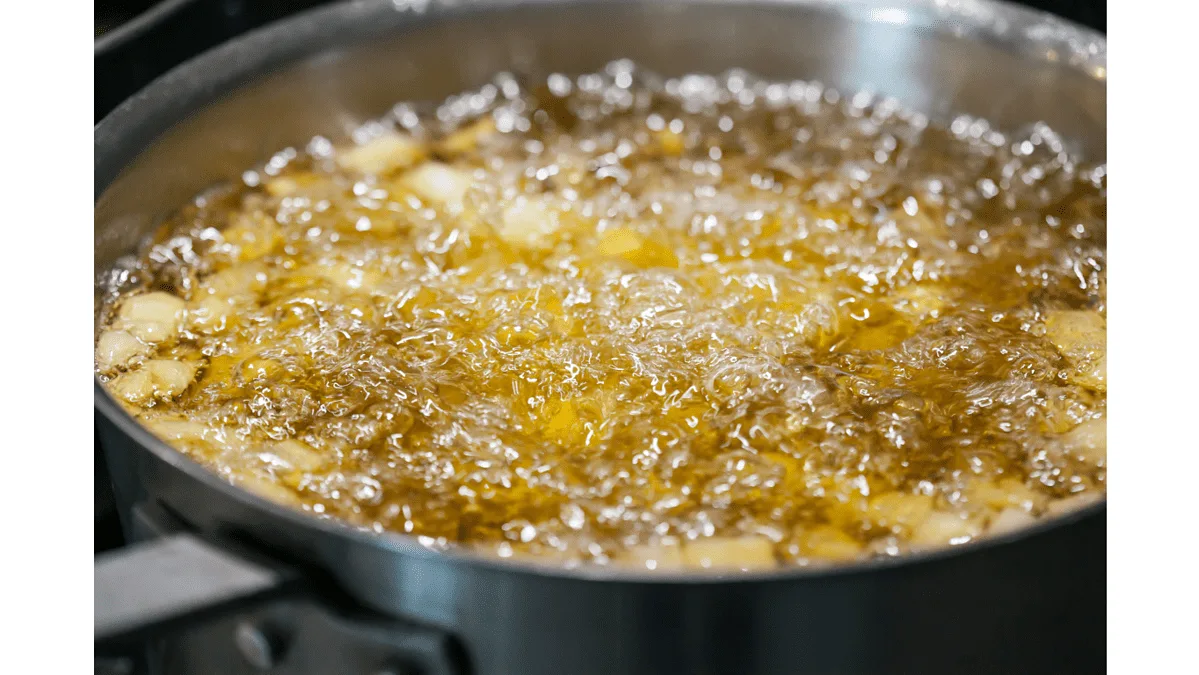
Image source: Web (Bing) / storage.googleapis.com (Web image (fair-use with source credit))
Why vinegar works
White vinegar contains acetic acid at roughly 5% concentration. That acid reacts with calcium carbonate and neutralizes it, turning the solid mineral deposit into water-soluble calcium acetate. Scale dissolves without abrasive scrubbing.
It's also food-safe. A vinegar rinse leaves no toxic residue, which matters when you're cooking large batches of soup or pasta in the same pot later. Aggregate user feedback consistently ranks vinegar as the most reliable first-line descaling agent for stainless steel.
The safe ratio for a 12-quart pot
Use a 1:1 ratio of white vinegar and water. For a standard 12-quart stockpot, fill it halfway. That's about 1.5 gallons of water and 1.5 gallons of white vinegar.
Use lighter ratios based on the condition:
- Light haze: 1 part vinegar to 3 parts water
- Moderate cloudy film: 1:1 vinegar to water
- Heavy white build-up: full-strength vinegar at a gentle simmer
The step-by-step soak
Step 1. Fill the pot with the vinegar-water solution, covering the scale deposits by at least one inch.
Step 2. Bring it to a gentle boil on medium heat. Boil for five to ten minutes.
A rolling boil is unnecessary and risks spattering acid.
Step 3. Turn off the heat and let it soak for 15 to 30 minutes. Heavy scale may need up to an hour.
Step 4. Pour out the solution and let the pot cool enough to handle.
Step 5. Scrub with a non-abrasive nylon pad or sponge, moving in the direction of the grain. Circular scrubbing leaves visible swirl marks on brushed stainless steel.
Step 6. Rinse thoroughly with clean water.
Step 7. Dry immediately with a microfiber towel. Air-drying leaves water spots, which are the start of the next scale film.
What if the white film survives?
If scale remains after a full vinegar treatment, apply a paste of baking soda and water to the spots. Rub gently with a soft cloth. If that doesn't lift it, escalate to citric acid or Bar Keepers Friend, which the next section covers in detail.
Consistent maintenance is cheaper than heavy descaling, which is why regular upkeep routines help.
Can you reuse the vinegar solution?
No. Once vinegar reacts with dissolved minerals, the acid is spent. Fresh vinegar is cheap and always more reliable than a recycled batch.
When Vinegar Isn't Enough: Escalating to Citric Acid or Bar Keepers Friend
Decision branch: when to escalate
Vinegar handles most scale in a single pass. But some deposits are too thick or too mineral-dense for a 5% acetic acid solution. Here's the if/then logic.
If the pot still shows haze after a vinegar soak, try baking soda paste first. If that doesn't lift it, move to citric acid.
If the scale is thick, crusty, or has been building up for months, skip straight to citric acid. It's stronger and faster than vinegar.
If the interior has a rainbow-colored stain rather than white scale, that's an oxidation effect. Bar Keepers Friend is the right tool here, since its oxalic acid removes the top oxide layer while polishing the steel.
Citric acid: the stronger descaling option
Citric acid powder is cheap, food-safe, and significantly more effective at dissolving calcium deposits than vinegar.
Mix 2 tablespoons of citric acid powder per gallon of water. For a 12-quart pot, use about 3 gallons of water and 6 tablespoons of acid, enough for a three-quarter fill.
Bring the solution to a gentle boil for ten minutes. Then let it sit for another 20 to 30 minutes. The water will turn slightly cloudy as the scale dissolves.
Pour out the solution, rinse thoroughly, and dry with a soft towel. The interior should feel smooth, not chalky.
Bar Keepers Friend: for stubborn spots and oxide stains
Bar Keepers Friend uses oxalic acid as its active ingredient. It combines a mild abrasive with a chemical cleaner, and it's widely recommended by stainless steel cookware manufacturers for stain removal.
Use it dry or as a paste. Sprinkle a small amount onto the affected area, add a few drops of water, and work it in with a damp sponge. Always rub in the direction of the grain.
Never let it sit longer than one minute. The oxalic acid can etch steel if left too long. Rinse thoroughly and dry.
Per manufacturer care guidelines, this cleaner handles the toughest interior staining, including overheating discoloration. It won't fix pitting. It isn't designed for that.
All it does is lift surface mineral or oxide staining.
Which to choose
- Heavy scale across a large interior: citric acid
- Localized spots, rings, or rainbow discoloration: Bar Keepers Friend
- Regular weekly maintenance in a hard-water home: vinegar
These three options cover every scale scenario you're likely to hit with a stockpot.
Salt Pitting: What It Actually Is and Why Scrubbing Makes It Worse
What's really happening
Salt pitting is localized corrosion. When sodium chloride sits on stainless steel, chloride ions penetrate the protective chromium oxide layer at tiny weak points. Once they reach the iron beneath, they trigger a reaction that eats the metal from the inside out.
This creates a small hole, called a pit, with a concentrated acid core. That pit then acts as an active corrosion site that keeps spreading even after the salt is gone.
The damage is permanent. It is not a film, a deposit, or a stain. The steel has physically been removed.
Why the fingernail test is essential
Run your nail across the interior. Scale feels raised. Pits feel like tiny valleys.
If you feel a recessed spot with a rough edge, you're looking at pitting.
Here's the part people mess up. Many home cooks see a dark spot and start scrubbing with steel wool or a green scouring pad. That works for scale.
For pitting, it grinds the exposed steel deeper and opens the hole further. You're not cleaning. You're machining the pit larger.
The role of the passive layer
Per ASTM A240 specifications, 304-grade stainless steel relies on that thin chromium oxide layer for corrosion resistance. The layer is just a few atoms thick. It's the only thing separating "stainless" steel from ordinary rusting steel.
Salt, bleach, and acidic food residue can break the layer down. Once broken, the underlying iron meets oxygen and moisture. Rust forms inside the pit.
The pit gets deeper. The rust stain spreads around it.
Why you can't restore it
No chemical regrows removed metal. No abrasive refills a hole. Polish can mask a pit for a few hours.
But the moment water and salt touch it again, corrosion resumes.
So the right response to pitting is the opposite of scale. With scale, you actively remove. With pitting, you stabilize and protect.
That's also why care habits matter across all your cookware, not just the big stockpot.
What a pitted pot tells you
A pitted interior usually means one of three things: salt sat in the pot after a boil, the pot went through the dishwasher, or bleach-based cleaners were used. All three expose the steel to chlorides at levels the passive layer can't handle.
The if/then decision branch
If the pitting is shallow and limited to a few spots, you can keep using the pot with proper care. Clean gently, dry thoroughly, and apply a thin oil layer.
If the pits are widespread, actively rusting, or flaking metal, retire the pot. Deep pits can harbor bacteria and release iron into acidic foods, altering taste and color.
That decision determines everything that comes next.
Living With a Pitted Stockpot: Clean, Dry, Oil, and Know When to Retire It
The cleaning routine for a pitted interior
Wash with warm water and mild dish soap. Use a soft sponge only. No abrasive pads, no steel wool, no green scouring pads.
A gentle wipe removes food residue without opening the pits.
Dry immediately with a microfiber towel. This step is non-negotiable. Any leftover moisture gives the corrosion fresh fuel.
Apply a thin layer of neutral oil to the interior. Food-grade mineral oil, vegetable oil, or canola oil all work. Rub it in with a paper towel until the surface looks dry.
The goal is to seal the pits from oxygen and moisture.
Do this after every wash. It won't repair the pitting. It will slow the damage down considerably.
When to retire the pot
Watch for active rust that returns after cleaning. If rust appears inside the pits regularly, corrosion is still chewing through the metal. That's your sign.
Retire the pot when the pits are deep enough to trap food. Bacteria can hide in those recesses, even after a solid scrubbing. If acidic soups or tomato sauce develop a metallic taste, iron is leaching into the dish.
Both are safety issues, not cosmetic ones.
Before you shop for a replacement, consider whether a stockpot is even the right vessel for your usual batch cooking. Your everyday routine may point you toward something else entirely. Matching the tool to the task beats buying the same pot twice.
Common Mistakes That Turn a Fixable Stockpot Into a Lost Cause
Steel wool and metal scouring pads
Steel wool scratches stainless steel. It also embeds tiny iron particles in the surface, which rust on their own. That's why pots cleaned with steel wool often sprout brown specks in the days afterward.
Use nylon pads or soft sponges.
Bleach-based cleaners
Chlorine is hostile to stainless steel. It breaks down the chromium oxide layer that protects the metal underneath. Once that barrier is gone, the base iron is exposed.
Even a short soak in diluted bleach can cause permanent etching. Bleach belongs nowhere near a stockpot.
Letting the pot air-dry
Air-drying always leaves mineral deposits behind. Tap water carries dissolved calcium and magnesium. When it evaporates, those solids stay put and cement onto the steel.
Drying with a towel immediately eliminates most future scale problems.
Boiling undiluted vinegar
Acetic acid at 5% works fine when diluted. Full-strength vinegar, heated aggressively, can attack the steel itself. It's a mild acid, not a solvent bomb.
A 1:1 ratio with water is the strongest you'll ever need.
Scrubbing a pitted pot
This deserves repeating. Scrubbing pits makes them bigger. Clean around pits, never inside them.
A pit is not a stain. It's a hole in the metal.
The same over-scrubbing and harsh-chemical habits show up when people care for other countertop appliances. Gentle wins everywhere in the kitchen.
Long-Term Maintenance: Keeping a 12-Quart Stockpot Clean Between Battles
Dry it right after every wash
This one habit solves more problems than any soak. Mop the interior and exterior with a clean towel before the pot hits the drying rack. It takes five seconds.
It prevents the vast majority of new scale.
Rub a drop of oil into the interior
Once the pot is dry, add a tiny drop of vegetable or mineral oil to the center. Spread it across the interior with a paper towel. The layer is thin enough to be invisible but strong enough to keep water and salt from touching the steel directly.
Follow salt safety rules
Add salt only when the water is already boiling. Stir until it dissolves completely. Never let dry salt sit on the metal surface.
After brining or salting a big batch, rinse the pot immediately. Even ten minutes of contact gives chloride ions time to start their work.
If you also run a countertop deep fryer, keeping that equipment clean follows the same no-steel-wool rule. Harsh scrubbing damages both stainless steel and nonstick surfaces equally.
Schedule a monthly descaling soak
If you live in a hard-water area, mark a monthly reminder for a quick vinegar soak. Use a 1:1 mix, fill the pot, and let it sit for twenty minutes. Rinse and dry.
That maintenance pass stops mineral scale from ever building into a thick film.
The same rules hold up across every piece of kitchen cookware. Protect the surface, dry the metal, and skip the aggressive chemicals.
Frequently Asked Questions
Is white vinegar safe for stainless steel cookware?
Yes. Diluted white vinegar is one of the safest descaling agents for stainless steel. It dissolves calcium deposits and rinses away cleanly without leaving toxic residue.
Just avoid boiling full-strength vinegar for long periods. A 50/50 water mix is plenty for any scale problem.
Can I still cook in a pitted stockpot?
It depends on the severity. Minor pits are a cosmetic issue and safe to cook in, provided you dry and oil the pot after every wash. Deep, actively rusting pits are not safe.
They can harbor bacteria and release iron into acidic foods. Retire the pot when the pits are wide or deep.
What's the best way to remove rust from a pitted interior?
Gently remove surface rust with a paste of baking soda and water. Rub softly with a cloth, then rinse and dry immediately. Apply a thin oil layer afterward.
This only handles superficial corrosion. You can't remove the pit itself, only the loose rust sitting on top.
Does the dishwasher cause pitting on stainless steel stockpots?
Yes. Dishwasher detergents are alkaline and aggressive. Combined with the chloride salts in rinse cycles, they attack the stainless surface.
Most manufacturers explicitly list the dishwasher as unsafe for this reason. Hand washing is the correct call for any quality stockpot.
How often should I descale my stockpot in a hard-water home?
Once a month is a good baseline. If your water is extremely hard, move to every two weeks. You'll know when the white film starts reappearing faster.
A quick vinegar soak handles it before the scale bonds tightly to the steel.

Related posts

12-Hour Golden Chicken Bone Broth: Temp & Time for 12-Qt Pot
If you're looking up what temperature and cooking time for rich 12hour golden chicken bone broth in stainless…
Stop Lid Rattle & Splash on Stainless Steel Pans
Your stainless steel sauté pan has a helper handle that rattles, a lid that bounces against the rim,…
Is All-Clad D3 Sauté Pan with Helper Handle Worth Buying?
If you’ve been scrolling Reddit at 1 a.m. wondering, “is allclad d3 sauté pan stainless steel saute pan…