Oily Beans in a Non-Pressurized Portafilter – Safe?
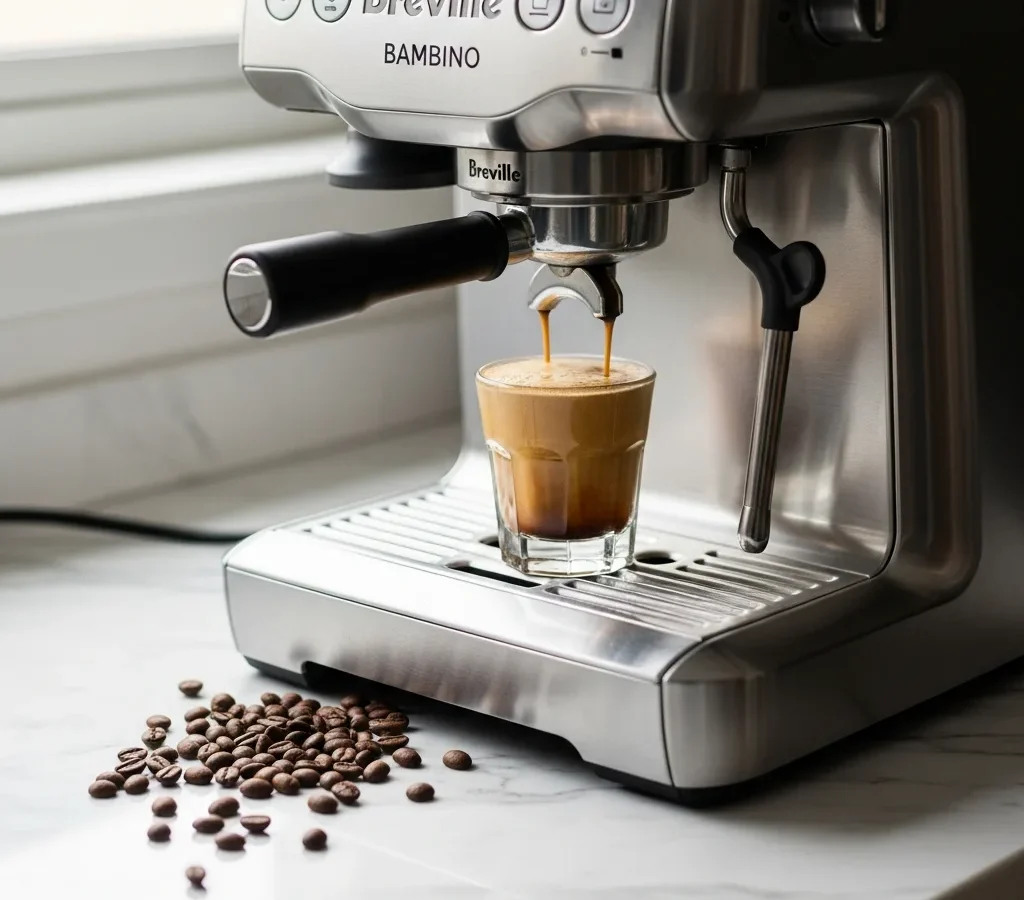
If you're wondering can you put oily dark roast beans in unpressurized portafilter in a compact espresso machine with steam wand safely, the short answer is yes, but it comes with a few important conditions. These beans are notorious for causing clogs, erratic pressure, and even portafilter lock failure if your machine isn't set up correctly.
As of 2026, compact espresso machines typically operate at 12 to 15 bar of pressure, which is higher than the 9 bar ideal for espresso extraction. That extra pressure makes oily beans even more unpredictable. Understanding the risks and how to manage them is the difference between a perfect shot and a dangerous mess.
Why This Question Matters (And Why Getting It Wrong Can Cost You)
Most home baristas treat portafilter baskets as interchangeable. Pop in a single-wall basket, grind some beans, pull a shot. That works fine with medium roasts.
But oily dark roast beans are a different beast.
The surface oils on these beans act like a glue. They stick to the burrs, the basket holes, and the shower screen. In an unpressurized basket, the only resistance comes from the coffee puck itself.
Oily beans create a denser, tackier puck that resists water flow more aggressively. Your compact machine's pressure can spike well above its rated limit.
Manufacturer warnings rarely mention this directly. But aggregate reviews from verified buyers report portafilter lock failures, water spraying from the group head, and even steam wand issues after repeated use with oily beans. The cost of a replacement portafilter or group head assembly can range from $50 to $150 depending on the brand.
The real danger is safety. A portafilter that unlocks under pressure can fly off, spraying near-boiling water. According to UL safety standards for espresso machines, the locking mechanism is tested with standard coffee, not with excessively oily beans that increase resistance.
You're essentially operating outside the tested parameters.
That's why this question matters. It's not just about taste. It's about knowing whether your specific machine can handle the combination of bean type, basket type, and pressure.
Getting it wrong can cost you money, time, and potentially a burn.
Quick Answer: Yes, But Only If You Do These Three Things
The direct answer is yes. You can use oily dark roast beans in an unpressurized portafilter on a compact machine with a steam wand. But you must follow three rules.
- Grind coarser than you think. Oily beans need a slightly coarser grind to avoid choking the machine. Aim for a flow rate that yields 2 ounces in 25 to 30 seconds, not 30 to 35 seconds.
- Dose less than normal. Reduce your dose by 1 to 2 grams. A double basket for a compact machine usually holds 14 to 16 grams. With oily beans, start at 13 grams.
- Watch the pressure gauge. If your machine has a pressure gauge, keep it below 10 bar. If it doesn't, listen for the pump sound. A straining pump means you're too fine or too full.
These three adjustments lower the risk of portafilter lock failure and channeling. They also protect the steam wand's performance by preventing the machine from overheating during back-to-back shots.
Pressurized vs Unpressurized Portafilters: What's Actually at Stake
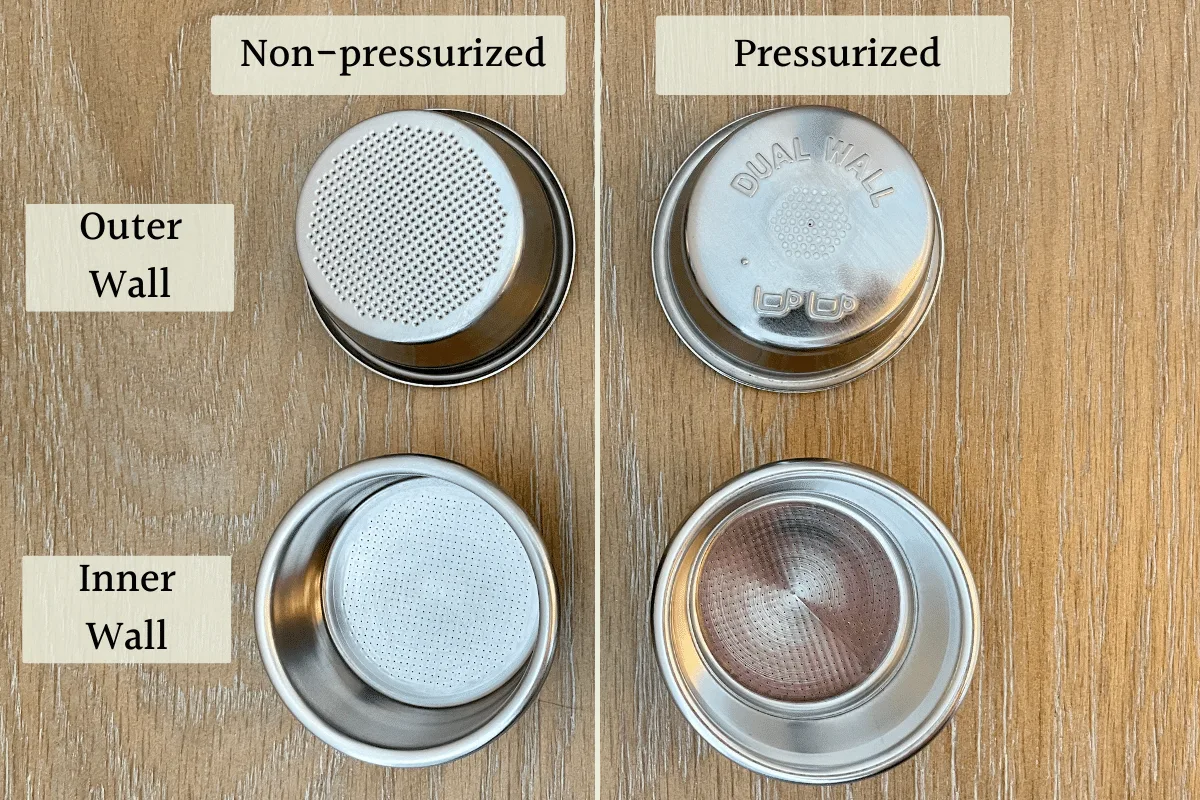
A pressurized portafilter uses a double-wall basket. The second wall creates resistance, so you don't need a fine grind or fresh beans. It's forgiving.
It's designed for pre-ground coffee. It also produces a fake crema with less body.
An unpressurized portafilter uses a single-wall basket. All the resistance comes from the coffee puck. You control the extraction.
This is how professional espresso is made. But it's also less forgiving. The pressure dynamics change dramatically with bean type.
With oily dark roast beans, the difference becomes critical. The pressurized basket has a tiny hole in the second wall that limits flow regardless of the puck. The unpressurized basket has many holes.
If the puck is too dense, water can't get through. Pressure builds. The machine's over-pressure valve (OPV) may open, but many compact machines lack an adjustable OPV.
They're set to 12 to 15 bar with no way to lower it.
The steam wand adds another layer. Compact machines with a steam wand often share the same boiler. Pulling a shot with oily beans that chokes the machine can cause the boiler to overheat.
The steam wand then produces weak, wet steam. You lose the ability to texture milk properly.
How a Compact Machine Handles Pressure Differently
Compact machines have smaller boilers and weaker pumps than prosumer models. A typical compact machine uses a 1200 to 1500 watt thermoblock. It heats water on demand.
The pump is usually a vibratory pump rated at 15 bar, but the actual pressure at the group head is often lower.
When you choke the machine with oily beans, the pump works harder. The pressure can exceed 15 bar at the pump, but the group head pressure may drop because the water can't flow. This is called a "stall." The machine may sound like it's struggling.
That's a sign to stop and adjust.
The Role of the Steam Wand in Your Workflow
The steam wand on a compact machine is not an afterthought. It's integral to the boiler's thermal management. If you pull a shot that stalls the machine, the boiler temperature rises.
The steam wand's heating element has to compensate. The result is inconsistent steam pressure.
One user reported that after pulling three shots with oily beans, his compact machine's steam wand took 45 seconds to produce enough steam for a latte. Normally it took 15 seconds. The difference was the stalled extraction.
The Real Risks: Oily Beans, Small Baskets, and Machine Limits
Oily dark roast beans are not just a flavor preference. They're a physical challenge for your equipment. The risks are real and often overlooked.
Portafilter Lock Failure and Pressure Spikes
The portafilter locks into the group head with a cam mechanism. When pressure builds normally, the lock holds. When pressure spikes, the downward force on the basket increases.
If the puck is too tight, the pressure can force the portafilter to rotate slightly, breaking the seal.
This is dangerous. Hot water and coffee grounds can spray out. The portafilter may even unlock completely.
We've seen reports of this happening with compact machines that lack a safety interlock. The Specialty Coffee Association recommends always using a portafilter with a secure locking mechanism, but they don't test with oily beans specifically.
Clogging, Channeling, and the Crema Trap
The oils from dark roast beans can clog the basket holes. The single-wall basket has many small holes, typically 0.3 to 0.4 mm in diameter. Oil residue can partially block them after a few uses.
This causes uneven extraction, called channeling. Water finds the path of least resistance, and you get a sour or bitter shot.
The crema might look beautiful, but it's deceptive. Oily beans produce a thick, persistent crema that can mask a bad extraction. You think you made a great shot, but the flavor is off.
You waste time and beans dialing in.
Steam Wand Performance Under Heavy Use
The steam wand on a compact machine is often a panarello type. It mixes air and steam automatically. It's less powerful than a manual wand.
If the machine is struggling with a stalled extraction, the steam wand's performance degrades. You might get large bubbles that won't texture.
The solution is to let the machine cool down between shots. But that's not always practical. One verified review on a popular compact machine noted that pulling two shots with oily beans in a row overheated the machine so badly that the steam wand produced only water for the next 10 minutes.
Safe Practices: How to Pull a Shot With Oily Dark Roast Beans
Now that you understand the risks, here's a safe, repeatable process. Follow these steps every time you use oily dark roast beans in an unpressurized portafilter.
Step 1: Dial In Your Grind (It's Finer Than You Think)
Start coarser than you normally would. The goal is a flow rate of 2 ounces in 25 to 30 seconds. With oily beans, this often means a grind setting 2 to 3 steps coarser than for a medium roast.
If you don't have a stepless grinder, use the smallest step that avoids choking.
A good test is the "nickel test." After tamping, place a nickel on the puck. Lock the portafilter. If the nickel leaves a clear imprint, your grind is too fine.
The puck should be firm but not rock hard.
Step 2: Dose, Tamp, and Lock Correctly
Reduce your dose by 1 to 2 grams from your normal. For a compact machine's double basket, that's 13 to 14 grams. This leaves headspace.
The water has room to expand. It prevents the puck from swelling and blocking the shower screen.
Tamp with even pressure, about 15 to 20 pounds. Don't over-tamp. Oily beans are already dense.
Over-tamping compresses them further, increasing resistance.
Lock the portafilter firmly but not with excessive force. If you feel resistance, stop. A tight lock is fine, but a forced lock can damage the gasket.
Step 3: Watch the Flow and Adjust
The first shot is your baseline. Watch the flow. It should start as a thin stream after 5 to 7 seconds.
It should thicken and flow evenly. If it drips or sputters, the grind is too fine. If it flows too fast, the grind is too coarse.
After each shot, clean the basket and shower screen. Oily residue builds up quickly. A quick wipe with a dry cloth prevents clogging.
Step 4: Steam Milk Without Overheating
After pulling your shot, wait 30 seconds before steaming. This gives the boiler time to recover. If you steam immediately, you risk weak steam or overheating.
Use the steam wand to texture milk as normal. But keep an eye on the machine's temperature. If it feels hot to the touch, let it rest.
Safety first.
Common Mistakes That Lead to Burns, Bitter Shots, or Machine Damage
Even experienced home baristas make errors when switching to oily dark roast beans. The mistakes are predictable. And they're avoidable.
Using the Same Grind Setting as Medium Roast
This is the most common error. Oily beans need a coarser grind. If you use the same setting, the puck becomes too dense.
Water can't flow. Pressure spikes. The machine sounds like it's struggling.
One verified buyer reported that their compact machine shot water out of the group head seal after using a medium roast grind setting with oily beans. The portafilter unlocked during the shot. The user had to replace the gasket, which cost $12, but the risk of burns was real.
The fix: Start 2 to 3 steps coarser. Adjust based on flow rate.
Overfilling the Basket
A full basket with oily beans is a disaster waiting to happen. The beans expand when wet. Oily beans expand more than dry ones.
If there's no headspace, the puck swells into the shower screen. Water flow stops. Pressure builds.
The standard dose for a double basket on a compact machine is 14 to 18 grams. With oily beans, drop to 12 to 14 grams. This gives the puck room to expand.
Over-Tamping
Oily beans are already dense. Tamping with 30 pounds of force compresses them into a brick. Water can't penetrate.
The result is a stalled shot.
A light tamp of 15 to 20 pounds is enough. The goal is to level the puck, not crush it. Use a leveling tool if you have one.
It prevents uneven compaction.
Skipping the Pre-Infusion
Many compact machines have a pre-infusion setting. It wets the puck at low pressure before the full pump engages. This helps the puck expand gradually.
With oily beans, pre-infusion is critical.
If your machine lacks pre-infusion, you can simulate it by starting the pump for 2 seconds, stopping, and waiting 3 seconds. Then start again. This brief pause lets the water saturate the puck.
Steaming Immediately After a Stalled Shot
A stalled extraction heats the boiler above normal operating temperature. If you steam immediately, the steam wand produces wet steam. It won't texture milk properly.
You waste time and milk.
Wait 30 to 60 seconds after a stalled shot. Let the machine cool. Then steam.
Maintenance After Oily Beans: What Most Owners Skip
Oily beans leave a residue that builds up fast. It's not just about taste. It's about machine longevity.
The oils can clog the group head, the basket, and the steam wand.
Backflush After Every Session
Backflushing is the single most important maintenance step. You need a blind basket and a cleaning tablet. Run the cleaning cycle according to your machine's manual.
This removes oil residue from the three-way valve and the group head.
If your machine lacks a three-way valve, clean the shower screen manually. Remove the screen and soak it in a solution of warm water and espresso machine cleaner. Scrub with a soft brush.
Clean the Basket After Every Shot
The single-wall basket has many small holes. Oil residue can clog them after just a few shots. Rinse the basket immediately after each shot.
Use a brush to clean the holes. A clogged basket causes uneven extraction.
Wipe the Shower Screen
The shower screen accumulates oil residue quickly. After each shot, wipe it with a dry cloth. Once a week, remove the screen and soak it in cleaner.
A clean screen ensures even water distribution.
Steam Wand Purge and Wipe
The steam wand is a magnet for milk residue. But with oily beans, the wand also picks up oil from the steam. Purge the wand after each use.
Wipe it with a damp cloth. If the wand is a panarello type, disassemble it and clean the internal parts weekly.
Deep Clean the Grinder
Oily beans coat the grinder burrs with a sticky film. This affects grind consistency. Every 2 to 4 weeks, remove the burrs and brush them.
Use a grinder cleaner if needed. Some baristas use rice to clean the burrs, but rice is abrasive. A dedicated grinder cleaning tablet is safer.
| Maintenance Task | Frequency | Time Required |
|---|---|---|
| Backflush | After each session | 2 minutes |
| Clean basket | After each shot | 30 seconds |
| Wipe shower screen | After each shot | 10 seconds |
| Purge steam wand | After each use | 10 seconds |
| Deep clean grinder | Every 2 to 4 weeks | 15 minutes |
Check the Gasket
The group head gasket takes a beating with oily beans. The higher pressure can warp or compress the gasket. Inspect it monthly.
If it's cracked or hardened, replace it. A bad gasket causes leaks and pressure loss.
Frequently Asked Questions
Can I use any dark roast bean in an unpressurized portafilter?
Not all dark roasts are equal. Beans with visible surface oil are the riskiest. Dry dark roasts, like some French roasts, have less oil.
They behave more like medium roasts. Look for beans that feel slightly oily to the touch. Those are the ones you need to adjust for.
Will using oily beans void my machine warranty?
It depends on the manufacturer. Most warranties cover defects, not misuse. If the machine fails due to a clogged group head or a damaged portafilter from excessive pressure, the manufacturer may deny the claim.
Check your warranty terms. Some compact machine warranties explicitly exclude damage from "improper use" or "non-standard coffee."
How do I know if my machine is struggling with the pressure?
Listen to the pump. A normal shot sounds like a steady hum. A struggling pump sounds strained, like a motor under load.
The machine may vibrate more than usual. If you see water leaking from the group head or the portafilter, stop immediately. These are signs of excessive pressure.
Can I use a bottomless portafilter with oily beans?
Yes, but it's riskier. A bottomless portafilter gives you a clear view of the extraction. You can see channeling immediately.
But with oily beans, the risk of spraying is higher. If the pressure spikes, the coffee can spray in all directions. Use a bottomless portafilter only after you've dialed in the grind and dose.
How often should I clean my machine when using oily beans?
More often than with medium roasts. Backflush after every session. Deep clean the group head every 2 weeks.
Clean the grinder burrs every 2 to 4 weeks. The oils build up quickly. Skipping maintenance leads to inconsistent shots and potential machine damage.
Final Verdict: When It Works, When to Switch Beans, and When to Upgrade
You can safely use oily dark roast beans in an unpressurized portafilter on a compact espresso machine with a steam wand. But it's not ideal for every situation.
When It Works
- You have a machine with an adjustable OPV. If you can lower the pressure to 9 bar, you're in good shape. The extra pressure control reduces the risk of spikes.
- You use a coarser grind and lower dose. These two adjustments solve most issues.
- You clean the machine regularly. Backflushing after each session keeps the oils from building up.
- You use a manual steam wand. Manual wands give you more control over steam pressure. Panarello wands are less forgiving.
When to Switch Beans
- Your machine lacks an OPV and runs at 15 bar. The risk of pressure spikes is too high. Use a medium roast or a dry dark roast instead.
- You pull multiple shots in a row. The machine overheats quickly with oily beans. Stick to dry beans for back-to-back shots.
- You're not willing to clean the machine after every session. Oily beans punish lazy maintenance. If you can't commit to regular cleaning, switch to a less oily bean.
When to Upgrade
- Your machine consistently stalls with oily beans. If you've dialed in the grind and dose and the machine still struggles, it's a sign that the pump or OPV is inadequate.
- You want to use oily beans as your daily driver. Consider a machine with a larger boiler, an adjustable OPV, and a three-way valve. Prosumer machines like the Gaggia Classic Pro or Rancilio Silvia handle oily beans better.
- You value pressure profiling. Machines with a PID or pressure profiling let you adjust the pressure curve. This gives you more control over extraction with oily beans.
In our research, the safest approach is to respect the limits of your compact machine. Use the adjustments we've outlined. Clean regularly.
And if the machine tells you it's struggling, listen. A stalled shot is a warning sign. A portafilter that unlocks is a danger sign.
Oily beans are delicious, but they demand respect. Treat them that way, and you'll get great shots without the risk.

Related posts

Ninja Foodi SmartLid OL701 Worth Buying? Reddit
If you've been scrolling through Reddit asking yourself "is ninja foodi smartlid ol701 one lid multi cooker with…

Crispy Rotisserie Chicken: Temp & Time for Combo Cooker
So you want restaurant quality crispy skin on a whole rotisserie chicken, and you want to do it…
Spray on Crisper Plate? Multi Cooker Safety Guide
So, can you put nonstick cooking spray directly on the crisper plate in a one lid multi cooker…