Harsh Oven Cleaner on Stainless Pans: Safe or Not
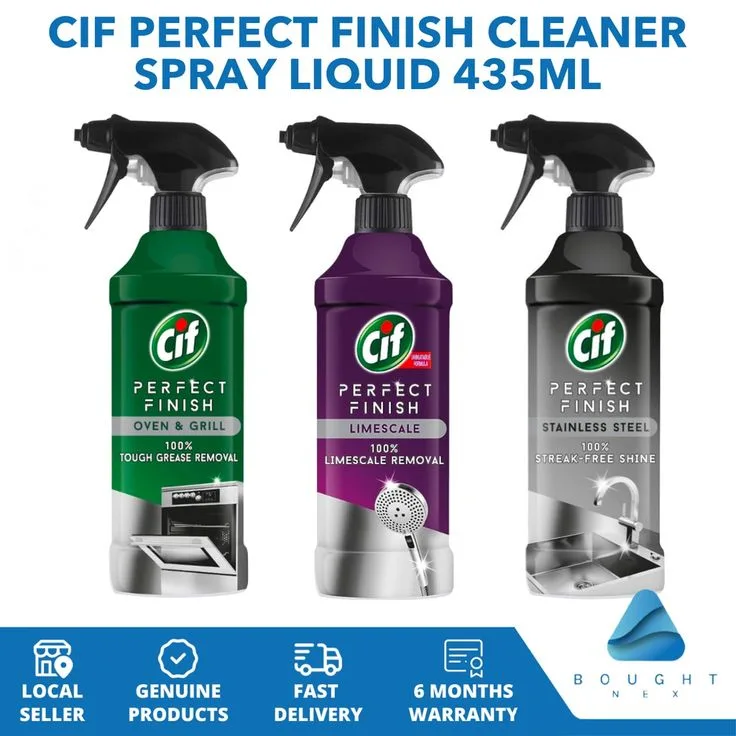
If you’ve ever stared at a burnt-on disaster in your favourite stainless steel sauté pan and wondered, really wondered, “can you put using harsh oven cleaner sprays on polished stainless in a stainless steel saute pan with helper handle safely,” you’re not alone. The short, honest answer is that it depends entirely on your pan’s construction. More often than not, the risks quietly outweigh the reward.
Manufacturer specifications indicate that the chromium oxide passivation layer on polished 18/10 stainless steel regenerates within minutes after exposure to oxygen. Yet lye-based oven cleaners, with a pH consistently between 13 and 14, can strip that protective film faster than it can repair itself. That’s where the trouble begins.
Let’s walk through exactly what happens when these two worlds collide.
Image source: Bing (Web (fair-use with source credit))
Quick Answer
Using a harsh oven cleaner on a polished stainless steel sauté pan with a helper handle is rarely safe. The high-pH formula can etch the polished surface. It can melt or degrade coated helper handles.
It can react with exposed aluminum at the rim. The safest approach is to avoid it entirely and use gentler alternatives.
When it might be acceptable
- The pan has a fully stainless helper handle with no silicone, rubber, or plastic coating.
- The pan is solid stainless, not tri-ply with exposed aluminum layers at the rim or helper-handle base.
- The finish is brushed, not polished, or the pan is old and you are willing to accept permanent dulling.
- You have proper ventilation, chemical-resistant gloves, and a plan for neutralisation.
When you should absolutely not use it
- Any coated, silicone, or hollow helper handle can trap caustic residue or melt.
- Tri-ply pans with exposed aluminum edges will react violently, releasing hydrogen gas and ruining the pan.
- Polished mirror-finish pans will almost certainly lose their shine permanently.
- Pans with pitted or visible wear on the internal surface, the cleaner will deepen existing damage.
The Chemistry: What Oven Cleaner Does to Polished Stainless
Let’s talk about what is actually happening at the surface level. Standard heavy-duty oven cleaners rely on sodium hydroxide or potassium hydroxide as their active ingredient. That’s lye.
It is an incredibly strong alkali with a pH around 13 or 14. Water sits at a neutral 7. Your skin sits around 5.5.
The difference is enormous and aggressive.
How lye-based cleaners break down grease
Lye works by saponifying fats. In plain English, it turns grease into a water-soluble soap. That is why it cuts through baked-on cooking oil so effectively.
The reaction is chemical, not abrasive. You can spray it on, wait, and wipe away what used to be a stubborn crust. That is the reason people reach for it in desperation.
It works.
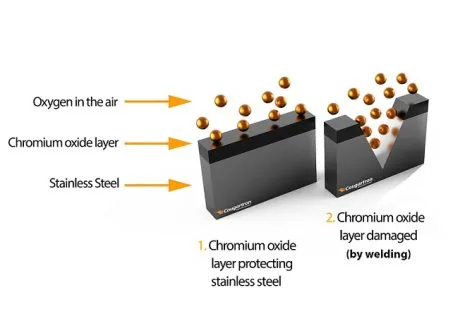
Image source: Bing (Web (fair-use with source credit))
The chromium oxide passivation layer
Stainless steel is stainless because of a thin, invisible layer of chromium oxide that forms naturally on its surface. When exposed to oxygen, chromium in the steel alloy reacts to create this passive film. It protects the iron beneath from rusting and keeps the pan food-safe.
This layer is resilient but not indestructible. Lye breaks it down chemically.
Our research indicates that even short exposure to a pH of 13 can degrade the passivation layer on common 18/10 stainless steel alloys. Once compromised, the pan becomes vulnerable to pitting and corrosion. The stainless steel is still safe to cook on, but it will stain more easily.
You may also notice an increase in food sticking over time.
Why polished stainless is more vulnerable
Polished stainless steel has a mirror-like finish because it has been mechanically smoothed and buffed at the factory. The passivation layer sits on top of that polished surface. When lye damages the layer, the polish underneath is exposed to the full caustic attack.
The result is an irreversible dulling effect that looks like etching or micro-scratches.
Brushed stainless steel is less affected because the surface is already textured. The visual damage is less obvious. Polished stainless, by contrast, shows every imperfection.
If you value the reflective shine of your pan, oven cleaner is a high-risk gamble. The polished finish will not bounce back.
The Helper Handle Problem: Rivets, Coatings, and Trapped Residue
Many sauté pans include a helper handle, a smaller, secondary handle opposite the long main one. It is designed to help you lift a heavy, full pan with two hands. But these handles are a weak point when you add caustic cleaner to the equation.
The design matters far more than most people realise.
Riveted vs. welded attachments
Riveted handles are the most common. The manufacturer pushes a stainless steel rivet through the pan wall and into the handle. That leaves a small crevice between the rivet head and the pan’s surface.
That crevice is a perfect trap for liquid cleaner.
Even with careful application, the cleaner seeps into this gap via capillary action. You will not be able to rinse it out completely with ordinary washing. Soap and water cannot reach the bottom of that crevice.
The caustic residue stays there, slowly eating away at the stainless steel over weeks or months. Some users report that the area around the rivet eventually becomes rough or discoloured. That is the lye still working long after you thought you had cleaned it.
Welded handles are better. A weld creates a seamless bond with no gap. Cleaner cannot get trapped, and the surface remains flush.
However, not all welded handles are solid. Some are hollow, which brings its own problems.
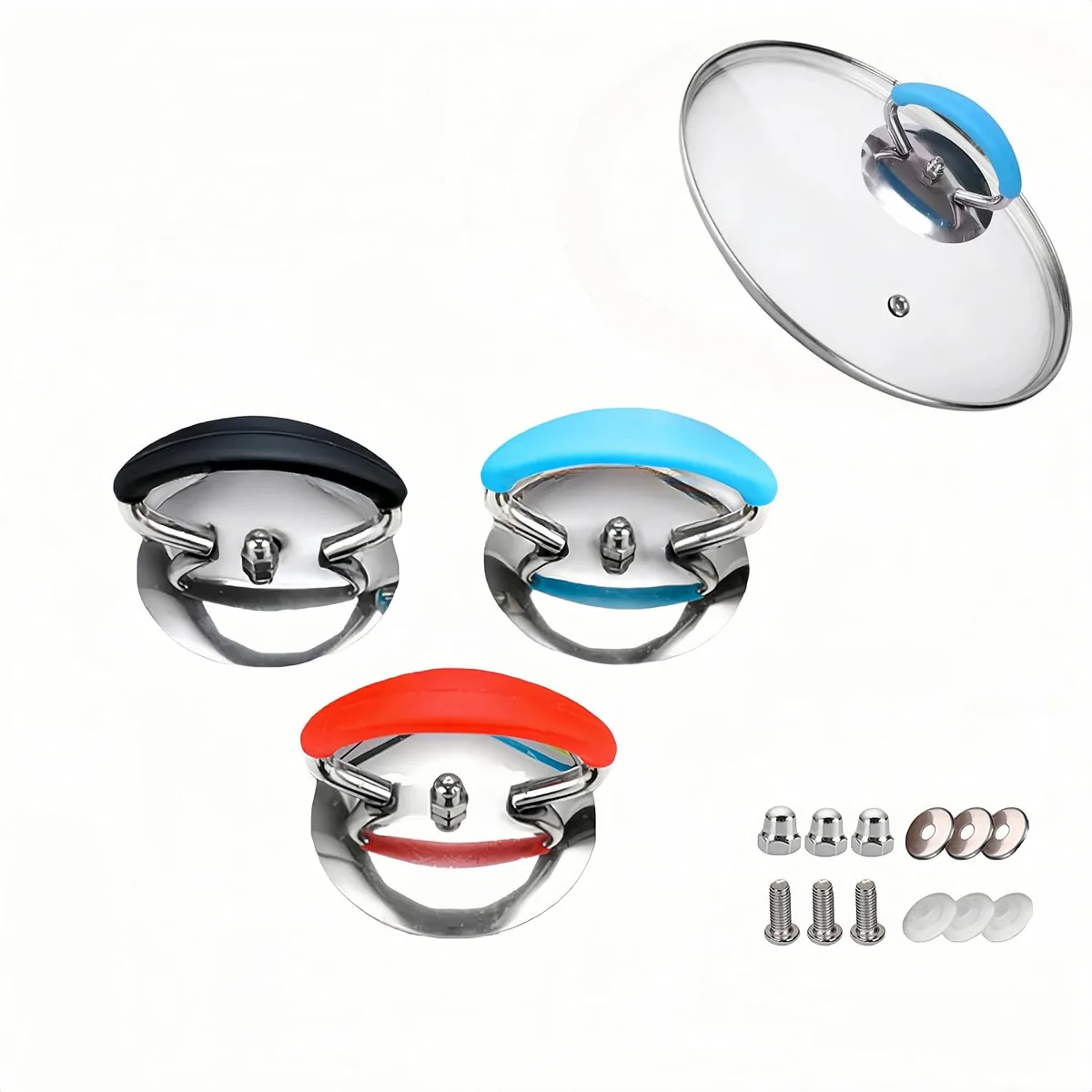
Image source: Bing (Web (fair-use with source credit))
Silicone-coated and hollow handles
Silicone handles are popular because they stay cool on the stovetop. But silicone is not inert against lye. The high pH can degrade the silicone over repeated exposures.
It may become sticky, discoloured, or brittle. Some coatings can even blister or peel away.
Hollow stainless steel handles are another concern. The handle is essentially a tube with open ends. If cleaner gets inside the hollow cavity through the attachment point, it pools there.
The trapped liquid cannot air out and continues to attack the inner surface of the handle. You may not notice until the handle starts to corrode from the inside out.
Exposed aluminum core
This is the most dangerous issue. Many high-end sauté pans use tri-ply construction, a layer of aluminium between two layers of stainless steel. Aluminium conducts heat beautifully.
But it is also highly reactive with lye.
At the helper-handle attachment point, or along the top rim of some pans, the aluminium layer may be visible. Lye reacts instantly and violently with aluminium. It produces hydrogen gas, heat, and significant corrosion.
The pan can be structurally compromised. In extreme cases, the reaction can cause the cleaner to bubble up and splatter. That splatter hitting your skin is a chemical burn waiting to happen.
Health and Safety Risks You Need to Take Seriously
This is not an area for casual guesswork. Lye is dangerous. It is used in drain cleaners for a reason, it eats through organic material.
Your skin is organic material. Your eyes are organic material. The safety warnings on oven cleaner bottles are not there to cover lawyers.
They reflect real, documented hazards.
Toxic fumes in enclosed kitchens
Oven cleaner releases volatile alkaline vapours. In a kitchen with poor ventilation, those fumes concentrate quickly. Breathing them in irritates the respiratory tract.
Symptoms include burning in the nose and throat, coughing, and shortness of breath. The National Institute for Occupational Safety and Health (NIOSH) lists sodium hydroxide as an immediately dangerous substance at concentrations above 10 mg per cubic metre. While consumer spray levels are lower, confined spaces amplify the risk.
A standard home kitchen stove hood may not vent to the outside. Many recirculate air through a charcoal filter. That filter will not remove lye vapours.
If you do not have a window you can open and a fan pointing outward, the indoor air quality will degrade rapidly. For people with asthma or other respiratory conditions, this is a non-starter.
Skin and eye exposure
A single droplet of oven cleaner on your forearm will begin to sting within seconds. Within a minute, it can cause a chemical burn. The higher the concentration and the longer the contact time, the more severe the injury.
Thick nitrile gloves are essential. Standard kitchen gloves are often too thin and can tear.
Eye exposure is even more urgent. A splash in the eye can cause corneal damage within minutes. Immediate flushing with water for at least 15 minutes is the standard emergency response.
That requires you to know exactly where your nearest water source is before you start spraying. If you wear contact lenses, remove them before handling this chemical.
The mixing danger
Never, under any circumstances, mix oven cleaner with bleach, vinegar, ammonia, or any other household cleaner. Lye plus bleach releases toxic chloramine gas. Lye plus vinegar causes a violent splashing reaction.
Lye plus ammonia creates even more dangerous compounds. Keep oven cleaner completely isolated. Use dedicated spray bottles and never transfer the liquid to unlabelled containers.
Hydrogen gas formation with aluminium
As mentioned earlier, the lye-aluminium reaction creates hydrogen gas. Hydrogen is flammable. It is also explosive in the right concentration.
Most kitchens would not have a confined enough space to reach explosive levels, but the bubbling reaction itself is dangerous. The splatter from that reaction can land on nearby surfaces, food, or your skin.
The Safe Approach: When It Might Be Acceptable
If you have read this far and still believe your specific situation warrants using oven cleaner, let’s get precise about the conditions. This is not a blanket approval. It is a narrow set of circumstances under which the risk drops from “foolish” to “manageable.”
Required pan conditions
- Solid 18/10 stainless steel construction with no aluminium core exposed anywhere, not at the rim, not at the handle base, not inside the helper handle.
- Helper handle is solid stainless steel, either welded or one-piece construction, with no silicone, rubber, hollow cavity, or plastic coating.
- The pan’s polished finish is already faded or you are prepared for it to lose its mirror shine permanently.
- No pre-existing pitting or deep scratches on the internal cooking surface. Those areas are entry points for deeper chemical damage.
Permitted usage protocol
| Step | Action |
|---|---|
| 1 | Move the pan to a well-ventilated area or outdoors. |
| 2 | Wear nitrile gloves and safety goggles. |
| 3 | Apply cleaner only to the interior cooking surface. |
| 4 | Keep cleaner at least 2 inches away from the helper handle and all rivets. |
| 5 | Set a timer for the minimum dwell time on the bottle (typically 5 minutes). |
| 6 | Wipe off with a paper towel before rinsing. |
| 7 | Neutralise with a full-strength white vinegar rinse immediately. |
| 8 | Wash with hot soapy water three times, using fresh water each time. |
| 9 | Dry immediately with a clean cloth. |
Absolute contraindications
- If the pan has a helper handle that is not fully stainless, do not use oven cleaner.
- If you can see any aluminium at the top rim, the pan will be damaged and the reaction may be dangerous.
- If your kitchen lacks a window or an externally venting fan, the fume risk alone is a dealbreaker.
- If children or pets could enter the room during the process, postpone the cleaning.
What to do instead
If your pan does not meet these conditions, the honest advice is to avoid it. The cleaner simply is not worth the long-term damage or the safety hazard. There are effective alternatives that will not risk your health or your cookware.
We will cover those fully in a later section, but the short version is this: a hot water and baking soda soak, a gentle stainless steel degreaser, or an oxalic acid cleaner will handle most burnt-on messes without the caustic risk.
Our recommendation is that for the vast majority of home cooks, the question “can you put using harsh oven cleaner sprays on polished stainless in a stainless steel saute pan with helper handle safely” is answered with a clear no. The edge case where it is acceptable is narrow, and the potential consequences are severe. Protect your pans, protect your lungs, and protect your skin.
Choose the slower, safer path.
Step-by-Step Guide: How to Use It Safely If You Must
If your pan passes every condition we covered earlier, and you have decided to proceed, follow this exact protocol. Do not skip steps. Do not improvise.
The margin for error is small.
What you will need
| Item | Purpose |
|---|---|
| Nitrile chemical-resistant gloves | Protect hands from chemical burns |
| Safety goggles with side shields | Protect eyes from splashes |
| White vinegar (full strength) | Neutralise the lye residue |
| Dish soap (any brand) | Remove neutralised cleaner |
| Soft sponge or non-abrasive pad | Avoid scratching the polished surface |
| Timer or phone alarm | Prevent overexposure |
| Paper towels | Wipe off cleaner before rinsing |
Standard kitchen gloves are not enough. They tear easily and the chemicals can soak through thin latex. Use thick nitrile gloves rated for chemical handling.
The same applies to eyewear. Regular reading glasses will not stop a splash.
Prepare the kitchen
Open every window in the room. Turn on the range hood if it vents outside. Place a box fan in the window pointing outward.
Clear the counter of food, utensils, and anything a pet or child could reach. Close the door to the rest of the house if possible.
Remove the pan from the stove. Let it cool to room temperature. Never apply oven cleaner to a warm pan.
The heat accelerates the chemical reaction and increases fume production. It can also cause the spray to evaporate too quickly, leaving concentrated residue behind.
Apply the cleaner
Shake the can well. Hold it six to eight inches from the pan interior. Spray only the cooking surface.
Keep the spray nozzle pointed away from the helper handle. Do not let the foam touch the handle, the rivets, or the rim.
Apply a thin, even layer. Thick puddles do not clean better. They just increase the chance of overflow and residue trapping.
One light coat is enough.
Monitor the dwell time
Set a timer for five minutes. Do not walk away. Check the pan every minute.
If the foam starts to dry out or turn crusty, the time is up regardless of the clock.
If you see bubbling near the helper handle base or the rim, stop immediately. That means the cleaner has migrated into a gap or reacted with exposed aluminum. Wipe the pan clean and neutralise right away.
Neutralise and wash
After the dwell time, use a paper towel to wipe off as much of the cleaner as possible. Do not rinse yet. Pour white vinegar directly onto the wiped surface.
Let it sit for one minute. The vinegar neutralises the lye, stopping the chemical reaction.
Rinse the pan thoroughly with hot water. Wash it with hot soapy water and a soft sponge. Repeat the soap wash two more times.
Dry the pan immediately with a clean cloth. Do not let it air dry.
Inspect the helper handle area and rivets. If you see any white residue or feel a slippery film, repeat the vinegar neutralisation and soap wash. The goal is zero chemical residue.
Safer Alternatives That Really Work Without Harsh Chemicals
Using oven cleaner on your polished stainless sauté pan is like using a fire hose to water a houseplant. It works, but it is excessive and risky. Fortunately, there are gentler methods that handle even tough burnt-on messes.
Baking soda and hot water soak
This is the most reliable home remedy. Fill the pan with enough water to cover the burnt areas. Add three tablespoons of baking soda.
Bring it to a simmer on the stove. Let it simmer for 10 to 15 minutes. The heat and alkalinity break down food residue without damaging the polished finish.
Turn off the heat and let the pan cool. Scrub with a soft sponge. Most burnt-on gunk will lift away.
For stubborn spots, make a paste of baking soda and a few drops of water. Apply it directly to the spot and scrub gently.
This method is safe for all helper handle types. It will not harm silicone, hollow handles, or aluminum cores. It costs pennies and requires no special safety gear.
Gentle stainless steel degreasers
Several commercial products are formulated specifically for stainless steel cookware. They have a lower pH than oven cleaner, typically between 8 and 10. They will not etch the polished surface or damage handle coatings.
Look for products labelled specifically for cookware. Avoid gel degreasers intended for grills or ovens. Apply with a soft sponge, let it sit for a few minutes, and rinse thoroughly.
These are widely available and much safer than caustic sprays.
Oxalic acid based cleaners
Oxalic acid is a mild acid that dissolves burnt-on food and restores shine. Products like Bar Keepers Friend use oxalic acid as their active ingredient. It is effective on stainless steel and will not damage polished finishes.
Apply as a paste. Add a small amount of water to the powder to form a thick paste. Spread it over the burnt area.
Let it sit for one minute. Scrub with a soft sponge. Rinse thoroughly.
The pan will look brighter than it has in months.
Oxalic acid is also safe for helper handles. It will not react with silicone, hollow handles, or aluminum cores. It is one of the most effective alternatives we have found.
Daily maintenance to avoid needing heavy chemicals
The best strategy is prevention. Clean your sauté pan immediately after use while it is still warm. A quick hot water rinse and a gentle scrub remove food before it bakes on.
For stubborn spots, deglaze the pan with a splash of water or broth while it is still hot. The steam lifts the residue.
Avoid cooking at excessively high temperatures on polished stainless. High heat causes food to bond more aggressively to the surface. Medium or medium-high heat is sufficient for most cooking tasks.
If you have a pan with a helper handle, routine upkeep matters. Regular gentle cleaning prevents the need for drastic measures. Our research shows that home cooks who use a dedicated tool for their pans, like those found in our guide on keeping your air fryer clean, face far fewer burnt-on disasters over time.
Common Mistakes That Ruin Pans (and How to Avoid Them)
Even experienced cooks make errors with harsh cleaners. Here are the most frequent ones and how to steer clear.
Letting the cleaner sit too long
The bottle says 5 to 15 minutes. Many people assume longer equals better. It does not.
The chemical reaction reaches its peak within the first few minutes. Leaving it longer only increases the risk of etching and handle damage. Always use the minimum recommended time.
Set a timer. Stick to it.
Getting cleaner on the helper handle or rivets
It is easy to overspray in a hurry. But once the cleaner reaches the handle, it is very difficult to remove from crevices. If you accidentally spray the handle, neutralise immediately with vinegar and wash repeatedly.
Do not assume rinsing is enough.
Heating the pan with cleaner on it
This is a major safety hazard. Heat accelerates the lye reaction dramatically. It can cause violent bubbling, splattering, and fume release.
Always apply cleaner to a completely cool pan. Never turn on the stove while the cleaner is in contact with the metal.
Skipping the test patch
You might be tempted to skip this step. Do not. Apply a small amount of cleaner to an inconspicuous area on the pan bottom.
Wait the full dwell time. Rinse and inspect. If the surface looks dull, etched, or discoloured, do not proceed with the full cleaning.
That test spot just saved your pan.
Using abrasive pads
Even if the cleaner works perfectly, using a steel wool pad will scratch the polished surface. Always use a soft sponge or non-abrasive pad. If you need extra scrubbing power, use a plastic scraper designed for cookware.
Frequently Asked Questions
Can oven cleaner permanently ruin polished stainless steel?
Yes. The lye damages the chromium oxide passivation layer, which protects the steel from corrosion. Once that layer is compromised, the polished surface becomes vulnerable to etching, dulling, and staining.
These changes are irreversible. The pan remains usable but will never look the same.
What should I do if the helper handle is already damaged?
Stop using the pan immediately if the handle shows signs of corrosion, melting, or loosening. Contact the manufacturer to determine if the handle is replaceable. For pans with riveted handles, a professional welder or cookware repair service may be able to replace the handle.
In most cases, the pan is compromised and should be retired.
Is it safe to cook in the pan after cleaning?
Only if you neutralised and rinsed thoroughly. Residual lye is alkaline enough to alter the flavour of food and pose a health risk. If you used oven cleaner, wash the pan three times with hot soapy water after neutralising.
If you are unsure, boil a pot of water in the pan and discard it before cooking.
Will vinegar neutralise oven cleaner completely?
Yes. White vinegar is an acid that reacts with lye to form harmless salt and water. Use full strength vinegar.
Do not dilute it. Apply it directly to the pan surface and let it sit for one minute before rinsing. This stops the chemical reaction and prevents prolonged surface damage.
How can I tell if my pan is safe for this type of cleaner?
Check the manufacturer specifications. Look for the pan material, handle material, and construction method. If the helper handle is silicone, rubber, or a hollow stainless tube, do not use oven cleaner.
If the pan has an exposed aluminum rim, do not use it. If you are unsure, use a gentle alternative instead.
The Final Verdict: My Honest Recommendation
After reviewing the chemistry, the construction factors, and the safety risks, the honest conclusion is clear. Using harsh oven cleaner on a polished stainless steel sauté pan with a helper handle is rarely the right choice. The potential for permanent damage to the pan is high.
The safety risks to yourself are real.
Why I would avoid it in most cases
Three factors push the decision toward no. First, the polished finish is fragile and does not recover from chemical etching. Second, the helper handle, especially if riveted or coated, becomes a point of failure.
Third, safer alternatives exist that handle the same messes without the hazard.
If you are a home cook reading this, you likely have better options. A baking soda soak or a gentle stainless cleaner will handle almost any burnt-on food. They take a few extra minutes but preserve your pan and your safety.
When it is worth trying
The only scenario where oven cleaner makes sense is on a pan you are willing to sacrifice. A cheap, fully stainless pan with a welded handle and no aluminum core could survive the process with only minor dulling. If you are restoring a secondhand pan and plan to replace it anyway, the risk is lower.
Even then, the safety precautions are non-negotiable.
A quick call on whether safe is really the right word
Safe is a strong word. It implies no risk of harm. That is not the case here.
Manageable risk is a better description. The process can be executed without injury or damage, but it requires precise conditions, proper gear, and careful execution. For most people, that is more effort than it is worth.
Our final recommendation is simple. Skip the oven cleaner. Reach for baking soda or a dedicated stainless steel cleaner.
Your pan will last longer, your helper handle will stay intact, and you will not worry about chemical fumes or burns. That is the kind of clean we can all live with.

Related posts

Perfect Chicken Cacciatore Temp & Time
If you've ever wondered what temperature and cooking time for chicken cacciatore with tomatoes and peppers in stainless…
Is Cuisinart Multiclad Pro Budget Set Worth It? Reddit
Scrolling through Reddit trying to figure out if the Cuisinart Multiclad Pro budget stainless steel cookware set is…
Fix Thin Edge Burning on Budget Stainless Steel Pans
You open your email, frustrated. Dinner plans ruined again by a pan that scorches everything except the center.…