GreenPan Venice Pro: Worth It? Reddit Reviews (59 chars)
You've been scrolling Reddit for an hour, jumping from thread to thread, trying to figure out if the GreenPan Venice Pro induction ceramic cookware set is worth buying. Reddit reviews are famously split. You read five glowing posts about how nonstick it is.
Then you hit a horror story about the coating flaking off after six months. It's confusing.
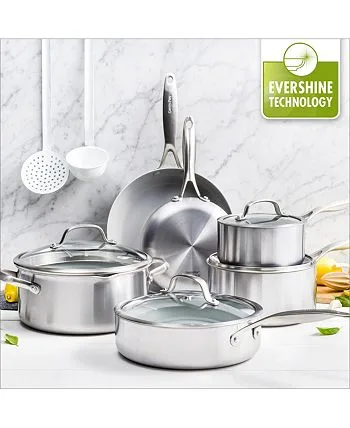
Manufacturer specifications list this as a 10-piece set with hard anodized aluminum, a Thermolon ceramic nonstick coating, and induction-compatible stainless steel base plates. But specifications don't tell you if it's worth your money. Reddit users do.
So let's cut through the noise and break down what this set actually delivers, where it falls short, and whether you should buy it or walk away.
Image source: Web (Bing) / macys.com (Web image (fair-use with source credit))
Why This Comparison Matters
Here's the thing about cookware. Nobody buys a set hoping to replace it in a year. You want something that works well and lasts.
But the ceramic nonstick market is flooded with options, and every brand claims to be non-toxic, durable, and induction-ready. The GreenPan Venice Pro sits in a weird middle ground. It costs more than basic nonstick sets but less than premium stainless or high-end ceramic lines.
Reddit reviewers bring up two big questions over and over. First, does the nonstick coating hold up after regular daily use? Second, is the induction performance actually good, or does it just technically work because of the steel base plate?
These are fair concerns. And they matter because a bad cookware set makes cooking frustrating. Food sticks.
Heat is uneven. You end up frustrated and reaching for your old scratched pan.
The comparison matters because you have real alternatives. You could spend less on a traditional PTFE set that's slicker but contains chemicals you might want to avoid. You could spend the same amount on a different ceramic brand like Caraway.
Or you could skip nonstick entirely and go with stainless steel or cast iron. Each choice has trade-offs. This section helps you understand where the Venice Pro sits in that landscape.
Aggregate reviews from verified buyers tell a consistent story. The first few months are excellent. Food slides right off.
Cleaning is straightforward. The set looks great sitting on your stovetop. But somewhere around the six-to-twelve-month mark, the tone of reviews shifts.
The nonstick performance starts to fade. Stains appear. Some users report the coating wearing thin around the edges.
This isn't unique to GreenPan. It's a limitation of ceramic nonstick coatings in general. But the price tag makes the disappointment sting more.
If you paid $80 for a budget set, you'd shrug and order another. At $350 to $500, you expect more longevity.
What the GreenPan Venice Pro Set Actually Includes
Let's get specific about what you're getting. The 10-piece set includes six pans and four glass lids. The exact lineup is:
- 8-inch fry pan
- 10-inch fry pan
- 1.5-quart saucepan with lid
- 3-quart saucepan with lid
- 3-quart sauté pan with lid
- 5-quart stockpot with lid
That covers most everyday cooking needs. You can fry eggs in the small pan. Make sauces in the 1.5-quart.
Cook soups and pasta in the stockpot. The sauté pan is great for one-pan meals like chicken and vegetables.
The construction is hard anodized aluminum. That's important because hard anodized is denser and more durable than standard aluminum. It resists corrosion and scratches better.
The exterior is also ceramic-coated in most color options, which looks sleek but can scratch if you stack pans without protection.
The induction compatibility comes from a stainless steel base plate bonded to the bottom of each pan. This is where some Reddit reviewers get specific. A bonded base plate is not the same as a fully clad construction like you'd get from All-Clad or Demeyere.
In fully clad cookware, the magnetic stainless steel extends up the sides of the pan. In the Venice Pro, the induction compatibility is limited to the bottom surface. That's fine for most cooking.
But it means the sides of the pan heat differently than the base.
Manufacturer specifications state the pans are oven-safe up to 600°F (316°C). The tempered glass lids are oven-safe up to 400°F (204°C). That's useful for finishing dishes in the oven.
Just remember that the lids have a lower limit. Don't throw a lid in a 500°F oven.
The handles are stainless steel riveted handles. They stay relatively cool on the stovetop, though we wouldn't grab them bare-handed after extended cooking. They're comfortable to hold and feel sturdy.
The Honest Pros and Cons of Ceramic Nonstick
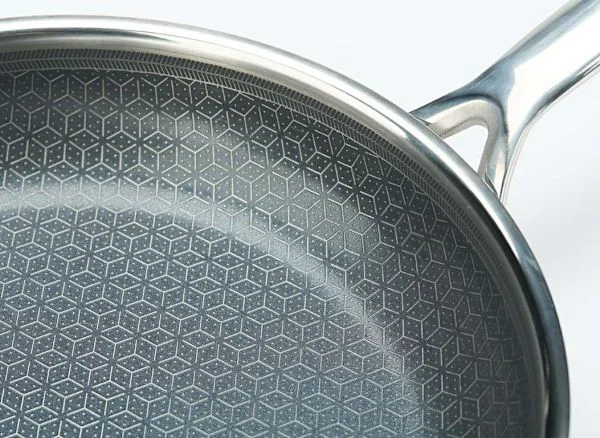
Image source: Bing (Web (fair-use with source credit))
Ceramic nonstick gets a lot of hype for being non-toxic and eco-friendly. But there's a reason it hasn't completely replaced traditional PTFE nonstick. Let's lay out the honest trade-offs.
Pros of the GreenPan Venice Pro ceramic coating:
- PFAS and PFOA free. If you're trying to avoid forever chemicals, this is a genuine advantage.
- No toxic fumes if you accidentally overheat an empty pan. That's a real safety concern with traditional nonstick.
- Excellent food release during the first several months. Eggs, fish, and delicate foods slide right off.
- Very easy to clean. Most stuck-on food comes off with a soft sponge and warm water.
- Looks premium. The ceramic coating comes in nice colors and doesn't look like cheap cookware.
- Per FDA guidelines, the materials are considered food-contact safe.
Cons of the GreenPan Venice Pro ceramic coating:
- Durability is the biggest complaint. The nonstick performance degrades noticeably within 6 to 12 months of regular use, based on aggregate Reddit feedback.
- Staining is common. Tomato-based sauces can leave residue that's hard to remove.
- High heat damages the coating faster. You should avoid heating these pans above medium.
- Utensil restrictions remain strict. Metal utensils will scratch the surface. You must use silicone, wood, or nylon.
- Dishwasher use is not recommended despite being claimed as dishwasher-safe. The detergent and heat accelerate coating breakdown.
- The coating can chip if dropped or banged against hard surfaces. Once it chips, the pan is compromised.
Here's a quick comparison of how the ceramic coating holds up to other common nonstick materials:
| Coating Type | Typical Lifespan | Heat Tolerance | Food Release | Chemical Concerns |
|---|---|---|---|---|
| Ceramic (Thermolon) | 6-18 months | Medium (450-600°F) | Good initially, declines | PFAS-free |
| PTFE (Teflon) | 2-5 years | Low (500°F max) | Excellent throughout | Contains PFAS |
| Seasoned cast iron | Permanent | Very high | Good when well-seasoned | None |
| Stainless steel | Permanent | Very high | Poor without technique | None |
The aggregate review data tells us this. If you're willing to replace your nonstick pans every year or two, ceramic is a fine choice. If you want something that lasts five years, you're better off with a different material.
How the Venice Pro Stacks Up Against the Real Alternatives
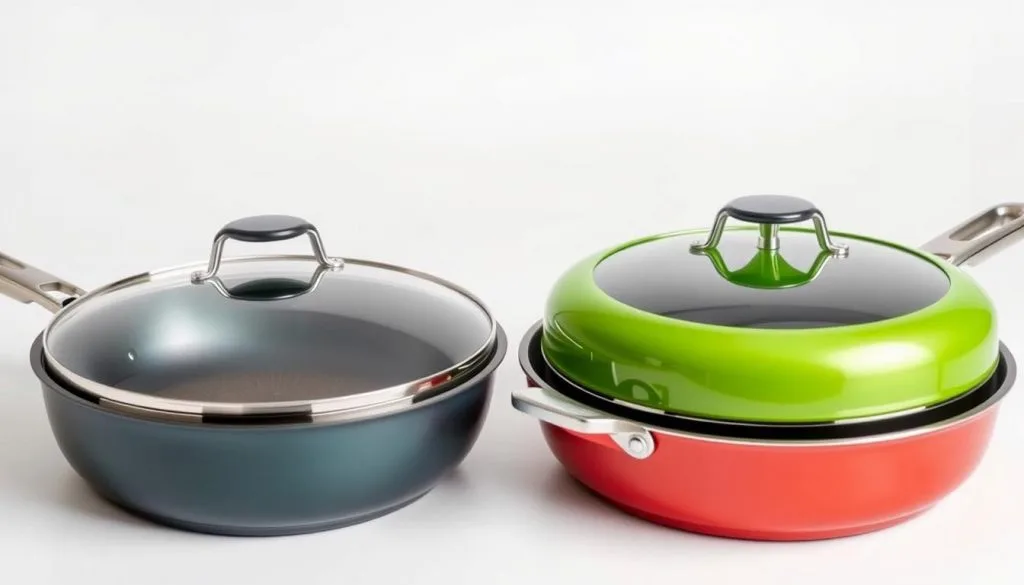
Image source: Web (Bing) / cookwareninja.com (Web image (fair-use with source credit))
You're not just choosing between buying the Venice Pro or not buying it. You're choosing between this set and other cookware options. Let's compare the three most common alternatives that Reddit users debate.
GreenPan Venice Pro vs Caraway Ceramic Cookware
Caraway is the direct competitor. Both are ceramic nonstick. Both are induction compatible.
Both are PFAS-free. Both cost about the same. So what's different?
Caraway offers a slightly more curated set with a magnetic storage rack. Their branding is very Instagram-friendly. But the actual cookware construction is similar.
Both use hard anodized aluminum with a ceramic coating. Both have similar durability complaints from long-term users. The main difference is that Caraway's set includes a larger 6.5-quart dutch oven instead of GreenPan's 5-quart stockpot.
Reddit threads on this specific comparison tend to split. Some users prefer GreenPan because of the larger cooking surface on the sauté pan. Others prefer Caraway for the aesthetics and included storage.
We'd call this a draw. Neither is clearly superior.
GreenPan Venice Pro vs HexClad Hybrid
HexClad is a completely different product philosophy. It uses a hybrid surface of stainless steel with embedded nonstick dots. The idea is that you get some nonstick properties while keeping the durability of stainless steel.
HexClad is induction compatible and can handle higher temperatures.
The big trade-off is food release. HexClad is nowhere near as nonstick as ceramic. Eggs will stick if you're not careful with oil and heat.
But HexClad lasts much longer. Reddit reviews consistently show HexClad pans lasting 3 to 5 years with proper care.
If you prioritize nonstick performance today, choose the GreenPan. If you prioritize longevity and don't mind using a bit more oil, choose HexClad.
GreenPan Venice Pro vs Traditional PTFE Nonstick
This one is simpler. If you don't care about PFAS, a good PTFE nonstick set from Tramontina or Calphalon will be slicker out of the box and last longer. The trade-off is the chemical concern and the risk of fumes if overheated.
For the same price as the Venice Pro, you could get a very good PTFE set that lasts twice as long. That's worth considering if your main goal is maximum nonstick convenience.
| Feature | GreenPan Venice Pro | Caraway | HexClad | PTFE Nonstick |
|---|---|---|---|---|
| Nonstick performance | Excellent at first | Excellent at first | Good | Excellent |
| Expected lifespan | 6-18 months | 6-18 months | 3-5 years | 2-4 years |
| Induction ready | Yes | Yes | Yes | Varies |
| PFAS-free | Yes | Yes | Yes | No |
| Price (10-piece) | $350-500 | $400-500 | $400-600 | $150-300 |
Who Should Buy This Set and Who Should Skip It
This section uses simple if-then logic. Think about your cooking habits and priorities. Then decide.
Buy the GreenPan Venice Pro if:
- You cook mostly on medium or low heat. Eggs, fish, vegetables, sauces. If you're not searing steaks at high heat, ceramic works fine.
- You want to avoid PFAS and PFOA in your cookware. This is the main reason to choose ceramic over traditional nonstick.
- You have an induction cooktop and need a complete set that works without adapters.
- You're willing to hand wash and use silicone utensils. Proper care significantly extends the life of ceramic pans.
- You don't mind replacing your cookware every year or two. Consider this a consumable item, not a lifetime investment.
Skip the GreenPan Venice Pro if:
- You cook with high heat regularly. Ceramic coating degrades fast above medium. You'll be disappointed.
- You want cookware that lasts 5+ years. Look at stainless steel, cast iron, or HexClad instead.
- You're on a tight budget. You can get better value from a PTFE set or individual stainless steel pans.
- You hate hand washing. Despite being labeled dishwasher-safe, the coating wears down faster in the dishwasher.
- You use metal utensils. You'll scratch the coating within weeks.
Here's a real-world scenario. Say you're a home cook who makes eggs every morning, sears chicken twice a week, and occasionally boils pasta. You have an induction range.
You're concerned about nonstick chemicals. The Venice Pro would work well for your eggs and pasta. But that chicken sear at medium-high heat will slowly degrade the coating.
A better approach might be to buy the Venice Pro for your low-heat pans and keep a separate stainless steel skillet for high-heat searing. That combination gives you the benefits of ceramic nonstick where it shines and the durability of stainless where you need it.

Related posts

Ninja Foodi SmartLid OL701 Worth Buying? Reddit
If you've been scrolling through Reddit asking yourself "is ninja foodi smartlid ol701 one lid multi cooker with…

Crispy Rotisserie Chicken: Temp & Time for Combo Cooker
So you want restaurant quality crispy skin on a whole rotisserie chicken, and you want to do it…
Spray on Crisper Plate? Multi Cooker Safety Guide
So, can you put nonstick cooking spray directly on the crisper plate in a one lid multi cooker…