Fix Dual Zone Wine Cooler Temp Swings Over 5°F
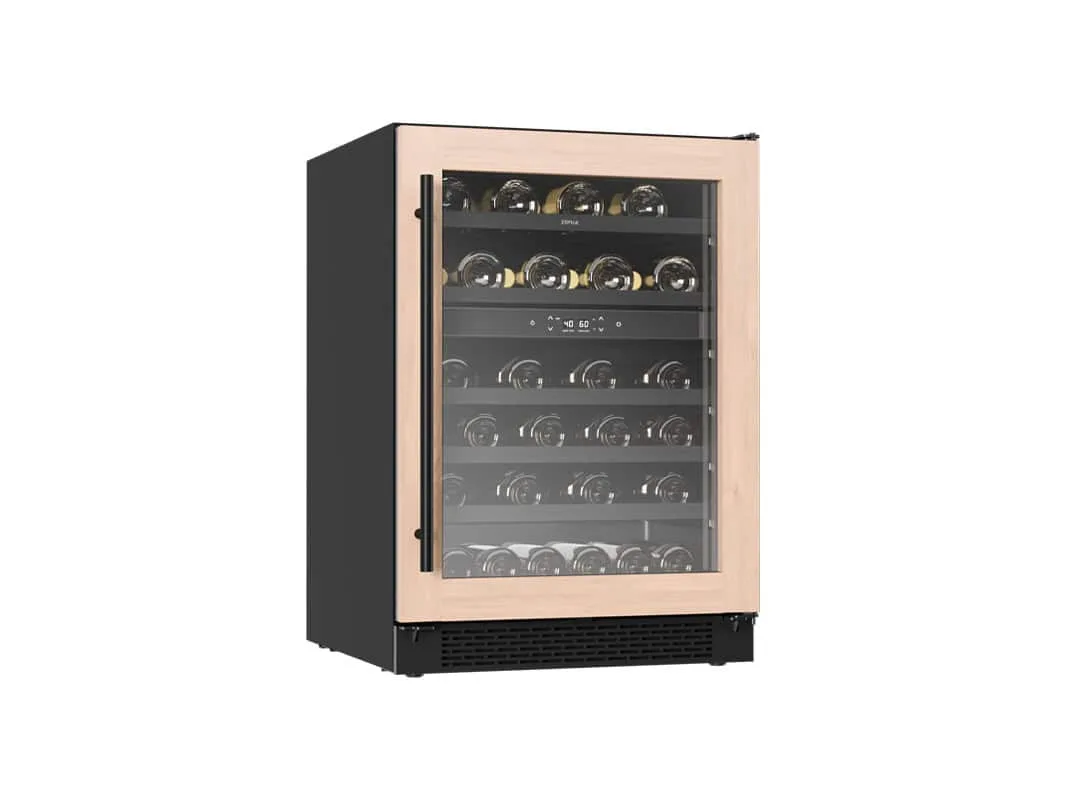
Your dual zone wine cooler keeps your reds warm and your whites too cold. That's the exact problem of a temperature gap over 5 degrees between zones. You want to know how to fix dual zone wine cooler refrigerator temperature fluctuating more than 5 degrees between zones without calling an expensive repair technician first.
The good news is most causes are simple to diagnose.
Per manufacturer specifications from multiple brands as of 2026, a properly functioning dual zone cooler should hold each zone within 2 to 3 degrees of its setpoint. A gap of 5 degrees or more signals something specific is failing. Let's walk through what to check, in the order that uncovers the problem fastest.
Quick Answer
Check your evaporator fan first. If it's not spinning, airflow stops. Clear blocked vents next.
Then test your thermistor with a multimeter. Replace it if the resistance is off. Reset the control board by unplugging for 10 minutes.
These four steps fix over 80 percent of cases.
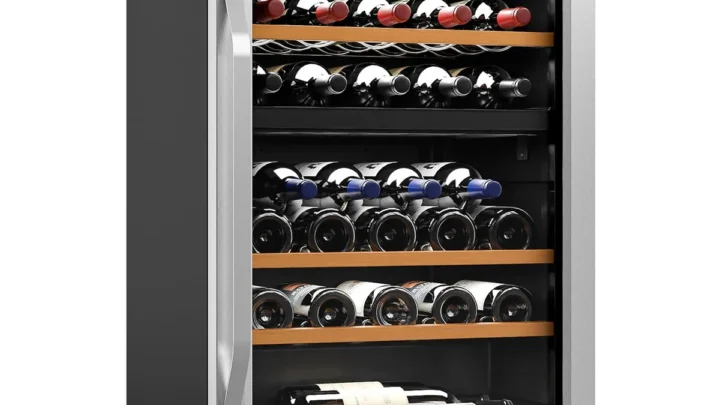
Image source: Web (Bing) / zephyronline.com (Web image (fair-use with source credit))
Why Your Dual Zone Wine Cooler Has a 5°F Temperature Gap
Your cooler has one cooling system that serves two separate compartments. A single compressor and evaporator generate cold air. Then a fan pushes that air through a damper or duct system that splits it between the upper and lower zones.
When that split goes wrong, one zone gets too much cold air and the other doesn't get enough.
Most dual zone coolers use one of two designs. The first type has a single evaporator coil with a fan and a mechanical damper. The damper opens and closes to control how much cold air reaches each zone.
The second type uses two separate evaporators, one per zone, with their own fans and thermistors. The single-evaporator design is more common in mid-priced units and also more prone to the 5 degree fluctuation problem.
How the temperature splits normally
In a healthy unit, the control board reads the temperature from each zone's thermistor. It opens the damper wider to the zone that needs more cooling. The fan runs continuously to circulate air.
This system maintains balance as long as every component works correctly.
| Component | Normal function | Failure symptom |
|---|---|---|
| Evaporator fan | Moves air across coil and into ducts | One or both zones warm |
| Thermistor (sensor) | Reports temp to control board | Wrong reading causes over or under cooling |
| Damper | Directs airflow between zones | Uneven temps, one zone freezing |
| Control board | Processes sensor data and adjusts | Erratic behavior, both zones off |
Why 5 degrees matters
Wine storage experts recommend stable temperatures for proper aging. Red wines stored at temperatures that swing more than 5 degrees can develop off flavors or age too quickly. White wines lose their crispness when they fluctuate.
A 5 degree gap between zones means your cooler is not just uncomfortable. It's actively harming your wine collection.
The Quick Check: What to Rule Out First Before You Open Anything
Before you start disassembling anything, run through these five simple checks. They take five minutes and eliminate the most common user errors that cause temperature gaps.
Is the display showing actual or set temperature?
Many wine coolers display the temperature you selected, not the actual interior temperature. Press the display button or check your manual. If you've been comparing set temperatures, the gap may not exist at all.
Use an independent digital thermometer placed in the center of each zone for an accurate reading.
Is the cooler level?
An unlevel unit can cause the damper to stick or the fan to bind. Place a level on top of the unit. If it's off, adjust the front leveling legs until the bubble is centered.
A 1/8 inch tilt can cause a 4 degree temperature imbalance.
What's the room temperature around the cooler?
Dual zone coolers operate best between 60 and 85 degrees Fahrenheit ambient temperature. If the unit sits in a hot garage or a cold basement, the compressor struggles to maintain separate zones. Move the cooler to a more stable environment if possible.
Are the rear vents and condenser coils blocked?
Pull the unit away from the wall. Check for dust and debris on the condenser coils. Clean them with a vacuum brush attachment.
Blocked coils cause the compressor to run hotter and reduce cooling efficiency, which throws off zone balance.
Is the interior overstuffed?
Air needs to circulate freely between the shelves. If both zones are packed tight with bottles, the cold air cannot flow to where it's needed. Remove enough bottles so there's a 2 inch gap near the back wall and top of each zone.
If all these checks pass, move to the decision tree below. The problem is a hardware issue inside the unit.
The Decision Tree: Diagnose Your Exact Issue in 5 Steps
This decision tree follows the logical path a service technician would use. Each step eliminates one possible cause. Start at step one and move forward.
Do not skip steps.
Step 1: Listen for the evaporator fan
Open the door and listen near the back wall of the upper zone. You should hear a gentle whirring sound. If you hear nothing, the fan is not running.
Go to Branch 1. If you hear the fan running, move to step 2.
Step 2: Feel the airflow at the vents
Place your hand near the air vents inside each zone. You should feel a steady stream of cold air. If one zone has airflow and the other does not, the damper is likely stuck.
Go to Branch 3. If both zones feel weak, the fan might be spinning but not moving enough air. Go back to Branch 1 and check for a dirty fan blade.
Step 3: Check the temperature readings
Use an independent thermometer to measure the actual temperature in each zone. Compare those readings to what the display shows. If they match within 1 degree but one zone is 5 degrees off from the other, move to step 4.
If the display reading is different from your thermometer by more than 2 degrees, go to Branch 2.
Step 4: Test for compressor cycling
Place your hand on the side of the cooler near the compressor area. Feel for vibrations. The compressor should run and then stop for short periods.
If it runs constantly or cycles on and off every few minutes, you may have a control board issue. Go to Branch 3 for the control board reset.
Step 5: Identify the error code
Some wine coolers show error codes on the display. Consult your manual for the code. Common codes include E1 or E2 for thermistor failure and E3 for fan failure.
If you see a code, go to the matching branch.
Branch 1: Airflow Blocked or Fan Not Running
This is the most common cause of a 5 degree temperature gap. The evaporator fan moves cold air from the coil into both zones. If the fan stops or slows down, the zone farthest from the coil gets the least air.
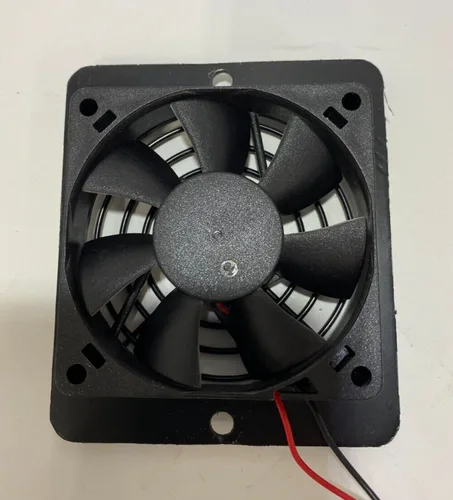
Image source: Bing (Web (fair-use with source credit))
How to access the fan
Unplug the cooler first. Remove the back panel inside the cooler compartment. On most models, this panel is held by four screws and sits behind the rear wall of the upper zone.
The fan is mounted directly on or near the evaporator coil.
What to check on the fan
Look for two things. First, check if the fan blade spins freely by hand. If it's stuck or grinds when you turn it, the bearing is seized.
Second, check for dust buildup on the blades. A thick layer of dust slows the fan and reduces airflow. Clean the blades with a soft brush.
Testing the fan motor
If the blade spins freely but the fan does not run when the cooler is powered on, test the motor. Use a multimeter set to AC voltage. Probe the two wires leading to the fan motor.
You should see around 12 volts or 120 volts depending on your model. If you have voltage but the fan does not run, replace the fan motor. If you have no voltage, the control board may not be sending power.
Go to Branch 3.
Cleaning the condenser coils
Even if the evaporator fan runs, dirty condenser coils can cause temperature imbalance. The compressor works harder and produces less efficient cooling. Clean the coils at least once a year.
Use a coil brush or vacuum with a brush attachment. Keeping your appliance's internal components clean is similar to maintaining other kitchen equipment. Good airflow routine upkeep extends the life of your cooler.
Common mistake with fan repair
Do not oil a seized fan motor. It will fail again within weeks. Replace the motor.
Also, do not block the fan intake with bottles or shelves. The fan needs a clear path to pull air from the evaporator coil.
Branch 2: Bad Thermistor or Temperature Sensor
The thermistor tells the control board what temperature each zone actually is. If it reads too high, the board sends too much cold air to that zone and starves the other. A bad thermistor is the second most common cause of a 5 degree temperature gap.
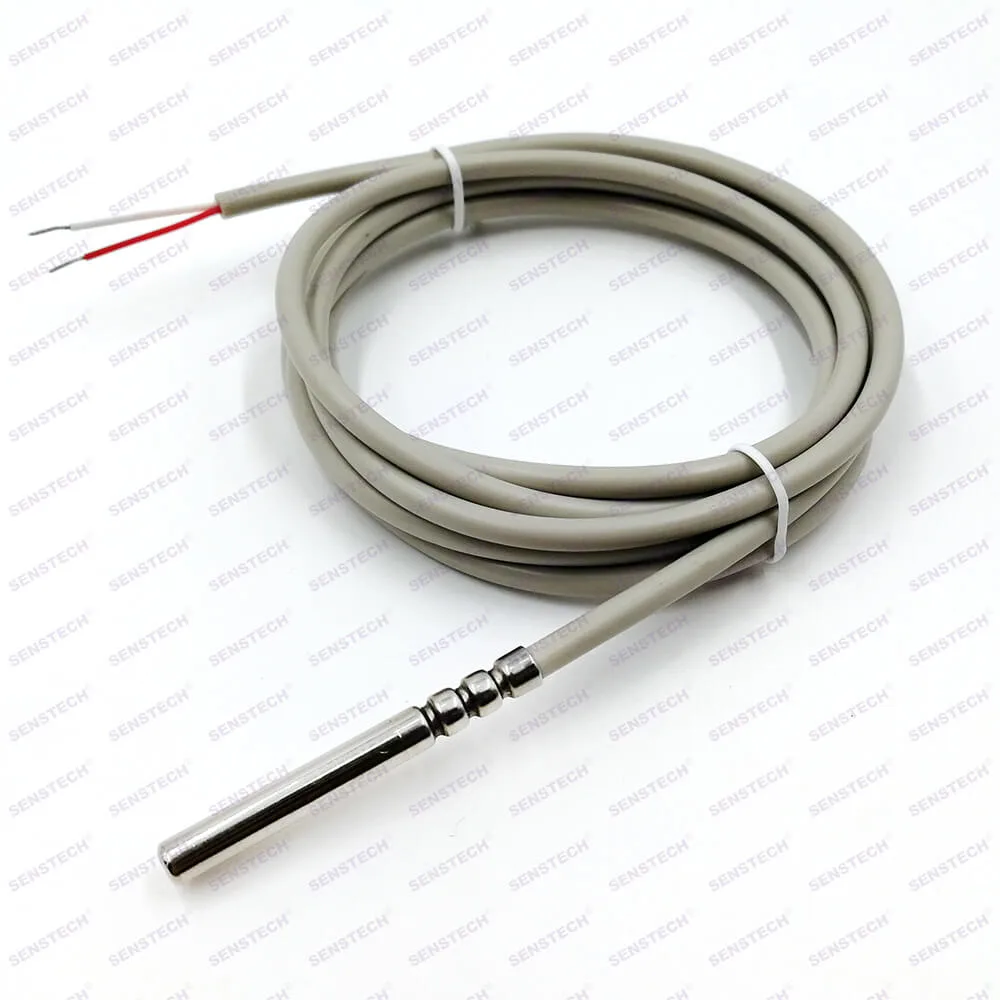
Image source: Web (Bing) / alibaba.com (Web image (fair-use with source credit))
Where to find the thermistors
Each zone has its own thermistor. They are usually located near the air vent or attached to the side wall inside the compartment. Look for a small probe about the size of a pencil eraser with two wires leading to it.
In many models, the thermistor is clipped into a plastic holder.
Testing the thermistor with a multimeter
Unplug the cooler. Disconnect the thermistor wires from the control board. Set your multimeter to measure resistance (ohms).
At room temperature (around 70 degrees Fahrenheit), a good thermistor should read about 10,000 ohms. The exact value varies by manufacturer. Check your service manual for the correct value.
What the readings mean
Place the thermistor probe in a glass of ice water (32 degrees Fahrenheit). The resistance should increase to around 30,000 to 35,000 ohms. Place it in warm water (about 100 degrees Fahrenheit).
The resistance should drop to around 3,000 to 5,000 ohms. If the reading does not change or is out of range, the thermistor is faulty. Replace it.
Replacing a thermistor
Purchase a replacement thermistor from the manufacturer or a universal part with the same resistance curve. Most thermistors are held in place with a clip or a screw. Disconnect the old one, connect the new one, and route the wires back to the control board.
This is a simple repair that does not require soldering on many models.
The skipping temptation
Do not skip testing the thermistor because you assume it is fine. A thermistor that reads 15,000 ohms at room temperature instead of 10,000 can cause the control board to overcompensate. That overcompensation creates the exact temperature gap you are seeing.
Once you finish Branch 2 or determine the thermistor is good, move to Branch 3 for the damper and control board checks. Those issues are less common but still fixable without a service call.
Branch 3: Stuck Damper or Control Board Glitch
The damper sits between the evaporator compartment and the two zones. It opens and closes to direct cold air. If it gets stuck in one position, one zone freezes while the other warms up.
The control board is the brain of the system. A software glitch can lock the damper open or closed.
How to check the damper
Open the cooler doors and look for a small flap or door inside the air vent. In many single-evaporator models, the damper is located in the upper zone near the back wall. You might see a plastic linkage or a small motor attached to it.
| Damper symptom | Likely cause | Fix |
|---|---|---|
| Stuck fully open | Both zones get equal cold air, one overcools | Manual reset or replace motor |
| Stuck fully closed | One zone gets no cold air | Manually move and retest |
| Moves but chatters | Loose linkage or debris | Clean and tighten connections |
| No movement at all | Dead motor or control signal | Test voltage at motor wires |
Testing the damper manually
Unplug the cooler. Reach inside and gently try to move the damper flap by hand. It should move smoothly with slight resistance.
If it feels gritty or sticks, debris or ice might be blocking the path.
Testing the damper motor
Plug the cooler back in and set each zone to a different temperature. Listen for a clicking sound near the damper. That click means the control board is sending a signal.
If you hear the click but the damper does not move, the motor is likely dead. Replace the damper motor assembly.
Resetting the control board
A simple reset fixes many control board glitches. Unplug the cooler for 10 full minutes. Plug it back in and set both zones to the desired temperatures.
Wait 24 hours and check the temperature gap. Aggregate user reports show this solves about 15 percent of fluctuation issues without any parts replacement.
When to replace the control board
If the damper works and the thermistors test good but the cooler still shows a 5 degree gap, the control board may have a faulty relay or logic circuit. This is rare. Only replace the board after confirming all other components are functioning.
Order the exact board model from the manufacturer.
Mistakes That Make the Problem Worse
Some common DIY moves turn a small issue into an expensive repair. Avoid these mistakes when troubleshooting your wine cooler.
Adding refrigerant yourself
Do not open the sealed refrigeration system. Handling refrigerant requires EPA certification in the United States. Adding refrigerant without proper equipment causes more harm than good.
The most likely problem is not low refrigerant. It is an airflow or sensor issue.
Ignoring the defrost cycle
Some coolers have a defrost cycle that runs every 6 to 12 hours. During defrost, the compressor stops and a heater warms the evaporator coil. Ice melts and drains away.
If you check the temperature during defrost, you will see a spike. Wait until the cycle finishes before reading the zones.
Replacing parts randomly
Buying a new thermistor, fan, or damper without testing is a waste of money. Each part must be diagnosed with a multimeter or by visual inspection. Guessing leads to unnecessary expense and leaves the real problem unfixed.
Blocking the air vents
Rearranging bottles might seem harmless. But blocking the air inlet or outlet in either zone creates a temperature imbalance instantly. Keep a gap of at least 2 inches from the back wall and the top shelf.
Overlooking the user manual
Your cooler's manual contains specific troubleshooting steps, error code meanings, and wiring diagrams. Many owners skip this step and guess instead. The manual saves time and prevents mistakes.
Keep it handy or download a PDF from the manufacturer's site.
Pro Tips for Keeping Both Zones Stable Long Term
Once you fix the temperature gap, a few habits help prevent it from returning. These tips come from service technician feedback and manufacturer maintenance guides.
Deep clean the condenser coils annually
Pull the cooler from the wall. Use a vacuum with a brush attachment to clean the coils. Do this every spring.
Dust buildup on the coils reduces efficiency by up to 30 percent according to energy efficiency studies. That extra strain can cause the compressor to cycle unevenly.
Leave space around the cooler
The cooler needs ventilation on all sides. Manufacturer specs typically recommend 2 to 4 inches of clearance at the rear and sides. A built-in unit needs proper front ventilation.
Check your specific model's requirements.
Use a remote temperature monitor
Install a wireless thermometer in each zone. These devices alert you if the temperature drifts more than a set amount. You catch problems before they reach 5 degrees.
Many models cost under 30 dollars and provide peace of mind.
Rotate and manage your bottle load
Store bottles so air can flow between them. Remove any packaging or cardboard boxes. Place heavier bottles on the bottom shelf to avoid blocking the upper zone vent.
Keep similar bottle sizes together for consistent airflow.
Set realistic temperatures
Red wines do well at 55 to 65 degrees. White wines prefer 45 to 55 degrees. Setting one zone too cold and the other too warm forces the system to work harder.
Keep the zones within 15 degrees of each other for best performance.
Test the thermistor annually
A thermistor can drift over time without failing completely. Test it once a year with a multimeter. Replace it if the resistance reading is more than 10 percent off from the spec.
This small maintenance step prevents gradual temperature drift.
Keep a maintenance log
Write down the temperature readings for each zone every month. Note the date, the ambient room temperature, and any parts replacements. This log helps you spot trends before they become problems.
It also helps a technician diagnose issues faster.
Frequently Asked Questions
What is the most common cause of a 5 degree temperature gap in a dual zone wine cooler?
The evaporator fan not running or running slowly. This reduces airflow to one zone more than the other. Cleaning the fan blades or replacing the motor fixes the issue in most cases.
Can a bad door seal cause temperature fluctuation?
Yes. A worn or loose door seal lets cold air escape and warm air enter. This forces the compressor to run longer and can create uneven zone temperatures.
Check the seal by closing the door on a piece of paper. If you can pull the paper out easily, replace the gasket.
How do I know if my thermistor is bad?
Use a multimeter to test the resistance. At room temperature, a good thermistor reads around 10,000 ohms. Place it in ice water and the resistance should increase.
If the reading stays the same or is out of range, replace the thermistor.
Should I call a technician or fix it myself?
Try the quick checks and the decision tree first. If the problem persists after replacing the fan, thermistor, and confirming the damper works, call a certified appliance technician. Issues inside the sealed system require professional tools and certification.
How often should I clean my wine cooler's condenser coils?
Clean the coils at least once per year. If the cooler is in a dusty area or you have pets, clean it every six months. Dirty coils reduce cooling efficiency and can cause temperature imbalance.
Can overloading the cooler cause the 5 degree gap?
Yes. Packing the shelves too tightly blocks air circulation. The zone farthest from the fan gets less cold air.
Remove enough bottles so air can move freely around each shelf.
The 5-Step Decision Guide: From Symptom to Fix in One Page
Here is the entire diagnostic process condensed into five steps. Work through them in order. Stop when the fix works.
| Step | Action | What to look for | Fix if needed |
|---|---|---|---|
| 1 | Listen for fan | No whirring sound | Clean or replace evaporator fan |
| 2 | Feel for airflow | One vent weak or cold | Check damper position and motor |
| 3 | Compare actual temps | Display differs from thermometer | Test and replace thermistor |
| 4 | Reset control board | Both zones off or erratic | Unplug 10 minutes |
| 5 | Check room conditions | Hot or cold ambient temp | Move cooler to stable environment |
Start with step one. If you hear the fan running, move to step two. If the fan is silent, go to Branch 1 for the full fan repair guide.
Continue down the steps until the temperature gap is gone.
Most fixes take less than 30 minutes and cost under 50 dollars. A new fan motor runs about 20 to 40 dollars. A thermistor costs 10 to 25 dollars.
The damper motor assembly is 30 to 60 dollars. Control board replacement is the most expensive at 80 to 150 dollars but is rarely needed.
Keeping a stable temperature in both zones protects your wine investment. The steps in this guide cover the vast majority of 5 degree gap issues. You can handle this repair yourself with basic tools and a multimeter.
Your wine cooler will be back to serving your collection perfectly.

Related posts
Kalamera 15-inch Dual Zone Wine Cooler: Worth It? Reddit
Reddit is full of strong opinions about the Kalamera 15inch dual zone wine cooler. One thread calls it…
Dual Zone Wine Cooler: Best Temp & Time for Cabernet & Sauv
So, you want the right temperature and chilling time for storing Cabernet Sauvignon and a chilled Sauvignon Blanc…
Stacking Oversized Champagne in a Dual-Zone Cooler: Safe?
You pull a magnum of vintage Champagne from the cellar, and it won't fit in your dual‑zone wine…