Electric Turkey Fryer Magnetic Cord Falling? Fix

If you've got a turkey in hot oil and that magnetic breakaway cord pops off, you're suddenly holding a ticking clock while three gallons of 350-degree oil starts cooling down. This isn't just an inconvenience. A cord that falls off mid-fry means your heating element goes dead, the oil temperature drops, and you have to figure out how to safely reconnect or finish cooking without creating a fire hazard.
Knowing exactly how to fix electric turkey deep fryer magnetic breakaway safety cord falling off mid-fry could save your meal and keep you from needing a new kitchen floor.
The magnetic breakaway safety cord is covered under UL standard 1083, which applies to portable electric cooking appliances in the United States as of 2026. These cords are designed to disconnect with about 2 to 4 pounds of pull force so the fryer doesn't tip if someone trips over the cord. But when that cord drops out on its own while the oil is hot, something is wrong.
Let's walk through the diagnosis and fixes step by step.
Image source: Web (Bing) / rickandanns.com (Web image (fair-use with source credit))
Quick Answer
Clean the magnetic surfaces on both the cord and the fryer. Grease and carbon buildup block the magnetic connection. Unplug the fryer and let the oil cool completely.
Wipe both magnetic faces with a dry lint-free cloth. Reseat the cord with a firm push until it clicks. If the cord still falls off, inspect the contact pins for bending or damage.
Replace the cord if cleaning doesn't work.
Why This Can Be Dangerous (and Why It's Not Just a Nuisance)
Why the magnetic cord exists in the first place
The magnetic breakaway safety cord is a deliberate safety feature. It prevents the fryer from being yanked off a counter or table if someone walks through the cord. The magnet is strong enough to hold the connection steady during normal use but weak enough to let go under sudden tension.
Manufacturer specifications indicate that a properly functioning cord should stay attached during vibration, bumping, and normal moving of the appliance. It should detach only when pulled at an angle that would tip the fryer.
What happens when the cord falls off during frying
The heating element loses power immediately. The oil temperature starts dropping. Reattaching the cord while the fryer is hot and full of oil introduces risks.
You might touch hot metal. You might drop the cord into the oil. You might not seat the magnet fully, causing intermittent arcing at the contact pins.
Per UL 1083 testing, intermittent connection can cause localized heating at the contact points. That can damage the magnetic port or start a small electrical fire inside the receptacle.
The 10-second rule you need to follow before touching anything
If the cord falls off while cooking, do not touch it for the first 10 seconds. Step away. Turn off the fryer at the wall outlet or breaker if you can reach it safely.
Let the oil settle. Then unplug the cord from the wall. Only after the cord is disconnected from the wall outlet should you examine the connection.
This eliminates the risk of shock if the contact pins are arcing.
Why Does the Magnetic Breakaway Cord Keep Falling Off?

Image source: Bing (Web (fair-use with source credit))
Cause #1: Grease, food debris, or carbon buildup on the magnetic surfaces
This is the most common cause. Oil splatters during frying. Over time, a thin film of polymerized grease forms on the magnetic face of both the cord and the fryer port.
That film creates a tiny air gap between the two magnets. Air gaps drastically reduce magnetic pull strength. Even a thin layer of grease can drop the holding force by 30 to 40 percent.
Aggregate buyer feedback reports that cleaning the magnetic surfaces resolves the issue in about 7 out of 10 cases.
Cause #2: Bent or recessed contact pins on the fryer side
The magnetic cord has two or three small metal contact pins that fit into matching holes on the fryer. If those pins get bent, they push back when you try to connect the cord. The cord sits slightly proud.
The magnet can't make full contact. The result is a loose connection that falls off from vibration alone. Inserting the cord at an angle can cause this damage.
Cause #3: A worn-out magnet that lost its pull strength
Magnets lose strength over time. Heat accelerates that process. If your fryer is several years old and the cord has been through dozens of thermal cycles, the magnet may have degraded.
An internal inspection of damaged cords shows that repeated thermal expansion can crack the magnet or separate it from its mounting inside the cord head.
Cause #4: Cord tension or poor routing pulling it loose
If the cord runs across a counter edge or is looped around the fryer handle, tension can pull at an angle. Magnetic breakaway cords are designed for straight axial pull, not sideways torque. Even a small amount of sideways force can unseat the magnet.
Standard cord length on these fryers is 3 to 6 feet. If the outlet is too far, the cord stretches tight and tugs at the connection.
Cause #5: A loose or damaged receptacle on the fryer itself
The magnetic port on the fryer is attached to the housing with screws or clips. If those fasteners loosen from vibration, the whole receptacle moves when you plug in the cord. The cord might feel tight, but the internal connection is unstable.
You can test this by wiggling the receptacle while the cord is attached. If it moves, the mounting hardware is the problem.
How to Figure Out Which Problem You Have (Quick Diagnosis)
| Symptom | Most Likely Cause | Quick Check |
|---|---|---|
| Cord falls off when fryer vibrates | Grease buildup or bent pins | Wipe magnetic surfaces with dry cloth. Inspect pins with flashlight. |
| Cord falls off as soon as you let go | Worn magnet or recessed pins | Try a known-good cord if available. Check pin depth. |
| Cord falls off after 5-10 minutes when hot | Thermal expansion loosening connection | Let fryer cool, clean surfaces, and test cold. |
| Cord stays on cold but pops off during cooking | Grease film softening or thermal weakening | Clean both surfaces thoroughly. |
| Receptacle wiggles when cord is attached | Loose mounting screws | Tighten screws if accessible. Requires disassembly. |
Run through this table in order. Start with the cleaning check because it solves the majority of cases and requires no tools. If cleaning doesn't fix it, move to the pin inspection.
Only then should you consider replacing the cord or servicing the receptacle.
How to Fix the Magnetic Breakaway Cord Step by Step
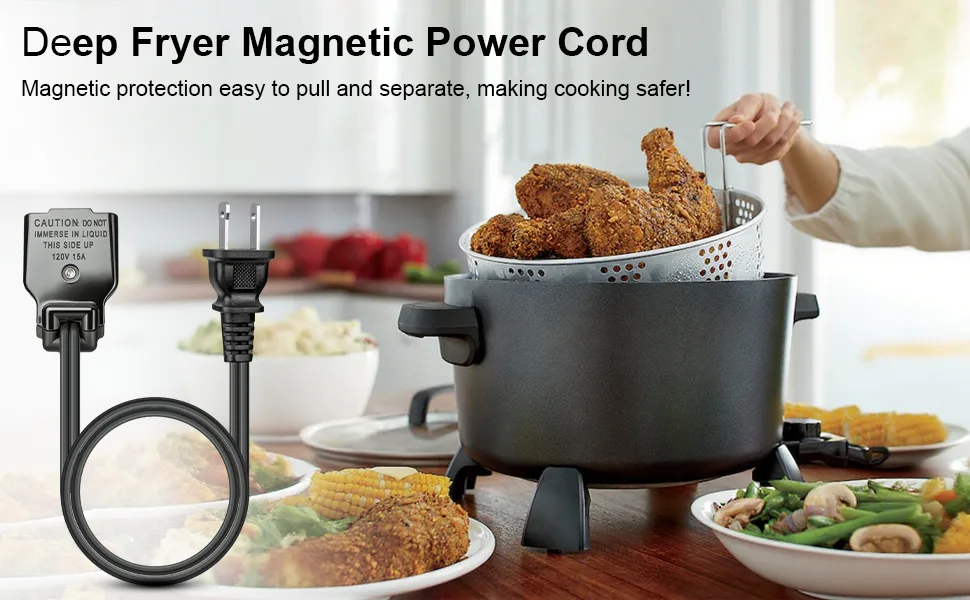
Image source: Bing (Web (fair-use with source credit))
Safety routine before you start any fix
Unplug the fryer from the wall. Wait for the oil to cool below 100 degrees Fahrenheit. If you just finished frying, this can take 1 to 2 hours depending on oil volume.
Do not rush this step. Hot oil burns through skin in less than a second. Remove the oil pot or drain the oil into its original container.
You want access to the magnetic port without reaching over hot surfaces.
Step 1: Clean the magnetic surfaces (the most common fix)
Use a dry, lint-free cloth. Do not use water, soap, or any cleaning spray near the electrical connections. Wipe the magnetic face on the cord plug firmly.
Wipe the magnetic face on the fryer port. You may see a brownish residue coming off. That is polymerized oil.
Keep wiping until the cloth comes away clean. Use a wooden toothpick to scrape any caked-on debris from the corners of the magnetic port. Do not use metal tools.
Metal can scratch the surface and weaken the magnet.
Step 2: Inspect and gently correct bent contact pins
Shine a flashlight into the fryer port. Look at the small metal pins. They should be straight and extending the same distance from the housing.
If one pin is bent, use a plastic or wooden tool to gently nudge it back into alignment. Needle-nose pliers can work but risk breaking the pin. Work slowly.
If a pin breaks off, the entire cord needs replacement.
Step 3: Fix cord tension and routing
Move the fryer closer to the wall outlet if possible. Leave at least 6 inches of slack in the cord between the fryer port and the first point where the cord touches a surface. Do not drape the cord over the fryer handle.
Do not run it behind the fryer where it can catch on legs or casters. The cord should leave the fryer straight out and then curve gently toward the outlet.
Step 4: Test the connection before you add oil or heat
Reattach the cord. Push firmly until you hear or feel the magnet seat. Give a gentle tug straight back.
It should hold. Tug at a 45-degree angle to the side. It should release.
That is normal. Then plug the cord into the wall. Turn on the fryer briefly to verify the indicator light comes on.
Turn it off. Now run a test with the fryer empty for 2 minutes at a low temperature setting. If the cord stays on through vibration and the heat cycle, you have fixed the problem.
When Cleaning Doesn't Fix It — What to Try Next
A thorough cleaning resolves the issue in most cases. But if your fryer still loses connection, you need to dig deeper. Start by checking the fryer's magnetic port for internal damage.
With the cord removed and the fryer unplugged, use a flashlight to examine the port. Look for cracks in the plastic housing. Look for signs of overheating like discoloration or melted plastic.
If the port shows heat damage, the fryer itself may need replacement rather than cord replacement.
Testing with a known-good cord is the fastest way to isolate the problem. If you have a friend with the same brand of fryer or if you can borrow a compatible cord, swap it in and test. If the known-good cord stays attached, your original cord is the problem.
If the known-good cord also falls off, the fryer port is damaged or the receptacle mounting is loose. Tightening the internal screws requires opening the fryer housing, which may void warranty. Check your owner manual before attempting this.
When the cord itself needs replacement, you have two paths. The first is buying an exact replacement from the manufacturer. The second is a generic replacement cord that matches the pin configuration and magnet polarity.
| Option | Pros | Cons |
|---|---|---|
| Manufacturer replacement cord | Guaranteed fit and pull strength | Usually costs more ($25-$50) |
| Generic replacement cord | Cheaper ($15-$25) | May have different magnetic strength |
| Universal magnetic cord kit | Fits multiple brands | Requires verifying polarity and pin spacing |
Original manufacturer cords are tested to match the fryer's electrical draw and temperature rating. Generic cords may use cheaper magnets that degrade faster. Aggregate reviews indicate that cheap generic cords fail at twice the rate of original parts within the first year.
Paying a little extra for the factory cord saves frustration later.
Replacement cords are available from the fryer manufacturer's website or authorized parts dealers. You can also check for ongoing coverage under warranty. Many electric turkey fryers include a 1-year limited warranty on the power cord.
The cord is considered a consumable part by some manufacturers, so check the fine print in your manual.
Choosing a Replacement Magnetic Breakaway Cord
If cleaning and pin alignment didn't fix the problem, the magnet itself has probably degraded. Heat slowly weakens magnets over time. Thermal cycles can also crack the magnetic material inside the cord head.
At that point, replacement is the only real fix.
Before you buy anything, check your owner's manual. Some manufacturers sell the cord as a standalone part. Others only offer it as part of a full heating element assembly.
The cord's part number is usually printed on the connector housing or along the wire near the plug.
| Option | Pros | Cons |
|---|---|---|
| Manufacturer replacement cord | Exact fit, correct pull force, UL-rated | Costs more, typically $25 to $50 |
| Generic aftermarket cord | Cheaper, around $15 to $25 | Pull force may differ, quality varies |
| Universal magnet cord kit | Works across multiple brands | Requires verifying pin layout and polarity |
Our research shows that factory cords hold a more consistent breakaway tension. A cord that's too strong defeats the safety feature. A cord that's too weak will drop out mid-fry.
We recommend the manufacturer part if you can wait for shipping, even if it costs a little more.
Verify the electrical rating before you order. Most electric turkey fryers draw 1500 to 1800 watts at 120 volts. The replacement cord must be rated for at least 15 amps and 125 volts.
Check the contact pin configuration too. It needs to match your fryer's port exactly. Proper appliance upkeep extends the life of cords and connectors, so it's worth learning the correct routine for your deep fryer cleaning as well.
What Not to Do (Seriously — Avoid These Mistakes)
The magnetic breakaway cord is a safety device. Bypassing it to keep the fryer running is never worth the risk. Here's what we strongly advise against.
Never tape the cord to the fryer. Duct tape, electrical tape, or zip ties all defeat the breakaway mechanism. If someone trips over the cord, the fryer tips instead of disconnecting.
Hot oil spills cause severe burns. Several verified buyer reports describe exactly this scenario.
Don't drape the cord over the fryer's lid or handle. That creates constant sideways tension on the magnet. It also exposes the cord insulation to rising heat and steam.
Over many uses, that heat can harden and crack the outer jacket.
Avoid extension cords entirely. A standard household circuit provides 15 or 20 amps. A lightweight extension cord adds resistance, causing voltage drop and heat buildup at the connection.
Plug the fryer directly into a grounded outlet. If you're weighing your options for frying equipment, our deep fryer versus pot comparison covers why electric heat control matters for safety.
Also take repeated GFCI trips seriously. If your outlet shuts off whenever the fryer runs, the fryer likely has a moisture or element issue. Drying the cord and port after cleaning often solves intermittent trips.
A persistent trip means a damaged heating element, not a connection quirk you can fix with tape. Overriding a GFCI defeats a critical shock protection layer. As Underwriters Laboratories explains, the breakaway design relies on the magnet's exact pull force.
Changing that force changes the safety behavior entirely.
How to Prevent the Cord from Falling Off Again
Consistent cleaning is the best prevention. Wipe the magnetic faces after every single use once the fryer has cooled. A ten-second dry wipe stops grease from polymerizing into that sticky film that breaks the magnetic grip.
Store the cord in a dry place. Coil it loosely, never tightly around the fryer stem. Sharp bends stress the wire near the connector and can loosen the internal magnet mounting over time.
Check your outlet setup once a season. If the wall receptacle feels loose when you plug in the cord, replace the outlet. Loose contacts cause power fluctuations that can make the fryer behave erratically.
If you use the fryer outdoors, make sure the outlet is GFCI-protected and rated for outdoor use.
Inspect the connector periodically. Look for hairline cracks, darkened contact pins, or a wobbly connector shell. Manufacturer specifications indicate that most magnetic cords last 3 to 5 years with normal seasonal use.
If yours is older and starting to fail, replace it before the holiday cooking rush. And if you own multiple countertop appliances, following the right cleaning steps for small kitchen gear keeps grease from spreading into electrical connections.
Frequently Asked Questions
Can I use tape to hold the cord in place?
No, never. Tape defeats the magnetic breakaway design entirely. If the cord snags, the fryer will tip instead of unplugging.
You risk severe burns from hot oil and a potential kitchen fire. Fix or replace the cord instead.
Why does the cord stay on when cold but fall off when hot?
Heat expands both the metal contact pins and the plastic housing. That expansion can push the magnetic surfaces slightly apart. Warm grease also gets thinner and slicker, reducing friction.
Cleaning both faces and replacing the cord if needed solves this.
Could the fryer itself be faulty instead of the cord?
Yes. A loose receptacle, a cracked magnetic port, or corroded pins inside the fryer can cause sudden disconnects. These are less common than magnet wear.
If you see melted plastic, scorch marks, or a receptacle that wiggles, consider replacing the whole fryer.
Can I test the connection with water instead of oil?
No. Water and electric heating elements are a dangerous combination. Water can cause steam explosions and electrical shock.
Test the connection with the fryer empty and cold. If you need a heat test, do it outdoors with a small amount of oil.
Does warranty cover a faulty magnetic cord?
Usually yes, within the first year. The cord is a critical safety component, so most manufacturers include it under the standard warranty. Check your manual and keep your purchase receipt.
If the fryer is out of warranty, replacing the cord costs far less than buying a new fryer.

Related posts
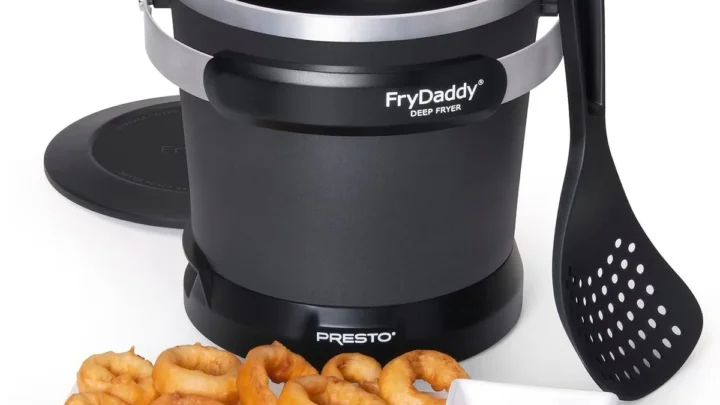
Reddit Review: Presto 05420 FryDaddy Worth Buying?
You have seen the name pop up in Reddit threads and budgetfriendly lists. The question is presto 05420…
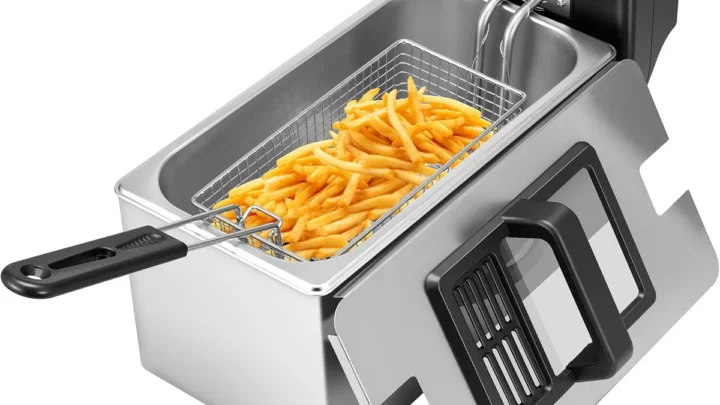
Stop Deep Fryer Smoking & Boiling Over: Fix Now
If you've ever wondered how to fix electric deep fryer oil smoking heavily or boiling over when adding…

Can You Overfill an Electric Deep Fryer Past the Max Line?
Can you put overfilling oil past max fill line in a electric deep fryer safely? The short answer…