Can You Put Metal Pans in Ceramic Nonstick Cookware?
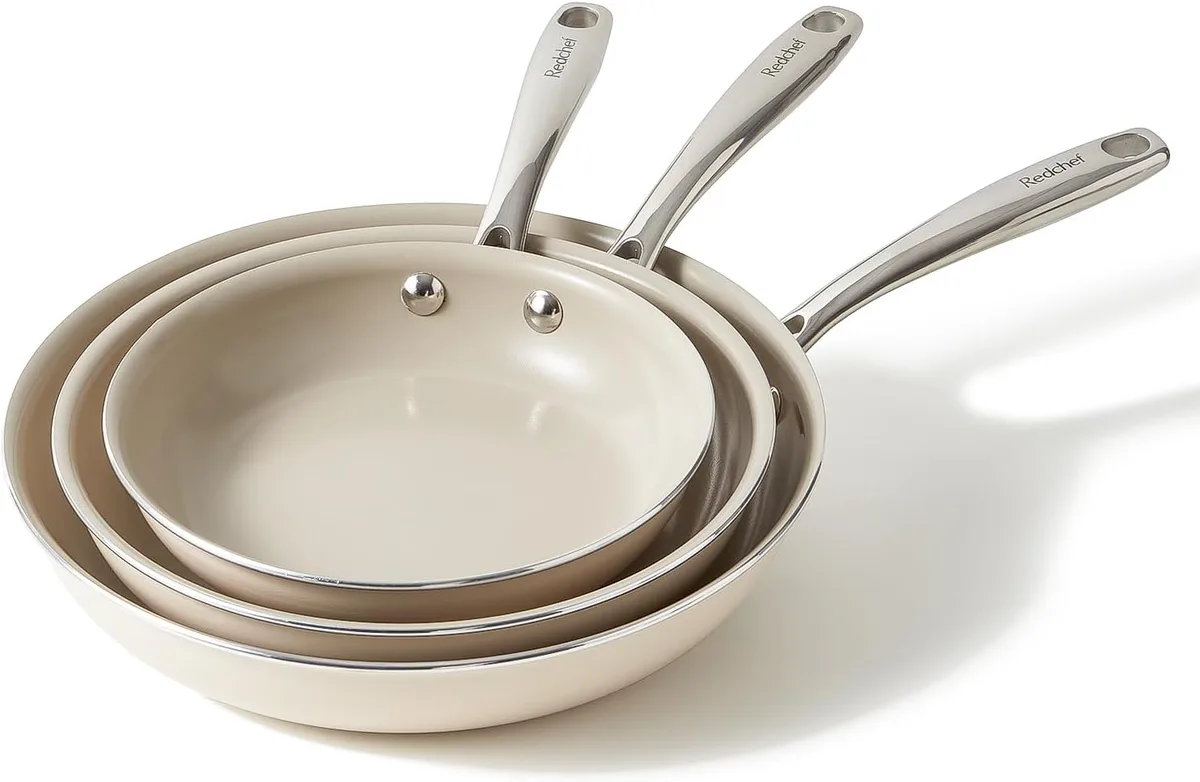
The question of can you put stacking metal pans directly inside ceramic coating in a ceramic nonstick skillet set safely comes up more than you think. If you're here because you just stacked a stainless steel pan inside your new ceramic skillet, you're asking exactly the right thing. Stacking saves cabinet space, sure.
But ceramic nonstick coatings are more delicate than their marketing lets on.
Ceramic nonstick coatings are a sol-gel layer with glass-like chemistry. As of 2026, most manufacturers spec these coatings at roughly 20 to 40 microns thick. Compare that to stainless steel pan rims, which are often over a millimeter thick and carry the full pan weight behind them.
That mismatch is where the trouble starts.
Image source: Web (Bing) / amazon.com (Web image (fair-use with source credit))
Quick Answer: Can You Stack Metal Pans Inside Ceramic Coating?
Not directly. Direct stacking puts metal rims on ceramic coating. That scratches and chips the surface over time.
One heavy skillet can leave visible marks. Use protective padding or store pans separately.
Why the Stakes Are Higher Than a Scratch
Scratches feel cosmetic until you cook on a damaged surface. Food starts sticking in the scored lines. Cleanup takes longer.
The coating that made the pan nonstick is wearing away.
Aggregate reviews of ceramic nonstick pans show most failures start with a single small scratch. That scratch catches oil, creates a hot spot, and spreads. Before long, it turns into a chip.
Chips are more than an eyesore.
Once the ceramic layer flakes, those particles can end up in your food. The sol-gel material is mostly silica, similar to glass. It isn't classified as toxic, but you still don't want glass-like bits in your dinner.
What's worse, a scratched base metal raises its own concerns about exposed aluminum reacting with acidic food. If you've ever wondered whether a coated appliance raises the same kind of health questions, plenty of people start with air fryer safety questions before moving on to cookware.
Beyond cosmetic wear, here's what's actually at stake:
- Food release degrades quickly once scratched.
- Coating flakes can get into meals.
- Exposed aluminum can leach into acidic ingredients.
- Many warranties get voided by improper storage.
- A ruined pan means replacing the whole set.
A quality ceramic nonstick set costs anywhere from $100 to $300. That's a lot of money to lose over something as avoidable as how you store the pans. The good news is that this damage is preventable.
How Ceramic Coating Handles Metal Contact (The Material Science)
Ceramic nonstick coatings are hard, not tough. That's a critical difference. Hardness means resistance to scratching.
Toughness means resistance to cracking and chipping. Ceramic coatings have the first but not the second.
The coating is essentially a thin glass layer baked onto an aluminum or stainless base. Glass is scratch-resistant in some ways, but it's brittle. When metal presses into it, the surface doesn't flex.
It dents, scratches, or cracks.
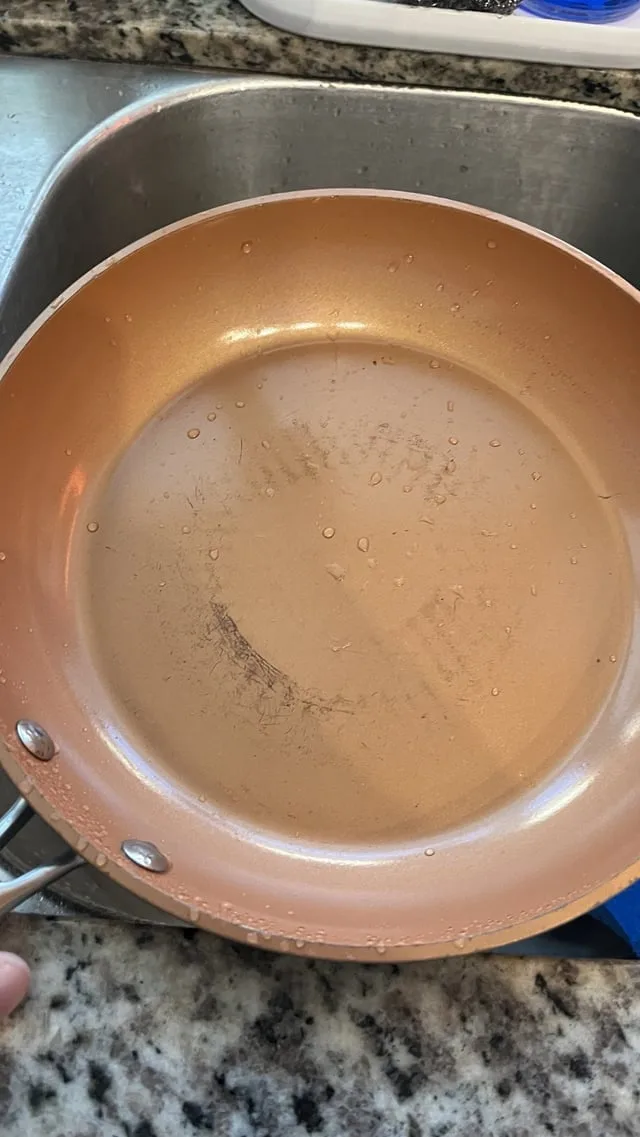
Image source: Web (Bing) / housekeepingmaster.com (Web image (fair-use with source credit))
Here's how the materials stack up:
| Material | Mohs hardness | What it means for stacking |
|---|---|---|
| Ceramic coating | 3 to 5 | Softer than steel pan rims, so direct contact scratches easily |
| Stainless steel | 5 to 6.5 | Common in pan bodies and rims, harder than ceramic |
| Aluminum | 2.5 to 3.5 | Softer than ceramic, but can still drag grit across the surface |
| Carbon steel | 4 to 6 | Rim hardness varies, but still enough to mark ceramic |
The other problem is thickness. A typical ceramic coating is only 20 to 40 microns. For context, a human hair is about 70 microns across.
So the entire nonstick protection layer is thinner than a hair's width. Scratches don't need to go deep to reach the base metal.
Pressure matters too. When you stack a pan directly inside another, the top pan's rim concentrates all its weight onto a tiny contact line. A four-pound pan can create enormous point pressure on a surface thinner than a hair.
That's why even "light" pans can cause damage.
What Happens When Metal Presses into Ceramic?
The first contact usually creates a faint arc-shaped scuff. You won't see it right away. Ceramic coatings are glossy, so micro-scratches hide until they catch oil or food residue.
By the time you notice them, the coating is already compromised.
The same coating care logic applies to every nonstick surface in your kitchen. That's why cleaning and care guides for gadgets like your Ninja air fryer always emphasize gentle handling. The coating is the product, and once it degrades, performance drops fast.
What Manufacturers Actually Say About Stacking
Manufacturer specifications are clear about this, even if the marketing isn't. Most ceramic nonstick brands include storage instructions in their care guides. As of 2026, almost all of them say the same basic thing: don't let metal touch the coating.
Here's what typical care cards tell users:
- "Never stack pans on top of each other without protection."
- "Place a soft cloth, paper towel, or pan protector between pans."
- "Avoid anything metal inside the cooking surface."
- "Damage from stacking is not covered by the warranty."
Some brands go further. A few explicitly say that stacking is not allowed at all, even with padding. Others include felt pan protectors in the box as a hint.
If your set didn't come with protectors, that's not permission to skip them.
Warranty language matters here. Most ceramic cookware warranties cover manufacturing defects like peeling or flaking under normal use. They don't cover user-caused damage.
Chips from metal contact count as improper handling, not a defect.
The FDA has weighed in on the food-contact side of these coatings. Ceramic nonstick materials fall under the agency's food-contact substance framework, which focuses on what's safe for food preparation. Surface damage isn't a chemical safety question as much as a physical one.
A scratched pan is still safe to use if the coating isn't chipping, but it loses its nonstick properties.
If you're checking the technical side of coating durability, standardized adhesion tests like ASTM D3359 are worth knowing. That cross-hatch tape test measures how well a coating sticks to its base. Aggressive stacking can fail a pan long before such a test would.
The Real-World Risks: Scratches, Chips, and Flakes in Your Food
Let's talk about what actually goes wrong in a real kitchen. You buy a ceramic nonstick set. You love how easily eggs slide around.
Then you store the pans by nesting them inside each other, because that's how everyone stacks cookware.
Within a few months, you notice hairline scuffs on the cooking surface. Food starts catching in those lines. The nonstick performance feels off, so you use a bit more oil.
Then one day, you see a small translucent flake in your scrambled eggs. That flake is ceramic coating.
Here's the risk breakdown by pan type:
- Stainless steel pans: The worst offender. Thin rims and hard steel press into ceramic aggressively.
- Aluminum pans: Softer, but still capable of scratching because the coating is fragile.
- Cast iron and carbon steel: Heavy and dense. A small contact point under high weight can crack ceramic coating.
The biggest red flag is exposed base metal. If you see a gray or silver spot where the coating used to be, the pan is compromised. Acidic foods like tomatoes, vinegar, or citrus can now touch the raw aluminum underneath.
That's not a panic situation, but it's a good reason to stop using that pan.
Warning Signs That Damage Already Happened
- Visible arc-shaped scuffs on the cooking surface.
- Food sticking in specific lines or patches.
- Raised edges around a scratch where the coating is lifting.
- Small translucent flakes in oil or food.
- A cloudy or rough strip around the pan's interior rim.
One small scratch isn't the end of the world. The coating doesn't peel off instantly. But every scratch is an entry point for grease and moisture, which can work underneath the layer and force chips loose.
If you catch chips early, stop using the pan. The coating will keep shedding. And if base metal is exposed, replacement is the safer call.
It's the same principle behind replacing a scratched nonstick appliance basket: once the surface degrades, the convenience and safety of nonstick are gone. You can apply that same logic to a Ninja AF101 or any other coated kitchen tool you own.
How to Stack Ceramic Pans Safely (If You Have No Choice)
Stacking directly is never a good idea. But cabinet space is real, and sometimes nesting pans is the only option. If you're in that situation, you can protect the coating with the right barriers.
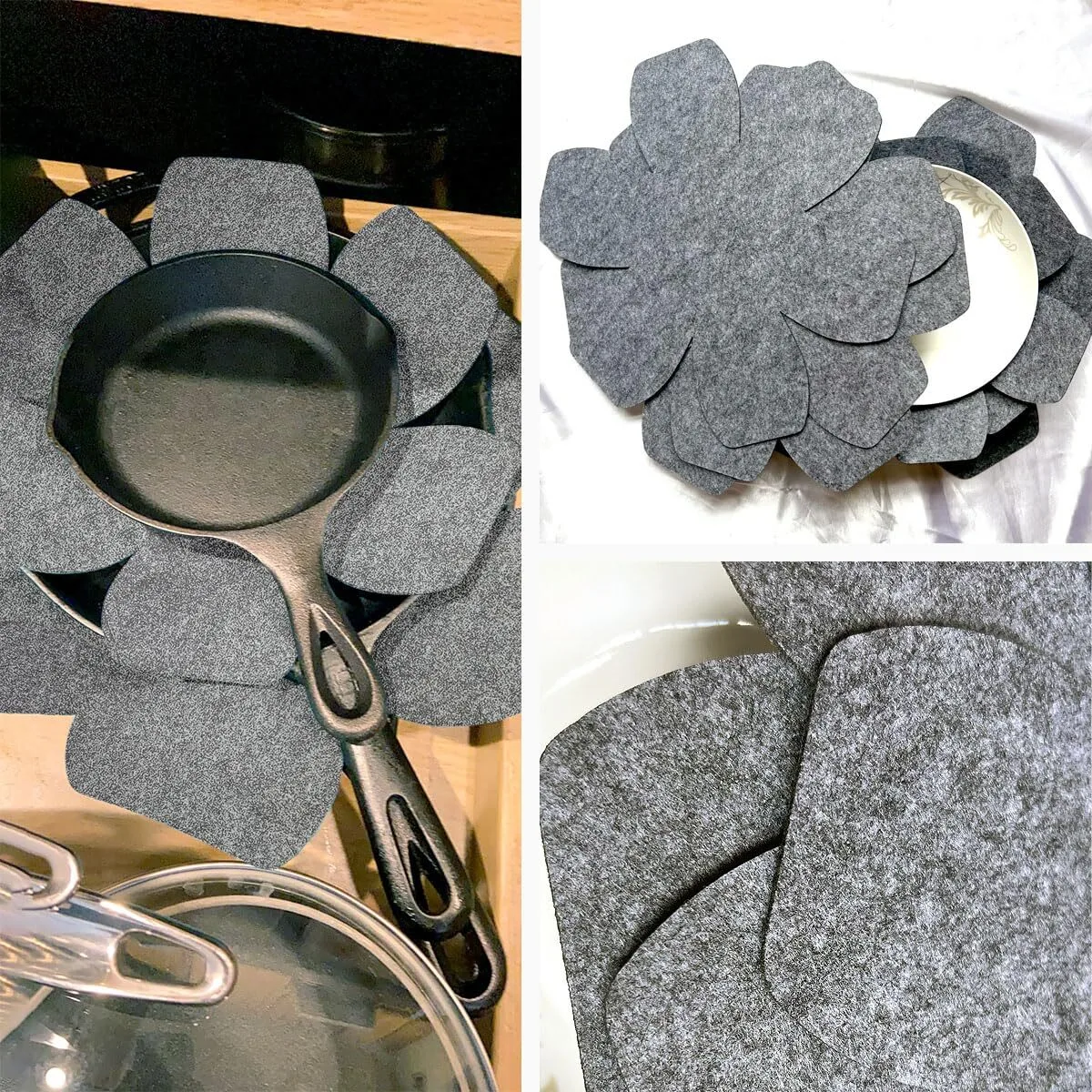
Image source: Web (Bing) / dunmorelane.com (Web image (fair-use with source credit))
Pan protectors are the easiest solution. These are round felt or silicone pads that sit between pans. A pack of six costs around $10 and covers a whole set.
- Clean and dry every pan completely.
- Put the largest pan on the counter.
- Lay a protector in its center.
- Nest the next pan on top.
- Repeat for each pan, always with a pad between.
Never skip the protector. One layer of felt may feel thin, but it's enough to stop metal-to-ceramic contact. Paper towels work in a pinch.
Fold them in half twice for extra thickness. They're not as durable as felt, but they're fine for short-term storage.
Another trick is using a clean dish towel. Place it flat over the cooking surface, then nest the next pan. The fabric cushions most of the pressure.
One thing to avoid: don't place a lid between pans. A glass lid can shatter under weight, and a metal lid can scratch just like another pan.
If you do this every day, invest in proper protectors. They're thin enough to store and washable. The long-term payoff is a pan that still releases eggs without oil three years later.
The same gentle handling applies to other coated gear in your kitchen, so it helps to build those cleaning habits slowly.
Better Storage Options for Ceramic Nonstick Sets
If you have the room, avoiding direct stacking is even better. Here are storage methods that protect your cookware and still save space.
| Storage method | Space efficiency | Protection level | Best for |
|---|---|---|---|
| Hanging rack | High | Excellent | Medium and large skillets |
| Cabinet shelf with dividers | Medium | Great | Complete sets |
| Vertical file organizer | High | Good | Lids and light pans |
| Stack with protectors | High | Good | When space is tight |
Hanging racks are the gold standard. A wall-mounted or cabinet-hanging rack holds pans by their handles. Nothing touches the coating, so scratches are nearly impossible.
Cabinet shelves with wire dividers keep pans upright. This method uses more space but offers total protection. You can see each pan at a glance.
Vertical file organizers work well for lids. They also handle shallow pans like crepe pans. Each slot holds one pan, so there's no contact between surfaces.
If you're choosing between cookware types, the same storage principles apply to other kitchen gear. Some people debate between a deep fryer and a pot based on cabinet space alone. No matter which method you pick, keep the pans dry and cool.
Moisture trapped between pans can corrode the base metal and dull the coating over time.
Common Stacking Mistakes That Void Warranties and Ruin Pans
Stacking without any pad is the number one mistake. Aggregate reviews of warranty claims show that most scratched pans have direct metal contact. The rim of one pan presses straight into the coating of another.
Pressing down to force pans together adds pressure. That extra force pushes the rim deeper, creating a larger scratch or a chip. Use gentle nesting pressure only.
Putting a heavy cast iron skillet on a light ceramic pan is a recipe for cracks. Weight concentrates on the same thin coating line. Even a single heavy pan can leave a permanent dent.
Glass lids can shatter when weighted down. Metal lids leave scuffs. Store them separately.
Even one scratch can void a warranty. Per ASTM D3359 adhesion testing, a coating that fails the cross-hatch test is considered poorly adhered. Manufacturers use that standard to reject claims for physical damage, which is why stacking damage rarely gets covered.
If you've ever seen the same issue with other nonstick tools, the story is always the same. A scratched surface loses its release, and soon food sticks everywhere. That's why people ask coating safety questions about their appliances before moving on to cookware.
For ceramics, the rule is straightforward: avoid any contact that could scrape or chip the surface.
Frequently Asked Questions
Can I use paper towels between pans?
Yes. Paper towels create a thin barrier that prevents metal-to-ceramic contact. Fold them into a few layers for better cushioning.
Replace them if they get damp, since moisture can damage the coating over time.
What if my pans already have scratches?
A small scratch isn't urgent. Check for rough edges. If the coating is lifting or chipping, stop using the pan.
Aggressive scrubbing and continued stacking will only spread the damage.
How do I store ceramic pans without a rack?
Use felt pan protectors or soft cloths between pans. Clean and dry each pan first. Keep the heaviest pan at the bottom of the stack.
Is ceramic coating toxic if it flakes?
Ceramic coating is mostly silica, similar to glass. It's not classified as toxic. Still, you don't want sharp particles in your food.
Replace a chipped pan to be safe.
Does stacking void the warranty?
Most brands list stacking as improper care. Warranty language usually excludes damage from physical impact. Check your care card to be sure.
Final Verdict — Stack or Don't Stack?
Don't stack metal pans directly inside ceramic coating. It's the fastest way to ruin a good nonstick surface. Stacking with protection is an acceptable compromise.
Use felt pads, paper towels, or cloth. This keeps the pan safe and saves space.
The final takeaway is simple: your ceramic skillet is only as good as its coating. Treat it like the thin layer of glass it is, and it will serve you for years. The same logic applies to any nonstick appliance, from a budget-friendly air fryer to a premium skillet set.
When in doubt, store pans separately. A few extra inches of cabinet space aren't worth losing a $200 cookware set over. And if you must stack, always put a barrier between every pan.
Your future self will thank you when the eggs still slide right off.

Related posts

Ninja Foodi SmartLid OL701 Worth Buying? Reddit
If you've been scrolling through Reddit asking yourself "is ninja foodi smartlid ol701 one lid multi cooker with…

Crispy Rotisserie Chicken: Temp & Time for Combo Cooker
So you want restaurant quality crispy skin on a whole rotisserie chicken, and you want to do it…
Spray on Crisper Plate? Multi Cooker Safety Guide
So, can you put nonstick cooking spray directly on the crisper plate in a one lid multi cooker…