3-Egg Omelet Temp & Time for Fluffy Results in Ceramic Pan
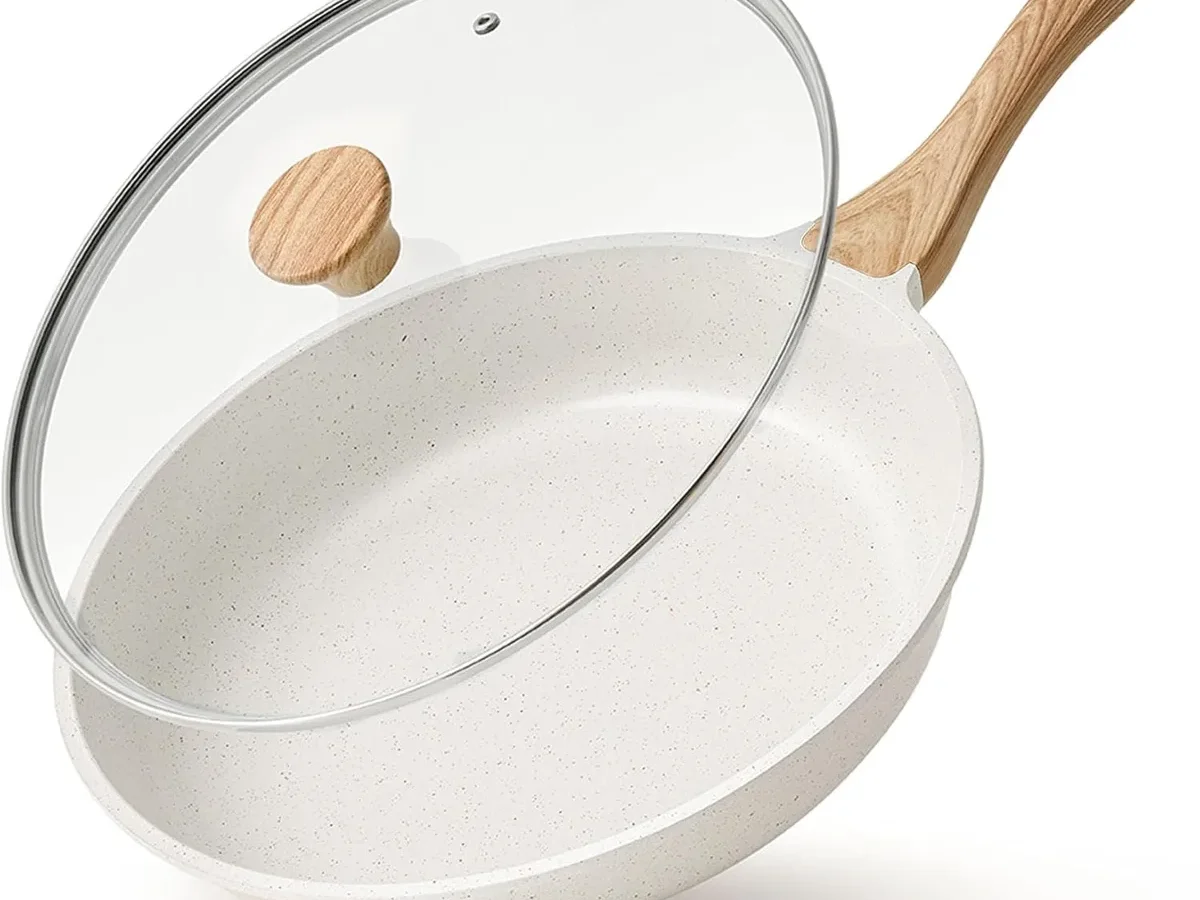
You finally bought a ceramic nonstick skillet set, and the first omelet still ended up welded to the pan. That’s frustrating. The answer to what temperature and cooking time for fluffy 3-egg breakfast omelet in ceramic nonstick skillet set is simpler than most recipes make it: low-medium heat and a 4 to 6 minute cook.
The good news? You don’t need expensive gear or chef training. You just need to relearn heat.
Ceramic behaves differently from the old nonstick pans you grew up with. As of 2026, cooking standards like USDA egg guidelines point to a safe internal egg temperature of 160°F, which means the pan should stay far below screaming hot. Let’s start with the biggest mistake people make.
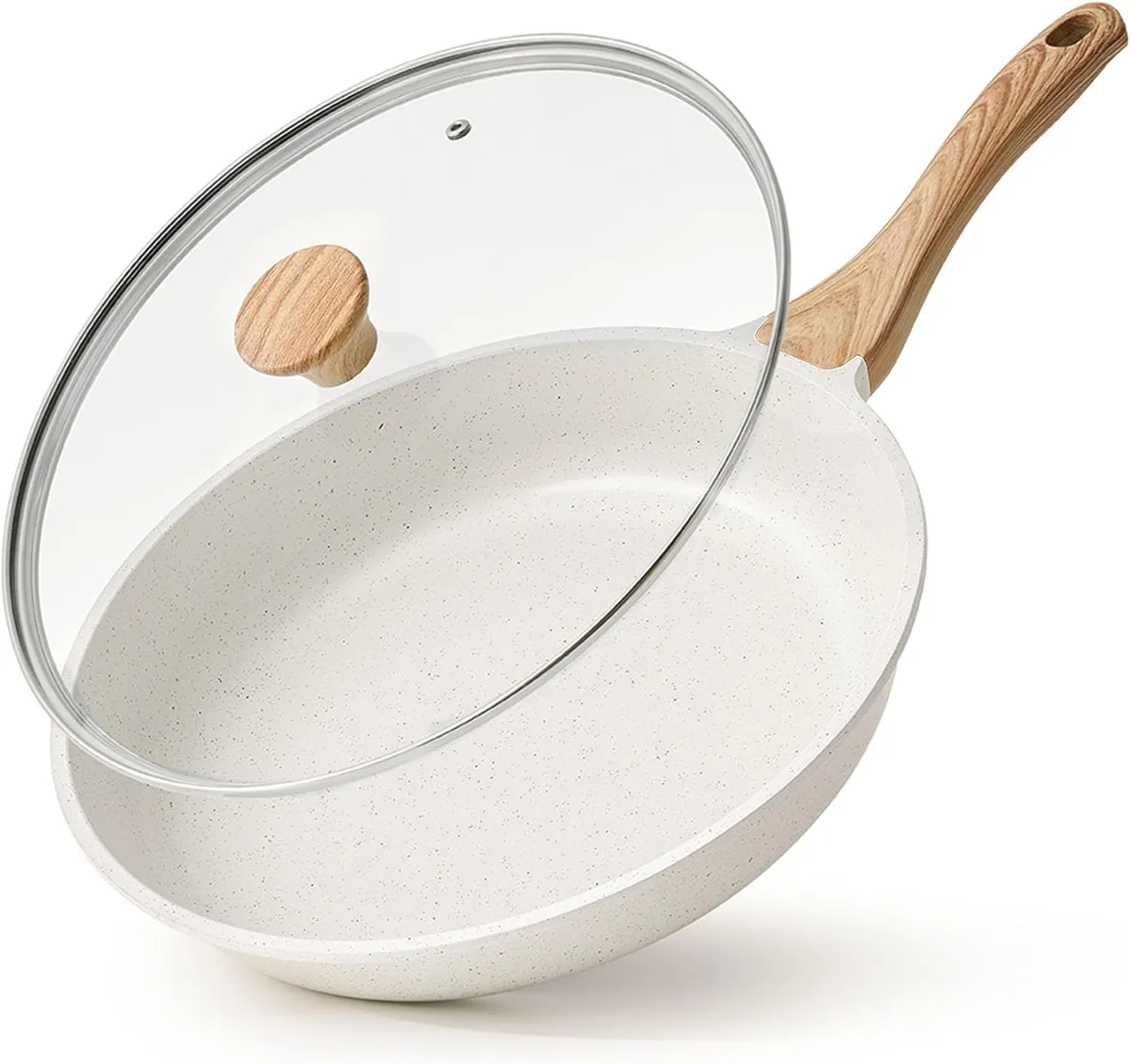
Image source: Web (Bing) / bidfta.com (Web image (fair-use with source credit))
The Real Problem: Why Your Ceramic Omelet Sticks or Turns Rubber
Most people blame the pan. But the ceramic isn’t the problem. It’s the heat.
Crank the burner to medium-high, and the coating climbs well past 260°C (500°F). Eggs bond to ceramic at those temperatures, and the protein tightens into a rubbery sheet instead of a fluffy one.
The fix is to drop the heat dramatically. Cook eggs in the same range as a gentle simmer. The pan should be warm enough to set the egg slowly.
It should never be hot enough to brown butter. If butter turns brown before the eggs go in, you’ve already overshot.
Run this quick diagnostic the next time you cook:
- Omelet sticks to the pan: heat is too high. Turn the dial down, wipe the pan clean, and start over with fresh butter.
- Omelet turns rubbery: it cooked too long or too hot. Aim for 4 to 6 minutes total, not 10.
- Omelet is pale and wet in the middle: heat is too low. Creep up half a point next time.
Those three clues solve 90 percent of ceramic omelet failures.
Low-Medium Heat Is the Whole Secret: The Quick Answer Up Front
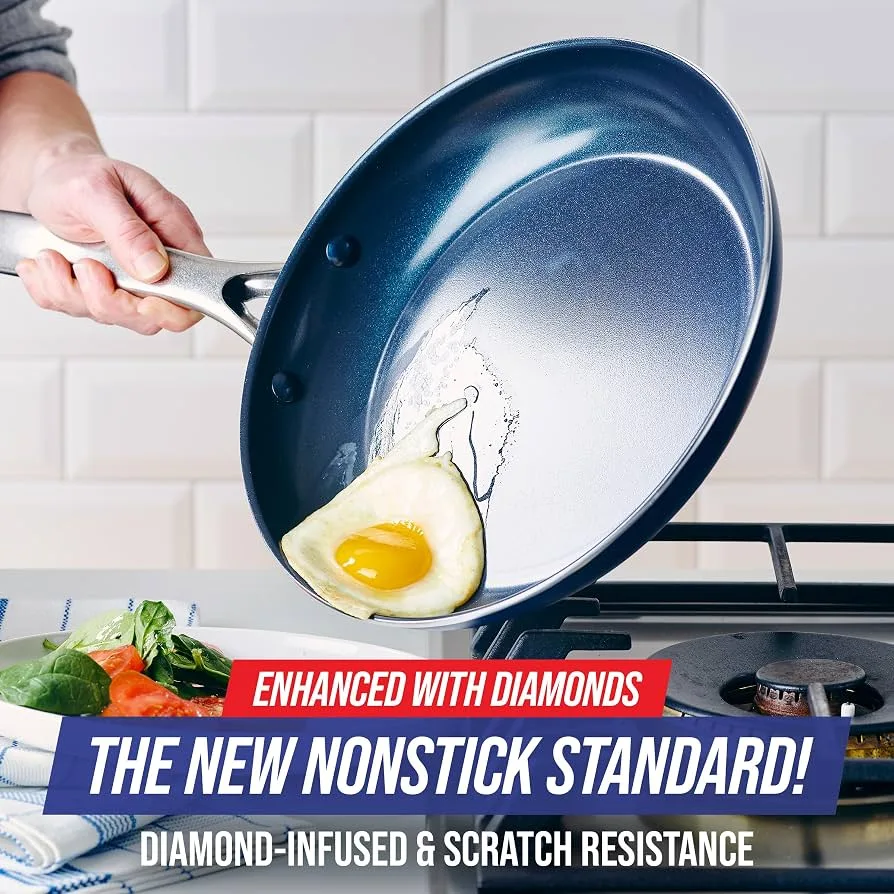
Image source: Web (Bing) / isispharma.by (Web image (fair-use with source credit))
Here’s the short version you can remember on a sleepy morning:
- Temperature setting: 3.5 to 4.5 on a 10-point stove dial
- Gas burner: 30 to 40 percent open flame
- Pan preheat time: 1 to 2 minutes
- Total cook time: 4 to 6 minutes
- Safe internal egg temperature: 160°F
Those numbers apply to a 3-egg omelet in an 8 or 10-inch ceramic nonstick skillet. A bigger pan spreads the eggs thinner and cooks faster. A smaller pan makes a thicker egg mass that needs more time.
Why low heat makes eggs fluffy
When eggs hit a hot pan, the proteins seize up fast and squeeze out moisture. That’s how you get a dense, tough blanket. On low-medium heat, the proteins set slowly.
The steam trapped inside lifts the curd, and the texture stays tender. It’s the same logic as custard. Gentle heat, creamy finish.
Ceramic also holds heat longer than you’d expect. That means it keeps cooking after you turn off the burner. Slide the omelet out a little earlier than you think.
How Ceramic Nonstick Behaves Differently (and What That Means for Eggs)
Ceramic nonstick isn’t the same as the dark gray PTFE pans. The coating is usually a sol-gel layer baked onto aluminum or stainless steel. It’s slick and glass-like, but it’s also less forgiving when overheated.
Manufacturer specifications indicate ceramic should stay below 260°C (500°F). That sounds like a lot, but stove burners can push a pan past that limit in minutes. Eggs need far less.
The curd firms up between 145°F and 160°F. So the pan should feel warm, not aggressively hot.
There’s also a delay in heat response. Turn up a ceramic pan and the surface keeps climbing for a bit. Turn it down and it stays hot for a while.
You have to work with that lag, not against it.
The butter test every ceramic owner should use
Drop a small cube of butter into the warm pan. It should melt into a glossy, pale yellow pool. If it foams hard, the pan is borderline too hot.
If it browns or smokes, the pan is way too hot. Let it cool for a minute before you try again.
If your ceramic set includes both thin and thick bases, treat them differently. A thin 8-inch skillet heats fast and can overshoot. A thick 10-inch skillet holds steady and behaves better for eggs.
Get familiar with the one you grab most.
Stove Type and Pan Size: Your Personal Temperature Calculator
Image source: Web (Bing) / bidfta.com (Web image (fair-use with source credit))
Before you set the burner, figure out which stove you’re using. The same 3-egg omelet needs a slightly different approach on gas, electric coil, glass ceramic, or induction.
| Stove type | Best setting | Preheat time | Visual cue |
|---|---|---|---|
| Gas | 30 to 40 percent flame | 60 to 90 seconds | Butter melts gently and sizzles softly |
| Electric coil | 3.5 to 4 | 2 to 3 minutes | Butter glistens without browning |
| Glass ceramic | Medium-low, around 4 | 2 minutes | Pan warms evenly with no steam burst |
| Induction | 4 to 5 | 45 to 60 seconds | Surface feels warm from 2 inches above |
Which skillet size from your set should you use?
A 3-egg omelet is picky about pan size.
| Skillet size | Omelet style | Cook time | Best choice for |
|---|---|---|---|
| 8-inch | Thick, tall, diner style | 5 to 6 minutes | Light and fluffy, softer center |
| 10-inch | Classic, thinner, easy fold | 4 to 5 minutes | Even cooking, more filling surface |
A 12-inch pan works for 3 eggs but spreads them too thin. The omelet cooks fast and loses that pillowy texture. A 6-inch pan is also possible, but the center takes too long to set while the edges overcook.
Stick with 8 or 10 inches.
Step-by-Step: The Fluffy Omelet Working Method (with Visual Cues)
Now it’s time to put the temperature advice to work. This method uses gentle heat, patient preheating, and a few visual cues that tell you exactly when to move.
Step 1: Pull the right pan
Grab the 8 or 10-inch skillet from your ceramic set. For 3 eggs, this is the sweet spot. A 12-inch spreads too thin.
A 6-inch cooks too thick.
Step 2: Whisk the eggs until they’re one color
Whisk until the yolks and whites become a single pale yellow liquid. Use a fork for average fluffiness. Use a whisk for a lighter omelet.
About 30 to 60 seconds is enough. Some people add a teaspoon of water for steam. Milk works too, but it weighs the curd down more.
Step 3: Preheat low, then test with butter
Set the dial between 3.5 and 4. Wait 1 to 2 minutes. The good cue is butter melting into a shiny pool with tiny, lazy bubbles.
The bad cue is butter foaming hard or browning. If that happens, wipe the pan and let it cool for a minute.
Step 4: Pour and let the bottom set
Pour the eggs into the center. Don’t stir. Let them spread naturally.
After 45 to 90 seconds, the edges will turn opaque and set. The middle will still look glossy. That’s your signal to move.
Step 5: Push and tilt
Use a silicone spatula. Drag cooked curds from the edge toward the center. Tilt the pan so raw egg flows into the empty space.
Repeat this around the entire pan for 2 to 3 minutes.
Step 6: Add filling and fold
Once the top is almost set but still soft, add cheese, herbs, or vegetables to one half. Fold the other side over gently. Let the omelet rest in the pan for 15 to 20 seconds.
Then slide it onto a plate.
The total time from pour to plate should land between 4 and 6 minutes. If you’re worried about the center looking slightly wet, remember that ceramic keeps cooking after it hits the plate. For official guidance on safe egg doneness, USDA food safety guidance sets the minimum internal temperature at 160°F.
That’s firmer than a classic omelet, but it’s the number to know if you’re cooking for someone with a sensitive stomach.
The Common Mistakes That Sabotage Fluffy Eggs
You got the heat right. You preheated the pan. Then the omelet still flopped.
Here's what went wrong.
- Rushing the preheat. A cold pan with a hot burner creates hot spots. The edges cook fast while the middle stays runny. Give the ceramic a full 1 to 2 minutes to warm evenly.
- Cracking eggs into a screaming pan. The egg spits, spreads thin, and bonds to the coating. If your butter test showed foaming bubbles, wait a minute and try again.
- Under-whisking. Streaks of white albumin cook into rubbery ribbons. Whisk for 30 to 60 seconds until the mixture is a single pale yellow.
- Adding too much milk. A glug of milk thins the curd and lowers the set temperature. That means wet, dense eggs. Use one teaspoon of water for steam lift instead.
- Overloading with fillings. More volume cools the pan. The cook time stretches, and the omelet gets hard to fold. Keep it to a quarter cup or less.
- Ignoring carryover heat. Ceramic holds warmth after the burner turns off. The omelet keeps cooking on the plate. Pull it a few seconds earlier than looks perfect.
None of these are pan failures. They're technique failures. The good news is that each one has a simple fix you can apply tomorrow morning.
Adjusting on the Fly: A Decision Guide for Sticky, Runny, or Overcooked Omelets
Even with good technique, things go sideways. Stoves run hot, pans vary, and mornings are chaotic. When an omelet starts misbehaving, run this quick decision flow.
If the omelet sticks to the pan, heat is too high. Cool everything down, wipe the pan clean, and start over at a lower dial. If the center is glossy and raw while the edges are set, the pan is too hot.
Drop the heat and let the residual warmth finish the middle. If the omelet is pale, wet, and floppy, heat is too low. Bump the dial up half a point and cook 30 seconds longer.
| Problem | Likely cause | Your move |
|---|---|---|
| Sticks to the pan | Heat too high | Cool pan, wipe, restart lower |
| Raw center, solid edges | Heat too high, small pan | Lower heat, use 10-inch pan |
| Pale and weepy | Heat too low | Raise dial, cook a bit longer |
| Rubbery texture | Cooked too long | Finish early, use carryover heat |
| Folds tear apart | Too many fillings | Cut back to 2 to 3 tablespoons |
Here's another common spot: your dial numbers won't match anyone else's. An electric coil at 4 behaves differently from glass ceramic at 4. Use the visual cues from the butter test as your real reference.
Bubbles that are lazy and soft mean the pan is ready. Foam and browning mean it's not.
You'll also want to adjust for pan size. A thinner skillet from the set heats faster and overshoots quickly. A thicker base holds steady, so you can preheat slightly longer.
Learn which pan you grab and compensate for its personality. For more on how heat and oil choices play out in other cooking gear, the deep fryer vs pot comparison covers similar trade-offs.
Frequently Asked Questions
Can I preheat a ceramic pan on high to save time?
No. High heat damages the ceramic coating and makes eggs stick instantly. Manufacturers rate ceramic for temperatures up to 260°C (500°F), but eggs need far less.
Use low-medium heat and wait 1 to 2 minutes.
Why does my omelet stick even with butter in the pan?
Your pan is likely too hot or too cold. Cold butter never coats the surface evenly. Hot butter burns and leaves sticky spots.
Wait until butter melts into a shiny pool with tiny, slow bubbles, then pour the eggs.
What utensil should I use in a ceramic skillet?
Use silicone, wood, or nylon tools. Metal utensils scratch the ceramic coating and create areas where eggs can adhere. A silicone spatula lets you fold the omelet gently without scraping the surface.
How do I clean a ceramic skillet after making eggs?
Let the pan cool completely before washing. Use warm, soapy water and a soft sponge. Avoid the dishwasher, since the harsher cycle can degrade the nonstick layer.
Regular care keeps the surface slick, similar to the maintenance advice we've covered for air fryer cleaning.
Can I add cheese before the eggs set?
Wait until the curd looks almost fully set, around the 3 to 4 minute mark. Adding cheese too early cools the pan and slows the set. It also melts into the raw egg instead of staying creamy inside the fold.
Final Verdict: What Actually Works
Here are the numbers to remember. Dial at 3.5 to 4.5 on a 10-point stove. Total cook time of 4 to 6 minutes.
Safe internal egg temperature of 160°F per USDA food safety guidance. That's the whole framework.
The deeper lesson is patience. Preheat gently, test with butter, pour slow, and let the curd set before you touch it. Ceramic rewards cooks who respect its heat retention.
Push it hard and it pushes back.
As of 2026, this method holds up across every stove type we've covered. Gas, electric, glass ceramic, and induction all follow the same visual cues. The dial moves, the principle stays.
So the next time you pull out that ceramic nonstick skillet set, remember the golden rule: low heat, slow curd, and a confident fold. Your fluffiest omelet is one breakfast away.

Related posts

Ninja Foodi SmartLid OL701 Worth Buying? Reddit
If you've been scrolling through Reddit asking yourself "is ninja foodi smartlid ol701 one lid multi cooker with…

Crispy Rotisserie Chicken: Temp & Time for Combo Cooker
So you want restaurant quality crispy skin on a whole rotisserie chicken, and you want to do it…
Spray on Crisper Plate? Multi Cooker Safety Guide
So, can you put nonstick cooking spray directly on the crisper plate in a one lid multi cooker…