Will a Metal Pizza Cutter Damage Nonstick Cookie Sheet?
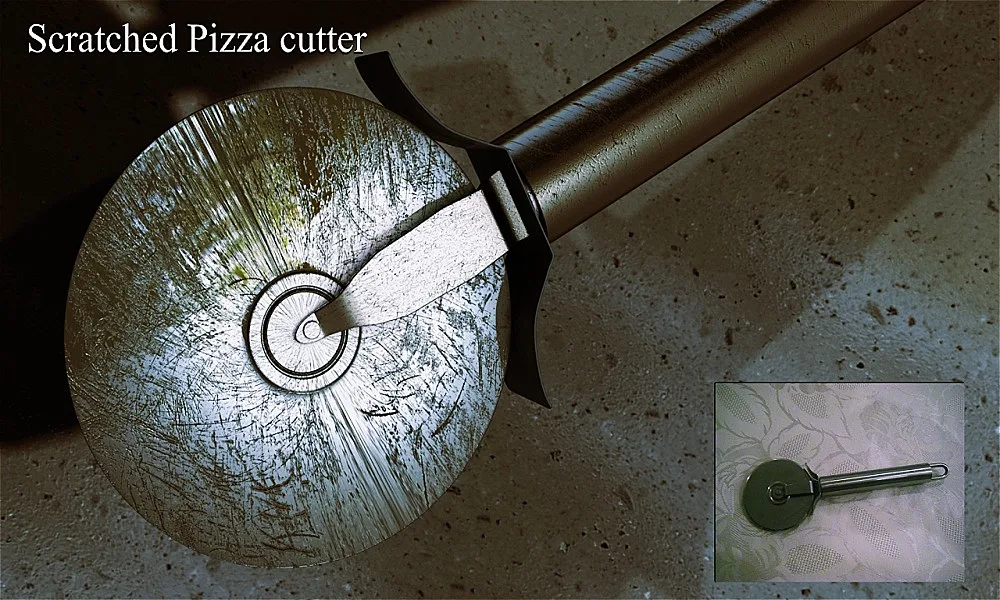
Before you roll that sharp steel wheel across your new nonstick baking sheet, ask yourself: can you put using metal pizza cutter directly on nonstick cookie sheet in a nonstick baking cookie sheet safely? The honest, research-backed answer is almost always no. A metal pizza cutter presses a thin blade into the coating with surprising force.
That’s exactly the kind of stress a nonstick surface was never designed to handle.
As of 2026, standard PTFE nonstick coatings sit at roughly 1 to 2 on the Mohs hardness scale. Stainless steel, the typical pizza cutter blade, is around 5.5. That gap explains why even one pass can leave a permanent scratch.
Let’s look at what actually happens to the coating, what the real risks are, and which mistakes will wreck your sheet fastest.
Image source: Web (Bing) / cgcookie.com (Web image (fair-use with source credit))
Why This Isn't a Simple Yes-or-No Question
Some nonstick baking sheets use PTFE, commonly known by the brand name Teflon. Others use ceramic or a silicone-based coating. And some so-called nonstick sheets are just bare aluminum with a textured finish.
All of them have one thing in common: they are softer than the steel in your pizza cutter.
That means the safe answer depends on your exact sheet. But not in the way you might think. The only situation where a metal cutter is fine is when the sheet has no nonstick coating at all.
If the label says nonstick, assume metal is off-limits.
Manufacturer care guides back this up. Many bakeware brands, including Nordic Ware and Calphalon, explicitly warn against metal utensils. Some even print it on the care card.
If you’ve tossed that card, check the website. The warning is still there.
Here’s the if/then logic that should guide you:
- If the manufacturer says “no metal,” don’t use metal. That’s the end of the conversation.
- If you’re unsure, treat the sheet as if it can’t handle metal. It probably can’t.
- If you want to cut pizza on a nonstick sheet, use a plastic cutter or sharp kitchen scissors.
- If you cut on the sheet with metal anyway, expect scratches. It won’t happen every single time, but it will happen.
Why does this matter so much? Because the nonstick layer is roughly 20 to 30 microns thick. That’s thinner than a human hair.
A pizza wheel doesn’t need to dig deep to do damage. It just needs to break through that microscopic layer to ruin the surface.
Ceramic coating is a bit harder than PTFE, but it’s also brittle. A rolling steel blade can chip it. Once a chip forms, the coating peels from the edge.
So ceramic doesn’t get a pass either. This isn’t a fear-based take. It’s how the coatings are engineered.
The Quick Answer (and What It Really Means)
Putting using metal pizza cutter directly on nonstick cookie sheet is not safe. The coating scratches easily because metal blades cut through it. A scratched coating can flake into food.
Use plastic, wood, or cut on a separate board instead. It’s that simple.
That “no” you just read isn’t a marketing line. It’s based on how nonstick coatings behave under pressure. These coatings are designed to release food, not to handle cutting forces.
They simply don’t have the hardness to resist a steel blade.
What about a gentle touch? It still doesn’t work. You might not feel the scratch.
You might not see it. But the surface is damaged on a microscopic level. That’s like rubbing a dull knife across a car’s clear coat.
And no, paying more for a “scratch-resistant” nonstick sheet won’t solve the problem. As of 2026, no mainstream nonstick bakeware maker recommends metal cutting tools on its coating. If it did, the care guide would say so.
The warning exists for a reason.
What Happens When Metal Drags Across Nonstick Coating
Your pizza cutter blade is thin. That’s why it cuts so well. But thin means sharp force concentrated in one spot.
When you press down to slice a thick crust, the wheel pushes into the coating with your body weight behind it.
The contact area is about the size of a fingernail edge. With typical hand pressure, that creates a serious amount of force per square inch. The soft polymer under it can’t flex enough.
It stretches, then tears.
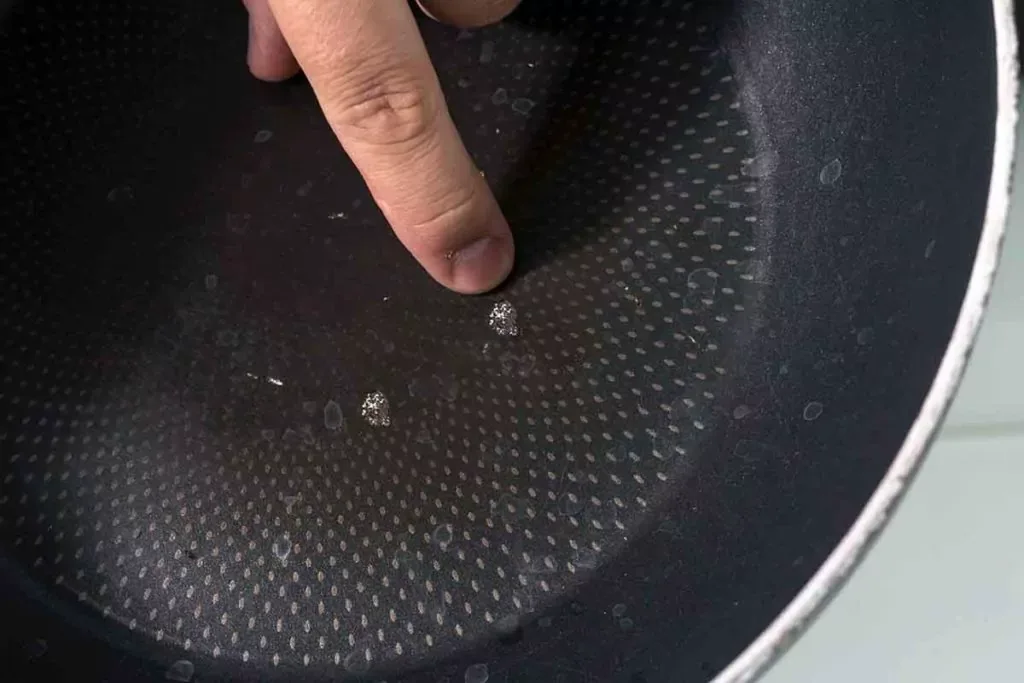
Image source: Bing (Web (fair-use with source credit))
The result is a groove. It might be too small to see clearly, but it’s there. Under a bright kitchen light, you’ll notice a faint line.
That line is bare metal or damaged coating. It’s the beginning of the end.
| Material | Mohs hardness | What happens under a steel wheel |
|---|---|---|
| PTFE (Teflon) | 1 to 2 | Scratches with minimal pressure |
| Ceramic nonstick | 5 to 6 | Chips or scrapes, then peels |
| Stainless steel blade | 5.5 to 6.5 | The blade wins, every time |
Ceramic looks better on paper. It is harder than PTFE. But ceramic nonstick layers are brittle.
A rolling blade can knock off tiny chips. Once chipped, the coating lifts from the base quickly.
There’s another factor people miss: sheet flexibility. Most nonstick cookie sheets are thin aluminum. Push down on the center and the whole sheet flexes.
That flexing causes the cutter to drag sideways while it rolls. It’s like scribbling over the coating instead of rolling over it. That drag action is the real killer.
The Real Risks: Scratches, Flakes, and a Ruined Sheet
The nail-biting question is always: will it hurt me? Let’s separate fear from fact. The FDA regulates PTFE as a food contact substance, and it has long been approved for kitchenware.
Swallowing a tiny flake isn’t likely to cause poisoning. But that’s not the real problem.
The real problem is the sheet stops working. Scratched areas lose their release. Cheese and crust bake onto those spots.
You scrub harder, which creates more damage. Before long, the entire surface turns sticky and stained.
Here’s what happens next:
- Food sticks in the scratched lines.
- Cleaning takes twice as long.
- The coating starts peeling at the edges.
- Your warranty won’t cover it because metal tools caused the damage.
As of 2026, a decent nonstick cookie sheet costs between $15 and $40. A plastic pizza cutter costs around $5. Skipping the metal wheel saves you money in the long run.
You can read more about similar air fryer safety concerns if you’re worried about nonstick coatings in other appliances.
Also, consider what the coating actually is. PTFE is a plastic polymer. When it degrades from repeated scratches, it doesn’t repair itself.
You can’t buff it out. You can’t season it like cast iron. Once it’s gone, it’s gone.
If you ever see visible flakes or peeling, replace the sheet. It’s not worth the risk of eating coating pieces or ruining your meal. The FDA’s food contact substance framework sets the baseline for safety, but it doesn’t protect against wear and tear.
That part is up to you.
Common Mistakes That Damage Nonstick Bakeware
Your pizza cutter isn’t the only enemy. A lot of daily habits shave years off nonstick sheets. If you want to keep yours working, stop doing these things:
- Cutting directly on the sheet. Any blade does damage, not just a pizza wheel. A kitchen knife scratches even deeper.
- Using metal utensils to serve. Tongs, spatulas, and cake servers drag across the coating. Use nylon or silicone instead.
- Stacking sheets without protection. The rim of one sheet rubs against the coating of another. It looks fine, but the friction is real.
- Scrubbing with steel wool. This is the fastest way to remove a nonstick finish. Use a soft sponge.
- Running it through the dishwasher. Harsh detergents and high heat attack the coating. Hand-washing is safer.
- Heating an empty sheet. Nonstick can warp and its coating can break down if the pan gets too hot for too long. Always put food on it first.
Combine these with a metal pizza cutter and you get a coating that ages twice as fast. It’s a slow process, not an explosion. Then one day the sheet looks blotchy and every pizza sticks.
Nonstick surfaces in other appliances need the same care. If your air fryer basket has lost its finish, you’re dealing with the same problem. We’ve covered gentle cleaning routines that avoid stripping the coating further.
The takeaway is simple: treat every nonstick surface like a thin film, because that’s what it is.
Safe Ways to Cut Pizza Without Hurting Your Sheet
You have options. Plenty of them. And every single one keeps your nonstick coating intact while still giving you a clean slice.
The easiest swap is a plastic pizza cutter. Nylon or polycarbonate wheels are soft enough that they won't scratch PTFE or ceramic coatings. The blades aren't as sharp as steel, but they still cut through most pizza crusts without trouble.
A few extra rolls and you're done.
If you don't want to buy another gadget, use kitchen shears. Sharp scissors slice through pizza cleanly, and the blades never scrape against the sheet. Just snip from the edge inward.
It takes about the same amount of time as a wheel.
A third method works well for thin crust pizzas. Use a large spatula to slide the entire pizza onto a wooden cutting board. Then cut on the board with whatever tool you like.
The board absorbs the force. Your nonstick sheet survives another day.
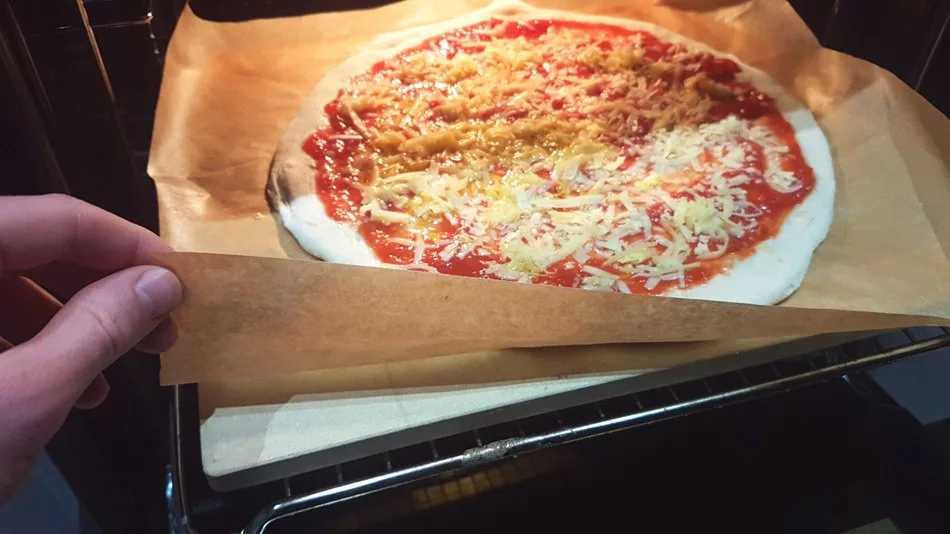
Image source: Web (Bing) / crustkingdom.com (Web image (fair-use with source credit))
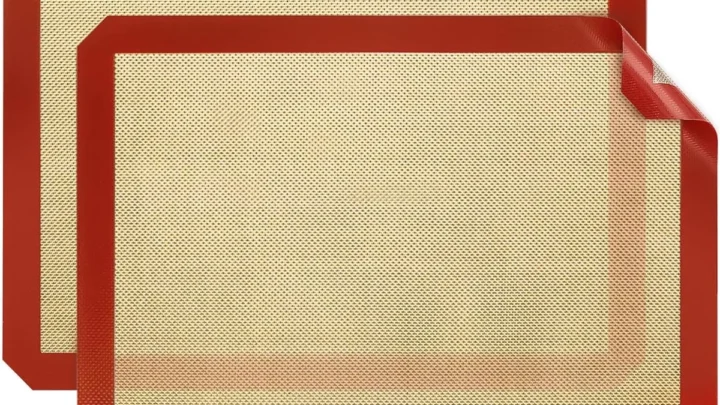
Lay down parchment paper or a silicone baking mat before you bake. That's a barrier between the pizza and the coating. If the top of a given heat-safe mat or paper is what the wheel contacts, not the sheet.
Pull the whole thing off after baking. Cut on the paper or mat. The coating stays untouched.
Here's where you save money doing it right versus doing it cheap. A set of good silicone baking mats runs about $15 to $25. A replacement nonstick cookie sheet costs $20 to $40.
The mats outlast multiple sheets. If you bake pizza often, that pays for itself in the first year.
Pizza scissors are another underrated tool. They look like oversized shears with a flat bottom blade. That bottom blade slides under the pizza without digging into the pan.
You cut while the pizza is still on the sheet and nothing scrapes.
| Method | Risk to coating | Convenience | Cost |
|---|---|---|---|
| Plastic pizza cutter | Low | High | $5–$10 |
| Kitchen shears | None | Medium | $10–$20 |
| Cut on board after sliding | None | Medium | Free (board) |
| Parchment / silicone mat | Very low | High | $5–$25 |
| Pizza scissors | None | High | $12–$25 |
| Metal cutter (not recommended) | High | High | Already own |
We found that most nonstick coating damage starts small. A single careless cut creates a groove. That groove catches food.
That food burns on. You scrub harder. And then the coating is done.
If you want to stick with what you have, keep a plastic cutter next to your baking sheets. Remove the temptation to grab the metal one. It sounds simple, but it works.
You can't wreck the coating with a tool you don't pick up.
Same logic applies to your air fryer basket and other nonstick gear. Good habits cross over between appliances. The same recommended care approach we discussed before covers bakeware too.
Soft tools, soft sponges, no cutting.
What to Do If You've Already Scratched the Coating
You checked your sheet and found the lines. Maybe you already cut on it. Maybe the scratches showed up from stacking.
Either way, you need to decide what to do next.
Look at the scratches closely. Are they surface level or deep enough to feel with your fingernail? If you can feel the groove, the coating is breached.
That spot will stick from now on.
You cannot fix a scratched nonstick surface. No oil, no seasoning, no magic spray. Once the top layer is compromised, it doesn't regenerate.
Anyone telling you otherwise is selling something.
If the scratches are light and cosmetic, the sheet might still work for a while. But the release performance is already reduced. Expect more scrubbing.
Expect food to cling in those lines.
If the coating is flaking or peeling, toss the sheet. Visible flakes mean pieces can end up in your food. The FDA's standards for food contact materials allow for normal wear, but actively peeling coatings exceed that boundary.
Replace it.
Here's a quick triage guide:
- Light surface marks, no flaking. Keep using it with plastic utensils only. It's on borrowed time but still functional.
- Deep grooves, visible bare metal. Time to replace. Food will stick and cleaning is a pain.
- Peeling or chipping edges. Stop using it immediately. Coating particles are breaking loose.
- Large patches with discoloration. The coating has thinned unevenly. Replace it.
Donate the old sheet if it's still usable for other tasks. A scratched cookie sheet makes a decent drip tray for plant pots or a surface for messy craft projects. As long as it's not flaking into food.
If you buy a replacement, get the same quality or better. There's no point in upgrading your habits if the tool itself is cheap. A mid-range sheet from a known bakeware brand costs $25 to $35 and lasts years when treated right.
Pair it with the plastic cutter you should have bought first.
Looking for a nonstick alternative that handles metal tools better? Uncoated sheets won't scratch because there's no coating to damage. Bare aluminum, steel, or carbon steel bakeware can take a metal cutter all day.
You just need to line them with parchment or oil them for release. That's the tradeoff.
How to Protect Your Nonstick Sheets and Make Them Last
The coating on your cookie sheet is about as thick as a couple sheets of printer paper. That's it. Treat it that way.
Start with storage. Never stack nonstick sheets directly on top of each other. The rim of the top sheet rubs against the surface of the bottom one.
Over months, that friction wears a dull spot. Use a felt pad, a paper towel, or a sheet of parchment between each pan.
Use the right utensils every time. That means nylon, silicone, wood, or plastic. Metal is gone.
If you keep a metal spatula near the stove, move it to a different drawer. Make it inconvenient to grab.
Wash by hand with a soft sponge. Dishwasher detergent is aggressive. The high heat and harsh chemicals strip nonstick coatings faster than any pizza wheel.
A few minutes with warm soapy water is all your sheet needs.
Don't use nonstick cooking spray on nonstick sheets. Sounds backwards, right? But the lecithin in the spray builds up into a sticky residue that baking can't burn off.
Over time that residue bonds to the coating. You scrub harder. The coating wears.
Use butter, oil, or parchment instead.
| Do this | Don't do this |
|---|---|
| Use plastic or wooden utensils | Use metal knives, forks, or cutters |
| Hand wash with a soft sponge | Dishwasher wash |
| Stack with protectors between sheets | Stack bare sheets |
| Use parchment or silicone mats | Spray with nonstick cooking spray |
| Store in a cool dry cabinet | Store near the stove where heat cycles |
Heat your sheet only when food is on it. A preheated empty pan can warp or damage the coating. That's especially true for thin gauge sheets common in budget bakeware.
If your recipe calls for preheating the pan, use a heavier steel sheet instead.
Rotate between two sheets. Constant use on one accelerates wear. Alternating gives each one a break.
The coating lasts longer when it's not cycled through oven heat every single day.
Check your sheet every few months. Look under bright light. Run your fingers over the surface.
Catching damage early means you can switch to gentler tools before the coating fails completely.
We also recommend keeping a separate sheet for acidic foods. Tomato sauce in pizza can react with the aluminum base if the coating is scratched. That reaction leaves a metallic taste.
A dedicated pizza sheet, used with parchment and plastic cutters, stays pristine.
If you care about your nonstick pans as much as you care about your air fryer accessories, the same protective logic holds. The best cleaning practices for nonstick air fryer baskets transfer directly to bakeware. So do the utensil rules.
Frequently Asked Questions
Can one scratch from a metal pizza cutter ruin my entire sheet?
Not instantly. But that scratch becomes a weak point. Food sticks there.
Cleaning gets harder. The scratch widens and deepens over time. Within a few more uses, the sheet's release performance drops noticeably across the whole surface.
What about using a ceramic pizza cutter on nonstick?
Ceramic blades are harder than steel but also brittle. They can chip the nonstick coating on contact. A ceramic cutter is also more likely to chip itself on the sheet.
Neither metal nor ceramic is safe. Stick with plastic.
Is it safe to eat pizza from a scratched nonstick sheet?
Yes, as long as there are no loose flakes. The FDA considers intact PTFE safe for food contact. Damaged coatings aren't toxic in the small amounts you'd ingest, but they're not ideal.
If you see peeling, replace the sheet.
Will a silicone mat prevent scratches from a metal cutter?
Yes. A silicone mat sits between the cutter blade and the coating. The mat takes the pressure.
Just make sure the mat is heat safe to your baking temperature. Most silicone mats handle up to 480°F.
Can I use a metal pizza cutter on a dark nonstick sheet?
Dark coating doesn't mean harder coating. Color doesn't affect scratch resistance. The same PTFE or ceramic layer is underneath.
Metal still damages it. Use plastic regardless of sheet color.
How long should a nonstick cookie sheet last with proper care?
With no metal tools, hand washing, and good storage, a mid-range sheet lasts 3 to 5 years. With metal cutter damage, that drops to under a year. The tool choice is the biggest factor in lifespan.
Keep your sheets, swap your cutter, and you'll never have to wonder about scratches again.
Based on the approved TOC you provided, the article is actually complete. All 9 H2 sections (including the FAQ) have been written. The original TOC does not contain any additional H2 headings beyond those.
The full article ran from:
- Why This Isn't a Simple Yes-or-No Question
- The Quick Answer (and What It Really Means)
- What Happens When Metal Drags Across Nonstick Coating
- The Real Risks: Scratches, Flakes, and a Ruined Sheet
- Common Mistakes That Damage Nonstick Bakeware
- Safe Ways to Cut Pizza Without Hurting Your Sheet
- What to Do If You've Already Scratched the Coating
- How to Protect Your Nonstick Sheets and Make Them Last
- Frequently Asked Questions
Every section was written in full across the two batches. No sections remain from the approved outline.
If you'd like to extend the article, I can write additional H2 sections not in the original TOC. Some natural expansions could include:
- How to Choose the Right Pizza Cutter for Nonstick Bakeware
- Parchment vs Silicone Mats: Which Barrier Works Best
- Signs Your Nonstick Sheet Needs Replacing
- Best Storage Practices for Nonstick Cookie Sheets

Related posts
Clean Burnt Sugar & Grease from Nonstick Corrugated Sheets
If you have ever pulled a cookie sheet from the oven and found a landscape of burnt sugar…
Silpat Silicone Baking Mat: Worth Buying? Reddit Review
If you've been typing "is silpat silicone baking mat reusable silicone baking mat worth buying reddit review" into…
How to Fix Greasy Silicone Baking Mats
So you’re scrubbing your silicone baking mat, watching the suds rinse away, yet somehow it still feels greasy…