Reddit Review: Is All-Clad D3 Tri-Ply Worth It?
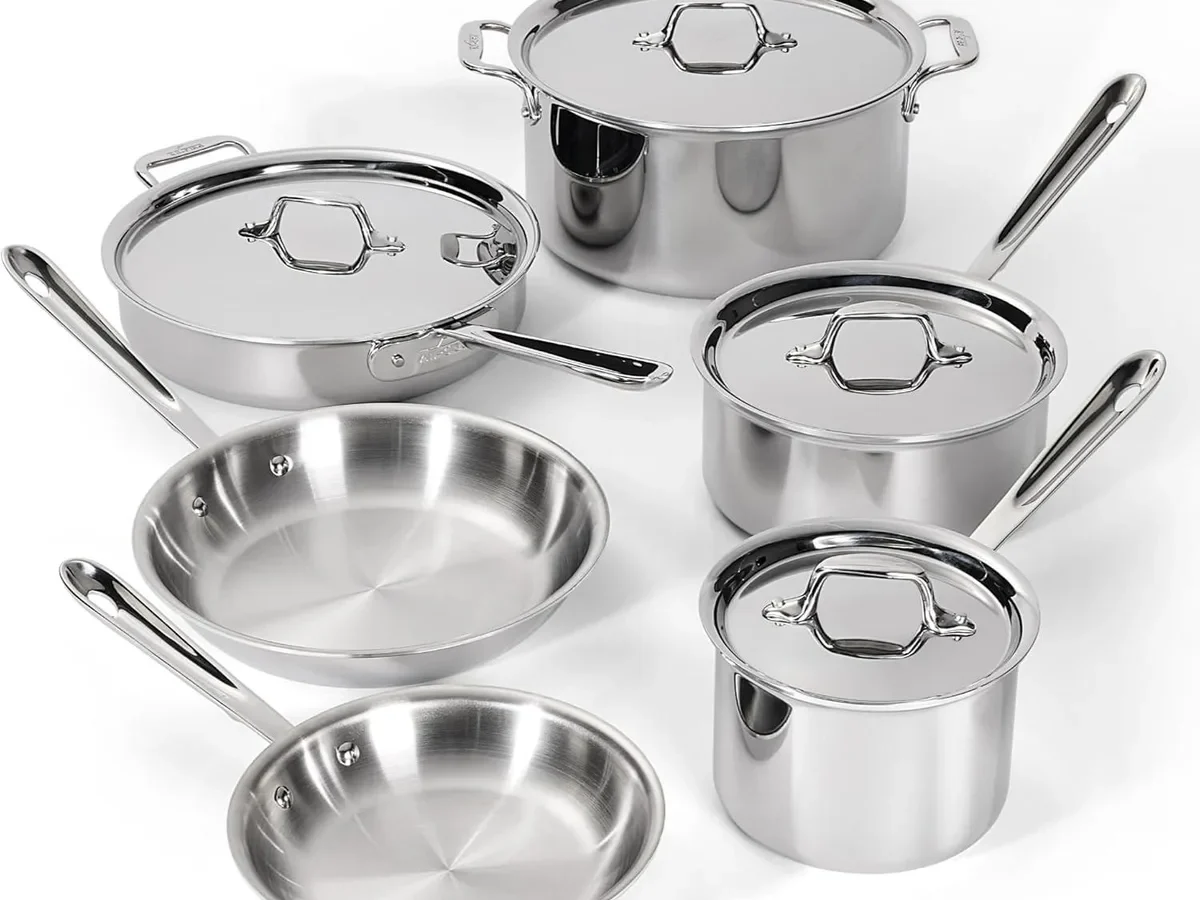
You're scrolling through Reddit at 2 a.m., bouncing between r/cooking and r/BuyItForLife, trying to figure out if the All-Clad D3 stainless tri-ply stainless steel cookware set is worth buying. You've seen the Reddit review threads, the heated arguments, and the "buy once, cry once" crowd versus the budget champions. It's confusing.
So let's cut through the noise.
Manufacturer specifications confirm the D3 uses a bonded three-layer construction with an aluminum core sandwiched between two layers of magnetic stainless steel. That aluminum core is what separates this from cheap stamped pots that burn everything on one side. As of 2026, this set remains one of the most debated purchases in home cooking communities.
Here is what the aggregate feedback actually tells us.
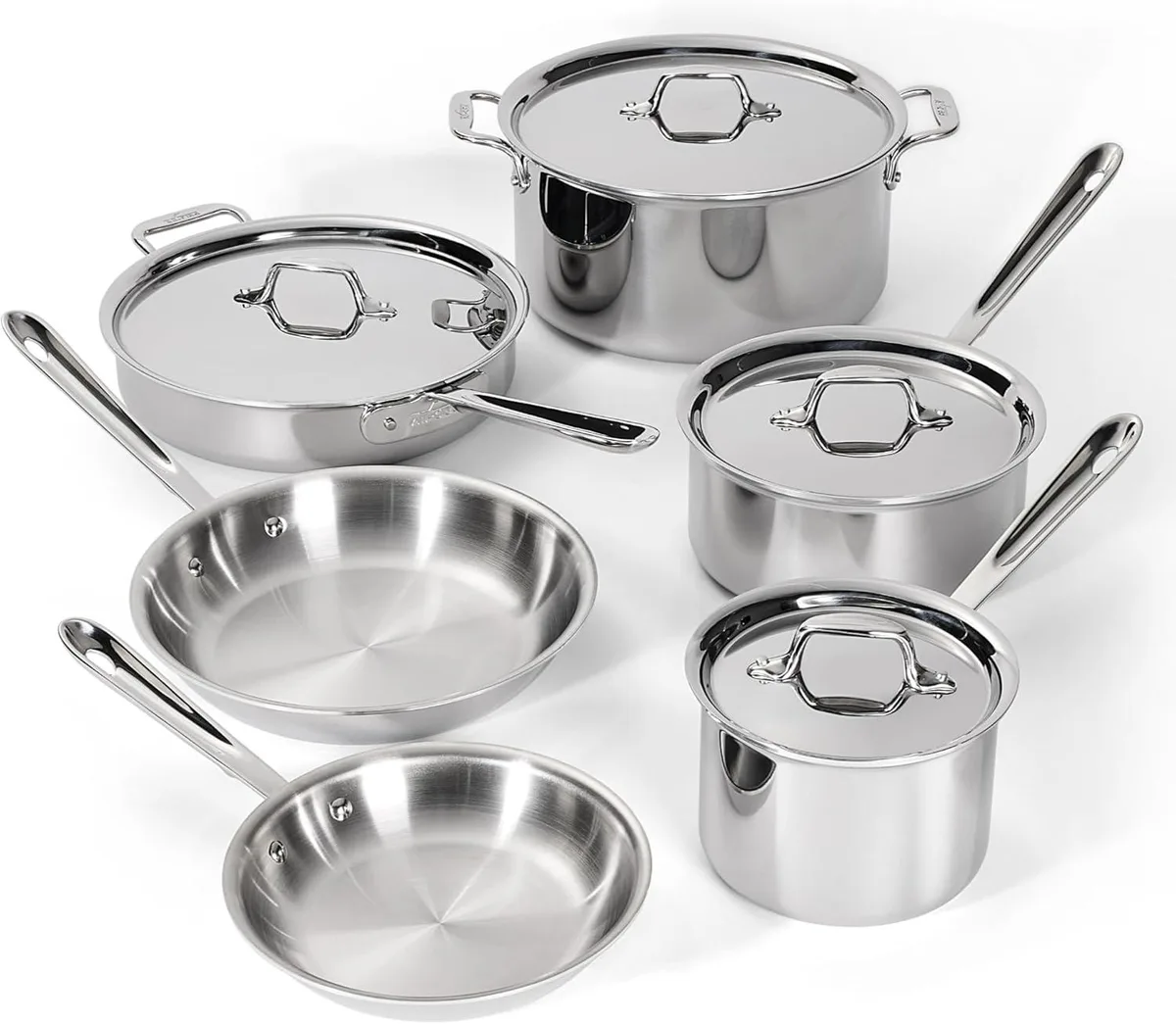
Image source: Bing (Web (fair-use with source credit))
Quick Answer
The All-Clad D3 set is worth buying for serious home cooks. It is not worth buying for everyone. If you cook often and want pans that last decades, buy it.
If you rarely cook or hate hand washing, skip it.
Reddit consensus leans positive but with strong caveats. The 10-piece set costs around $500 on sale. That is serious money for pots and pans.
you'll get even heating, induction compatibility, and restaurant-quality searing. You will also get a learning curve, heavy pans, and required hand drying.
What Actually Makes All-Clad D3 Different From Cheap Stainless Steel
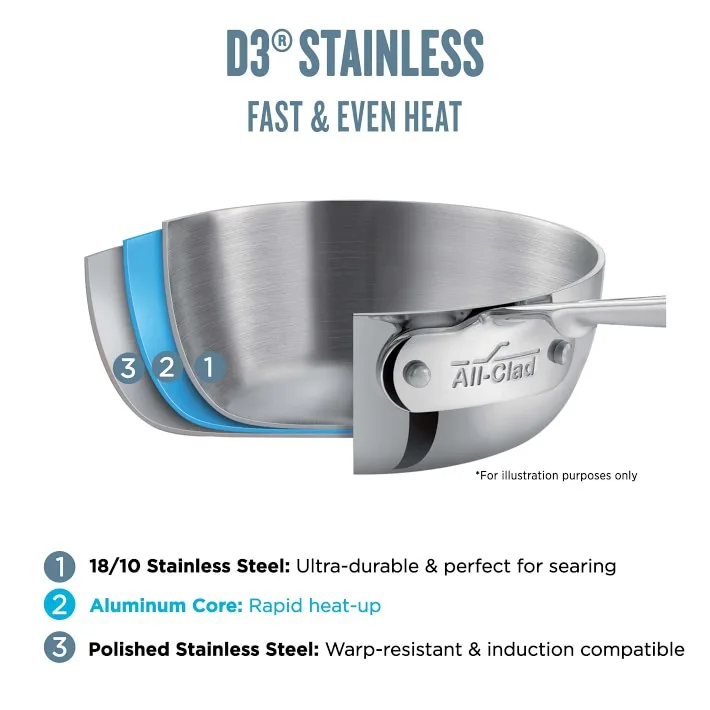
Image source: Web (Bing) / williams-sonoma.com (Web image (fair-use with source credit))
The Full-Clad Construction
Cheap stainless steel pans often have a disc bottom. That means a thin layer of aluminum is welded only to the base. The sides remain single-layer steel.
Food burns on the sides. Heat travels unevenly up the walls.
All-Clad D3 uses full-clad construction. Every single wall of the pot, sides included, has three bonded layers. The outer layer is magnetic stainless steel.
The middle layer is thick aluminum. The inner layer is 18/10 stainless steel. Heat spreads evenly across the entire surface, not just the bottom.
This matters most when you simmer sauces or braise meats. The liquid level sits above the disc bottom in cheaper pans. With D3, the heat reaches that liquid through the sides.
No hot spots. No scorching.
The manufacturing process is also distinct. All-Clad bonds the layers under extreme pressure and heat. No air gaps.
No delamination. Aggregate reviews of cheaper tri-ply sets occasionally report layers separating after years of use. That is rare with D3.
Induction Compatibility
The magnetic stainless steel exterior means these pans work on any cooktop. Gas, electric, ceramic, and induction all work fine. Many cheaper pans have a magnetic disc bolted onto a non-magnetic base.
That disc can warp or detach. D3's magnetic layer is the entire outer skin of the pan, not an add-on.
Oven Safety
All-Clad D3 is oven safe up to 600 degrees Fahrenheit. The handles are stainless steel riveted straight into the pan. There is no plastic, no silicone, no rivet that fails at high temperatures.
This lets you start a steak on the stovetop and finish it in the oven without switching pans.
The Pan Weight
D3 pans are heavy. Not absurdly heavy, but noticeably heavier than budget tri-ply sets. The aluminum core is thick, and the stainless steel layers are substantial.
This weight helps with heat retention. It also means you will not want to toss vegetables by flipping the pan with one hand. Reddit threads frequently mention arm fatigue with larger pieces like the 8-quart stockpot.
What's in the Box: Breaking Down the 10-Piece D3 Set
The standard 10-piece All-Clad D3 set is the most recommended configuration. Here is exactly what you get.
| Piece | Size | Best Use |
|---|---|---|
| Fry Pan | 8-inch | Eggs, crepes, small batches |
| Fry Pan | 10-inch | Searing steaks, sautéing veggies |
| Saucepan | 1.5-quart | Heating soup, cooking rice |
| Saucepan | 3-quart | Sauces, small pasta batches |
| Sauté Pan | 3-quart | Braising, pan-frying chicken |
| Stockpot | 8-quart | Stocks, pasta, big batches |
| Lids | Various sizes | Tempered glass with steam vents |
The Fry Pans
The 8-inch fry pan is good for breakfast tasks. Eggs, crepes, small omelets. But stainless steel sticks if you do not preheat correctly.
Many Reddit users say the 8-inch is too small for daily use. They recommend buying a separate nonstick egg pan instead.
The 10-inch fry pan is where most of your cooking happens. It sears two steaks comfortably. It handles a batch of chicken thighs.
It browns aromatics for a sauce. This is the workhorse piece.
The Saucepans
The 1.5-quart saucepan is small. It heats milk, reheats leftovers, makes a single portion of oatmeal. Some owners say it is too small to be useful.
Others love it for quick tasks.
The 3-quart saucepan is the sweet spot. It handles sauces, soups for two, rice, quinoa, and small pasta portions. The wide base gives even heat across the bottom.
The Sauté Pan
The 3-quart sauté pan has straight sides and a wide cooking surface. This is excellent for braising chicken thighs or making a one-pan dinner. The straight sides hold liquids without splashing.
The wide base sears meat without crowding.
The Stockpot
The 8-quart stockpot is big. It holds stock, pasta water, chili, or soup for a crowd. It is also heavy when full.
Pouring out a full pot of pasta water requires two hands and care. Some owners wish they had bought a separate lighter stockpot for big batches.
What's Missing
Reddit discussions often point out what the set lacks. There is no 12-inch fry pan. There is no saucier pan with rounded sides for easier whisking.
There is no dedicated lid for the stockpot in some configurations (the 8-quart stockpot lid is also used on the 3-quart sauté pan, which some find annoying). You can buy these pieces separately, but that adds cost.
The Honest Pros and Cons of Living With All-Clad D3
The Pros
Even heating across the entire pan. No hot spots, no scorching. This is the biggest reason people buy D3 and stick with it for years.
Durability that outlasts you. These pans do not warp under normal use. The rivets stay tight.
The layers stay bonded. Many owners inherit their parents' All-Clad.
Oven and broiler safe up to 600 degrees. Move from stovetop to oven without changing pans. This is a huge advantage for recipes that need a hot finish.
Non-reactive surface. Cook acidic foods like tomato sauce or wine reductions without metallic tastes. The 18/10 stainless steel interior does not react with ingredients.
Induction compatible. If you switch to induction later, your pans still work. No need to rebuy everything.
Resale value. Used All-Clad sets sell for decent money. This is not an investment, but it holds value better than any other cookware brand.
The Cons
Food sticks easily. Stainless steel is not nonstick. Eggs will glue themselves to the pan if you do not preheat correctly and use enough fat.
Reddit is full of "eggs stuck to my new All-Clad" posts.
Heavy pans. The 10-inch fry pan alone weighs over two pounds. The stockpot is a beast.
Anyone with wrist or grip issues should handle the pieces in person before buying.
Hand washing required. You can put D3 in the dishwasher, but the manufacturer and every experienced owner advises against it. Dishwasher detergent dulls the finish and leaves water spots.
You wash by hand and dry immediately.
Handles get hot. The riveted stainless steel handles conduct heat from the pan. You need an oven mitt or a towel every time.
No exceptions.
Water spots and discoloration. The brushed finish shows every fingerprint and water spot. A splash of Bar Keepers Friend fixes it, but it is a recurring chore.
Price. Even on sale, $500 is a lot for cookware. Budget alternatives perform 80 percent as well for half the price.
How It Stacks Up: D3 vs. D5, Made In, Tramontina, and Nonstick Sets
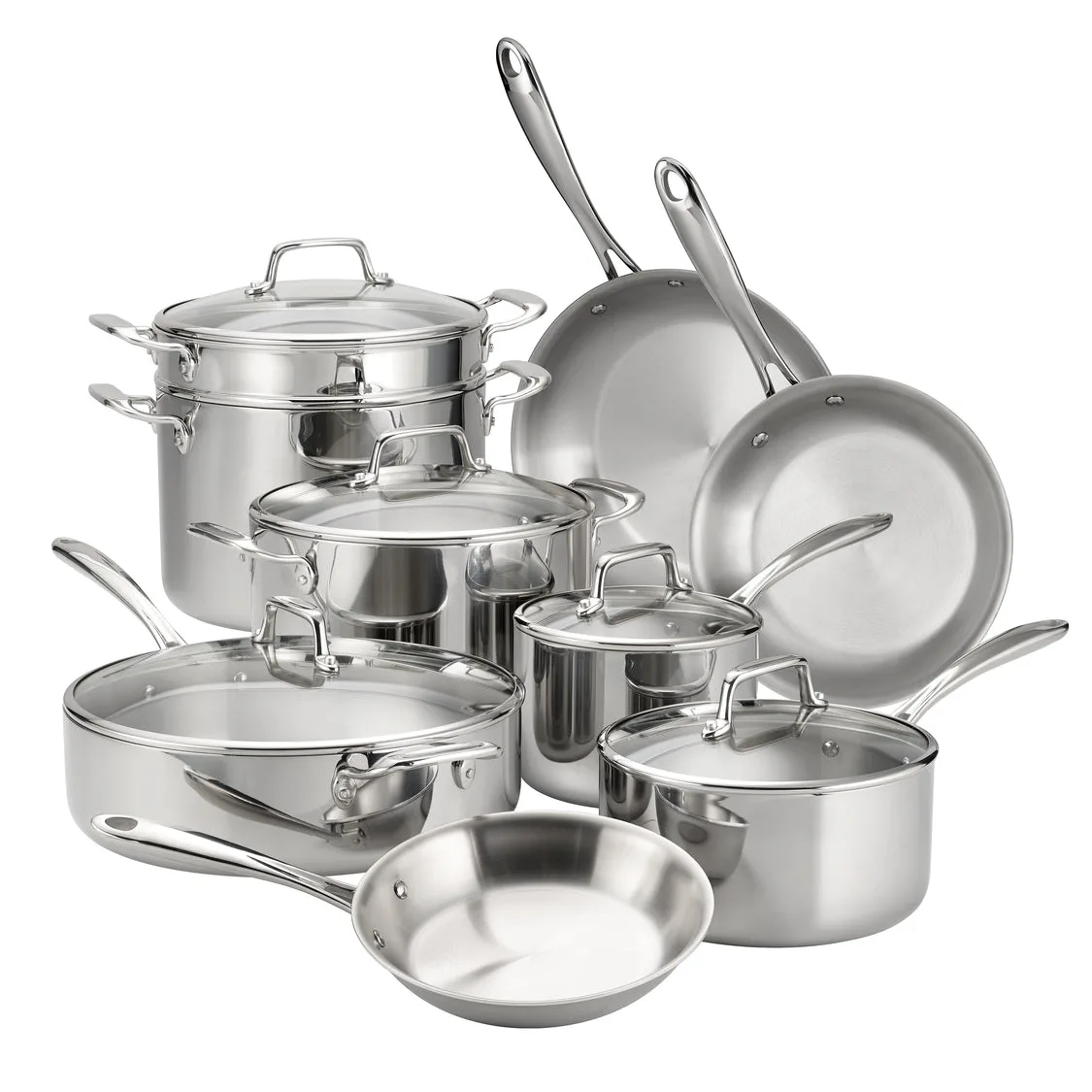
Image source: Web (Bing) / tramontina.com (Web image (fair-use with source credit))
All-Clad D3 vs. All-Clad D5
D5 has five layers instead of three. Two layers of aluminum, three layers of stainless steel. The extra layers make the pans slightly thicker and more expensive.
D3 heats up faster. D5 holds heat longer. For most home cooking, the difference is small.
D3 is lighter and easier to handle. D5 is noticeably heavier.
Price difference is significant. A D5 set costs roughly 30 to 40 percent more than D3. Reddit consensus says D3 is the better value.
D5 is for people who want the absolute best and do not care about the extra cost.
All-Clad D3 vs. Made In Cookware
Made In uses five-ply construction in many of its pans. The company has strong marketing and a direct-to-consumer model. Prices are similar to All-Clad, sometimes slightly lower.
Made In handles are shaped differently. They are wider and more comfortable for some people. The pans are also slightly lighter than D3 in some cases.
The biggest difference is manufacturing location. All-Clad D3 is made in the USA. Made In sources from Italy and other countries.
For some buyers, domestic manufacturing is important.
Reddit discussions generally favor All-Clad for longevity. Made In pans sometimes show wear faster according to aggregate reviews. But Made In customer service gets high marks.
All-Clad D3 vs. Tramontina Tri-Ply
Tramontina tri-ply is the budget champion. A 12-piece set often costs under $300. The construction is similar, full-clad with an aluminum core and stainless steel layers.
The differences are subtle. Tramontina pans are slightly lighter. The handles are less comfortable for some people.
The fit and finish is not quite as polished.
However, the cooking performance is remarkably close. Blind taste tests between All-Clad D3 and Tramontina tri-ply often show no meaningful difference. Even heat distribution is excellent on both.
Reddit's general advice is clear. If you have the budget and want the best, buy D3. If you want to save money, buy Tramontina.
Often, the main difference is even the induction base that D3's magnetic exterior provides versus the simpler disc on Tramontina, which can be a deciding factor for those who own induction cooktops.
All-Clad D3 vs. Nonstick Cookware
This is a very different argument. Nonstick pans are lightweight, easy to clean, and do not require preheating finesse. They are terrible for searing and cannot take high oven temperatures.
Nonstick coatings degrade over time. A good nonstick pan lasts two to three years before it starts peeling. All-Clad D3 lasts decades.
For eggs, fish, and delicate foods, nonstick is better. For steaks, sauces, and browning, D3 is better. Many home cooks keep one small nonstick pan for eggs and use stainless steel for everything else.
This is the most practical setup according to aggregate feedback across forums.
The "Best Value" Verdict
Here is where the research lands. All-Clad D3 is the gold standard for tri-ply stainless steel. Tramontina tri-ply is the best value for money.
D5 is overkill for most people. Nonstick is a supplement, not a replacement.
If you cook regularly and want one set that lasts your entire life, D3 is the correct answer. If you are on a tight budget or cook infrequently, Tramontina makes more sense. The Reddit "buy once, cry once" crowd is right, but only if your cooking habits actually match the investment.

Related posts
Cold Pan Meat Safety: Leidenfrost Test for Tri-Ply Steel
You grab your triply stainless steel pan, a nice thick cut of steak, and you ask yourself: can…
Perfect Filet Mignon: Temp & Time for Red Wine Pan Sauce
If you have ever watched a beautiful filet mignon stubbornly glue itself to a stainless steel pan, you…
5 Ways to Fix a Warped Stainless Steel Skillet
You didn't just stumble onto this article, so let's get straight to it. How to fix 5ply stainless…