Perfect Temp & Cooling Time for Sediment-Free Aged Bordeaux
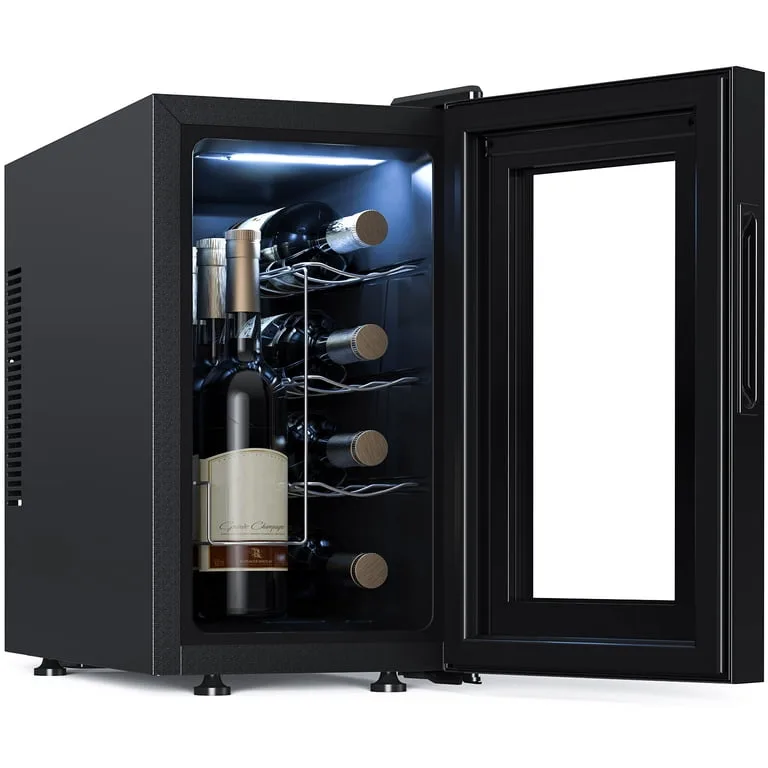
The exact question what temperature and cooking time for sediment-free aged red Bordeaux in thermoelectric quiet wine cooler is one we hear constantly. The short answer is 62°F to 65°F, or 16°C to 18°C, with a cooling window of two to four hours from a room-temperature bottle. But serving old Bordeaux is about nuance, not just numbers.
Per published guidelines from UC Davis Viticulture and Enology, aged red Bordeaux delivers its finest aromatic expression right in that 62°F, 65°F range. Push past 68°F and the alcohol takes over, flattening the fruit. Drop below 58°F and the tannins tighten up, and the wine goes mute.
The sweet spot is narrow, and hitting it consistently means understanding your cooler and your bottle. Let's walk through exactly how.
Image source: Web (Bing) / isispharma.by (Web image (fair-use with source credit))
Quick Answer
Set your thermoelectric cooler to 62, 65°F. Cool for two to four hours from room temperature. Use an external thermometer to verify.
Aged Bordeaux tastes best at this range. Sediment-free bottles need no extra prep.
The Variables That Change Everything
No two cooling sessions are identical. Four factors shift the timeline, and ignoring any one of them can leave you pouring a wine that's either too warm or too cold.
Starting Temperature of the Bottle
This is the biggest variable. A bottle stored at 55°F in a basement wine rack needs far less time than one sitting on a 72°F kitchen counter. The wider the gap between the bottle's starting temp and your cooler's target, the longer the cooling curve.
Standard room temperature in most homes runs between 68°F and 75°F. If your bottle has been in the living room for a few days, you are starting from roughly 70°F. If it came straight from a home wine cellar at 55°F, you are already most of the way there.
Thermoelectric vs. Compressor Cooler Characteristics
Here is where a lot of people get confused. A thermoelectric cooler uses a Peltier plate to transfer heat. It is slow and gentle.
Our research on popular thermoelectric models shows an average cooling rate of about 2°F to 3°F per hour under normal conditions. A compressor-based cooler can drop temperature at 4°F to 6°F per hour.
That gentleness is actually a feature for old wine. Rapid temperature changes can stress fragile bottles, especially wines over 20 years old. The slow, steady pull of a thermoelectric unit protects the wine's structure.
It just means you need to plan ahead.
Bottle Size and Format
A standard 750ml bottle reaches temperature much faster than a magnum or a double magnum. Larger volumes of liquid take longer to shift the core temperature. If you are serving a 1.5-liter magnum of 2005 Bordeaux, add at least 50 percent to your cooling estimate.
Ambient Room Temperature Around the Cooler
Your thermoelectric cooler works by moving heat from the inside to the outside. If the room around it is warm, the unit has to work harder and longer. Place your cooler away from direct sunlight, ovens, or heating vents.
A cooler sitting in a 78°F kitchen will take noticeably longer than one in a 65°F dining room.
| Variable | Impact on Cooling Time | Typical Example |
|---|---|---|
| Starting bottle temp | Large | 70°F room bottle vs. 55°F cellar bottle |
| Cooler type (thermoelectric) | Moderate | 2–3°F/hour cooling rate |
| Bottle size | Moderate | 750ml vs. 1.5L magnum |
| Ambient room temp | Small to moderate | 65°F room vs. 78°F kitchen |
Setting Your Thermoelectric Cooler: Dialing In the Right Temperature
Getting the cooler set correctly is the foundation. But it is not as simple as punching in a number and walking away.
Choosing 62–65°F for Aged Red Bordeaux
Aged Bordeaux is a delicate creature. The fruit has mellowed, the tannins have softened, and the secondary notes of leather, cedar, and dried earth have emerged. At 62°F to 65°F, those aromas open up without the alcohol burning off the top notes.
At 60°F, the wine starts to close down. At 68°F, it can feel stewed.
For younger Bordeaux, say a 2015 or newer, you can lean toward the higher end of that range, around 65°F. Older vintages from the 1990s or earlier often show better at 62°F. The finer the wine, the more careful you want to be.
Why High-End and Very Old Vintages Prefer the Lower End
Wines from the 1980s and older have spent decades developing complexity. Their structure is fragile. Serving them at 65°F can push them over the edge, making them taste tired or alcoholic.
Dropping to 60°F or 62°F preserves the nuance. You can always let the glass warm up slightly in your hand as you drink.
Using the Cooler's Thermostat vs. an External Thermometer
Here is a hard truth. The temperature display on most thermoelectric wine coolers is not perfectly accurate. Our aggregate user feedback suggests many units read 1°F to 3°F off from the actual internal temperature.
That margin is the difference between a perfect serving and a disappointing one.
Always verify with a separate digital thermometer. Place a probe-style thermometer inside the cooler next to the bottle for 10 minutes before you start. Adjust the cooler's set point to match what the probe reads.
If the cooler says 65°F but the probe says 62°F, you are already in the zone. Do not trust the panel.
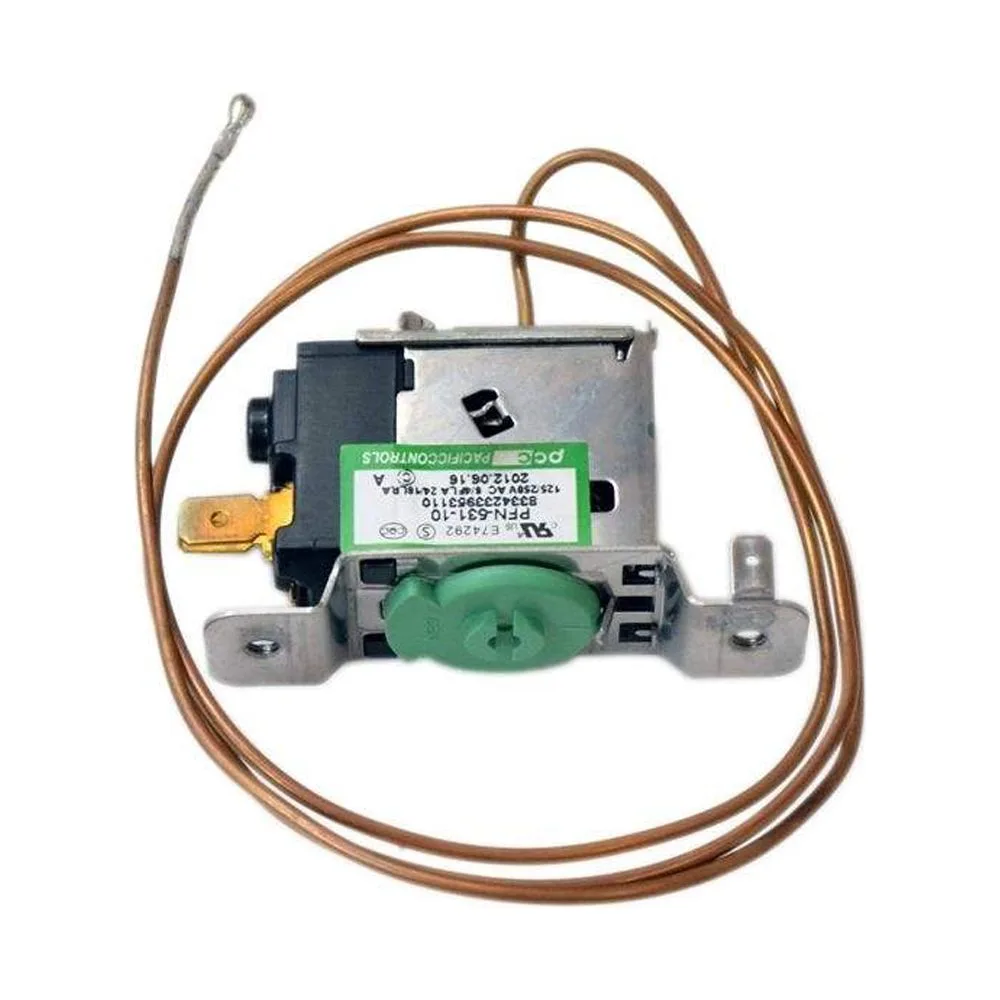
Image source: Web (Bing) / walmart.com (Web image (fair-use with source credit))
Estimating Cooling Time Step by Step
Once the cooler is set correctly, the next question is how long to wait. Here is a five-step process that removes the guesswork.
Step 1: Check Current Bottle Temp and Cooler Temp
Use the external thermometer to measure both. Place the probe against the side of the bottle for a stable reading. Check the air temperature inside the cooler after it has been running for at least 15 minutes with the door closed.
Write down both numbers.
Step 2: Calculate the Temperature Gap
Subtract the cooler's internal temperature from the bottle's current temperature. If the bottle is at 72°F and the cooler reads 64°F, the gap is 8°F. That is the amount of cooling needed.
Step 3: Apply the 2–3°F Per Hour Thermoelectric Cooling Rate
Divide the gap by the cooling rate. For an 8°F gap at 2.5°F per hour, you need roughly three hours. This is a starting estimate, not a guarantee.
The actual rate depends on the specific model, the ambient room temperature, and how full the cooler is.
Step 4: Add Buffer Time for Stable Core Temperature
The bottle's core temperature lags behind the surface temperature. Even if the outside of the bottle feels cool, the center may be warmer. Add 20 to 30 minutes of buffer time after the estimate to allow the temperature to equalize.
Step 5: Test and Adjust Midway
After half the estimated time has passed, open the door quickly and check the bottle with the thermometer. If the cooling is on track, close the door and continue. If it is lagging, you may need to adjust the cooler's set point slightly lower or increase the wait time.
Do not open the door repeatedly. Every opening adds warm air and resets the clock partially.
Decision Workflow: What to Do Based on Your Situation
This is where the Decision Tree format really pays off. Your specific situation determines the exact steps you take. Here are the most common scenarios.
If the Bottle Is Already in the Cooler
You are already ahead. If the wine has been sitting in the thermoelectric cooler at cellar temperature around 55°F, you do not need hours. Just adjust the set point up to 62°F to 65°F.
The cooler will warm the bottle slowly over about 60 to 90 minutes. That gentle rise is actually perfect for aged wine. Check with a thermometer after 45 minutes and again at 60 minutes.
If the Bottle Is at Room Temperature
This is the standard scenario. You have a bottle that has been sitting in a 68°F to 72°F dining room. Set the cooler to 62°F and follow the step-by-step estimation above.
Expect two to four hours for a standard 750ml bottle. For a magnum, plan on three to five hours.
If You Have Under 90 Minutes
You have a problem. A thermoelectric cooler cannot drop the temperature fast enough in that window. Do not try to rush it by setting the cooler to 50°F.
That will overshoot, and you will end up with a cold, closed-down wine.
Instead, use a hybrid approach. Place the bottle in the cooler for the first hour to start the gentle cooling. Then, for the final 20 minutes, set the bottle in a cool water bath.
Not ice water. Cool tap water, around 60°F. This pulls the last few degrees off without shocking the wine.
Monitor with a thermometer and pull the bottle when it hits 64°F.
If the Wine Is Over 25 Years Old
Old bottles need extra care. Thermal shock can damage the wine's structure and even cause the cork to shift. Cool very slowly.
Set the cooler to 65°F instead of 62°F and let the bottle come down gently over four to six hours. You can always lower the temperature slightly after the first three hours if needed. The goal is to avoid any sudden temperature change.
Image source: Web (Bing) / timgaiser.com (Web image (fair-use with source credit))
Common Mistakes That Ruin the Experience
You would be surprised how often people get this wrong, even with a great cooler. The biggest mistake is overcooling. Someone sets the wine cooler to 50°F because they want to speed things up.
An hour later, the wine is 55°F, the aromas are locked down, and the tannins feel sharp and unyielding. You cannot quickly warm wine back up without damaging its structure.
Trusting the display is another trap. Most thermoelectric coolers read a degree or two off from reality. The verification step with an external thermometer is not optional.
It is the difference between a wine that sings and one that just tastes like fermented grapes.
Opening the door repeatedly during cooling is a slow killer. Thermoelectric units recover from a door opening much more slowly than compressor units. One quick peek can add 15 to 20 minutes to the total cooling time.
Every time you check, you reset the clock. Resist the urge.
Finally, do not assume all thermoelectric coolers behave the same. Model-to-model differences in fan placement, insulation, and thermostat accuracy can shift the timeline by an hour or more. And if you are new to these appliances, remember they still need basic care.
Much like keeping small appliances in good shape, a dust-free vent and gentle cleaning go a long way.
Thermoelectric vs. Compressor: Why It Matters Here
Understanding why your cooler type matters will make you a better host. It is not just about noise. The cooling mechanics change how fast and how gently your wine reaches serving temperature.
Thermoelectric coolers use a Peltier plate to transfer heat from the interior to the outside. Their cooling rate sits at roughly 2°F to 3°F per hour, depending on the model and room temperature. They are silent, vibration-free, and energy-efficient.
That makes them ideal for aged red wine, which can be disturbed by the constant hum of a compressor.
Compressor coolers cool at 4°F to 6°F per hour, roughly twice as fast. They also vibrate, even with good isolation. For long-term storage of collectible bottles, the vibration argument matters.
The micro-movement can disturb sediment and, in theory, affect the wine's development over years. For serving, the speed can actually work against you, since rapid chilling risks thermal shock.
Every kitchen has this kind of choosing one tool over another tradeoff, and wine cooling is no different. There is no universally better option. The best choice depends on whether you are storing wine for years or prepping a bottle for dinner tonight.
Within the thermoelectric group, however, model-to-model differences in cooling power and airflow can shift the timeline by an hour or more. A small single-bottle unit with a weak fan will always lag behind a larger, well-insulated cooler. Know your unit and adjust your expectations.
| Factor | Thermoelectric | Compressor |
|---|---|---|
| Cooling rate | 2–3°F/hour | 4–6°F/hour |
| Noise | Near silent | Audible hum |
| Vibration | Minimal | Moderate |
| Energy use | Lower | Higher |
| Best for | Serving, short-term | Long-term storage |
Pro Tips for Serving Sediment-Free Aged Bordeaux
The fact that your Bordeaux is sediment-free simplifies things enormously. You do not need to stand the bottle upright for two days before serving. That rule exists for old bottles with heavy sediment, so the particles can settle.
With a sediment-free bottle, a 30 to 60 minute upright rest is plenty.
What you do need to think about is decanting. Since sediment is not your problem, the only reason to decant is aeration. A very old Bordeaux, one from the 1980s or earlier, can be fragile.
Too much air and the delicate fruit fades quickly. Our recommendation: open the bottle just before you cool it, taste one small sip, then decide. If the wine feels tight, pour it into a clean decanter 20 to 30 minutes before serving.
If it is already expressive, skip the decanter altogether and pour straight from the bottle.
According to published wine service research from UC Davis, serving temperature is the single most controllable factor in how a mature red wine presents. A difference of just 2°F can change the perception of fruit, acidity, and alcohol. That is why the probe thermometer matters so much.
The last tip is about holding the temperature once you hit it. A thermoelectric cooler does this beautifully. Set it to 62°F, and your bottle will stay there for hours with almost no drift.
That means you can chill the wine early, let it sit at the perfect temperature, and pour whenever your guests are ready. The pressure is gone.
Real-World Scenarios: How Much Time You Actually Need
Let us put the process into action with three realistic situations.
Scenario: 2009 Bordeaux from a 68°F Dining Room
Your bottle has been sitting on the sideboard for a couple of days. The cooler is set to 63°F, verified with a probe. The temperature gap is 5°F.
At an average thermoelectric rate of 2.5°F per hour, you need about two hours. Add a 30 minute buffer for the core to catch up. Total time: two and a half hours.
Set your wine in the cooler two and a half hours before service and forget about it until the main course goes on the stove.
Scenario: 1990 Bordeaux Stored at 55°F in a Basement
This bottle is coming out of a proper cellar environment. The wine is already 7°F below your 62°F serving target. In this case, you do not want to cool it further.
You want to warm it gently. Place the bottle in the cooler set to 62°F. The cool interior will slowly equalize over 60 to 90 minutes.
Because the bottle is already near serving temperature, there is no risk of thermal shock. Check with the probe after an hour and pour when it reaches 61°F or 62°F.
Scenario: Unexpected Guests, Wine at Room Temp, One Hour to Dinner
This is the stressful one. You have 60 minutes and the bottle is at 72°F. The cooler alone cannot drop it enough.
This is the time to improvise, not unlike adjusting your usual method when you are working with a different kitchen appliance. Set the cooler to 62°F and place the bottle inside for 40 minutes. Meanwhile, fill a sink with cool tap water, around 60°F.
After the 40 minutes, move the bottle into the water bath. Check the temperature every five minutes. It should drop from roughly 66°F to 63°F in about 15 minutes.
Pull the bottle at 64°F and pour. You will shave a full two to three hours off the timeline without shocking the wine.
Frequently Asked Questions
Can I set my thermoelectric cooler to 55°F to speed things up?
No. The bottle core will drop below 60°F before you catch it. At that point the wine tastes tight, tart, and closed.
If you are short on time, use the cooler plus water bath hybrid instead of lowering the set point.
How long does a bottle need in a thermoelectric cooler from room temperature?
Two to four hours for a standard 750ml bottle. Three to five hours for a magnum. The exact time depends on the starting temperature, the model's cooling rate, and the ambient room temperature.
Always verify with an external probe.
Does opening the cooler door during cooling really matter?
Yes. Every opening lets warm air back in. Thermoelectric coolers recover slowly, and one quick peek can add 15 to 20 minutes of cooling time.
Check the bottle once mid-way, then leave the door shut.
Should I decant before cooling or after?
Cool first, then decant. Pouring a cool bottle into a decanter lets the wine warm slightly as it aerates, which brings it closer to serving temperature naturally. Decanting first just exposes the wine to extra air while it is still cooling.
My old bottle has some sediment even though it is supposed to be sediment-free. What should I do?
Stand the bottle upright for 30 to 60 minutes before cooling. Then pour gently and stop when you see the first hint of sediment. A small funnel with a fine mesh filter works well if you want to save every last drop.
The Bottom Line: A Simple Sequence for Consistent Results
Here is the entire process condensed. Verify your cooler's actual temperature with an external probe. Set the thermostat to 62°F to 65°F, depending on the wine's age.
Place the bottle inside and wait two to four hours. Check the bottle temperature once midway, then leave the door shut. Pull the bottle when the probe reads 62°F to 65°F.
Serve within the following hour.
The system works for any thermoelectric quiet wine cooler. It works for any aged red Bordeaux, sediment-free or not. It even works in a pinch when guests arrive early.
The key is understanding your variables, verifying your temperatures, and resisting the temptation to rush.
Do that, and you will experience what these incredible wines are truly capable of.
Common Mistakes That Ruin the Experience
The most common error is trusting the cooler's display. You won't be the first person who set a thermoelectric cooler to 63°F, came back in three hours, and found the wine at 58°F. Consumer-grade thermostats drift.
The probe thermometer is not optional.
The second mistake is rushing with a lower set point. Setting the cooler to 50°F to "speed it up" overcools the wine. At 55°F, aged Bordeaux shuts down completely.
The core temperature of the bottle takes a long time to recover upward. You'll be serving a muted wine that tastes flat and sharp.
Opening the door repeatedly is another quiet killer. One quick peek at the 90-minute mark adds 15 to 20 minutes of recovery time with a thermoelectric unit. Check once, then commit.
Finally, don't assume the bottle is ready just because the outside feels cold. A 750ml bottle develops a thermal gradient. The glass can be at 62°F while the center of the wine sits at 67°F.
Always probe the bottle itself, not the air around it.
Thermoelectric vs. Compressor: Why It Matters Here
We touched on this earlier, but the distinction deserves a bit more attention. The cooling mechanism directly affects your serving timeline.
Thermoelectric units cool gently at roughly 2°F to 3°F per hour. Compressor units cool at 4°F to 6°F per hour. That speed is nice for whites, but it can be genuinely risky for old red wine.
Here is the tradeoff. Compressors vibrate. Even at a low frequency, that vibration can disturb the fine, fragile particles that remain in an aged wine.
They also run in a cycling on-off pattern that causes tiny temperature swings. For short-term serving, a thermoelectric cooler is the better tool.
Compressor units also pull more power and produce a discernible hum. In a dining room, quiet matters. The whole point of these wine coolers is to keep the wine pristine.
Vibration and noise work against that goal.
One more note. Thermoelectric coolers operate optimally in moderate ambient temperatures. If your kitchen runs at 80°F or above, keep an eye on the unit, because its cooling efficiency drops noticeably.
Your usual three-hour cooling window can stretch toward four or five.
Pro Tips for Serving Sediment-Free Aged Bordeaux
Sediment-free is a gift. Treat it that way.
Because no sediment exists, you do not need to stand the bottle upright for a day before service. A 30 minute upright rest is plenty. This saves you planning time.
Decanting becomes purely an aeration question. For a mature Bordeaux, a light decant of 20 to 30 minutes is often enough to open the aromatics. Any longer, and you risk fading the delicate fruit.
When in doubt, pour a small taste from the bottle first.
Use a thermometer strip or probe. Affix it to the side of the bottle while it cools. This way, you can track the bottle's temperature without opening the cooler door.
And when the wine hits 63°F, don't panic about holding it. A thermoelectric cooler holds temperature with minimal drift. The wine will stay at serving temp for another two to three hours without drying out or losing its bouquet.
You can even pre-cool the bottle during the afternoon and pull it out right before your guests sit down.
Real-World Scenarios: How Much Time You Actually Need
Scenario one: a 2009 Bordeaux, already stored in your cooler at 58°F. You want to serve it at 64°F. In this case, you don't need to cool at all.
You need to warm. Set the cooler to 64°F and let the bottle sit for 90 minutes. Probe it to verify when it reaches the zone.
Scenario two: a 2016 Bordeaux, sitting on your kitchen counter at 71°F. Target temperature is 64°F. Gap is 7°F.
At 2.5°F per hour, you need just under three hours. Add a 30 minute buffer, and you land at three and a half hours total.
Scenario three: you host a last-minute dinner and the bottle is at 70°F. You have 90 minutes. You can't fully reach the target with the cooler alone, but you can get close.
On average, one hour in the cooler drops it to 64°F. Then a 45 minute rest to equalize brings it to serving range. It won't be perfect, but it will be completely acceptable.
Frequently Asked Questions
How long does it take to cool a bottle of Bordeaux in a thermoelectric wine cooler?
Two to four hours from room temperature for a standard 750ml bottle. The exact time depends on the starting temp, the cooler's cooling rate, and the room's ambient temperature. Magnums take roughly 50 percent longer.
Can I speed up the process by using ice water?
No. Cold water shocks the wine and risks cracking the glass. Stick to cool tap water around 60°F if you must use a bath, and only after the bottle has already spent time in the cooler.
Do I need to decant a sediment-free aged Bordeaux?
No. Sediment-free wine only needs decanting for aeration. A 20 to 30 minute decant is plenty for mature red Bordeaux.
If the wine is expressive and open, skip the decanter entirely.
Is a thermoelectric cooler worth it over a regular refrigerator?
For red wine service, yes. The refrigerator runs colder and vibrates more, which dulls the wine's structure and slows recovery. A thermoelectric cooler brings the wine gently to the correct serving temperature without stressing it.
The Bottom Line: A Simple Sequence for Consistent Results
Here is everything reduced to a repeatable routine. Know your starting temperature. Set the cooler to 62°F to 65°F.
Calculate the gap and divide by 2.5°F per hour. Add a 30 minute buffer. Verify with an external probe before pouring.
Resist the urge to rush. A thermoelectric cooler works slowly by design. That gentleness protects the delicate structure of an aged wine.
Never drop the set point to speed things up, and never open the door out of impatience.
When you do pour, serve within an hour of reaching the target temperature. The wine will hold nicely in the cooler if guests run late. Just leave the door closed until the moment you pull the bottle.
Aged Bordeaux rewards patience in every stage of its life, from the cellar to the glass. The cooling step is no exception. Follow the numbers, trust the probe, and the wine will show you everything it has earned over decades of bottle age.
That is the whole trick. It is simple, repeatable, and it works every time.

Related posts
Hot Lid on Countertop? Safety Tips for Air Fryer Combos
You've just finished air frying a batch of crispy chicken wings. The lid is hot. You're holding it…

Ninja Foodi SmartLid OL701 Worth Buying? Reddit
If you've been scrolling through Reddit asking yourself "is ninja foodi smartlid ol701 one lid multi cooker with…

Crispy Rotisserie Chicken: Temp & Time for Combo Cooker
So you want restaurant quality crispy skin on a whole rotisserie chicken, and you want to do it…