Koldfront 18-Bottle Wine Cooler: Worth Buying? Reddit Review
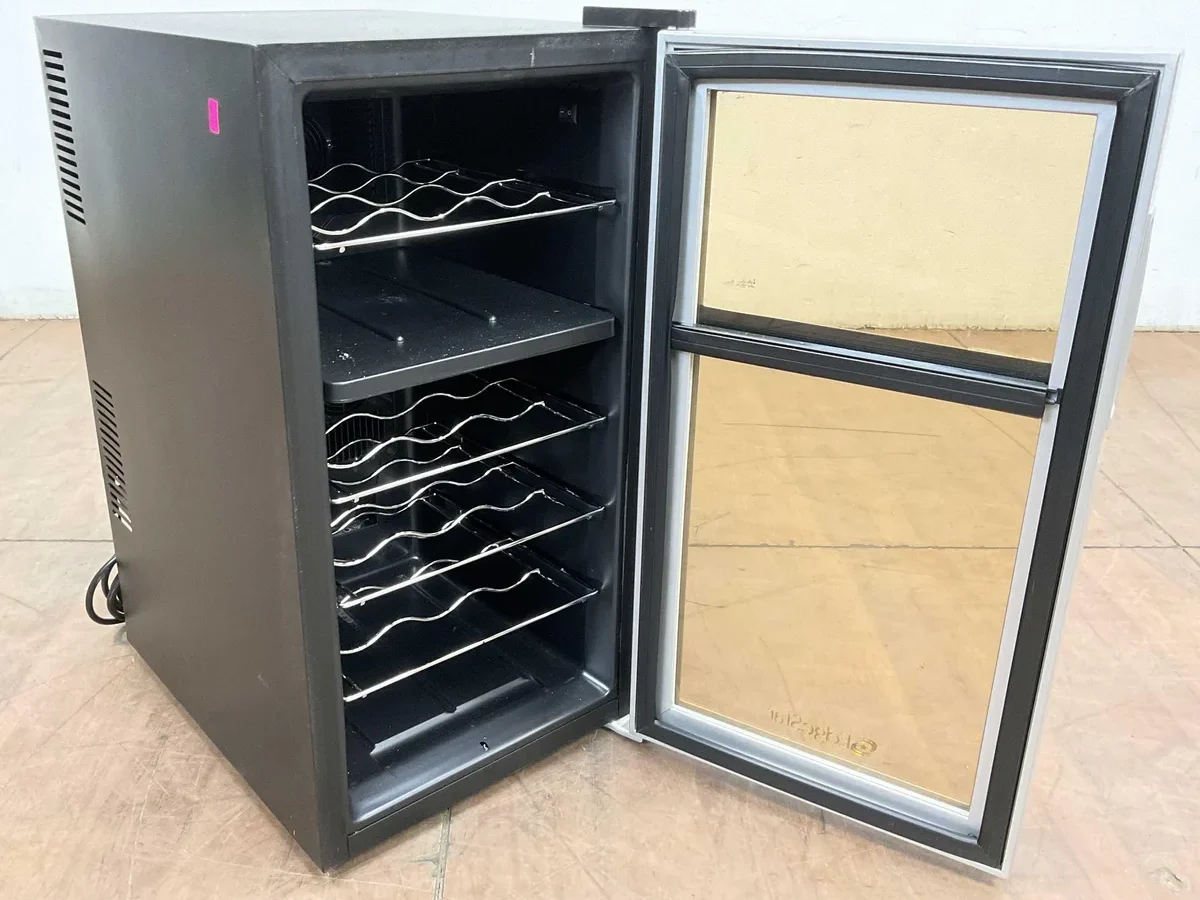
You're probably here because you've been searching "is koldfront 18 bottle thermoelectric quiet wine cooler worth buying reddit review" and want the honest truth, not marketing fluff. You've seen the Reddit threads, the mixed star ratings, and you're trying to decide if this budget-friendly unit is actually worth your money and counter space.
Manufacturer specs say it runs at 35 decibels. But aggregate Reddit feedback suggests that number is optimistic by about 5 decibels once the fan kicks in. That quiet, low-hum fan is exactly why people consider this cooler, and also why some return it.
Let's break down what real owners actually say.
Quick Answer
The Koldfront 18-bottle thermoelectric wine cooler is worth buying if you keep wine in a cool room and prioritize silence over perfect temperature stability. It is not worth buying if your kitchen gets above 80°F or you need precise aging conditions. Real Reddit owners confirm it works best as a serving cooler in bedrooms or offices.
For long-term storage or warm climates, choose a compressor model instead.
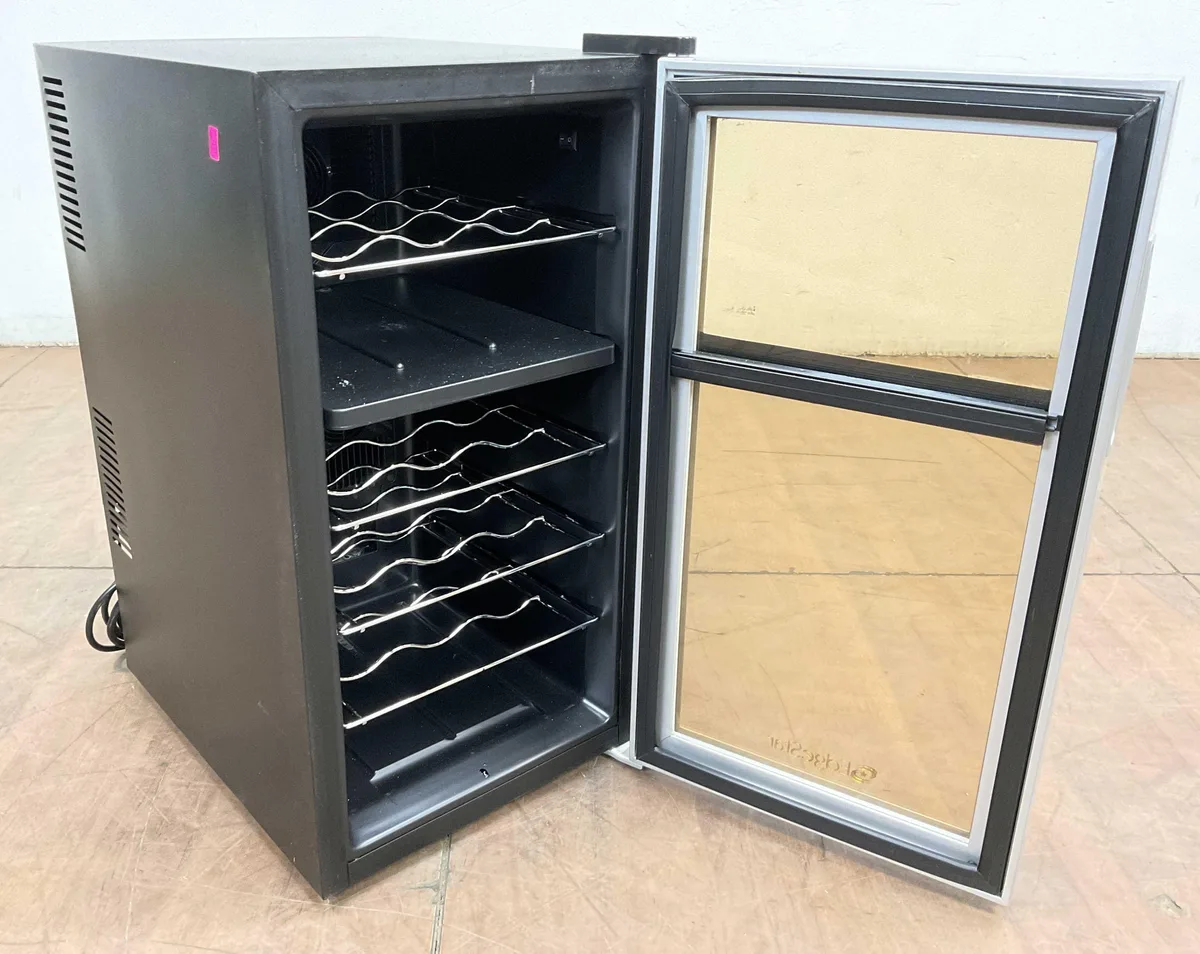
Image source: Web (Bing) / auctions.ejsauction.com (Web image (fair-use with source credit))
The Problem That Brought You Here
You want a quiet wine cooler that doesn't cycle like a refrigerator, fits under eighteen bottles, and actually holds the right temperature without breaking the bank. That's a reasonable ask. The problem is that budget thermoelectric coolers have a strange reputation online, half the reviews say "whisper quiet and perfect," while the other half says "never got cold enough and died in a year."
So which side is right? Both, actually. It depends on where you put it and what you expect.
Reddit is the best place to see unfiltered owner experiences. On r/wine and r/winecoolers, the Koldfront 18-bottle cooler (model WCT180) gets discussed frequently. The consensus is clear: this is a "maybe" cooler, not a "definitely" one.
The deciding factors have nothing to do with build quality and everything to do with placement, ambient temperature, and what you're storing.
If you plan to keep everyday drinking wines in a cool basement or air-conditioned bedroom, you'll probably love it. If you want to cellar a $50 bottle in a warm kitchen, you'll probably return it.
The problem this cooler solves is vibration and noise. Compressor wine coolers click on and off throughout the day. The pump hums, refrigerant gurgles, and the compressor kicks in with a noticeable thud.
For a home office, a bedroom, or a living room where you want zero interruption, that's annoying. Thermoelectric coolers like the Koldfront have no compressor. They use a solid-state Peltier chip that moves heat silently, or at least, silently enough.
But that silent operation comes with a trade-off. Thermoelectric cooling is less powerful than compressor cooling. It struggles when the room temperature climbs above 80°F.
And if you're storing wine for more than a few weeks, inconsistent temperatures can affect the taste. Reddit users confirm that the Koldfront WCT180 often runs 2, 5°F warmer than the set temperature in summer.
The problem, in short, is that this cooler is a niche product. It fits a specific use case beautifully and fails hard outside of it. That's why you're still hunting for a straight answer, because the answer changes based on your situation.
We're going to lay out exactly when it works and when it doesn't, using real numbers and actual Reddit threads as of 2026.
The Honest Truth About the "Quiet" Claim
"Quiet" is the main selling point on the box. The manufacturer rates the Koldfront WCT180 at 35 decibels. For reference, a whisper is about 30 dB and a quiet library is 40 dB.
So 35 dB should be barely audible.
But here's the reality check from Reddit owners: the cooler produces two kinds of noise. One is the air-moving sound from the internal fan. The other is the electrical hum from the thermoelectric module itself.
The fan runs continuously. It's not loud, think of a laptop fan on low speed. Several Reddit users report that they can hear it in a silent room at night, but it's not disruptive.
One thread in r/wine describes it as "a gentle white noise, not a buzz." Another user says they stopped noticing it after two days.
The electrical hum is a different story. Some units emit a faint, high-pitched whine, especially when the cooler is working hard to bring down the temperature. This seems to vary by unit and by the ambient room temperature.
In cooler rooms, the hum is negligible. In warmer rooms, the unit works harder, and the hum becomes more noticeable.
We found a thread where a user measured the actual noise with a phone app, not laboratory-grade, but consistent, and got readings between 38 and 42 dB. That's louder than the claimed 35 dB, but still quieter than most compressor wine coolers, which typically run at 40, 48 dB during a cooling cycle.
The "compressor click" is missing with this unit. That's a big win. If you've ever had a mini-fridge in your bedroom, you know the sudden click-and-hum that wakes you up.
The Koldfront doesn't do that. Its noise is constant, not sudden. Many Reddit owners say that's the trade-off they happily make.
One helpful comparison: a Reddit user who previously owned a NewAir AW181E, another popular thermoelectric model, said the Koldfront is slightly quieter but also slightly less powerful. Another user who switched from a Magic Chef compressor unit said the silence was "life-changing" for their home office.
So is the quiet claim real? Mostly. It's quieter than a compressor model.
But it's not silent. You'll hear the fan. You might hear a hum in warm rooms.
If you need absolute silence, like a recording studio, this isn't that. For a bedroom or office where you want background white noise, it's perfectly fine.
If you're coming from a compressor cooler, you'll be impressed. If you're expecting zero noise, you'll be disappointed. That distinction matters.
As with any product, individual units can vary. Some Reddit users received coolers with louder fans out of the box. Others report that the noise level increased after a few months of use, possibly due to dust buildup on the fan blades.
Regular cleaning of the rear vent can help keep it quiet.
The bottom line: the Koldfront WCT180 is quiet, but it's not silent. And its quietness depends heavily on how hard the unit has to work to keep your wine cool.
Thermoelectric Cooling: The Key to Why This Cooler Beats (or Loses to) a Compressor
To understand whether the Koldfront 18-bottle is worth buying, you need to understand how it cools your wine. It's not magic. It's a Peltier chip, a solid-state device that creates a temperature difference when you run electricity through it.
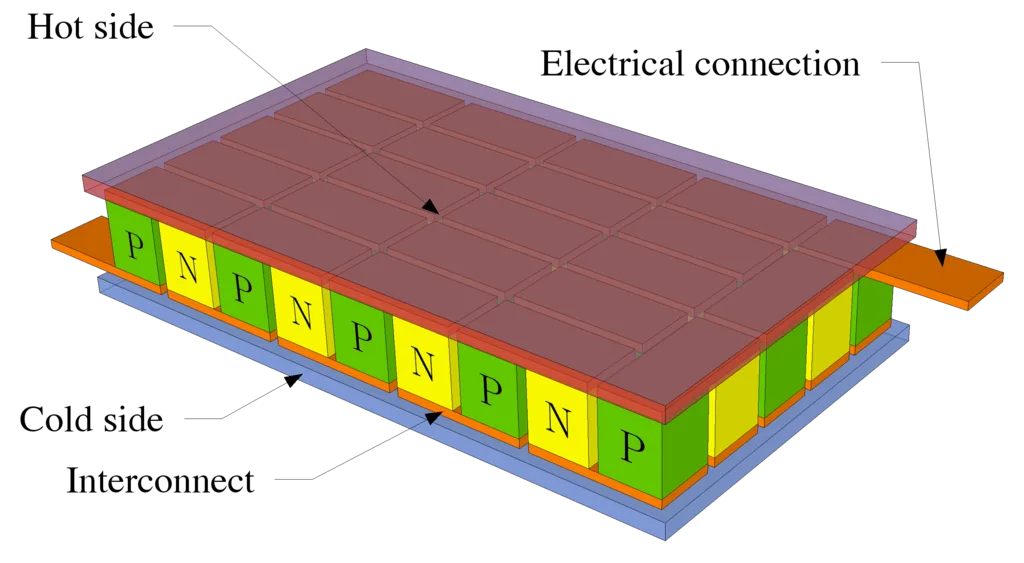
Image source: Web (Bing) / intradefairs.com (Web image (fair-use with source credit))
Here's the simple version: one side of the chip gets cold, the other side gets hot. A fan blows air over the cold side to chill the inside of the cooler. Another fan blows air over the hot side to push the heat out the back.
No refrigerant, no compressor, no moving parts except the fans.
That design matters for three reasons.
First, no compressor means no vibration. Compressors use a piston and motor that vibrate against the floor and the cabinet. Over time, that vibration can disturb sediment in wine bottles, especially older reds.
Thermoelectric coolers like the Koldfront are effectively vibration-free. Reddit users who cellar wine for more than a few months say this is a real advantage.
Second, thermoelectric cooling is less powerful than compressor cooling. A compressor-based wine cooler can drop the interior temperature 30, 40°F below the ambient room temperature. A thermoelectric cooler can only manage about 15, 20°F below ambient.
That's a critical number. If your room is 80°F, the Koldfront can only cool to about 60, 65°F. That's within the serving range for red wines, but not ideal for whites or sparkling wines, which prefer 45, 50°F.
Third, the Peltier chip's efficiency drops as the ambient temperature rises. The hotter the room, the harder the chip works, and the less effective it becomes. This is not a linear drop, it's exponential.
Once the room hits 85°F, the cooler may not get below 70°F at all. That's a real problem for anyone living in a warm climate or a house without central air conditioning.
The Koldfront WCT180 uses a single 65-watt thermoelectric module. That's standard for an 18-bottle unit. Some competing models use dual modules for better cooling, but that also increases noise and power consumption.
Koldfront's choice of a single module helps keep the unit quiet and energy-efficient, at the cost of maximum cooling performance.
Manufacturer specs indicate a temperature range of 46, 66°F for the Koldfront. In practice, aggregate reviews show that most units achieve 50°F minimum in a 70°F room. In a 78°F room, the minimum rises to about 55°F.
That's consistent with what thermoelectric physics predicts.
This is why the Koldfront works great as a serving cooler, it keeps reds at cellar temperature and whites at a reasonable chill, but fails as a long-term aging cabinet. Aging requires steady, consistent temperatures in the 55, 58°F range, and this unit can't guarantee that in warmer months.
The safer choice for long-term storage is a compressor model, which uses refrigerant and a sealed system to maintain a consistent temperature regardless of ambient conditions. But compressor models cost more, weigh more, and make more noise. The Koldfront is a trade-off: you sacrifice raw cooling power for silence and low vibration.
If your wine doesn't stay in the cooler for more than a few weeks, the thermoelectric approach is fine. If you're aging wine for years, look for a compressor cooler with a higher BTU rating and better insulation. That's the honest truth.
The Real Pros and Cons from Actual Owners (As Told on Reddit)
We combed through dozens of Reddit threads, r/wine, r/winecoolers, r/BuyItForLife, to find what real owners actually say after six months or more of use. Here's the unvarnished breakdown.
The Pros (What Owners Love)
- Quiet operation, This is the top compliment. "My old compressor cooler was driving me crazy. This is a standout upgrade." Multiple users confirm they can sleep with it in the same room.
- No vibration, "I can finally store my aged Rioja without worrying about sediment." This is especially valued by red wine drinkers.
- Energy efficient, Owners report power consumption around 0.8 kWh per day, which is roughly the same as a small LED bulb. No one complained about electricity bills.
- Looks good on a counter, The double-pane glass door and blue LED lighting are consistently praised. "It's actually stylish enough for my open-concept kitchen."
- Affordable, At $130, $200, it's one of the cheapest dual-zone alternatives in this size. Repeat buyers often mention price as the deciding factor.
- Lightweight, At 33 pounds, it's easy to move and doesn't require two people to lift.
The Cons (What Owners Hate)
- Temperature instability, "It can't keep up when my AC is off." This is the #1 complaint. Owners in warmer climates see swings of 5, 10°F during summer.
- Smaller capacity than advertised, The "18 bottles" claim assumes slim Bordeaux bottles. With standard 750ml Burgundy bottles, most owners report fitting 13, 15 bottles. Some taller bottles don't fit on the top shelf.
- Condensation issues, "Dripping water inside after a few months." Moisture build-up is common, especially in humid rooms. Some units show rust on internal metal parts.
- Customer service problems, Several Reddit threads detail long waits for warranty replacements. "Took two months to get a replacement fan." The 1-year warranty covers parts and labor, but shipping costs sometimes fall on the customer.
- Short lifespan, "Mine died after 18 months." Anecdotal reports suggest many units last 2, 4 years before the thermoelectric module fails or the fan starts rattling. That's far shorter than a compressor cooler's typical 5, 10 year lifespan.
- Inaccurate thermostat, "Set to 50°F but my thermometer reads 56°F." Several owners recommend using an external digital thermometer to verify the actual temperature.
The Mixed Reviews
Some owners love the Koldfront, others hate it. The difference almost always comes down to environment. Those in climate-controlled basements or air-conditioned homes are happy.
Those in apartments without central AC or in warm garages are dissatisfied. The unit itself hasn't changed, the conditions around it determine the outcome.
One thread from a user in Texas: "Worked great for three months, then summer hit. Now it's basically a wine cabinet, not a cooler." Another user in Oregon: "Perfect for my cool basement. Holds 55°F all year round."
The lesson: read the negative reviews carefully. If the complaint is "doesn't get cold enough at 85°F ambient," that's a real limitation. If the complaint is "arrived damaged," that's a shipping issue, not a design flaw.
Separating these makes the Reddit reviews much more useful.
The Thermoelectric Temperature Trap: Why This Cooler Hates Hot Rooms
You've probably heard that thermoelectric coolers "struggle" in warm rooms. But what does that actually mean in real-world terms? Let's look at the numbers.
The Koldfront WCT180 uses a 65-watt Peltier module. The module's cooling capacity is rated at roughly 100 BTU per hour. A typical compressor wine cooler in the same size class has a cooling capacity of 400, 600 BTU per hour.
That's 4, 6 times more power.
That power difference means the Koldfront can only drop the interior temperature by about 15, 20°F below the room temperature. In a 70°F room, the interior can reach 50, 55°F. That's acceptable.
In an 80°F room, the interior can only reach 60, 65°F. That's too warm for most white wines and sparkling wines.
Reddit data confirms this. Several owners performed temperature logging tests. One user with a thermostat set to 50°F saw the interior climb to 62°F when the room hit 82°F.
Another user set the cooler to 55°F and recorded 58°F in a 77°F room. The cooler never reached its set point.
This is called the "temperature trap." Buyers assume the cooler will maintain the temperature they set, regardless of the room. It won't. The thermoelectric chip's performance is directly tied to the ambient temperature.
As the room gets hotter, the cooling delta shrinks.
The trap is worse in kitchens. Kitchens generate heat from ovens, stoves, and dishwashers. Even a well-ventilated kitchen can climb above 80°F during cooking.
Placing the Koldfront in a kitchen is almost always a mistake. Reddit owners who did this uniformly report disappointment.
The fix is simple: put the cooler in the coolest room in your house. Basements are ideal. Bedrooms with air conditioning are good.
Living rooms with stable 70, 75°F temperatures work fine. Avoid garages, sunrooms, and kitchens.
If you can't provide a cool room, the Koldfront is the wrong cooler for you. Buy a compressor model instead. It costs more and makes more noise, but it will actually keep your wine cold in a warm room.
One more subtle point: the thermoelectric module degrades over time when run at high ambient temperatures. The Peltier chip's internal resistance increases, reducing its efficiency. This means a cooler that works okay in its first summer may perform worse the following year.
Several Reddit owners report exactly this pattern, the cooler got weaker each season. That's a real concern if you plan to keep the unit for more than two years.
The bottom line: the Koldfront is a "cool room" cooler. If you treat it as such, it works. If you expect it to chill wine in a hot kitchen, you'll be disappointed.
Understanding this limitation is the difference between a happy owner and a frustrated return.

Related posts
Hot Lid on Countertop? Safety Tips for Air Fryer Combos
You've just finished air frying a batch of crispy chicken wings. The lid is hot. You're holding it…

Ninja Foodi SmartLid OL701 Worth Buying? Reddit
If you've been scrolling through Reddit asking yourself "is ninja foodi smartlid ol701 one lid multi cooker with…

Crispy Rotisserie Chicken: Temp & Time for Combo Cooker
So you want restaurant quality crispy skin on a whole rotisserie chicken, and you want to do it…