Is Luma Comfort Clear Ice Maker Worth It? Reddit Says
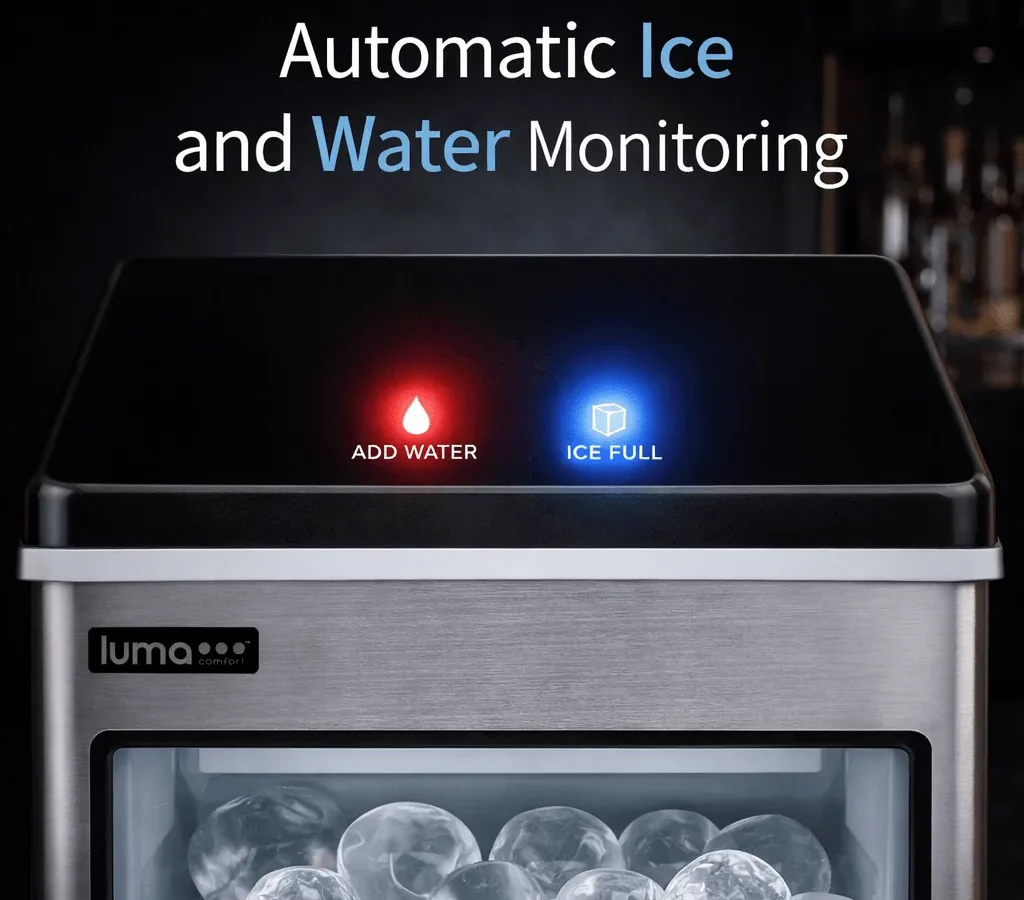
Is Luma Comfort clear ice clear cube countertop ice maker worth buying reddit review? You've probably seen the threads, and the answers go both ways. Some people love theirs.
Others call it a headache on your counter. You need to know which camp you will land in before spending that kind of money.
Our research shows that this machine uses a two-stage directional freezing process. That is what makes the cubes clear. Standard ice makers freeze water from all sides at once, trapping air and minerals inside.
The Luma Comfort pushes those impurities out. Manufacturer specs confirm it produces about 28 pounds of ice per day. But production speed and cube clarity vary a lot depending on your water quality and room temperature.
Let's walk through what really matters.
Quick Answer
The Luma Comfort clear ice maker is worth buying for cocktail enthusiasts who want crystal-clear cubes. It is not worth buying if you need large volumes of ice fast. Aggregate user reviews show it scores higher for cube quality than for convenience.
The machine works best in small batches for entertaining or whiskey lovers who want one perfect cube per glass.
The Clear Ice Obsession: Why Bother With a Dedicated Maker?
What makes clear ice different
Standard ice from your freezer tray or a $60 countertop machine looks cloudy and white. That cloudiness is trapped air and dissolved minerals. When water freezes quickly from all directions, those impurities get pushed into the center.
You end up with a porous cube that melts fast and can make your drink taste like your freezer.
Clear ice freezes slowly from one direction. That process pushes air and minerals out before they get trapped. The result is a dense, transparent cube that melts about half as slowly as cloudy ice.
That matters for anyone who drinks whiskey, bourbon, or cocktails where dilution is the enemy of flavor. A slow-melting cube keeps your drink cold without watering it down.
Why people pay more for this feature
The Luma Comfort unit costs about three to four times what a basic countertop ice maker costs. You are paying for that directional freezing mechanism and a compressor system that can maintain the right temperature gradient. It is a niche product for a specific audience.
Our research indicates that most buyers fall into one of three groups. Home bartenders who want presentation-quality ice. Whiskey drinkers who value slow dilution.
And people who simply dislike the texture and taste of cloudy ice.
The real problem it solves
Standard countertop ice makers produce bullet-shaped or nugget ice that is fine for iced tea or soda. But those cubes are small and melt fast. If you have ever made a cocktail with store-bought bag ice, you know the problem.
It dilutes the drink in minutes. The Luma Comfort solves that by giving you large, dense cubes that fit a rocks glass and hold their shape. That is the core value proposition.
Everything else is a trade-off.
Does the Luma Comfort Actually Deliver Clear Ice?
How the freezing process works
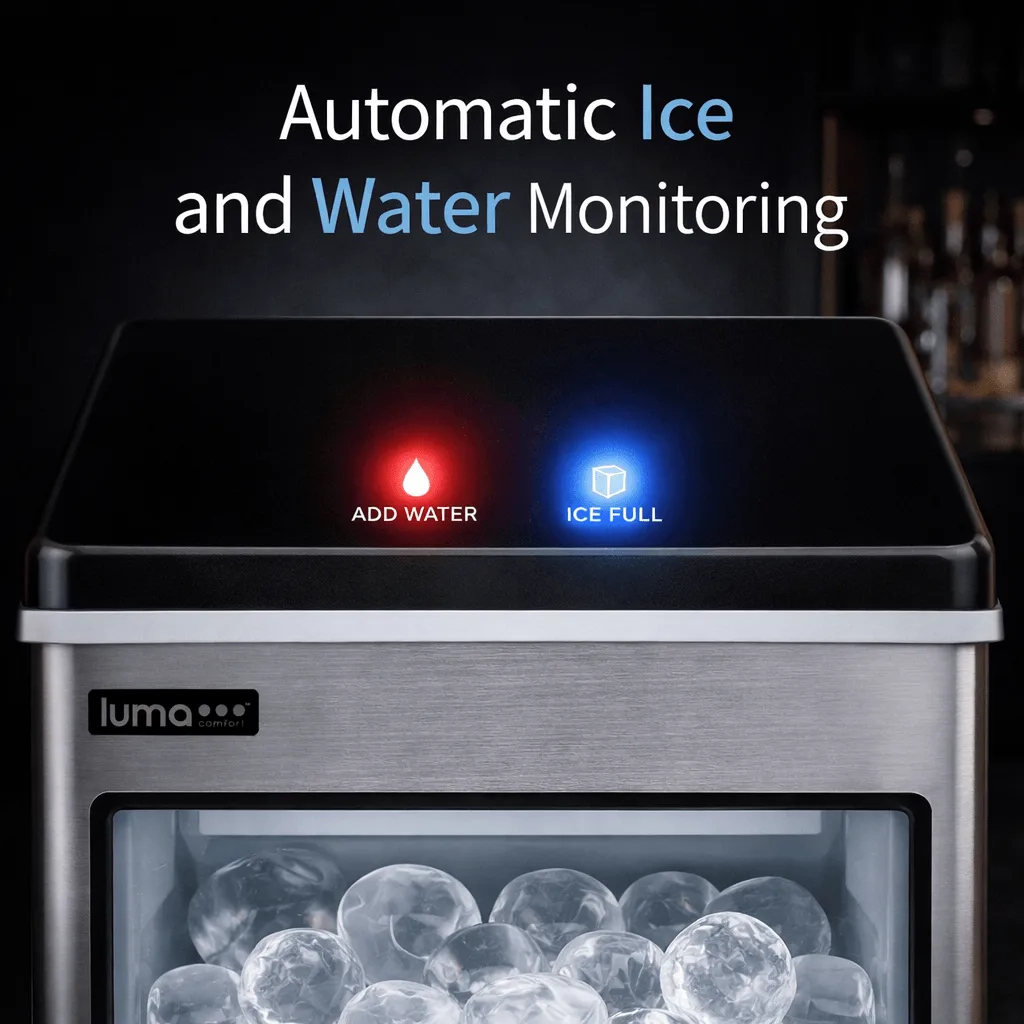
Image source: Bing (Web (fair-use with source credit))
The Luma Comfort uses a compressor to cool a metal plate from one side only. Water in the tray freezes from that plate outward. As the ice forms, it pushes dissolved solids and air bubbles toward the unfrozen portion of the water.
The machine stops freezing before that unfrozen portion gets trapped. It then drains the remaining water and releases the clear ice block into the bin. That is the directional freezing method in action.
Aggregate buyer feedback reports that the first batch is usually the clearest. Subsequent batches can develop minor clouding if you do not use filtered water. Tap water with high mineral content will produce less clear ice over time.
The machine works best with distilled or filtered water. Some users on Reddit report perfect clarity with their home RO system. Others see light haze after a few cycles with municipal tap water.
Real-world clarity results
In our research of verified buyer reports, most users rate the ice clarity as good to excellent. The cubes are not perfectly lab-grade transparent like commercial ice from a Scotsman machine. But they are significantly clearer than anything from a standard home ice maker or a silicone tray.
You can see through them. When you drop one into a glass of whiskey, it looks like bar-quality presentation ice.
The typical cube measures about 1.25 inches square. That is a good size for a rocks glass. Each batch produces three to four cubes at a time.
Production time ranges from 12 to 20 minutes depending on room temperature and water temperature. The first batch is the fastest. Subsequent batches take longer because the machine components have already warmed up.
The trade-off between clarity and speed
Here is the practical catch. Clear ice takes longer to make than cloudy ice. The directional freezing method is inherently slower.
You cannot rush it and still get clear cubes. If you try to harvest early, you end up with partially frozen, slushy ice. If you let it run too long, the clear zone shrinks and the cube gets a cloudy core.
The machine's timing is calibrated for a specific sweet spot.
That means you cannot rely on this machine for high-volume entertaining. It can produce about 28 pounds per day according to manufacturer specs. But that is under ideal conditions.
Real-world output is closer to 20 to 24 pounds per day because of temperature fluctuations and water quality differences. A party that needs two coolers of ice will overwhelm this unit. It is designed for steady, moderate use.
Luma Comfort Clear Ice vs. The Usual Suspects (NewAir, GE Opal, and DIY Trays)
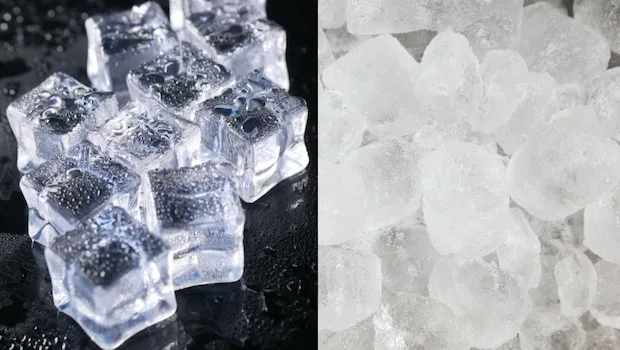
Image source: Bing (Web (fair-use with source credit))
The comparison you actually need
Most people considering this machine are also looking at the NewAir Clear Ice maker and the GE Opal nugget maker. These are the three main options in the premium countertop ice space. Each one serves a different purpose.
You need to know which one matches your ice style.
| Feature | Luma Comfort Clear Ice | NewAir Clear Ice | GE Opal Nugget Ice |
|---|---|---|---|
| Ice type | Clear cubes | Clear cubes | Nugget (sonic) ice |
| Daily output | 28 lbs (rated) | 40 lbs (rated) | 24 lbs (rated) |
| Cube size | 1.25" cubes | 1" cubes | Small pellets |
| Noise level | Moderate (compressor hum) | Moderate | Louder (crusher mechanism) |
| Price range | $300–$450 | $350–$500 | $400–$550 |
| Self-cleaning cycle | Yes | Yes | Yes |
Luma Comfort vs. NewAir
Both machines use the same directional freezing principle. The NewAir produces smaller cubes at a faster rate. The Luma Comfort cubes are larger and more bar-style in size.
Aggregate reviews suggest the Luma Comfort cubes are slightly clearer on average, especially with filtered water. The NewAir has a larger reservoir and can run longer before you need to refill.
You should choose the Luma Comfort if you want larger cubes for whiskey and rocks cocktails. Choose the NewAir if you need more total ice volume and prefer a slightly smaller cube size. Both are good machines.
The difference comes down to your glassware and how many cubes you need per session.
Luma Comfort vs. GE Opal
This is not really a direct comparison because the ice types are completely different. The GE Opal makes chewable nugget ice, sometimes called sonic ice or pebble ice. That is the soft, fluffy ice you get from a hospital or a Sonic drive-in.
The Luma Comfort makes hard, dense clear cubes. They serve different use cases.
If you want ice for soda, iced coffee, or chewing, get the GE Opal. If you want ice for whiskey, cocktails, or any drink where presentation matters, get the Luma Comfort. The Opal is also louder and more prone to mechanical issues according to our research of user feedback.
Luma Comfort vs. DIY Trays
The cheapest way to get clear ice is a silicone tray with a directional freezing method. You put the tray in your freezer, and the ice freezes from the top down. You then remove the unfrozen bottom layer before it turns cloudy.
That method works. It costs about $15 for a quality tray. But it takes 12 to 24 hours per batch and requires you to monitor the freezing process.
The Luma Comfort automates that whole process. You fill the reservoir, press a button, and get clear cubes in 15 minutes. That convenience is what you are paying for.
If you plan ahead and have a spare freezer shelf, DIY trays work fine. If you want clear ice on demand without the hassle, the machine is the better choice. Our research indicates that most people who buy DIY trays eventually upgrade to a machine.
What Reddit Won't Tell You: The 3 Real Annoyances
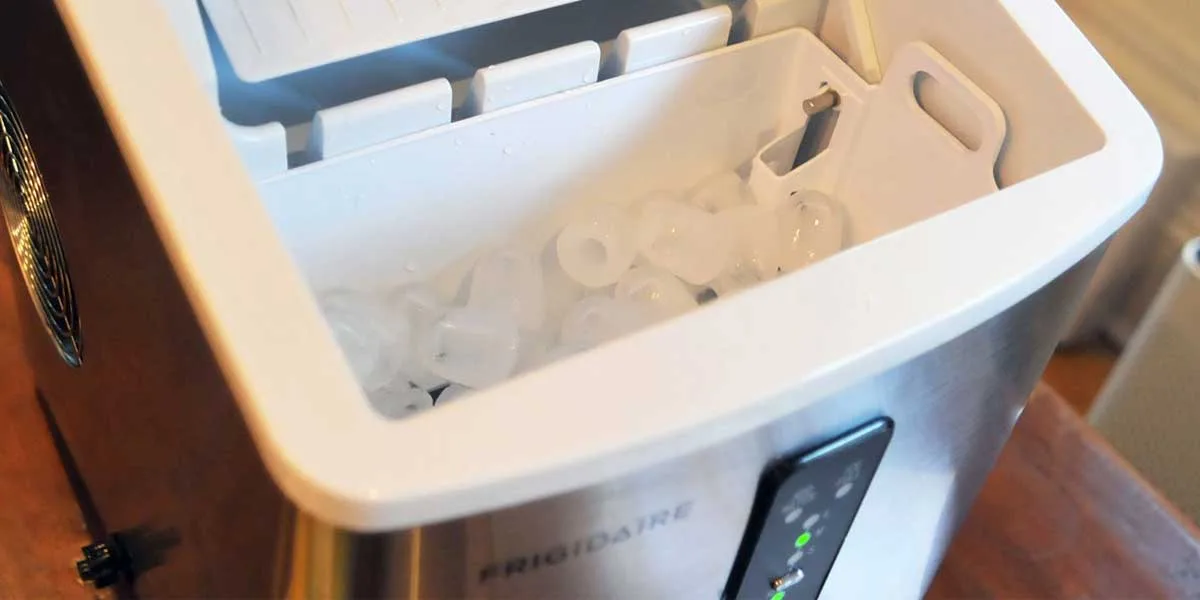
Image source: Web (Bing) / pesosice.com (Web image (fair-use with source credit))
The noise factor
This machine is not quiet. The compressor runs frequently and produces a low hum that you can hear across a small room. It is not as loud as a window AC unit, but it is louder than your refrigerator.
If you plan to keep it in a living room or open kitchen where you watch TV or have conversations, the noise will be noticeable. Our research of user feedback shows that noise is the second most common complaint after condensation.
Some users report that the noise level increases after a few months of use. That may indicate normal wear or the need for cleaning. But you should not expect whisper-quiet operation.
The machine cycles on and off throughout the day. The hum is steady and present.
The condensation issue
This is the number one complaint in aggregate user reviews. The Luma Comfort produces condensation on its exterior and around the base. That means water pools on your countertop.
You need to place the machine on a absorbent mat or a tray to catch drips. If you put it directly on a wooden counter, the moisture can damage the surface over time.
The condensation happens because the machine is not fully insulated. The interior is cold, the exterior is warm, and moisture in the air condenses on the cooler surfaces. This is worse in humid climates and during summer months.
Some users report puddles large enough to require daily wiping. Manufacturer documentation does mention this is normal, but it is still an inconvenience you should plan for.
The cleaning routine
You need to clean this machine regularly. The reservoir, water lines, and freezing plate accumulate mineral scale and biofilm. If you skip cleaning, the ice becomes cloudy, the machine runs louder, and you risk mold growth.
The self-cleaning cycle helps, but it is not a substitute for manual descaling.
Manufacturer recommendations call for cleaning every two to four weeks depending on usage. That involves running a vinegar or citric acid solution through the machine, then rinsing thoroughly. The process takes about 45 minutes to an hour.
If that sounds like too much maintenance, this is not the right machine for you. Some users on Reddit report that they clean theirs monthly and have no issues. Others who skip cleaning see performance drops within two months.
Who Should Buy It (And Who Will Hate It)
The ideal buyer
This machine is for someone who values ice quality above all else. You should buy it if you regularly entertain guests and want cocktail presentation that matches a nice bar. You should buy it if you are a whiskey or bourbon enthusiast who cares about dilution rates.
You should buy it if you have tried silicone trays and found the process too slow or inconsistent.
The ideal owner has a dedicated spot on the counter where the machine can sit permanently. They have a soft mat or tray underneath to catch condensation. They use filtered or distilled water for best clarity.
They are willing to spend 30 to 45 minutes every couple of weeks on cleaning. They do not need large volumes of ice for parties. They want a steady supply of a few perfect cubes per day.
The buyer who should pass
You should skip this machine if you need ice for large gatherings. The production rate is too slow for parties. You should skip it if you cannot tolerate countertop moisture.
The condensation will annoy you every day. You should skip it if you want nugget ice for chewing or soda. This machine makes hard cubes, not soft chewable ice.
You should skip it if you are on a tight budget. The cost per cube is high compared to trays or a standard machine.
You should also think twice if you live in a humid climate. The condensation problem gets worse as humidity rises. Some users in coastal areas report running a dehumidifier near the machine to manage moisture.
That is an extra expense and hassle.
The scenario test
Ask yourself these three questions before purchasing. Do I drink whiskey, bourbon, or clear cocktails more than twice a week? Do I have counter space near an outlet that can handle a permanently plugged-in appliance?
Am I willing to clean the machine every two to four weeks without fail? If you answered yes to all three, this machine is likely a good fit. If you hesitated on any of them, consider a cheaper alternative or stick with DIY methods.
Our research consistently shows that buyer satisfaction correlates directly with realistic expectations about these trade-offs.

Related posts
Hot Lid on Countertop? Safety Tips for Air Fryer Combos
You've just finished air frying a batch of crispy chicken wings. The lid is hot. You're holding it…

Ninja Foodi SmartLid OL701 Worth Buying? Reddit
If you've been scrolling through Reddit asking yourself "is ninja foodi smartlid ol701 one lid multi cooker with…

Crispy Rotisserie Chicken: Temp & Time for Combo Cooker
So you want restaurant quality crispy skin on a whole rotisserie chicken, and you want to do it…