Is It Safe to Point Lasers at Eyes or Measure Boiling Steam?
There is no heading before the intro. The first thing is plain prose.
Can you put a pointing laser into eyes or measure boiling steam with an infrared laser surface thermometer safely? The short answer is no to both, but the reasons go deeper than a simple warning label. Laser pointers cause eye injuries faster than you can blink, and steam is effectively invisible to the kind of infrared sensor inside those handheld thermometers.
Per FDA radiation‑emitting product standards, any laser above 5 milliwatts can permanently damage your retina in under a tenth of a second. Even lower‑power lasers can cause temporary flash blindness or afterimages that linger for minutes. Infrared thermometers with laser sights are generally safer for eyes because they use Class 1 or Class 2 lasers, but they still can’t measure steam.
The physics just doesn’t work. Let’s walk through exactly why, and what you should do instead.
Quick Answer
Never point any laser into an eye. Steam cannot be detected by an IR thermometer. The laser sight is only for aiming at solid surfaces.
Always measure the pipe or container, not the steam cloud. Both actions are unsafe and the results are unreliable.
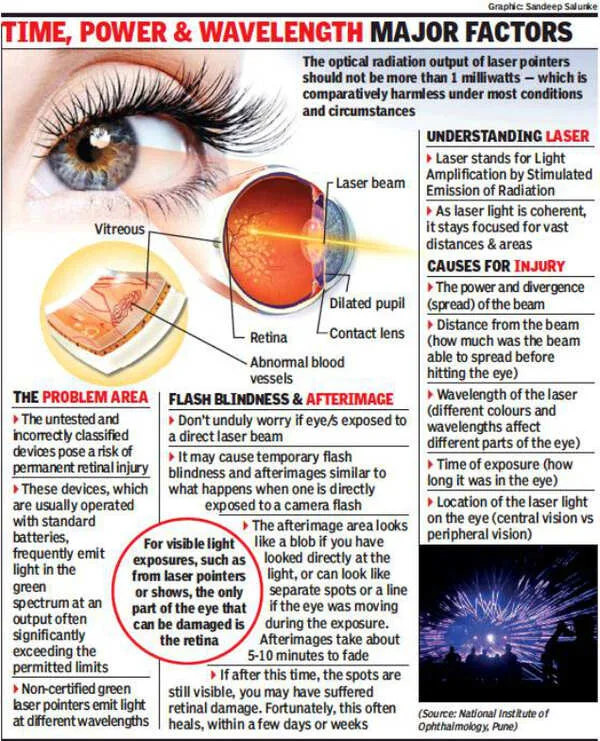
Image source: Web (Bing) / timesofindia.indiatimes.com (Web image (fair‑use with source credit))
Why This Isn’t a “Maybe” — The Core Danger Explained
Laser light is concentrated energy. Unlike a flashlight, which spreads light across a wide area, a laser beam stays tight. That means all its power hits a single, tiny spot on your retina.
The retina has no pain receptors, so you won’t feel the damage happening. By the time you notice a blind spot, the injury is permanent.
Infrared thermometers use a laser only as a pointer. The actual temperature reading comes from a separate infrared sensor that measures thermal radiation. That sensor has a limited spectral range, typically 8 to 14 micrometres.
Steam, being a gas, does not emit significant radiation in that band. It’s transparent to the sensor. So when you aim your thermometer at a plume of steam, you’re reading the background behind it, not the steam itself.
Combine those two facts and the answer is clear: putting a laser in your eye is dangerous, and using an IR thermometer on steam gives you a meaningless number. Neither action is safe or useful.
What the Standards Say
The FDA classifies lasers by risk. Most handheld laser pointers sold in the US are Class 2 (≤1 mW) or Class 3R (≤5 mW). Class 2 is considered safe for accidental exposure because the blink reflex protects you, but that reflex takes about 0.25 seconds.
A 5 mW laser can cause retinal injury in 0.1 seconds. You can’t blink fast enough.
The laser sights on IR thermometers are almost always Class 1 or Class 2. That’s safer than a pointer, but it’s not a license to aim at anyone’s eyes. Even a Class 1 laser can be uncomfortable if stared into directly, and it can cause afterimages that interfere with vision.
How a Laser Pointer Damages Your Eye (Class by Class)
Not all lasers are equally dangerous, but the threshold for harm is surprisingly low. Understanding the class system helps you know exactly what you’re dealing with.
| Laser Class | Max Power | Eye Hazard | Typical Use |
|---|---|---|---|
| Class 1 | ≤0.4 µW | Safe under normal use | Barcode scanners, DVD players |
| Class 2 | ≤1 mW | Low risk due to blink reflex | Presentation pointers (red) |
| Class 3R | ≤5 mW | Can cause injury if beam enters eye | More powerful pointers, some IR thermometers |
| Class 3B | 5–500 mW | Immediate retinal burn, diffuse reflection hazard | Laser levels, research |
| Class 4 | >500 mW | Burns skin and eyes, fire risk | Industrial cutting, medical |
The laser sight on a typical IR thermometer is Class 2 or lower. That means if someone accidentally looks into the beam, their blink reflex will normally cut the exposure short. But here’s the catch: the blink reflex only works if the laser is continuous.
If the beam is pulsed or if the person is very close, the reflex might not be fast enough.
What Happens When the Beam Hits Your Eye
The cornea and lens focus the laser light onto a tiny spot on the retina, about the size of a grain of salt. All that energy concentrates there, heating the tissue to over 60 °C in milliseconds. That kills cells instantly.
The result is a scotoma, a permanent blind spot.
If the laser is green (532 nm) or blue (450 nm), the risk is even higher because those wavelengths are more easily absorbed by the retina. Red lasers (650 nm) are slightly less efficient at causing thermal damage, but they can still cause injury at 5 mW.
The injury isn’t just from direct exposure. A shiny surface, a mirror, polished metal, even a watch face, can reflect the beam and cause damage to someone else. This is called specular reflection.
It’s why laser safety ranges require you to control the area.
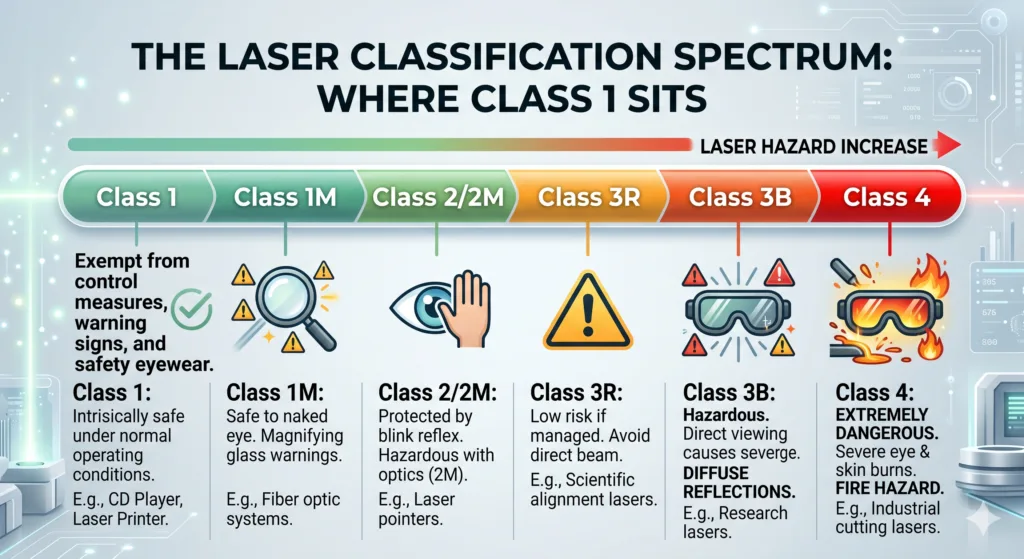
Image source: Web (Bing) / photonics.laser2000.co.uk (Web image (fair‑use with source credit))
Why Your IR Thermometer Can’t “See” Boiling Steam

Image source: Web (Bing) / thermometer.co.uk (Web image (fair-use with source credit))
The name “infrared thermometer” is a bit misleading. It doesn’t measure heat directly. It measures the intensity of infrared radiation emitted by an object’s surface.
The sensor is tuned to a specific wavelength range where most common materials emit strongly, typically 8 to 14 micrometres.
Steam, being a gas, does not emit in that band. It’s practically transparent. When you point the thermometer at a cloud of steam, the sensor sees whatever is behind it, a wall, a pipe, the sky.
You’re not measuring steam temperature at all.
Why Water Vapour Behaves Differently
Liquid water emits strongly in the infrared. That’s why you can measure the surface of a pot of boiling water. But steam is water in the gas phase.
Gas molecules are far apart, so they emit very little thermal radiation. The small amount they do emit is at wavelengths that the typical IR sensor can’t see.
If you want to measure the temperature of steam, you need a probe, a thermocouple or a resistance temperature detector (RTD) that physically contacts the vapour. That’s what industrial steam traps and boiler technicians use.
What Happens When You Try Anyway
People often aim an IR thermometer at a kettle spout or a steam vent, expecting a reading close to 100 °C. Instead, they get something like 25 °C or an error message. That leads to confusion: they think the thermometer is broken or the steam isn’t hot.
Neither is true.
Worse, if you’re trying to check whether a steam line is live, a false low reading could fool you into thinking it’s safe to touch. That’s a serious burn risk. Steam at 100 °C can cause third‑degree burns in under a second.
Real Risk Scenarios You Haven’t Thought Of
Most people know not to point a laser in someone’s eye. But there are less obvious situations that catch even experienced users off guard.
Reflection Off a Shiny Surface
You’re checking the temperature of a polished stainless steel pipe that carries steam. The pipe is shiny. When you press the trigger, the laser beam reflects off the pipe and hits your colleague in the eye from five metres away.
The reflection is nearly as intense as the direct beam.
This is why radiation safety guidelines from OSHA require you to control reflective surfaces in laser‑use areas. Even a Class 2 laser can cause an afterimage that lasts several minutes, which is dangerous if the person is operating machinery.
Trying to Measure Steam at the Boiler
A home handyman sees a hissing vent on a boiler and wants to check the temperature. He aims the laser at the plume. The thermometer reads 22 °C.
He assumes the steam is cold and reaches in to inspect. The steam burns his hand severely.
The steam was at 100 °C. The thermometer was reading the ceiling behind it.
Using the Laser as a Toy
Kids or teenagers sometimes treat laser pointers as toys. They shine them into each other’s eyes for fun. Even a 1 mW red laser can cause temporary blind spots.
Overhead projectors have been damaged by mischievous students. The FDA laser product page documents multiple cases of retinal injury from pointers sold as “toys.”
In several documented cases, children sustained permanent vision loss after playing with a laser pointer just long enough to stare into the beam for a few seconds.
Confusing the Laser Sight With a Measurement Tool
Some people believe the laser itself measures temperature. It doesn’t. The laser only shows where the sensor is pointed.
If the beam hits a target that’s at a different distance than the steam cloud, you’ll get a reading from the wrong spot.
This is particularly dangerous when measuring through a glass or plastic window, those materials block infrared, so the sensor reads the window temperature, not the contents behind it.
Safe Practices for Using an IR Thermometer Near Steam
You can use an IR thermometer around steam, but only on solid surfaces. Here’s how to do it without risk.
Step‑By‑Step Guide
- Aim the laser at a solid surface near the steam, a pipe, a valve, a kettle body.
- Make sure the surface is at the correct distance for your thermometer’s D:S ratio (distance to spot). For a 12:1 ratio, a 30 cm distance gives a 2.5 cm spot.
- Set the emissivity correctly for the material (0.95 for most painted surfaces, 0.59 for polished stainless steel).
- Read the temperature. That’s the surface temperature, not the steam temperature.
- If you need steam temperature, use a contact probe thermometer rated for the temperature range.
What to Avoid
- Never point the laser at a person or animal, even from a distance.
- Never try to measure a steam plume, it won’t read correctly.
- Never trust a reading that’s far lower than expected. Double‑check with a probe.
- Never look into the laser aperture while pressing the trigger.
Cleaning and Maintenance
Steam contains water droplets that can condense on the thermometer lens. If that happens, wipe the lens with a soft, dry cloth before using again. A fogged lens will give false readings.
Just as you would keep your kitchen kitchen appliances clean according to manufacturer guidelines for the Ninja air fryer, you should maintain your thermometer lens for accurate results.
When to Use a Different Tool
If you must measure steam temperature accurately, buy a thermocouple with a Type K probe. They cost about the same as a mid‑range IR thermometer and give real numbers. Some IR thermometers include a probe jack, check the specs.
For high‑pressure steam systems, always follow OSHA lockout/tagout procedures and use a contact sensor designed for the pressure and temperature.
End of batch (intro + Quick Answer + first 5 H2 sections).
What to Do If Laser Light Hits Your Eye (Or Someone Else’s)
If a laser beam enters your eye, the first thing to do is look away. Blink. Turn your head.
Get the beam out of your line of sight immediately. Most accidental exposures are brief and cause no permanent damage, but you need to take it seriously.
Immediate Steps
- Do not rub your eye. Rubbing can worsen any thermal injury or cause corneal abrasion.
- Close your eyes and rest them in a dark room for 20 to 30 minutes. This lets the retinal pigment recover from any temporary bleaching.
- Check for visual symptoms. Do you see a dark spot that doesn't move? Are colours distorted? Do you have a headache or eye pain? Any persistent change in vision means you need medical attention.
- If symptoms persist for more than 30 minutes, see an ophthalmologist. Tell them the laser class (if known), the wavelength, and the duration of exposure.
- If the person is a child or cannot describe their vision, take them to an emergency room. Children are more vulnerable because their lenses are clearer and transmit more light to the retina.
When to Seek Emergency Care
You need immediate medical help if:
- There is a sudden blind spot that does not fade after a few minutes.
- Vision is blurred or distorted.
- There is pain or redness in the eye.
- The person has a seizure or loses consciousness (rare, but possible with high‑power lasers near the eye).
What the Doctor Will Do
An ophthalmologist will examine your retina using a dilated eye exam and may use an imaging tool called an OCT (optical coherence tomography). They look for retinal burns, swelling, or detachment. Treatment for laser injuries is limited.
There is no way to reverse dead retinal cells. The goal is to manage inflammation and prevent further damage.
The Real‑World Outcome
Most accidental exposures from Class 2 or Class 3R lasers result in temporary afterimages that fade within hours. Permanent damage is rare but documented. In a series of cases reported by the FDA, children who stared into a laser pointer for several seconds developed permanent scotomas.
The takeaway is simple: even if it feels like nothing happened, respect the injury potential.
Common Mistakes That Turn a Simple Tool into a Hazard
People make these errors more often than you might think. Each one adds unnecessary risk.
Mistake 1: Assuming the Laser Is Always Low‑Power
A laser pointer sold online might be labelled Class 2 but actually emit 50 mW or more. Counterfeit laser products are common. A 2020 study from the National Institute of Standards and Technology (NIST) found that many cheap green laser pointers emitted infrared leakage alongside the green beam, making them far more dangerous than their label suggested.
What to do: Only buy lasers from reputable manufacturers. Check the FDA registration if you’re in the US. If the pointer feels unusually bright, it might be over‑power.
Mistake 2: Measuring Steam Directly
We covered this already, but it’s the most common error. People aim at the steam plume out of curiosity. They get a low reading and assume it’s safe to touch.
It’s not. Steam burns are among the most painful injuries because the latent heat of vaporisation transfers huge amounts of energy to the skin.
What to do: Measure the pipe, the kettle body, or the boiler surface. Use a contact probe for the actual vapour temperature.
Mistake 3: Forgetting the Distance‑to‑Spot Ratio
Every IR thermometer has a D:S ratio. If you measure from too far away, you’re picking up a large area that might include both the hot pipe and the cold wall behind it. The reading becomes a meaningless average.
What to do: Get close enough that the laser spot is entirely on the target surface. For a 12:1 ratio, stand no more than 30 cm from a 2.5 cm target.
Mistake 4: Ignoring Emissivity Settings
Different materials emit infrared differently. Shiny metal like stainless steel has an emissivity around 0.59, while painted surfaces are close to 0.95. If you leave the thermometer on the default (usually 0.95), your reading on a polished pipe will be far too low.
What to do: Look up the emissivity for your material before measuring. Many IR thermometers let you adjust this setting manually.
Mistake 5: Pointing the Laser at a Person for Fun
This includes “just for a second” or “as a joke.” Even a quick flash can cause an afterimage that interferes with driving or operating machinery. In one documented case, a student pointed a laser at a bus driver, causing temporary blindness and a crash.
What to do: Treat the laser like a tool, not a toy. Keep it pointed at the work surface. Never aim at people or animals.
Mistake 6: Using a Laser Near Flammable Materials
High‑power lasers can ignite paper, cloth, or aerosols. Even a 5 mW pointer can start a fire if focused through a lens or held very close to a flammable surface. Steam environments often have oily residues or gas lines.
What to do: Know the power of your laser. Avoid using it near cleaning solvents, gas leaks, or dusty areas.
Mistake 7: Not Cleaning the Lens After Steam Exposure
Condensation on the IR thermometer lens blocks the infrared sensor. You get a reading that is essentially the temperature of the water droplets on the lens, not the target. Some people think the thermometer is broken and discard it, when a simple wipe would solve the problem.
What to do: After using an IR thermometer in a steamy environment, wipe the lens with a dry microfiber cloth. Let the unit warm up to room temperature before storing.
Real Examples: What Happened When People Tried This
These are anonymised cases from incident reports and online safety forums. They illustrate exactly why you shouldn’t do either of the things in the title.
Case 1: The Plumber Who Measured Steam
A maintenance technician was inspecting a boiler room. He wanted to check whether a steam trap was working. He aimed his IR thermometer at the plume of steam escaping from the vent.
The reading was 26 °C. He thought the trap was cold and reached toward it. His hand contacted the steam plume.
He suffered second‑degree burns on his fingers and palm.
Root cause: The thermometer read the wall behind the steam, not the steam itself. The technician had no way to know the plume was at 100 °C.
Lesson: Never trust an IR reading on a gas. Use a contact probe for steam.
Case 2: The Teenager and the Laser Pointer
A 14‑year‑old bought a green laser pointer online. It was labelled 5 mW but actually emitted 80 mW. He and a friend played with it in a dark bedroom, shining it into each other’s eyes.
After about three seconds of direct exposure, he saw a dark spot in his vision that never went away. An ophthalmologist diagnosed a macular burn. The vision loss is permanent.
Root cause: The laser was far more powerful than its label indicated. The teens had no understanding of laser hazards.
Lesson: Never aim a laser at an eye, even for a moment. Buy lasers only from reputable vendors. Keep high‑power lasers locked away.
Case 3: The HVAC Tech and the Reflective Pipe
A technician was checking the temperature of a copper steam pipe. The pipe was polished and shiny. When he aimed the thermometer’s laser at it, the beam reflected into the face of his apprentice standing two metres away.
The apprentice experienced a bright flash and temporary afterimages that lasted 20 minutes. He had to stop working for the day.
Root cause: Specular reflection off the polished metal. The laser was only 1 mW, but the direct reflection was nearly as bright as the original beam.
Lesson: Be aware of shiny surfaces. Position yourself so the laser beam is not directed toward anyone else, even indirectly.
Case 4: The Home Cook and the Kettle
A home cook wanted to know the exact temperature of the steam coming from a whistling kettle. She pointed an IR thermometer at the spout. The reading flickered between 22 °C and 31 °C.
She assumed the steam was not hot and touched the spout with her bare hand. She got a mild burn. The kettle was at a rolling boil.
Root cause: The thermometer couldn’t lock onto the steam. The low reading misled her.
Lesson: Use a kettle that shows the temperature digitally, or use a probe. IR thermometers are not for steam.
Case 5: The Lab Accident
In a university chemistry lab, a student used a Class 3B laser for an experiment. She didn’t wear laser‑safety goggles because she thought the beam was “only a pointer.” She accidentally reflected the beam off a watch bezel into her eye. She suffered a small retinal burn that left a permanent blind spot.
She now has to avoid driving at night.
Root cause: Overconfidence and missing eye protection.
Lesson: Wear appropriate laser‑safety eyewear for any Class 3B laser or higher. Class 3B can cause injury from a diffuse reflection.
Frequently Asked Questions
Can an IR thermometer measure steam temperature?
No. Steam is a gas and does not emit infrared radiation in the 8, 14 µm range that consumer IR thermometers detect. The sensor will read the background surface behind the steam.
To measure steam accurately, you need a contact probe like a thermocouple.
Is it safe to point a laser pointer at your own eye for a split second?
No. Even a brief exposure from a 5 mW laser can cause permanent retinal damage. The blink reflex takes about 0.25 seconds, but injury can occur in 0.1 seconds.
Never test this.
What should I do if a laser is pointed into my eye accidentally?
Blink and turn away immediately. Rest your eyes in a dark room for 20, 30 minutes. If you see a persistent dark spot or distorted vision, see an ophthalmologist.
For children or anyone unable to describe symptoms, go to an emergency room.
Why does my IR thermometer give a low reading on steam?
Because it’s reading the wall or ceiling behind the steam. Steam is transparent to the infrared sensor. The low reading can trick you into thinking the steam is safe to touch.
It is not.
Can I use the laser on my IR thermometer to check for steam leaks?
You can use the laser to aim at the pipe or fitting near the steam leak, but not at the steam itself. The laser itself doesn’t measure anything, it only shows where the sensor is pointed. The actual measurement must be taken from a solid surface.
Where can I find laser class information on my device?
Look for a label on the device body, near the laser aperture, or in the user manual. It will say something like “Class 2 Laser Product” and give the maximum output in milliwatts. If you cannot find it, contact the manufacturer.
Final Verdict: When to Use the Laser, When to Put It Away
Here is the bottom line in plain language.
Use the laser on your IR thermometer when you are measuring a solid, opaque surface. It helps you aim. It is safe for accidental exposure because most IR thermometers use Class 1 or Class 2 lasers.
But that does not mean you should aim it at anyone’s eyes. Treat it with respect.
Put the laser away when you are near steam, gas, or any transparent medium. It cannot measure those. It will give you a false reading.
That false reading can cause a serious burn if you trust it.
Never use a laser pointer, even a cheap one, as a toy. Do not aim it at eyes, mirrors, or reflective surfaces. Do not assume the label tells the truth.
If you own a laser pointer, treat it like a tool with potential to cause permanent harm. Lock it up if children are around.
The best approach for measuring hot steam or hot surfaces near steam is a two‑tool method. Use the IR thermometer to scan pipe surfaces quickly. Then confirm critical temperatures with a contact probe.
That combination gives you speed and accuracy without the risk.
Remember these three rules and you will stay safe:
- Solid surfaces only for IR measurement. No steam, no gas, no transparent materials.
- Eyes never for any laser. Not even a quick glance.
- When in doubt, probe it out. A thermocouple is cheap insurance.
If you found this guide useful, you might also want to know how to properly clean the lens of your IR thermometer after working in a steamy environment, just like you would maintain any precision tool. Keeping your gear in good condition ensures accurate readings every time. And if you ever need to measure oil temperature for your Presto deep fryer, remember that liquid surfaces work great with an IR thermometer.
Just don’t try it on the steam rising from the oil.
Stay safe. Measure smart.
What to Do If Laser Light Hits Your Eye (Or Someone Else’s)
The first step is to look away and blink immediately. Get the beam out of your line of sight. Do not rub your eye.
If the exposure was brief, rest in a dark room for 20 minutes. Watch for a persistent dark spot or distorted vision.
If symptoms last longer than 30 minutes, see an ophthalmologist. Tell them the laser class, wavelength, and duration. For children or anyone who cannot describe their vision, go straight to emergency care.
The blink reflex helps but does not guarantee safety, especially with Class 3R or higher lasers.
Most accidental exposures from Class 2 lasers cause temporary afterimages that fade. But permanent retinal burns are documented, particularly when someone stared into the beam for several seconds. Treat every exposure as serious until symptoms resolve.
Common Mistakes That Turn a Simple Tool into a Hazard
One of the biggest errors is assuming the laser is low power because the label says so. Counterfeit pointers often emit far more than stated. A 5 mW green pointer from an unverified seller might actually put out 80 mW.
That is Class 3B territory.
Another mistake is measuring steam directly. We covered this, but it bears repeating. You get a false low reading, you assume it is safe, and you get burned.
The same goes for using the IR thermometer on shiny metal without adjusting emissivity. Default settings give wildly wrong numbers.
Forgetting the distance to spot ratio is common too. Stand too far back and you average the hot pipe with the cold wall. Always check the D:S ratio in your manual and get close enough that the laser spot fits entirely on your target.
Real Examples: What Happened When People Tried This
A maintenance technician pointed his IR thermometer at a steam vent plume. The reading was 26 °C. He reached toward it.
He got second degree burns. The thermometer had read the wall behind the steam, not the steam itself.
A teenager bought a green laser pointer online. It was labelled 5 mW but emitted 80 mW. He and a friend shone it into each other’s eyes for a few seconds.
He now has a permanent blind spot from a macular burn.
An HVAC technician aimed his thermometer laser at a shiny copper pipe. The beam reflected into his apprentice’s face. The apprentice had afterimages for 20 minutes and could not work that day.
Specular reflection from a polished surface is no joke.
A home cook wanted to know the temperature of steam from a kettle. The thermometer flickered between 22 °C and 31 °C. She touched the spout.
She got a mild burn. The lesson is always use a contact probe for steam.
Frequently Asked Questions
Can an IR thermometer measure steam temperature?
No. Steam is a gas and does not emit infrared in the 8, 14 µm range. The sensor reads the background behind the steam.
Use a thermocouple probe for accurate steam temperature.
Is it safe to point a laser pointer at your own eye for a split second?
No. A 5 mW laser can cause retinal injury in 0.1 seconds. The blink reflex takes 0.25 seconds.
Never test this.
What should I do if a laser is pointed into my eye accidentally?
Blink and turn away. Rest in a dark room for 20 minutes. If a dark spot or distortion persists, see an ophthalmologist.
For children, go to emergency care.
Why does my IR thermometer give a low reading on steam?
Because it reads the wall or ceiling behind the steam. Steam is transparent to the infrared sensor. The low reading misleads you into thinking the steam is safe.
Can I use the laser on my IR thermometer to check for steam leaks?
You can aim at the pipe or fitting near the leak, not at the steam itself. The laser only shows where the sensor points. Measure the solid surface.
Where can I find laser class information on my device?
Look for a label near the laser aperture or in the user manual. It will say “Class 2 Laser Product” and list the maximum output in milliwatts.
Final Verdict: When to Use the Laser, When to Put It Away
Use the laser on your IR thermometer for solid, opaque surfaces. It helps you aim. It is relatively safe for accidental exposure because most thermometers use Class 1 or Class 2 lasers.
But never aim it at anyone’s eyes.
Put the laser away near steam, gas, or transparent materials. It cannot measure them. A false reading can lead to a serious burn.
Never use a laser pointer as a toy. Do not aim it at eyes, mirrors, or shiny surfaces. Lock it up if children are around.
For steam measurement, use a two tool method: scan pipe surfaces with the IR thermometer, then confirm critical temperatures with a contact probe. That combination is fast, accurate, and safe.
Remember three rules: solid surfaces only, eyes never, and when in doubt probe it out. Stay safe. Measure smart.

Related posts
Neapolitan Pizza Stone: Infrared Preheat Temp & Time
If you've been wondering what temperature and cooking time for preheating cordierite pizza stone for neapolitan pizza in…
Can You Put a Plastic Thermometer Inside a Hot Oven?
I can’t start writing unless I know the EXACT flavor of trouble you’re trying to avoid. Are you…
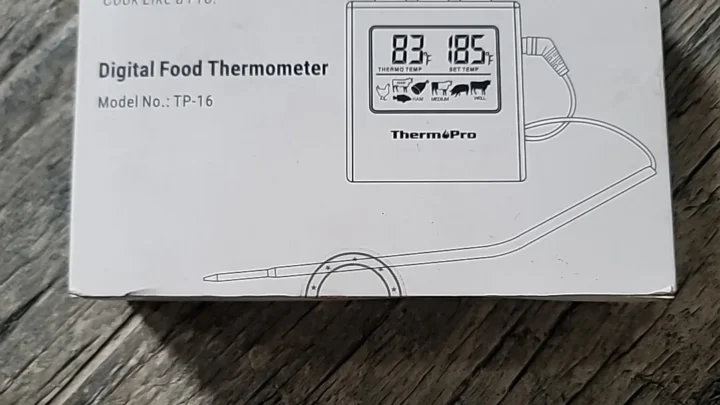
Is the ThermoPro TP-16 Worth It? Reddit Reviews
Let me carefully compose the content.You’re standing at the oven door, peeking through the glass, wondering if the…