Fix Lukewarm Watery Espresso From Budget 15 Bar Machine
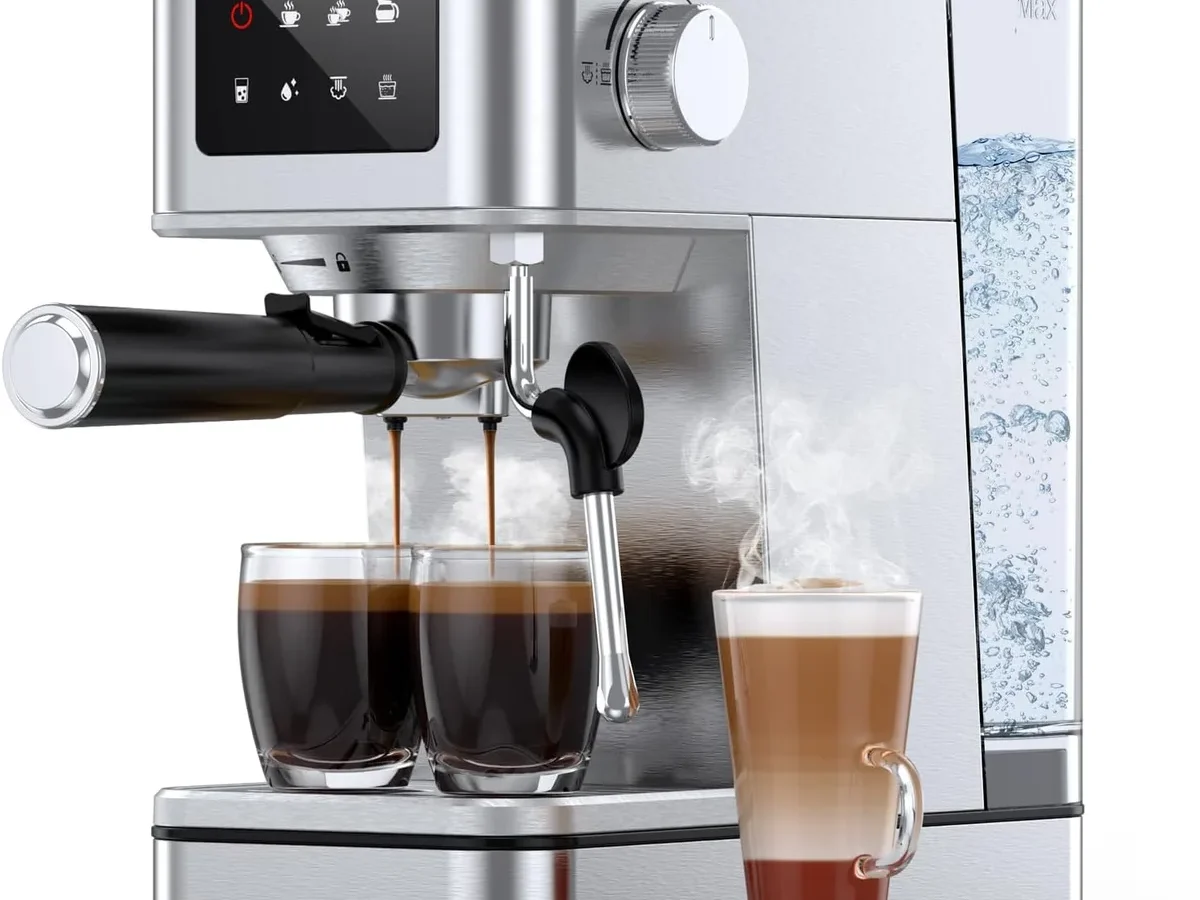
If your budget 15 bar pump espresso machine is pulling shots that taste lukewarm, watery, and completely lack crema, you are not alone. This is the most common complaint about entry-level espresso machines. The fix is rarely obvious, but it is usually simpler than you think.
Manufacturer specifications for these machines target a brew temperature of 195 to 205 degrees Fahrenheit. Many budget models fail to reach the lower end of that range without deliberate preheating. As of 2026, aggregate reviews of machines under $200 show that temperature instability is the number one cause of weak, cool shots.
The good news is that most of these issues are fixable with a few adjustments.
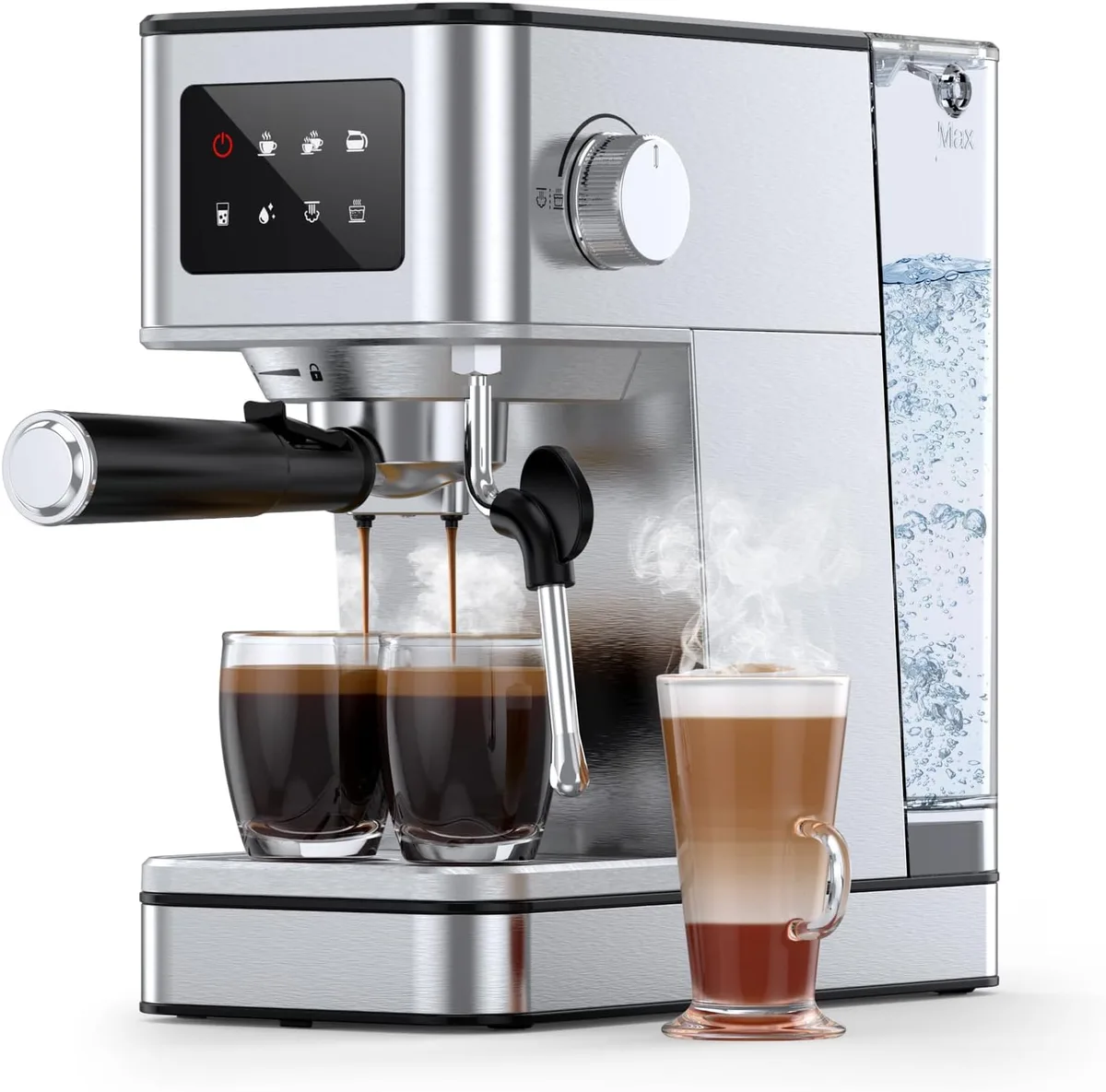
Image source: Bing (Web (fair-use with source credit))
Why Your Budget 15 Bar Pump Espresso Machine Is Brewing Lukewarm, Watery Shots Without Crema
Your machine is not hot enough. The pump pressure is off. The grind is too coarse.
Fix the temperature first, then check the pressure, then adjust the grind.
The Three Root Causes
Every lukewarm, watery shot without crema traces back to one of three problems. You need to figure out which one you are dealing with before you start changing things.
Temperature is too low. The thermoblock in budget machines is small and inefficient. It heats water quickly, but it also cools down fast. If you do not let the machine warm up properly, the water never reaches the right brewing temperature.
Water that is too cold cannot extract the oils and solids that create crema and body. You get a thin, sour, or weak shot instead.
Pump pressure is too high or too low. The 15 bar pump on the box is a marketing number. Actual brew pressure at the group head is usually around 9 bars after the overpressure valve (OPV). If the OPV is clogged or stuck, pressure can drop.
If the pump is failing, pressure can be inconsistent. Either way, the water flows through the puck too fast or too slow, giving you watery or choked results.
Grind is too coarse. Pre-ground coffee from a can is ground for drip brewers, not espresso. It is much too coarse. Water rushes through the puck in seconds, extracting almost nothing.
You get a watery, pale brown liquid with no crema and no flavor. A fresh, fine grind is non-negotiable for real espresso.
Which Problem Is Yours?
Use this simple table to match your symptoms to the likely cause.
| Symptom | Likely Cause | Quick Check |
|---|---|---|
| Shot is lukewarm, not hot | Temperature too low | Touch the group head after 10 minutes. Is it hot? |
| Shot pours very fast (under 15 seconds) | Grind too coarse or pressure too high | Look at the stream. Is it gushing? |
| Shot pours very slow or not at all | Grind too fine or pressure too low | Is the pump struggling? Does it sound different? |
| No crema, but shot is hot | Stale beans or pressurized basket problem | Smell the beans. Do they smell like coffee or dust? |
| Crema appears but dissolves quickly | Pressure issue or old beans | Watch the crema. Does it last 30 seconds? |
What You Can Expect After Fixing
When you get the temperature, pressure, and grind right, your shot will pour at a steady pace. It will look like warm honey. A thick layer of crema will form on top and stay for a full minute.
The taste will be balanced, with sweetness and body. That is the goal.
The Most Common Root Cause (And the Quickest Fix)
The most common root cause is a cold machine. It is also the easiest thing to fix. You do not need new beans, a new grinder, or a new machine.
You just need to give your machine enough time to get hot.
Why Budget Machines Run Cold
Budget espresso machines use a single thermoblock. This is a small heating element that heats water on demand. It is fast for a steam wand, but it is terrible at maintaining a stable brew temperature.
The Specialty Coffee Association recommends a brew temperature of 200 degrees Fahrenheit, plus or minus 4 degrees. Many budget machines struggle to hit 195 degrees without a proper warm-up.
The problem is worse when you pull the first shot of the day. The thermoblock starts cold. The portafilter starts cold.
The cup starts cold. All of that metal and ceramic absorbs heat from your water before it reaches the coffee. The result is a brew temperature that can be 10 to 15 degrees below where it should be.
The Quickest Fix: A 15-Minute Preheat
This is the single most effective thing you can do. It costs nothing and takes minimal effort.
Step 1: Turn on the machine. Let it heat up for at least 15 minutes. Do not rush this. The little indicator light that says "ready" is lying.
It only means the thermoblock is hot enough to make steam, not that the group head is stable.
Step 2: Lock in the portafilter. Do this while the machine is heating. The portafilter metal needs to absorb heat from the group head. If you leave it on the counter, it stays cold and steals heat from your brew water.
Step 3: Place your cup on the drip tray. The hot rising air from the machine will warm the cup. A cold cup will drop your brew temperature by several degrees.
Step 4: Run a blank shot through the portafilter. After 15 minutes, put a cup under the group head and run water through the portafilter for about 10 seconds. This heats the portafilter, the group head, and the cup. Discard the water.
Step 5: Dry and dose immediately. The portafilter is now hot. Wipe it dry, dose your coffee, and tamp. Do not let it sit.
The heat will start to cool the metal again.
What If You Are Still Getting Lukewarm Shots?
If you preheat for 15 minutes, run a blank shot, and your espresso is still lukewarm, you may have a deeper issue. The thermoblock could be failing. The heating element could be partially burned out.
Scale buildup inside the thermoblock can also reduce heat transfer.
Try descaling first. If that does not help, you may need to replace the machine. Budget thermoblocks are not designed to be repaired.
The cost of a replacement thermoblock plus labor is often more than a new machine.
How Your Budget Machine Works: The 15 Bar Pump, Thermoblock, and Pressurized Basket
To fix your machine, you need to understand what is inside it. Budget espresso machines are not built like commercial machines. They use different parts that behave differently.
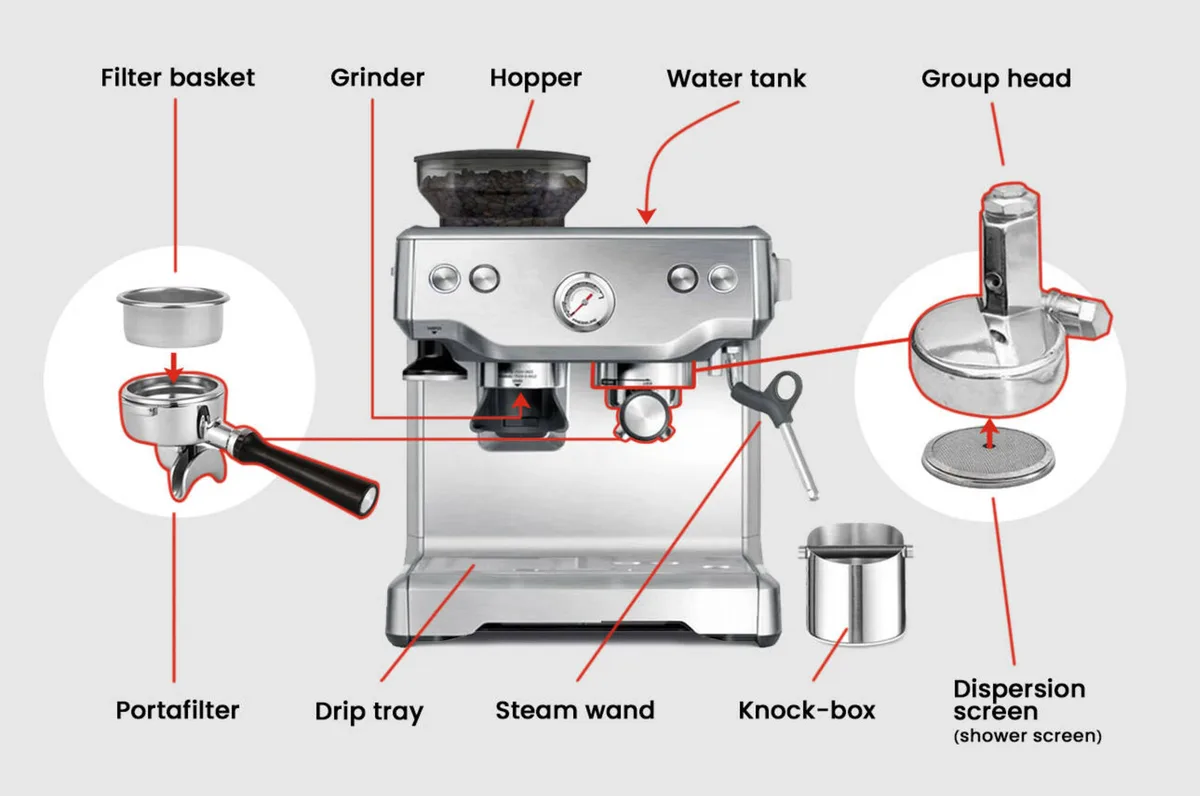
Image source: Bing (Web (fair-use with source credit))
The 15 Bar Pump
The pump is a vibratory pump. It uses a small piston and a solenoid to push water through the system. The "15 bar" rating is the maximum pressure the pump can produce at the outlet, not the pressure at the coffee puck.
By the time water reaches the group head, the OPV reduces it to around 9 bars.
Real espresso requires about 9 bars of pressure at the puck. The 15 bar pump is overkill, but it is cheap to manufacture. Most budget machines cannot adjust the pressure.
You are stuck with whatever the OPV gives you.
If the OPV gets clogged with scale or debris, it can stick open or closed. A stuck-open OPV drops pressure to zero. Water flows through the puck without resistance.
A stuck-closed OPV sends full pump pressure to the puck, which can cause channeling and a bitter, burnt taste.
The Thermoblock
The thermoblock is a solid block of aluminum or brass with a heating element inside. Water runs through a small channel inside the block and gets heated as it passes. It is fast and cheap, but it has no thermal mass.
It cannot hold a steady temperature the way a boiler can.
When you pull a shot, cold water from the reservoir enters the thermoblock. The thermoblock has to heat that water from room temperature to brewing temperature in a few seconds. It can do this, but only if the block itself is already hot.
That is why preheating is so important.
The thermoblock also serves the steam wand. When you switch to steam mode, the machine reroutes water through the block at a higher temperature. This is fine for milk, but it can leave the block too hot for brewing.
If you steam milk before pulling a shot, you need to flush the group head with water to bring the temperature back down.
The Pressurized Basket
Most budget machines come with a pressurized portafilter basket. This is a double-walled basket with a small hole in the bottom. It creates artificial pressure by forcing the water through the small hole.
The goal is to create fake crema from pre-ground coffee or stale beans.
Pressurized baskets are forgiving. They work with coarse grinds. They work with old coffee.
They also produce a thin, bubbly crema that dissolves quickly. They mask the real problems with your shot.
If you want real espresso, you need a non-pressurized basket. These have a single wall with many small holes. They require a fine, even grind and a proper tamp.
They also produce genuine crema from the coffee oils, not from forced pressure.
How These Parts Work Together
Understanding the system helps you diagnose problems. The pump pushes water through the OPV into the thermoblock. The thermoblock heats the water.
The heated water passes through the group head and into the portafilter. The pressure in the basket extracts the coffee.
If any part of this chain is cold, clogged, or failing, your shot will suffer. The decision tree helps you find the weak link.
The Budget Espresso Troubleshooting Decision Tree: Temperature, Pressure, Grind, and Maintenance
Now you know the parts. Here is the workflow to find and fix your specific problem. Follow it in order.
Do not skip steps.
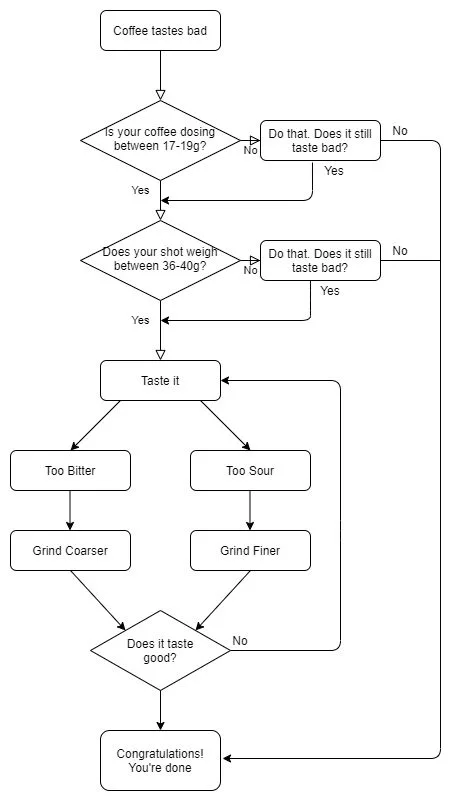
Image source: Bing (Web (fair-use with source credit))
Step 1: Is the Machine Hot Enough?
Start with the easiest check. After a 15 minute preheat and a blank shot, touch the group head. It should be hot enough that you cannot hold your finger on it for more than a second.
If it is not hot enough: Run a longer blank shot. Let the thermoblock cycle several times. If the machine still runs cold after 20 minutes, descale it.
Scale inside the thermoblock acts as an insulator. If descaling does not help, the heating element may be failing.
If it is hot enough: Move to Step 2.
Step 2: Is the Shot Pouring at the Right Speed?
The ideal extraction time for a double shot is 25 to 30 seconds from the first drop of coffee. Time your shot from the moment you flip the switch or press the button.
If the shot pours in under 15 seconds: The water is moving too fast. This is usually a grind problem. Your grind is too coarse.
Go finer. If you are using pre-ground coffee, switch to whole beans and a burr grinder. If you are already using a fine grind, check your tamp.
A light tamp can also cause fast flow.
If the shot pours in over 35 seconds: The water is moving too slow. Your grind is too fine. Go coarser.
If you are using a pressurized basket, try a slightly coarser grind. Pressurized baskets are sensitive to fine grinds.
If the shot pours at 25 to 30 seconds but is still watery: The problem is not the flow rate. Move to Step 3.
Step 3: Is the Crema Real?
If the flow is correct but the crema is thin or absent, the issue is likely the beans. Stale beans produce no crema. Dark roast beans that are too old can also produce a thin, bubbly layer that dissipates quickly.
If the beans are fresh: Check the basket. Are you using a pressurized basket? Pressurized baskets produce a thin, artificial crema that looks bubbly and disappears fast.
Switch to a non-pressurized basket if you want real crema.
If the beans are old: Buy fresh beans from a local roaster. Look for a roast date on the bag. Beans should be used within 2 to 4 weeks of roasting.
Supermarket beans with no date are likely stale.
Step 4: Is the Pressure Correct?
If your shot pours at the right speed with fresh beans and still tastes watery, the pressure may be wrong. You can test this by feeling the water flow from the group head during a blank shot.
Run a blank shot without the portafilter. The water should come out in a steady stream. If it sputters or pulses, the pump may be struggling. If the stream is very weak, the OPV may be stuck open.
If the pressure seems low: Remove the OPV from the machine and clean it. Use a small brush or a toothpick to clear any scale. Reassemble and test again.
If the pressure seems high: You cannot easily adjust a budget OPV. Some machines have a screw adjustment inside the OPV, but many do not. If the pressure is too high and you cannot adjust it, the machine may be at its limit.
Consider upgrading to a machine with an adjustable OPV.
Step 5: Is the Machine Clean?
Scale buildup affects both temperature and pressure. If you have hard water, scale can accumulate inside the thermoblock, the OPV, and the group head. This reduces heat transfer and restricts water flow.
Descale the machine. Use a commercial descaler or a citric acid solution. Follow the manufacturer instructions. After descaling, flush the machine with fresh water several times.
4 Common Mistakes That Make Your Espresso Worse (Not Better)
When you try to fix your espresso, it is easy to make things worse. These four mistakes are the most common. Avoid them.
Mistake 1: Grinding Too Fine to Compensate for Fast Flow
If your shot pours too fast, the natural instinct is to grind finer. That is correct. But some people overcorrect.
They grind extremely fine, and the machine chokes. The shot takes 50 seconds to produce a few drops of bitter, burnt liquid.
The fix: Change grind size in small steps. Adjust one number on your grinder, and pull a test shot. If the shot is still too fast, go finer again.
If it chokes, go coarser. Small adjustments matter.
Mistake 2: Tamping Too Hard
More pressure does not always mean better extraction. There is a common myth that you need to tamp with the force of a hydraulic press. The truth is that 15 to 30 pounds of pressure is enough.
Anything beyond that is wasted.
The fix: Use a consistent tamp. Press until the coffee is level and compacted. Do not push with all your weight.
If you are using a pressurized basket, a light tamp is often enough. The basket creates the pressure for you.
Mistake 3: Using Stale Beans
Stale beans are the number one cause of no crema and weak flavor. Coffee beans start to lose their volatile compounds immediately after roasting. After 2 to 4 weeks, they are essentially dead.
Pre-ground coffee loses freshness even faster.
The fix: Buy whole beans with a roast date. Grind them immediately before brewing. Store beans in an airtight container away from light and heat.
Do not freeze or refrigerate them. This introduces moisture and ruins the grind.
Mistake 4: Skipping the Preheat
This is the most common mistake of all. People turn on the machine, wait for the light, and pull a shot. The light is a lie.
The machine is not ready. The water is 10 to 15 degrees too cold.
The fix: Commit to a 15 minute preheat. Set a timer. Do not touch the machine until it has been on for at least 15 minutes.
This alone will fix 80 percent of lukewarm espresso problems.

Related posts
Philips 3200 LatteGo Worth It? Reddit Users Weigh In
You're asking a fair question. The "is philips 3200 lattego super automatic bean to cup espresso machine worth…
Can Flavored Oily Beans Gum Up Super Auto Ceramic Burrs?
Can you put flavored oily beans gumming up ceramic burrs in a super automatic bean to cup espresso…
One-Touch Velvety Cappuccino: Temp & Time for Super Auto
You've got a super automatic bean to cup espresso machine. You press the onetouch cappuccino button. The drink…