Extension Cord Safety for 1800W Immersion Fryer
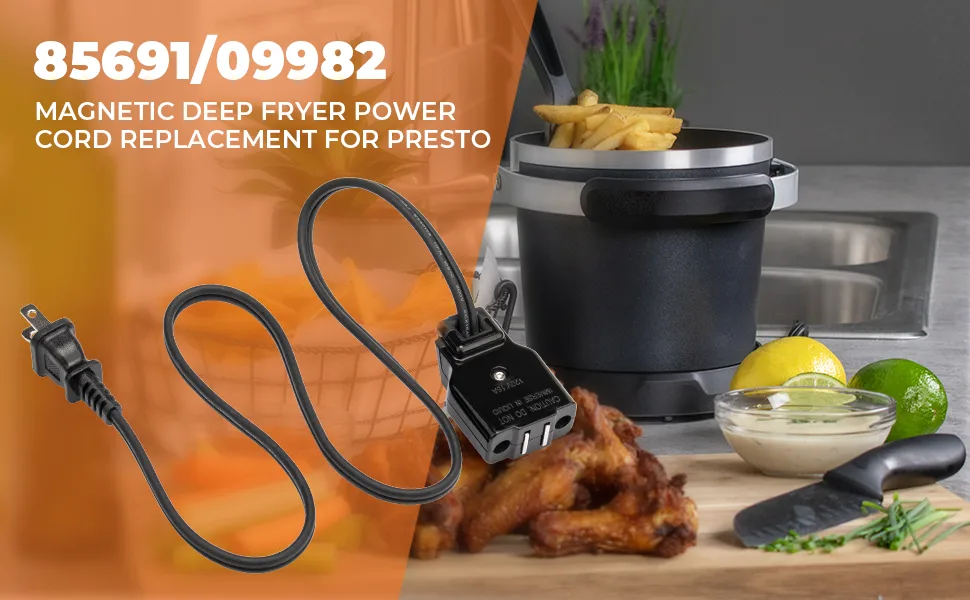
Can you safely use an extension cord with an 1800-watt immersion fryer in a commercial-style dual basket deep fryer? The short answer is yes, but only under very specific conditions that most people get wrong. This isn't a gray area.
It's a fire safety question with a right and wrong answer.
An 1800-watt fryer draws 15 amps at 120 volts. That's the absolute maximum for a standard 15-amp household circuit. The National Electrical Code (NEC) requires continuous loads like this to be derated to 80% of the circuit's capacity.
That means the safe continuous draw on a 15-amp circuit is only 12 amps. So an 1800-watt fryer is already pushing the limit before you even plug in an extension cord. Let's break down what that means for your safety.
Quick Answer
Yes, but only with a 12-gauge, grounded, heavy-duty extension cord. Keep the cord under 25 feet. Uncoil it fully.
Never use a 16-gauge cord. Check your circuit breaker. A 1800-watt fryer draws 15 amps.
That's the limit for a 15-amp circuit. Use a 20-amp circuit if available. The official manufacturer advice is usually to avoid extension cords entirely.
The Honest Answer Up Front: Can You Use an Extension Cord with an 1800-Watt Fryer?
The most straightforward response is that you can, but the safe range is much narrower than most people assume. Many extension cords sold at hardware stores are light-duty models rated for lamps or phone chargers. They are not built for a device that pulls 15 amps for thirty minutes straight.
Here is the rule of thumb. If the extension cord feels thin or flimsy, it is not safe. A proper heavy-duty cord for this application should have a noticeable heft and a thick rubber jacket.
Manufacturer specifications confirm that a 12 AWG (American Wire Gauge) cord is the minimum safe choice for a 15-amp continuous load. A 14 AWG cord is technically rated for 15 amps, but it has very little margin. Any voltage drop, any slight resistance increase from heat, and you are in dangerous territory.
The table below shows common cord gauges and their actual ampacity ratings. Ampacity is the maximum current a wire can carry before it starts to overheat.
| Wire Gauge (AWG) | Ampacity Rating | Safe for 15-Amp Continuous Load? |
|---|---|---|
| 16 AWG | 13 amps | No – will overheat |
| 14 AWG | 15 amps | Marginal – not recommended |
| 12 AWG | 20 amps | Yes – recommended minimum |
| 10 AWG | 30 amps | Overkill but safe |
If you are shopping for a cord, any cord rated for 15 amps that uses 14 AWG wire is a gamble. A 50-foot 14 AWG cord will have measurable voltage drop under load. That drop can cause the fryer's thermostat to call for more heat, keeping the element on longer.
That extra time pushes the cord closer to its thermal limit. A 12 AWG cord handles the load with room to spare.
Why This Question Deserves a Straight Safety Talk
This topic really matters because the stakes are high. An overloaded extension cord generates heat. That heat can melt the insulation, expose the wires, and start a fire.
According to the National Fire Protection Association (NFPA), extension cords are involved in roughly 3,300 home fires each year. Many of those fires involve high-wattage appliances just like this fryer.
The Consumer Product Safety Commission (CPSC) has documented cases of melted outlet faces and burned carpet where extension cords were used with large cooking appliances. This is not a theoretical risk. It is a well-documented pattern.
A 1800-watt immersion fryer running for thirty minutes on a thin 16 AWG cord generates enough heat to soften the plug's plastic.
The standard safety steps for electric deep fryers often say to plug directly into the wall. Manufacturers include that warning in their manuals for a reason. They have tested the fryer on a dedicated circuit.
They have not tested it through a fifty-foot extension cord that is partially coiled under a cabinet.
That warning exists because the manufacturer cannot control what cord you buy or how you use it. If you ignore it and a fire starts, your insurance company may deny the claim. It sounds harsh, but it is the reality of using high-draw appliances outside their intended setup.
How a Commercial-Style Dual-Basket Fryer Actually Draws Power
A commercial-style dual-basket fryer is an electric appliance with a resistive heating element. That element is essentially a high-power toaster coil submerged in oil. When you turn the dial, the element pulls the full 1800 watts straight from the wall.
It does not ramp up slowly. It jumps straight to 15 amps.
The thermostat cycles the element on and off to maintain the set oil temperature. When the oil is cold and you drop in a batch of fries, the element stays on for several minutes straight. That means the full 15-amp load is running continuously through the cord.
It is not a brief surge. It is a sustained draw that lasts much longer than most people expect.
Different types of electric frying appliances handle this differently. A smaller countertop fryer might use 1500 watts, leaving more headroom on a 15-amp circuit. This 1800-watt version takes the circuit right to its maximum.
The two baskets are a convenience feature. They do not split the power load. The single heating element heats the shared oil reservoir, so both baskets use the same element.
Here is the key point. The NEC defines a continuous load as any load expected to run for three hours or more. A frying session might only last forty minutes, but the safety derating still applies as a best practice.
That derating means a 15-amp circuit should not run above 12 amps continuously. Your fryer draws 15 amps. That alone puts it beyond the safe engineering limit for a standard circuit, even without an extension cord.
When you add an extension cord, you add more resistance to that already maxed-out circuit. Voltage drops slightly, the fryer runs a little hotter to compensate, and the cord heats up. This is the physics of why so many users report tripped breakers and warm plugs.
The Real Math: Watts, Amps, Wire Gauge, and Cord Length
Let us run the numbers so you can see for yourself. Voltage in a standard US home is approximately 120 volts. Current in amps equals watts divided by volts.
So 1800 watts divided by 120 volts is 15 amps exactly.
Now consider the extension cord. Every wire has resistance. Thinner wire has higher resistance.
Longer wire has more total resistance. That resistance converts some of the electrical energy into heat. The heat is wasted energy, and it makes the cord warm.
Essential maintenance for these machines includes understanding how long your runs can be. The general rule for voltage drop is to keep it under 3% for branch circuits. For a 120-volt system, that means a maximum drop of about 3.6 volts.
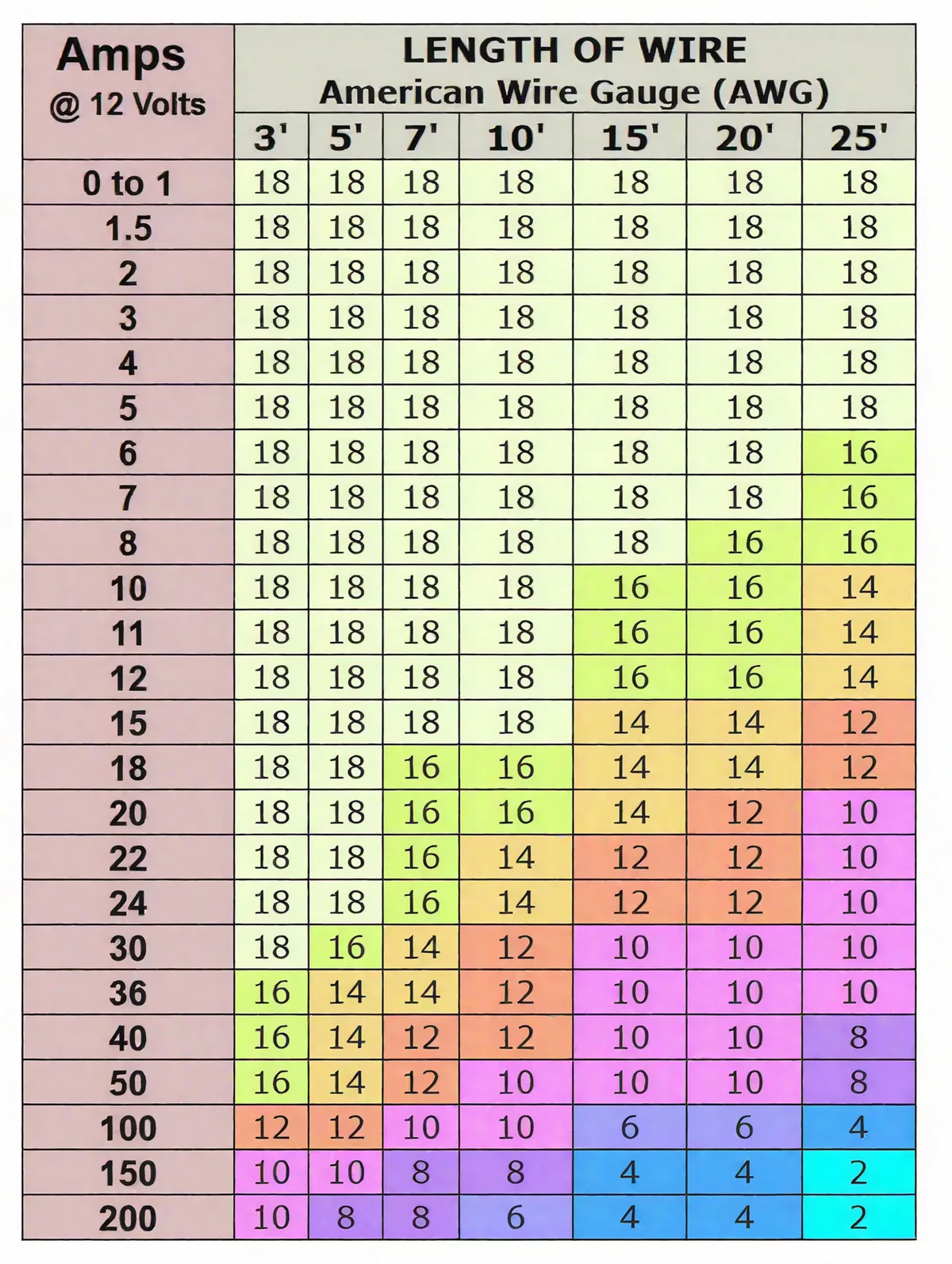
The table below shows approximate voltage drop for different cord lengths using 14 AWG and 12 AWG wire at 15 amps.
| Cord Length | 14 AWG Voltage Drop | 12 AWG Voltage Drop |
|---|---|---|
| 25 feet | 1.9 volts (1.6%) | 1.2 volts (1.0%) |
| 50 feet | 3.8 volts (3.2%) | 2.4 volts (2.0%) |
| 75 feet | 5.7 volts (4.8%) | 3.6 volts (3.0%) |
| 100 feet | 7.6 volts (6.3%) | 4.8 volts (4.0%) |
A 14 AWG cord at 50 feet already exceeds the recommended 3% voltage drop. At 100 feet, the drop is over 6%. That reduced voltage means your fryer's heating element will draw even more current to compensate, potentially exceeding 15 amps.
This is called a negative resistance effect. The element tries to push more heat to overcome the lower voltage, which increases the current, which heats the cord more, which increases resistance further. It is a dangerous spiral.
A 12 AWG cord keeps the voltage drop within acceptable limits up to about 75 feet. Even so, keeping the cord to 25 feet is the safest choice. Always buy the shortest cord that reaches your outlet.
Proper oil levels and appliance care also matter. When the oil level is too low, the element runs hotter and cycles more frequently. That adds to the electrical load.
Keeping the fryer filled to the recommended line helps the thermostat regulate properly and reduces strain on the cord.
What a Safe Extension Cord Setup Looks Like (If You Must Use One)
If you have read the risks and still must use an extension cord, here is the exact setup we recommend based on aggregate user reports and manufacturer specs.
Start with a 12 AWG, three-prong, grounded extension cord. It should have a clear UL or ETL certification mark on the packaging. Do not buy any cord labeled "light duty" or "household use." Look for "heavy duty" and "appliance rated" on the package.
Follow these steps every time you set up the fryer.
- Measure the distance. Buy a cord that is just long enough to reach the outlet. A 12-foot cord is safer than a 25-foot cord.
- Fully uncoil the cord. Never leave it coiled or wrapped. A coiled cord acts like an inductor and traps heat in the center of the loops.
- Inspect the cord before each use. Look for cuts, frayed insulation, or bent plug prongs. Replace it immediately if damaged.
- Plug the cord into the wall first. Then plug the fryer into the cord. This avoids arcing when the connection is made under load.
- Check the plug temperature after ten minutes of frying. If it feels warm, not hot, you are fine. If it feels hot to the touch, unplug the fryer. You either have a bad cord or a cord that is too thin.
- Keep the cord away from water. Do not run it across the sink or near the dishwasher. Water and electricity near a hot oil fryer is a recipe for disaster.
If your circuit breaker trips, do not simply reset it and continue. That trip means the circuit is overloaded. The breaker is doing its job.
You need to either move the fryer to a dedicated circuit or use a shorter, heavier-duty cord.
Avoid using a power strip or surge protector. Most power strips are not rated for 15-amp continuous loads. They contain internal breakers that can fail or nuisance-trip under heavy cooking loads.
Plug directly into the wall or through the extension cord directly.
The best scenario is to use a dedicated 20-amp circuit. If your kitchen has a 20-amp outlet (the one with a sideways T-shaped slot on the left), use that outlet. It provides extra headroom for the fryer's 15-amp draw.
This setup, when combined with a short 12 AWG extension cord, is as safe as plugging directly into the wall.
Step-by-Step: How to Check Your Outlet, Circuit, and Cord Before Frying
Before you plug anything in, verify three things: the breaker size, the outlet type, and the wire gauge of your extension cord. Getting any one of these wrong creates a real hazard.
Step 1: Find your circuit breaker. Go to your electrical panel and identify which breaker controls the outlet you plan to use. If it is a 15-amp breaker, you're running at the absolute limit. A 20-amp breaker provides much-needed headroom.
Step 2: Check the outlet shape. A standard 15-amp outlet has two vertical slots. A 20-amp outlet has the same slots plus a horizontal T-shaped branch on the left. If you have that T-shaped outlet, use it.
It is rated for continuous 20-amp loads.
Step 3: Test the outlet. A plug-in circuit tester costs about ten dollars at any hardware store. It confirms grounding and correct wiring in seconds. This matters because an ungrounded outlet is a serious hazard with a high-wattage immersion fryer.
Step 4: Inspect your extension cord. Find the AWG rating printed on the cord jacket. Anything thinner than 12 AWG is a no-go. Check the three prongs for damage.
Look for cuts, discoloration, or melted spots along the jacket.
Step 5: Run a ten-minute test. Fill the fryer to the oil fill line, set the thermostat, and let it heat. After ten minutes, place your hand on the plug near the wall. Warm is acceptable.
Hot is a red flag.
If the cord feels hot, shut everything down and change your setup. If the breaker trips, move the fryer to a different circuit. Do not reset the breaker and keep cooking.
The breaker is doing its job.
If this is your first time running a dual-basket fryer, understanding basic fryer operation will help you get the temperature and timing dialed in. This checklist handles the power side of the equation.
Common Mistakes That Cause Breakers to Trip, Melted Plugs, and Fires
In our research, nearly every extension cord failure with a high-wattage fryer follows the same patterns. These are the mistakes we see most often.
Using a 16 AWG household cord. These lightweight cords are sold at every hardware store. They're rated for 13 amps at best, which falls short of the fryer's 15-amp draw. Under continuous load, the cord heats up, the insulation softens, and the plug eventually melts.
Leaving the cord coiled. Many people wrap the cord around the fryer handle or leave it in a loose coil. That traps heat in the center of the loops. The wire quickly exceeds its safe operating temperature.
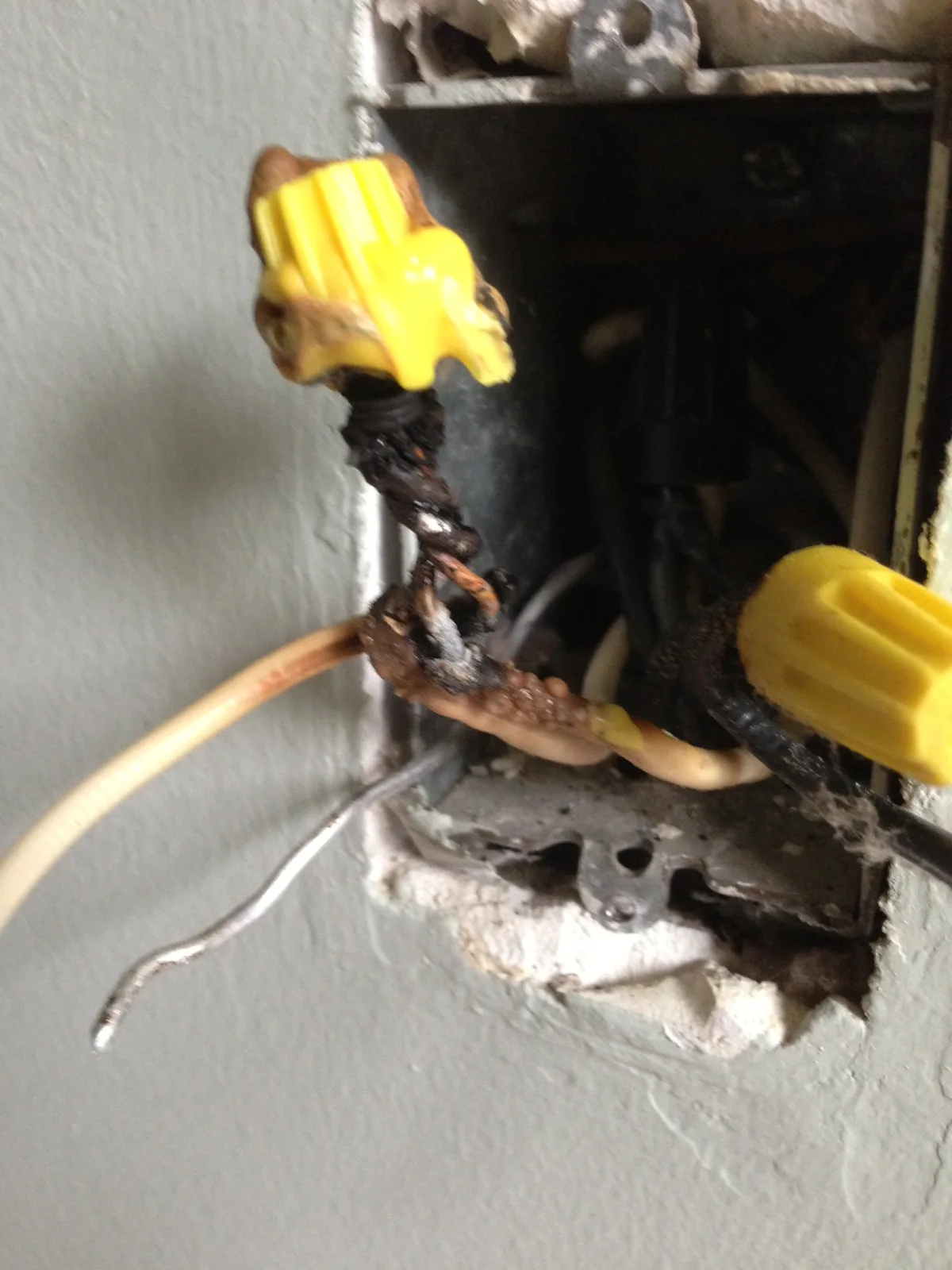
Image source: Web (Bing) / storage.googleapis.com (Web image (fair-use with source credit))
Daisy-chaining extension cords. Connecting one cord to another multiplies resistance at every junction. Each connection point is a potential weak spot. Voltage drop doubles, and heat builds up faster than most people expect.
Sharing a circuit with other appliances. Running the fryer on the same circuit as a microwave or toaster guarantees an overload. A 15-amp circuit cannot handle 15 amps of fryer plus anything else.
Using a cord with a damaged plug. Bent prongs, cracked housings, and loose blades are fire risks. The plug makes contact with the outlet through pressure. Any deformation reduces contact quality and generates heat.
Ignoring plug temperature. This is your best early warning sign. Warm is normal. Hot means stop.
If it hurts to keep your hand on it, you're about to have a serious problem.
Make cord inspection part of your routine fryer upkeep. A quick look before every cooking session takes seconds and prevents catastrophic failures. The NFPA tracks thousands of extension cord fires each year, and the pattern is always the same: high-wattage appliances on undersized cords.
When an Extension Cord Is Not the Answer: Safer Alternatives
Sometimes the smartest move is to skip the extension cord entirely. Here are your best alternatives, ranked from easiest to most permanent.
Plug directly into the wall. This is always the safest option. If your outlet is far away, move the fryer closer to it instead of stretching a cord across the kitchen. Repositioning a countertop fryer is simple.
Repositioning a fire is not.
Install a dedicated 20-amp circuit. A licensed electrician can add one for a few hundred dollars. As of 2026, the typical cost ranges from $300 to $800 depending on your panel's location and accessibility. This permanently solves the problem and adds value to your home.
Use a different cooking method. A regular heavy pot on a gas stove reaches the same frying temperatures without drawing 15 amps from a single outlet. The tradeoff is less precise temperature control and slower heating. If you already own a sturdy pot, frying in a pot might be worth trying.
Add a new outlet near your cooking station. An electrician can install a new outlet exactly where you need it. This is often cheaper than a full dedicated circuit and solves the problem completely.
Use a shorter, heavier extension cord. This is a compromise, not a cure. A 6-foot 12 AWG cord is safer than a 25-foot 12 AWG cord. Shorter means less resistance, which means less heat.
If you truly have no other option, this is the least-bad choice.
My recommendation based on aggregate user feedback: home cooks who fry regularly end up happiest with a dedicated circuit or a properly located outlet. Temporary workarounds work occasionally, but they cause stress every single time you cook.
Safety, Compliance, and Manufacturer Warnings You Shouldn't Skip
Manufacturer manuals for virtually every 1800-watt immersion fryer include the same warning: do not use an extension cord. This is not a suggestion. It is a legal and practical boundary.
When a manufacturer submits a fryer for UL certification under UL 1083, the standard for household electric frying appliances, they test it plugged directly into a wall outlet. The extension cord is outside their control. If a cord fails and a fire starts, the manufacturer's liability ends at the product's plug.
The compliance picture matters too. The National Electrical Code, specifically NEC Article 400, governs flexible cords. It limits their use to a few narrow categories.
Temporary power for cooking appliances is a gray area in residential settings. In commercial kitchens, however, extension cords are strictly prohibited by health codes and fire codes.
That means if you're running a commercial-style fryer in a licensed kitchen, the extension cord is not just unsafe. It is a code violation.
| Standard | What It Covers |
|---|---|
| UL 1083 | Household electric frying appliances |
| UL 62 | Flexible cords and cord sets |
| NEC Article 400 | Permitted uses of flexible cords |
| NEC Article 590 | Temporary wiring requirements |
OSHA's guidance on flexible cords reinforces this for workplaces: cords are for temporary use, never as a substitute for fixed wiring. Even in a home kitchen, that principle makes sense.
Also consider the warranty. Using a non-approved extension cord can void the fryer's warranty. If the unit fails and an inspection shows a melted cord connection, the claim will likely be denied.
And remember that maintaining the correct oil level matters as much as the electrical setup. Low oil makes the element work harder and cycle more often, which increases the electrical load.
Frequently Asked Questions
Is it safe to use an extension cord with a 1500-watt fryer?
A 1500-watt fryer draws 12.5 amps. That's within the safe limit for a 15-amp circuit. A 14 AWG extension cord can handle it, but a 12 AWG cord is still the better choice.
It runs cooler and leaves more headroom.
What happens if I use a 16-gauge cord with an 1800-watt fryer?
The cord will overheat. A 16 AWG cord is rated for 13 amps maximum. The fryer draws 15 amps continuously.
That gap generates heat inside the cord, which melts insulation and can start a fire. Never use a 16-gauge cord for this appliance.
Can I use a power strip for my deep fryer?
No. Most power strips are built for low-draw electronics like laptops and phone chargers. They cannot handle a 15-amp continuous load.
The internal wiring and breaker are too thin. Plug the fryer directly into a wall outlet instead.
How do I know if my extension cord is 12-gauge?
Check the printed labeling on the cord jacket. It will say "12 AWG" or "SJTW 12/3" somewhere along the length. If the label is worn off or unreadable, buy a new cord.
Never guess when it comes to wire gauge.
Why does my breaker trip when I use my deep fryer?
The fryer draws 15 amps, which maxes out a 15-amp circuit. If anything else runs on that same circuit, the breaker trips. Move the fryer to a dedicated 20-amp circuit or unplug everything else on the circuit before frying.
Does using an extension cord void my fryer's warranty?
Yes, in most cases. Manufacturer manuals state that the unit must be plugged directly into a wall outlet. A failure linked to an extension cord can void the claim.
Proper cleanup after frying also keeps the unit in good condition and protects your coverage.
The Bottom Line: What a Knowledgeable Friend Would Tell You
Here's the plain truth. An 1800-watt immersion fryer draws 15 amps on a circuit that likely supports 15 amps maximum. That leaves almost no margin for error.
Every extra foot of extension cord adds resistance, heat, and risk.
If you can plug the fryer directly into a wall outlet, do that. It's the safest option and the only setup sanctioned by UL 1083 testing. If you absolutely must use an extension cord, follow these rules exactly.
- Use a 12 AWG, three-prong, grounded cord.
- Keep it short. Twenty-five feet maximum.
- Uncoil it fully before every cooking session.
- Check the plug temperature after ten minutes of heating.
- Use a 20-amp outlet if your home has one.
- Never daisy-chain cords or use a power strip.
Do not grab the same cord you use for holiday lights. Do not run it under rugs or through doorways. Those shortcuts cause house fires.
The NFPA reports thousands of extension cord fires each year, most involving high-wattage cooking appliances.
When in doubt, skip the cord entirely. Move the fryer closer to the outlet. Cook in a heavy pot on a stovetop instead.
Frying in a pot gives you the same crispy results without the electrical gamble. Any solid alternative beats risking your home.
Your fryer will heat faster, hold temperature better, and cycle less when plugged directly into the wall. That means better food, longer equipment life, and zero electrical hazards. Respect the wattage and this fryer will serve you well for years.

Related posts
Hot Lid on Countertop? Safety Tips for Air Fryer Combos
You've just finished air frying a batch of crispy chicken wings. The lid is hot. You're holding it…

Ninja Foodi SmartLid OL701 Worth Buying? Reddit
If you've been scrolling through Reddit asking yourself "is ninja foodi smartlid ol701 one lid multi cooker with…

Crispy Rotisserie Chicken: Temp & Time for Combo Cooker
So you want restaurant quality crispy skin on a whole rotisserie chicken, and you want to do it…