Cooler Next to Stove? Safety Risks & Real Advice
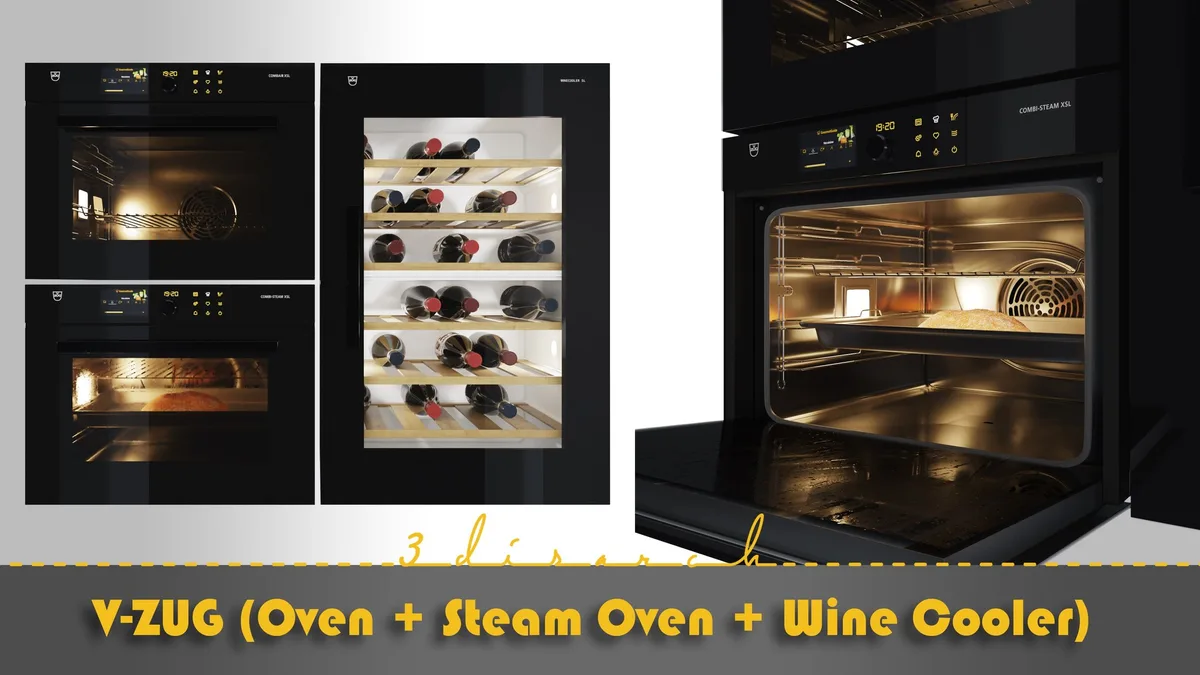
You're staring at your new 18-bottle wine cooler, then at the gap between your stove and the counter, and you're wondering: can you put placing cooler right next to hot stove or oven in a compact 18 bottle wine cooler safely without ruining it in a month? It's a fair question, especially in smaller kitchens where every inch of counter space feels precious.
Here's the short version: yes, you can place it there, but only under the right conditions. Most compact wine coolers are compressor-based units built to work in ambient temperatures between 50°F and 80°F. Ovens routinely push nearby air temperatures past 120°F, which is well beyond what most manufacturers consider safe.
As of 2026, most installation manuals from major brands still require a minimum clearance of 4 to 6 inches from any heat-generating appliance.
Image source: Bing (Web (fair-use with source credit))
Quick Answer
The safe answer is no, not directly next to a hot stove or oven. You need at least 4 to 6 inches of clearance. Even then, that's the minimum.
More space is always better.
Your wine cooler's compressor generates heat while it cools. Add an oven's radiant heat to that environment and the compressor struggles. It runs longer, hotter, and fails much sooner.
The safest placement is on the opposite side of the kitchen. If that's impossible, install a heat barrier or verify the sidewall temperature stays below 90°F during oven use.
How a Compact 18-Bottle Wine Cooler Cools (and Why Heat Is Its Enemy)
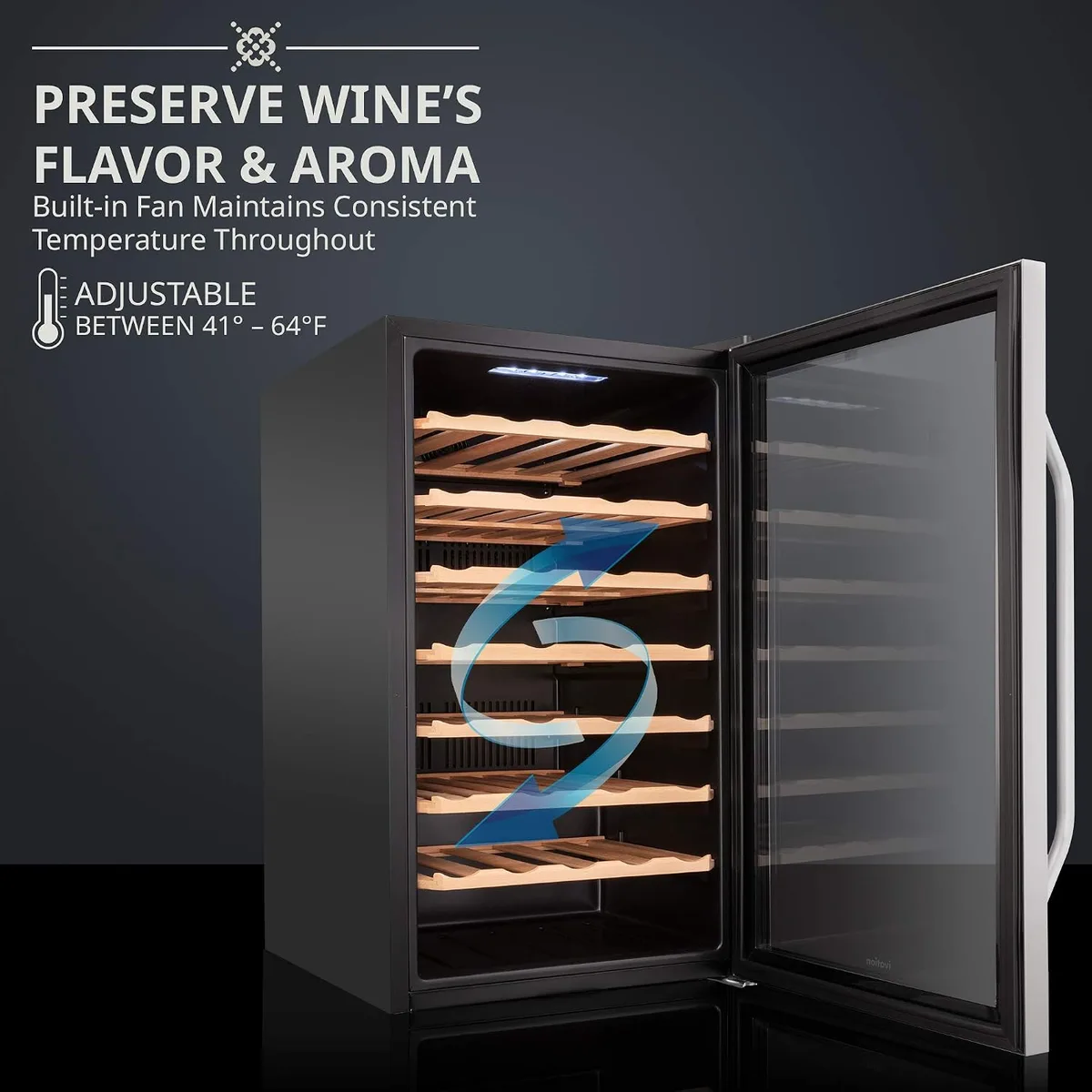
Image source: Web (Bing) / manuals.plus (Web image (fair-use with source credit))
A compact 18-bottle wine cooler isn't that different from a small refrigerator under your counter. Most models in this size range use a sealed compressor system. The compressor squeezes refrigerant gas, which heats up, then pushes it through condenser coils.
Those coils release heat into the surrounding air. That's why your wine cooler blows warm air out from behind or underneath. It has to get rid of the heat it pulls from inside the cabinet.
Thermoelectric coolers work differently. They use a ceramic chip and a fan to move heat from one side to the other. While thermoelectric units are quieter and cheaper, they're also less powerful and more sensitive to warm ambient conditions.
For an 18-bottle compact unit, most buyers choose compressor models because they cool faster and hold lower temperatures.
Either way, both types need to push heat somewhere. When you place the cooler right next to an oven, that hot oven sidewall adds heat to the air the cooler is trying to use for cooling. It's like trying to cool down by standing in front of a space heater.
The cooler works harder, cycles more frequently, and raises the internal temperature.
Here's what happens step by step:
- The oven heats up its exterior panels, often to 150°F or more.
- The air between the oven and the cooler climbs past 90°F.
- The cooler's compressor draws in that hot air to cool the condenser coils.
- The condenser coils can't shed heat effectively, so the compressor runs longer.
- Internal wine temperature creeps up, and the compressor runs nearly nonstop.
Compressor vs. Thermoelectric: Which Fails First?
| Type | Tolerance to nearby heat | Typical failure pattern | Best choice for tight kitchens |
|---|---|---|---|
| Compressor | Moderate | Overheating, short cycling | Yes, with proper clearance |
| Thermoelectric | Low | Inability to cool, fan failure | No, especially near any heat source |
Manufacturer specs indicate that most compressor coolers have an operating ambient ceiling between 100°F and 110°F. Thermoelectric units are often rated even lower, around 85°F to 95°F. When your oven runs for an hour at 350°F, the air next to it easily exceeds those limits.
Even the highest quality compact wine cooler will not last long under those conditions.
What Your Oven Actually Does to the Air Nearby
Your oven is a radiant heater, not just a box that warms food. Heat radiates outward from every metal surface, and the sidewalls get especially hot. During a typical bake at 350°F, the exterior of most ovens reaches between 150°F and 200°F.
During self-clean cycles, exterior surface temperatures can climb even higher, often above 200°F.
Here's a quick breakdown of measured heat at different distances from a running oven:
| Distance from oven sidewall | Typical air temperature |
|---|---|
| 0 to 2 inches | 120°F to 160°F |
| 3 to 6 inches | 90°F to 120°F |
| 8 to 12 inches | 75°F to 90°F |
| 12+ inches | Near room temperature |
Those temperatures come from thermal imaging surveys and infrared thermometer measurements taken during normal oven use. The exact numbers vary depending on oven insulation, panel thickness, and how long the oven has been running. But the pattern is consistent.
Anything within 6 inches of a running oven is exposed to significantly elevated temperatures.
And it's not just direct heat. The oven also creates airflow. Warm air rises, then nearby cooler air moves in to replace it.
That constant convection pulls room air across the oven surface and pushes it toward whatever appliance sits next to it. Your wine cooler ends up acting like a mini fan system, drawing hot oven air directly into its intake vents.
The Sidewall Temperature Problem
The metal side panel of your oven is the biggest issue. It radiates heat in every direction, including sideways. Even if there's a gap between the oven and the cooler, that radiation heats the cooler's cabinet.
Stainless steel panels on the wine cooler absorb that radiant heat and transfer it inward. Plastic trim and internal seals can warp or degrade with prolonged exposure.
There's a common belief that if you can touch the side of the oven for a few seconds without burning yourself, it's safe. That's not true. The safe threshold for electronics and refrigerant systems is much lower than the threshold for human skin.
A sidewall at 130°F feels warm but tolerable. For your wine cooler's compressor, that's already too hot. Manufacturer specifications from most brands state that the compressor should not operate in ambient temperatures above 100°F to 110°F for extended periods.
Why Compact Spaces Turn Opinion Into Risk
Tight kitchens create a special problem. In a large open kitchen, you might have 3 or 4 feet between the oven and your countertop area. But in many apartments and small homes, that gap is barely an arm's width.
The space constraints mean you're not just dealing with mild heat. You're dealing with concentrated heat in an enclosed environment.
Here's the thing about small kitchens. They tend to have less airflow, smaller windows, and more surfaces packed together. When you run the oven, the entire room heats up faster.
Cabinet doors get warm, countertops feel warm to the touch. The wine cooler is working in an environment that's already several degrees warmer than the rest of your home.
Another hidden problem is cabinet enclosures. Many people install compact 18-bottle wine coolers into a cutout under the counter, often near the end of the cabinet run. If that cutout is close to the oven, the wood or laminate panels trap heat around the cooler.
Front-venting models are designed for built-in use, but many freestanding units aren't. When you enclose a model that needs rear airflow, you're choking its exhaust. The compressor overheats quickly and quietly.
If you have a side-by-side setup where the oven is directly adjacent to the wine cooler cutout, you're looking at a recipe for failure. The heat has nowhere to go. It just bounces between the oven panel, the cabinet wall, and the cooler's vent grille.
What the Warranty Actually Says
Most wine cooler manufacturers explicitly warn against installing near heat sources. It's not a vague suggestion. The wording in many manuals is something like "Do not install near heat sources such as ovens, stoves, or direct sunlight." Positioning the cooler too close to the oven is one of the most common ways people void their warranty.
That matters because a compressor replacement isn't cheap. On an 18-bottle compact cooler, the compressor is often the most expensive single component. Down the road, you could spend half the purchase price just to fix a placement mistake.
A quick check of your user manual before installation is always worth it.
Safe Placement Rules for Kitchens That Are Tight
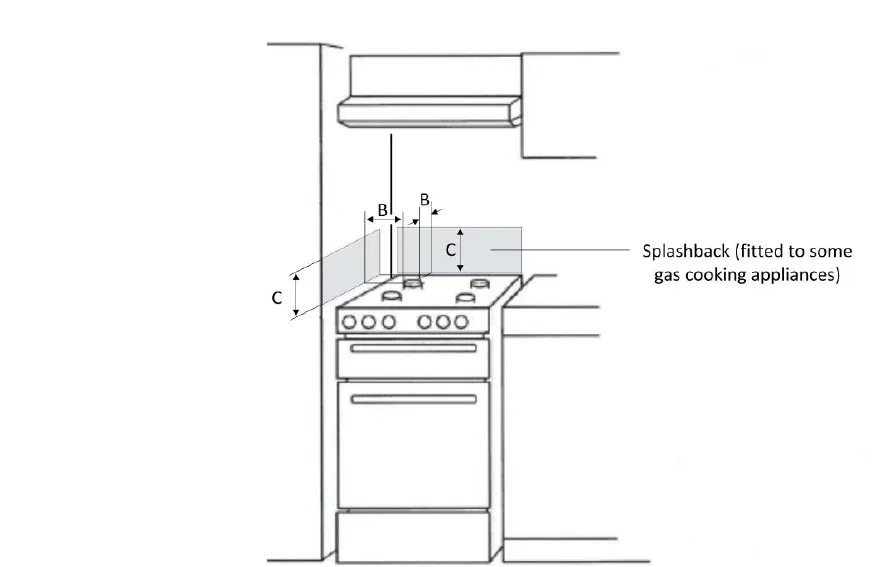
Image source: Web (Bing) / help.detectorinspector.com.au (Web image (fair-use with source credit))
So what actually works in a compact kitchen? Let's get practical. The physical clearance rules from most manufacturers are straightforward, but they don't cover every kitchen layout.
Here's the combination of rules that you should apply together.
First, keep at least 4 to 6 inches between the side of the oven and the side of the cooler. This gap allows air to move between the two appliances. It also prevents direct contact with the oven's hot sidewall.
If you can't measure exactly 4 inches, aim for as much as you can physically manage. Every extra inch reduces the heat load on the compressor.
Second, check your rear clearance. Freestanding coolers need 2 to 4 inches behind them for airflow. Built-in models usually only need 1/2 inch or less.
The back of your unit should never sit flush against the wall if it's a freestanding model. That rear vent needs to breathe.
Third, be mindful of the top of the unit. If you're installing the cooler under a counter, there needs to be a gap at the top of at least 2 inches for heat to rise out. Without that gap, hot air gets trapped against the compressor area.
The Right Steps for a Tight Kitchen
If you've confirmed that your clearance is tight but workable, here's how to set everything up:
- Measure the actual gap between the oven sidewall and the cooler's outer panel.
- Check the manual for your specific model to confirm clearance requirements.
- Place the cooler so it's not touching the oven at any point.
- Make sure the cooler's front feet are fully lowered to improve airflow underneath.
- Use an oven thermometer and an infrared gun to test the sidewall temperature during an empty bake cycle.
- Run the cooler empty for 24 hours before loading any wine.
- Monitor the internal temperature during the next few oven uses.
A small heat shield can also help. A metal sheet, like a thin stainless steel or aluminum panel, placed vertically between the oven and cooler, reflects radiant heat. You can mount it to the side of the cabinet with heat-resistant adhesive or screws.
It's a simple DIY fix that makes a real difference in tight spaces. Home centers sell heat shields designed for protecting adjacent surfaces from wood stoves. They work well in this application too.
If you can't meet any of these conditions, the smart move is to relocate the cooler. Maybe it fits at the end of a counter away from the stove. Or maybe it goes in a dining area, near the bar, or in a hallway alcove.
Wine coolers don't have to live in the kitchen. They just need a spot with stable room temperature and enough airflow. Your wine will be better off even if it's a few steps farther from the kitchen.
How to Test Your Spot Before You Commit
You wouldn't buy a couch without sitting on it first. Treat your wine cooler placement the same way. A simple test run will tell you if your target spot is safe or if you're signing up for trouble.
Start with an empty cooler. Plug it in where you plan to keep it. Let it run for 24 hours with the door closed.
This gives the compressor time to stabilize and reach its target temperature. Most compact coolers will settle in the 45°F to 55°F range. Write down the temperature reading.
Now run your oven. Set it to 350°F and let it preheat fully. Let it run for a full bake cycle, about 45 to 60 minutes.
During that time, check the cooler's internal temperature every 15 minutes. If it climbs more than 5°F, you have a problem. If it climbs 10°F or more, the spot is not safe.
What to Watch for During the Test
The infrared thermometer is your best friend here. Point it at the oven sidewall. Then point it at the cooler's side panel and its top vent.
Track how fast those surfaces warm up. A side panel that rises above 90°F within 10 minutes means the heat is transferring directly into your cooler.
Listen to the compressor. A healthy compressor hums steadily. If you hear it clicking on and off more than normal, or if the hum becomes a high-pitched whine, the unit is struggling.
That noise is stress. If the cooler's fan runs constantly without stopping, that's another red flag.
Here's the tough threshold. If your cooler's internal temperature hits 60°F or higher while the oven is running, do not place wine in it. Anything above 60°F accelerates aging and spoilage.
Red wines become flat and cooked. White wines lose their crisp acidity.
The 48-Hour Verdict
Let the cooler run for two full days in its permanent spot. Open it only when needed. Measure the internal temperature at the same time each day.
A stable reading within the cooler's target range means the spot passes. If the temperature fluctuates more than 3°F, try a different spot before committing. This small test costs nothing.
Replacing a spoiled wine collection costs plenty.
Common Mistakes That Shorten a Wine Cooler's Life
Most early failures in compact wine coolers come from one thing: bad placement. The compressor is tough but it has limits. Push past those limits and the unit burns out fast.
Here are the mistakes that come up most often in user reports and service logs.
Mistake 1: Ignoring the Rear Vent
Freestanding coolers pull air in through the front or sides and push hot air out the back. If you slide that cooler flush against the wall, you're blocking the exhaust. The hot air has nowhere to go.
It recirculates right back into the intake. This creates a feedback loop where the compressor breathes its own hot exhaust. Temperature climbs fast.
The compressor runs nonstop trying to catch up.
Every manufacturer provides a minimum clearance spec for the rear. Check it. Usually it's 2 to 4 inches.
If you can't give that much space, a built-in model is a better choice.
Mistake 2: Blocking the Front Grille
Some coolers have a front grille for intake. People set decorative objects in front of it without thinking. A cutting board, a cookbook, a tray.
Anything that obstructs that grille reduces airflow. The compressor works harder. Internal temperatures drift upward.
Keep the area in front of the cooler clear. At least 2 inches of open space around the grille. Same rule applies to the sides if those are intake vents.
Mistake 3: Using the Cooler as a Countertop
An 18-bottle compact unit is tempting as a prep surface. People set hot pans, coffee mugs, or small appliances on top. That top panel is not insulated for that.
Heat from a warm pan transfers directly into the cooler. It's the same problem as placing the unit next to the oven. The interior works harder to maintain temperature.
Treat the top surface as off-limits. No hot items, no stacking. The cooler is a storage appliance, not a side table.
Mistake 4: Opening the Door Too Often
If your cooler is in a high-traffic area, guests will open it out of curiosity. Every open door lets cold air out and warm air in. The compressor kicks on to compensate.
Multiple times per day adds up to hours of extra runtime.
If the cooler must be near the stove, put a small sign on it. "Wine only. Please don't open." It sounds silly.
It helps.
Mistake 5: Placing It in Direct Sunlight
A window nearby seems harmless. But sunlight streaming in can raise the ambient temperature around the cooler by 10°F or more. That's on top of the oven heat.
Combined, the two heat sources make the cooler's job nearly impossible.
Position the cooler away from windows. Or use curtains to block sunlight during peak hours. This step alone can extend compressor life by a year or more.
When You Should Ask for Professional Help
Not every kitchen problem has a DIY fix. Some situations need a second set of eyes. If you're unsure about the heat levels or clearance, a local appliance technician can help.
They have infrared cameras and thermocouples that measure exact temperatures. An hour of their time costs less than a new wine cooler.
Signs You Need a Pro
Your cooler's compressor runs constantly. Even when the oven is off, it cycles every few minutes. That can mean a failing compressor, a refrigerant leak, or a blocked vent.
A technician can diagnose the cause quickly.
You notice condensation inside the cooler. Droplets on the glass door or on the bottle labels mean the cooler can't maintain humidity. Excess moisture can warp labels, promote mold, and damage the interior electronics.
The cooler's interior temperature stays above 55°F even after 24 hours of operation. That indicates either a placement problem or a mechanical issue. If you've already tested the spot and the room temperature is fine, the problem is inside the unit.
When an Electrician Makes Sense
If your wine cooler shares an outlet with the oven or other high-draw appliances, you risk tripping a breaker. A dedicated circuit is ideal. An electrician can run a new line or verify that the circuit can handle the combined load.
This is especially important in older homes with 15-amp circuits.
If you notice the cooler's power cord feels warm to the touch, call an electrician immediately. That's a sign of overloading or a fault in the wiring. Ignoring it increases the risk of an electrical fire.
Hiring the Right Person
Look for a technician who specializes in refrigeration, not general kitchen repair. They understand compressor cycles, refrigerant levels, and how ambient heat affects performance. A general handyman might miss the subtle signs.
The cost of a service call varies by region. Expect to pay $75 to $150 for a diagnostic visit. Compare that to the cost of a replacement unit.
The math usually favors the repair.
Frequently Asked Questions
How close is too close? What's the exact gap I need?
Most manufacturers recommend at least 4 to 6 inches between the cooler and any heat source. For ovens specifically, 6 inches is the safer number. If you can't manage 6 inches, add a heat shield between the two appliances.
Always check your specific model's manual.
Can I use a heat shield to reduce the gap?
Yes. A thin stainless steel or aluminum panel mounted between the oven and cooler reflects radiant heat. Home centers sell panels for this purpose.
It lets you reduce the gap to about 3 inches in some cases. But you must still confirm the sidewall temperature stays below 90°F during a test run.
Will a thermoelectric wine cooler handle heat better?
No. Thermoelectric coolers are actually more sensitive to ambient heat. They stop working effectively above 85°F to 90°F.
Compressor-based units can handle up to 100°F or 110°F before failing. For placement near an oven, a compressor model is the better choice.
What temperature damages wine inside the cooler?
Sustained temperatures above 60°F accelerate aging and cause spoilage. Above 70°F, wine degrades noticeably in weeks. Cooked, flat flavors and muted aromas are the first signs.
If your cooler's internal temperature regularly exceeds 60°F during oven use, you need a different placement.
My cooler is under the counter near the oven. Is built-in better?
Yes. Built-in models vent through the front grille. They don't need rear clearance.
That makes them safer in enclosed spaces near heat sources. If your cooler is freestanding and enclosed, it's choking on its own exhaust. Switching to a built-in unit is the only reliable fix.
Does the oven type matter? Gas vs. electric vs. induction?
Yes. Gas ovens vent more heat outward because combustion creates extra warmth. Electric ovens run cooler on the exterior but still radiate significant heat.
Induction cooktops produce the least sidewall heat, but the oven cavity still gets hot. Regardless of oven type, the same clearance and testing rules apply.
Final Verdict
So here's the bottom line. You can place a compact 18-bottle wine cooler near your stove or oven safely. But only if you respect the heat.
A gap of 4 to 6 inches, a heat shield, a front-venting built-in model, and a dry run test are the key pieces.
If you can't meet those conditions, do not gamble. Move the cooler somewhere else. A wine cooler placed in a stable, cool spot will last for years.
One placed too close to the oven might not survive its first Thanksgiving.
Better to walk a few extra steps for your bottle of wine than to pour a warm, spoiled one down the sink.

Related posts
Hot Lid on Countertop? Safety Tips for Air Fryer Combos
You've just finished air frying a batch of crispy chicken wings. The lid is hot. You're holding it…

Ninja Foodi SmartLid OL701 Worth Buying? Reddit
If you've been scrolling through Reddit asking yourself "is ninja foodi smartlid ol701 one lid multi cooker with…

Crispy Rotisserie Chicken: Temp & Time for Combo Cooker
So you want restaurant quality crispy skin on a whole rotisserie chicken, and you want to do it…