Clean Non-Toxic Ceramic Cookware: Remove Brown Oil Stains
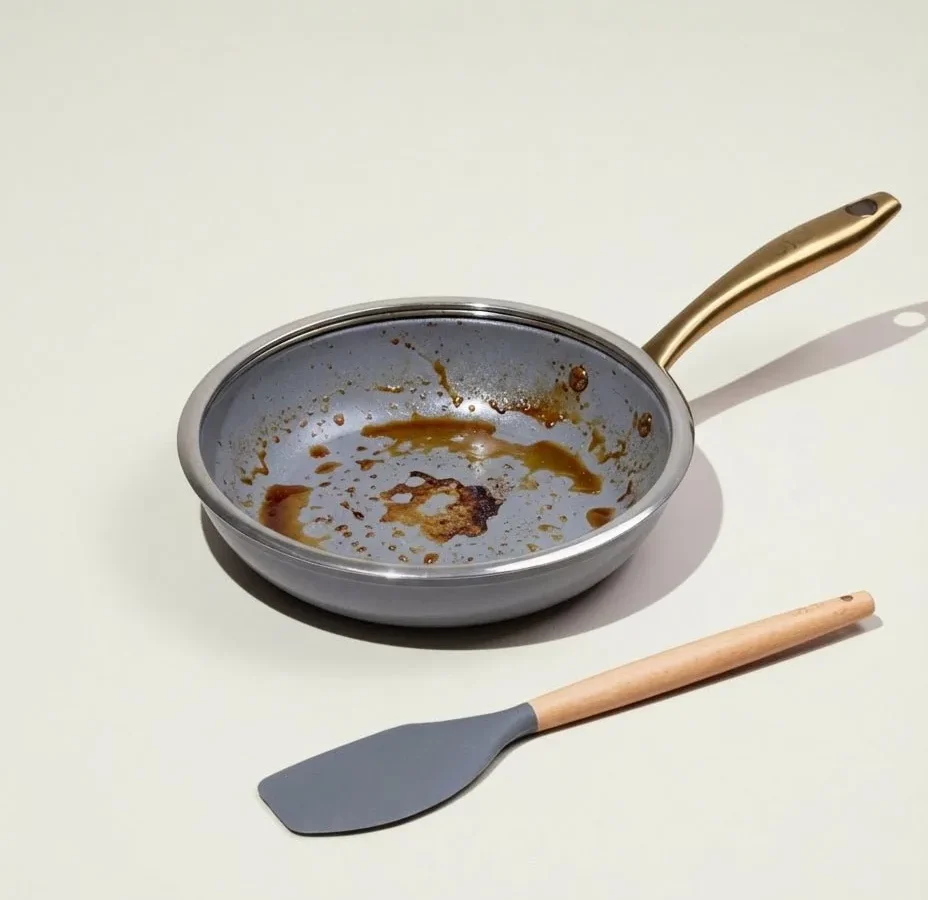
If you need to know how to clean non-toxic ceramic cookware set and remove brown oil stains that won't come off ceramic surface, you're in the right place. Brown, baked-on spots appear after weeks of cooking with oil, and no amount of dish soap seems to touch them. This is the most common frustration with ceramic pans, and it happens to nearly everyone.
Here's what most people don't realize: those stains aren't ordinary grease. They're polymerized oil, which bonds to the ceramic at a molecular level. Most ceramic coatings sold in 2026 are certified PFOA-free and PTFE-free, but aggressive cleaners can damage the surface faster than the stain itself.
Let's walk through what actually works, what damages your pan, and when to stop scrubbing.
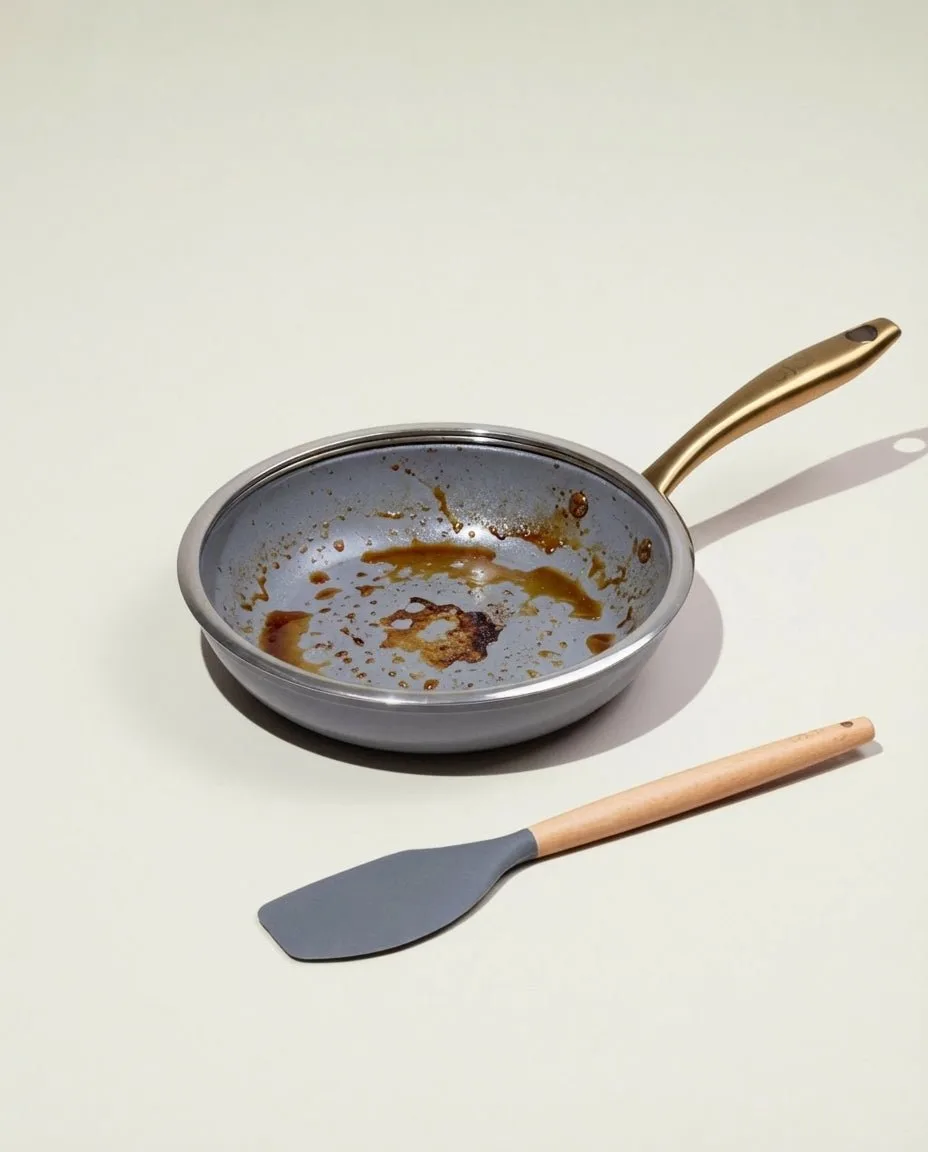
Image source: Bing (Web (fair-use with source credit))
Why Brown Oil Stains Stick to Ceramic (and Why Scrubbing Fails)
If you've ever stared at a ceramic pan wondering why that brown ring won't go away, here's the truth: it's not leftover food. It's oil that has undergone polymerization. When cooking oil hits high heat, it breaks down and forms a hard, plastic-like bond with the surface.
This is the same reaction that seasons cast iron, except on ceramic, it's just a nuisance.
Ceramic cookware has a mineral-based coating, mostly silica and inorganic compounds, fired onto the base material. It's technically non-stick, but it isn't as smooth as PTFE (the coating on Teflon pans) at a microscopic level. Oil can seep into tiny pores and bake on.
Once that happens, dish soap alone won't touch it.
Scrubbing just makes things worse. Steel wool and harsh green scouring pads create micro-scratches on the ceramic. Those scratches trap even more oil.
So the next stain sets in deeper. You end up in a cycle: scrub harder, create more surface damage, get more stains.
The fix isn't more elbow grease. It's a chemical approach. Break down the polymerized oil so it releases from the surface, then lift it away gently.
Heat, mild acids, and soft abrasives do that without hurting the coating.
Manufacturer specifications for most ceramic cookware brands in 2026 recommend keeping heat below 450°F / 232°C for extended cooking. That's the exact zone where polymerized oil forms fastest. Our research and aggregate user reviews confirm that the right technique can remove even the most stubborn brown buildup without scoring the pan.
If you regularly cook with oil at high temperatures, you might also want to reconsider which pan you reach for. Different cookware handles oil very differently, and comparing a deep fryer to a stovetop pan shows how heat distribution affects baked-on residue. Understanding those differences helps you avoid the same problem in the future.
One more thing: ceramic coatings are thin. Most brands use a layer measured in microns, not millimeters. That means every aggressive scrub takes a little bit of the coating with it.
Over time, the pan loses its non-stick properties entirely. That's why the problem matters beyond appearance.
The Quick Answer: What Actually Works
To clean non-toxic ceramic cookware, remove brown stains with a soapy soak. Heat 1 part vinegar and 3 parts water to a boil. Cool, then wipe with a soft sponge.
Repeat twice for stubborn spotting. Skip steel wool and abrasive scouring pads.
What Makes These Stains So Tough (Core Science Made Simple)
Let's get into the science for a minute, but keep it painless. Cooking oil is made of fatty acids and triglycerides. When you heat it past its smoke point, those molecules break apart.
Then they recombine into longer, cross-linked chains. That's polymerization, and it turns liquid oil into a hard, lacquer-like film.
You've seen this before on cast iron. The "seasoning" on a cast iron skillet is literally polymerized oil. Cooks build it up on purpose.
But on ceramic cookware, that same layer isn't protective. It's just a stubborn brown blotch that refuses to budge.
The bond is strong because the oil molecules physically lock into the microscopic pits and pores of the ceramic surface. It's not sitting on top like a splash of grease. It's embedded.
Think of it like glue drying in the grooves of a textured surface. Wiping the top does nothing because the bond is below the surface line.
Different oils create different levels of stubbornness. Olive oil has a smoke point around 375°F / 190°C. Avocado oil goes up to 520°F / 271°C.
The higher the heat, the faster and harder the polymerization. So a pan used for searing steak with avocado oil will develop tougher stains than one used for gentle sauteing with butter.
| Oil Type | Smoke Point | Stain Severity |
|---|---|---|
| Butter | 350°F / 177°C | Low, wipes off easily |
| Olive Oil | 375°F / 190°C | Moderate, requires soaking |
| Canola Oil | 400°F / 204°C | Moderate to high |
| Avocado Oil | 520°F / 271°C | High, very stubborn |
| Coconut Oil | 350°F / 177°C | Low to moderate |
Why does the brown color appear in the first place? Heat causes oxidation. The oil molecules react with oxygen and carbonize.
That's why the stains range from golden amber to dark brown, depending on how long they've been baked on. Fresh stains are lighter. Stains from weeks ago are dark, almost black.
Here's another factor: ceramic's surface energy. Ceramic coatings are designed to repel water and food, but they aren't as hydrophobic as PTFE. That means oil spreads more easily across the surface and finds its way into tiny imperfections.
PTFE pans resist this because the molecules are packed so tightly that even oil can't penetrate.
The good news is that polymerization isn't permanent. Unlike cast iron seasoning, which is deliberately built up in layers, ceramic stains are thin. They respond to mild acids and alkalines.
Vinegar breaks down the hydrocarbon chains slowly. Baking soda provides a gentle mechanical lift. Combined with heat, these methods can reverse what heat created in the first place.
If you're concerned about the safety of non-stick coatings more broadly, it's worth checking how different brands handle their certifications. Some manufacturers of other appliances have faced scrutiny over their non-stick surfaces, which is why PTFE-free claims matter so much in modern cookware.
The Right Way: Step-by-Step Stain Removal That Works
Before you do anything, check the manufacturer's care instructions that came with your set. Some brands have specific rules about cleaning agents and heat exposure. Following those guidelines first is always the safest move.
Here's the step-by-step process that works for the vast majority of ceramic cookware. It's gentle, effective, and doesn't require any harsh chemicals.
Step 1: Warm Soapy Soak
Run warm water into the pan and add a few drops of mild dish soap. Let it sit for 15 to 30 minutes. This loosens any surface grease and softens the polymerized layer.
It won't remove the stain by itself, but it prepares the surface for the next step.
Step 2: Vinegar and Water Boil
Mix 1 part white vinegar with 3 parts water. Pour it into the pan, filling it about halfway. Bring it to a gentle boil on the stovetop.
Let it boil for 5 to 10 minutes. The heat softens the oil bonds, and the mild acid in vinegar starts breaking down the polymerized structure.
Turn off the heat and let the pan cool completely. Don't pour cold water into it. Thermal shock can warp the base metal or cause micro-cracks in the ceramic coating.
Step 3: Soft Sponge Scrub
Once the pan is cool enough to handle, dump the vinegar water and rinse. Use a soft sponge or a nylon scrub brush to gently work the surface. You should see the browned areas starting to lift.
Apply light pressure in circular motions. Don't grind down on the stain like you're sanding wood.
For most fresh-to-moderate stains, this is enough. If the stain still shows, move to step four.
Step 4: Baking Soda Paste
Mix 3 parts baking soda with 1 part water to create a thick paste. Spread it over the stained areas and let it sit for 10 to 15 minutes. The paste acts as a very mild abrasive with a high pH.
That helps lift and dissolve the oil residue without scratching.
After the wait, gently scrub with a soft sponge using small circular motions. Rinse thoroughly.
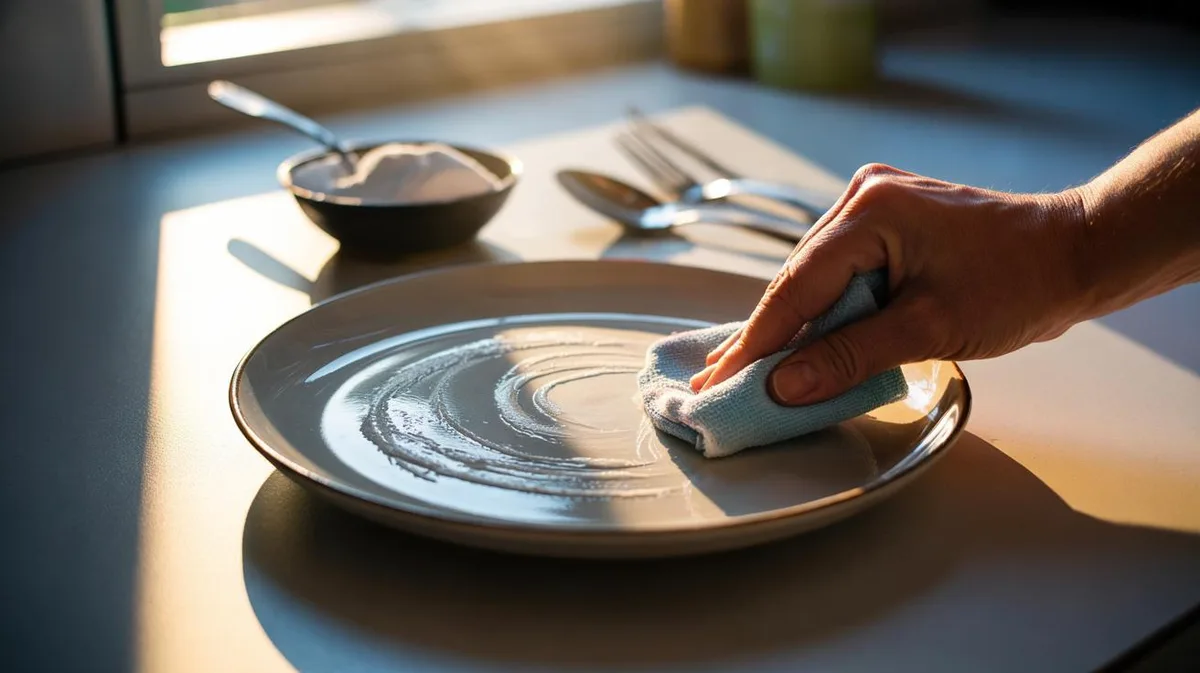
Image source: Web (Bing) / appletonpc.org.uk (Web image (fair-use with source credit))
Step 5: Rinse and Dry
Rinse the pan with warm water. Dry it completely with a soft towel or let it air dry. Don't put it away wet.
Moisture trapped in the coating can lead to water spots or, worse, dull the ceramic finish over time.
If the stain is still visible after the full process, repeat steps two and four together. Boil the vinegar solution, then apply the baking soda paste while the pan is still warm. The combination of heat and chemistry usually cracks even the most stubborn buildup.
What If It Still Won't Come Off?
Sometimes you're dealing with a stain that's been baked on for months. In those cases, try a citric acid soak. Dissolve 2 tablespoons of food-grade citric acid in warm water and let the pan sit for 30 minutes.
Then go through the vinegar boil and baking soda paste steps again.
This same gentle approach translates well to other kitchen equipment too. If you own an air fryer with a non-stick basket, using the same kind of soft-scrub method and mild vinegar solution will keep that finish intact. The principles are the same across non-stick surfaces.
Tools and Materials Summary
| Item | Purpose | Notes |
|---|---|---|
| Mild dish soap | Initial grease removal | Avoid citrus-based or abrasive formulas |
| White vinegar | Breaks down polymerized oil | Use plain distilled, not cleaning-strength |
| Baking soda | Gentle abrasive + alkaline lift | Fine grain, no crystals |
| Soft sponge | Safe scrubbing | Check that it's labeled non-scratch |
| Nylon brush | Stubborn spots | Only use soft bristle versions |
| Citric acid | Heavy-duty soak | Food-grade only |
Mistakes That Ruin Ceramic Coating (and Your Health)
The biggest threat to ceramic cookware isn't the stain. It's what people do trying to remove it. Let's go through the common errors that cause permanent damage, and in some cases, create real safety concerns.
Using Steel Wool or Abrasive Pads
Steel wool is the fastest way to destroy a ceramic coating. It cuts into the surface and leaves hundreds of micro-scratches. The coating becomes rough, food sticks more, and future stains embed even deeper.
The pan's non-stick performance drops immediately.
Green Scotch-Brite pads are nearly as bad. They might feel fine, but they're more abrasive than you think. Stick to soft sponges.
If in doubt, check the label for "non-scratch" or "safe for non-stick."
Metal Utensils While Cooking
Using metal spatulas or forks in a ceramic pan does visible damage. You'll see thin gray lines where the utensil scraped the coating. Those scrapes, even if you can't feel them, create entry points for oil.
The pan won't just stain more easily. It will also lose its non-stick qualities.
Thermal Shock
Ceramic coatings don't handle rapid temperature swings well. If you take the pan off the stove and immediately run cold water over it, the coating can expand and contract unevenly. That causes crazing, a network of fine cracks that looks like spiderwebs.
Once crazed, the pan is compromised. Food particles and oil get trapped in the cracks, and cleaning becomes nearly impossible.
Always let the pan cool gradually. If you need to speed things up, let it sit on a cooling rack or trivet for 15 minutes first.
High Heat on an Empty Pan
Heating a ceramic pan with nothing in it is a bad idea. The coating can overheat and begin to degrade. This often shows up as small bubbles or a chalky white appearance.
That's the ceramic breaking down, and it comes with a safety concern: the coating may start flaking into your food.
Harsh Chemical Cleaners
Bleach, oven cleaner, and other caustic products have no place on ceramic cookware. They can etch the surface and leave residues that later mix with your food. Even some "natural" cleaners with citrus oils can be too acidic for daily use.
Stick to mild dish soap and the vinegar or baking soda methods described above.
Dishwasher Use
Most brands technically allow dishwasher cleaning, but that doesn't mean you should do it. Dishwasher detergent is highly alkaline. Combined with high heat and water pressure, it slowly wears down the ceramic coating.
You'll notice the surface becoming dull and less non-stick over time. Hand washing is the safer choice for longevity.
Ignoring Flakes and Chips
Here's the part people don't like to hear. If your ceramic coating shows actual flakes, chips, or exposed base metal, stop using the pan. Ceramic coating chips can end up in your food.
While modern ceramic coatings are free of PFOA and PTFE, swallowing small fragments of fired mineral coating isn't something you want to risk.
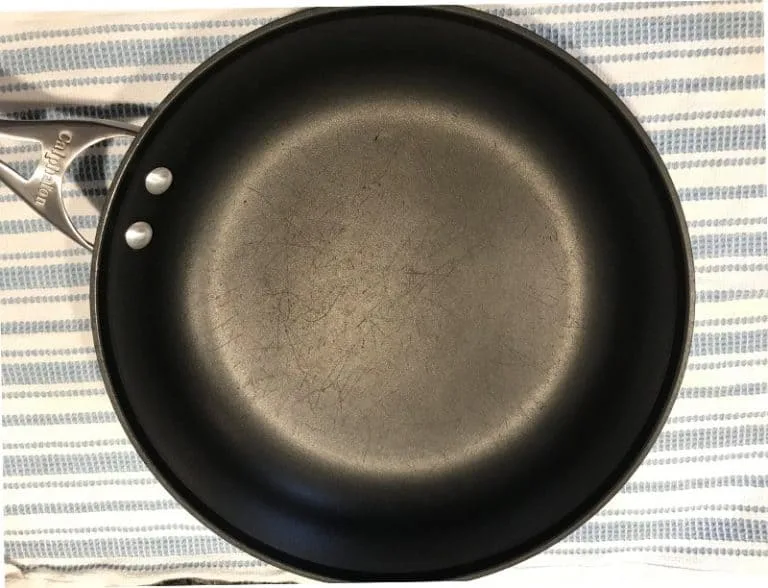
Image source: Web (Bing) / prudentreviews.com (Web image (fair-use with source credit))
The FDA sets the framework for food contact safety, and most reputable ceramic cookware brands design their coatings to comply with those standards. That doesn't mean a damaged coating stays safe forever. The integrity of the surface is what keeps it functional.
Once that surface breaks, the pan is no longer performing as designed.
This is also a good reminder to think about the bigger picture of non-stick safety. Many people worry about PTFE in older-style pans, and the debate shows up across other kitchen appliances too. If you're trying to keep your whole kitchen free of potentially problematic coatings, choosing non-toxic options matters at every step.

Related posts
Hot Lid on Countertop? Safety Tips for Air Fryer Combos
You've just finished air frying a batch of crispy chicken wings. The lid is hot. You're holding it…

Ninja Foodi SmartLid OL701 Worth Buying? Reddit
If you've been scrolling through Reddit asking yourself "is ninja foodi smartlid ol701 one lid multi cooker with…

Crispy Rotisserie Chicken: Temp & Time for Combo Cooker
So you want restaurant quality crispy skin on a whole rotisserie chicken, and you want to do it…