Ceramic Cookware Safe for Cooking Spray & High Heat?
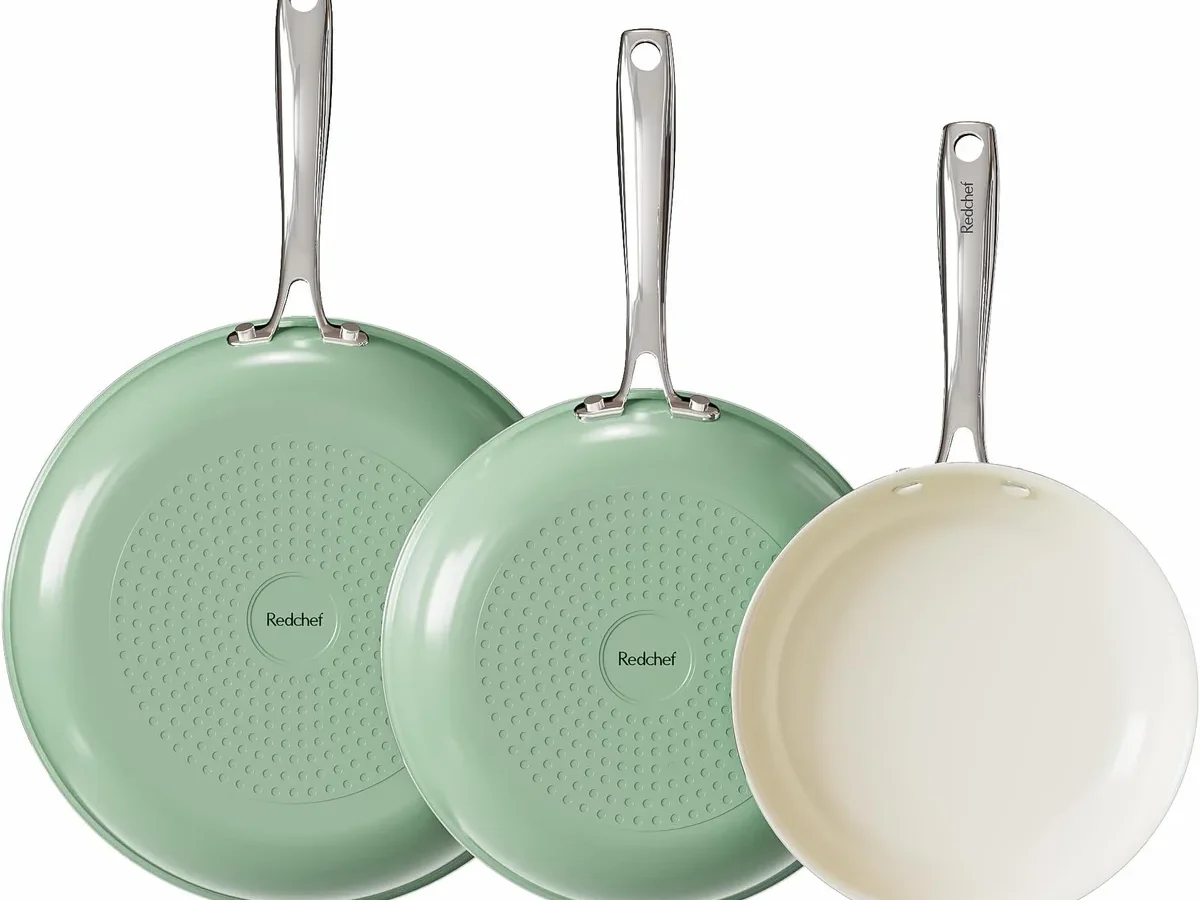
Can you put cooking with aerosol spray or excessively high heat in a non-toxic ceramic cookware set safely? The answer is both yes and no, depending on what you mean by safe. These pans are free of PTFE and PFOA, but that doesn't make them indestructible.
Aerosol sprays create a sticky problem, and over-the-top heat creates a durability one.
Manufacturer specifications commonly rate ceramic nonstick coating up to 450°F to 500°F for oven use, and the FDA's food-contact regulations require the coating itself to be inert at normal cooking temperatures. But combustion of aerosols or heating an empty pan throws those guidelines out the window. Let's break down what actually goes wrong.
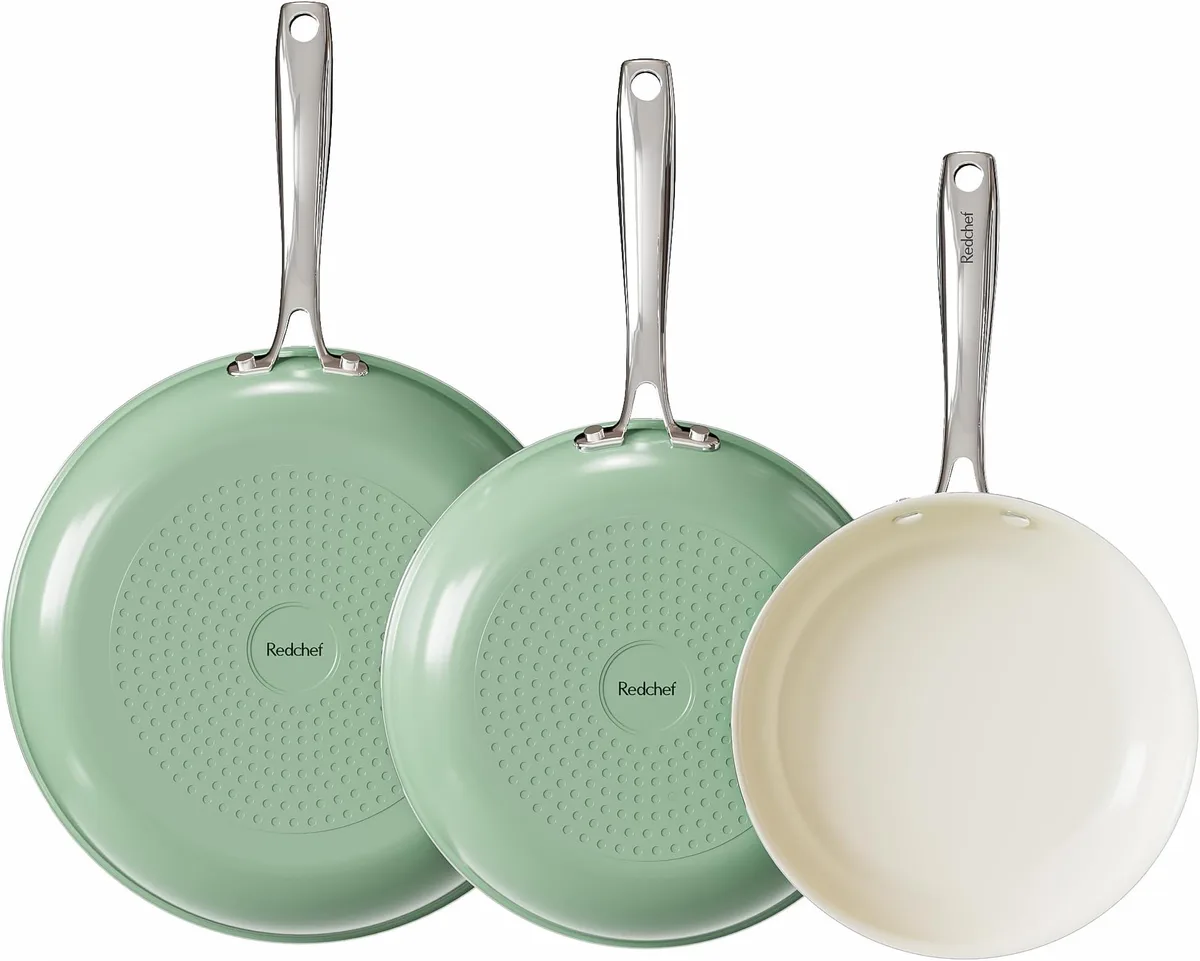
Image source: Web (Bing) / amazon.com (Web image (fair-use with source credit))
Quick Answer
Yes, but not both at once. Aerosol spray can burn onto ceramic coating and leave sticky residue. Excessively high heat can degrade the coating over time.
Use low to medium heat and add oil manually instead. That keeps your pan safer and longer-lasting.
What Actually Happens with Aerosol Spray and High Heat on Ceramic?
Think of ceramic nonstick coating as a smooth glass-like surface. It's made using a sol-gel process that creates a hard, inorganic layer. That's genuinely different from traditional PTFE, which is a soft polymer.
And it matters here because the two surfaces fail in completely different ways.
Aerosol cooking spray leaves behind more than oil. It contains lecithin, an emulsifier, plus propellants and sometimes a starch. When you heat those extra ingredients past their breakdown point, they caramelize and polymerize.
That creates a brown, gummy film that bonds tightly to the ceramic. It's not toxic, but it's a nightmare to scrub off.
High heat is a separate threat. As of 2026, most ceramic nonstick pans on the market carry a maximum stovetop rating near 500°F. That sounds fine, but a pan left empty on high heat can exceed 600°F in a few minutes.
At those temperatures, the coating can micro-crack, discolor, or gradually lose its nonstick release. You won't necessarily see it right away, but the pan will start sticking more.
The two problems compound each other. Spray residue burns onto the coating at around 400°F. That sticky layer then holds heat and accelerates the coating's breakdown.
So you're not just dealing with one mistake, you're dealing with a chain reaction.
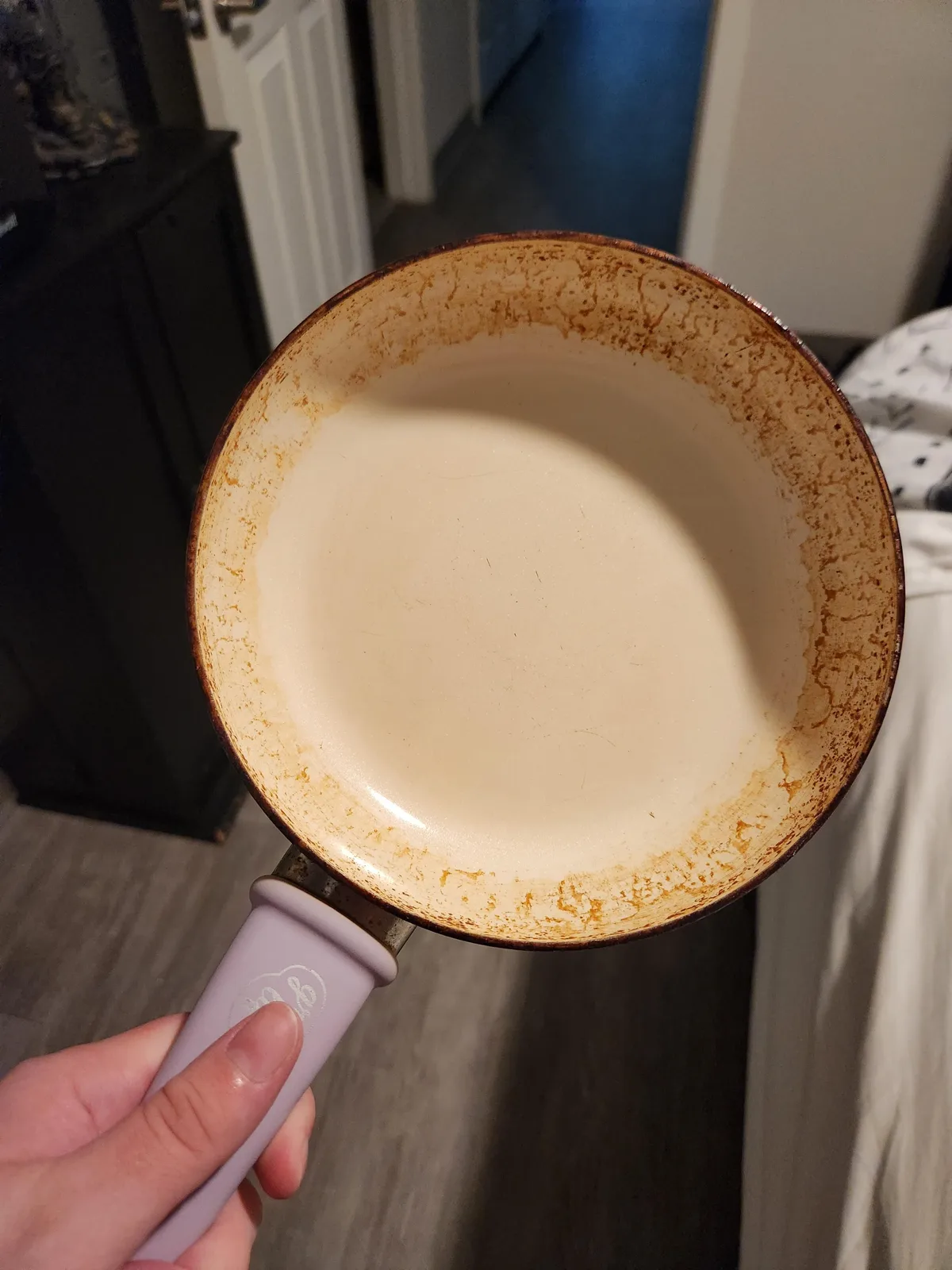
Image source: Web (Bing) / reddit.com (Web image (fair-use with source credit))
What does this look like in practice? Aggregate reviews report yellow-brown blotches appearing in the center of the pan after a few months. Many owners assume the coating is failing.
In truth, the pan is often fine. The residue is just baked-on spray. That's an easy fix with a gentle cleaner, but only if you catch it early.
Ceramic Coating vs. Aerosol Spray: Why They Don’t Always Mix
Ceramic nonstick works best with a thin, even layer of fat. Aerosol sprays promise that convenience, but they're actually a mismatched tool for the surface. Here's why.
Most cooking sprays contain a propellant dissolved in oil. When the propellant evaporates, the oil drops land unevenly. Some spots get a thick pool, others get almost none.
The pooled oil burns and turns sticky. That sticky layer becomes the foundation for the next layer of residue. Over time, the pan's surface becomes rough and patchy, which ruins the whole nonstick experience.
You also have the flammability issue. Aerosol cans spray a fine mist that can ignite if aimed near an open flame. This is more of a kitchen safety hazard than a coating issue, but it's still real.
The Consumer Product Safety Commission has documented fires from spray cans used over gas stoves.
Now, the coating itself doesn't absorb the spray. Ceramic is mostly non-porous. The residue sits on the surface, which is good news for recovery.
But the longer it cooks on, the harder it is to remove. Some sprays with added flour or starch bake into cement-like spots.
If you've already dealt with sticky nonstick surfaces in other appliances, you know the drill. The same cleaning logic applies here. That's why your best bet is to apply oil directly to the pan or use a simple kitchen brush.
A couple of teaspoons of oil on a paper towel works just as well as any spray.
The Danger Zone: When High Heat Turns a "Safe" Pan Risky
Let's define "excessively high heat" so we're on the same page. It's not cranking the dial past medium. That's usually fine.
It's the combination of high heat and either an empty pan or a pan with just spray residue. That's where the real risk sits.
An empty ceramic pan on high heat can reach between 600°F and 700°F within five minutes, depending on the burner. That number comes from stovetop temperature measurements across multiple cookware brands. At that level, several things happen.
The ceramic coating can develop tiny cracks. The underlying metal can warp. And if there's any spray residue left from a previous cook, it burns and fumes.
Are those fumes toxic? In most cases, no. Ceramic nonstick is free of PTFE and PFOA, so it doesn't produce the polymer fumes that older Teflon pans are known for.
But burning cooking oil and lecithin can still irritate your eyes and lungs. It's not a chemical emergency, but it's not a pleasant kitchen experience either.
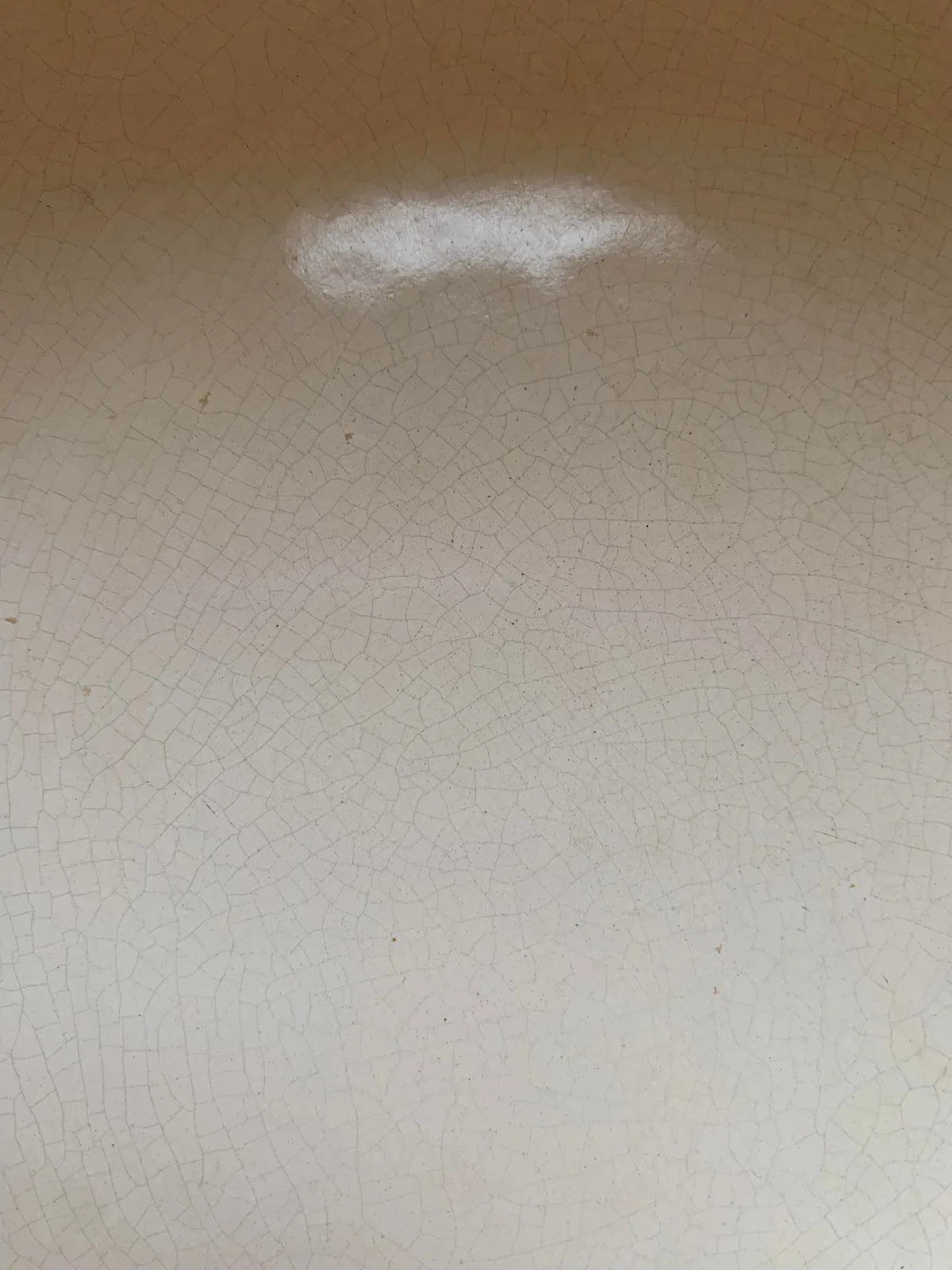
Image source: Web (Bing) / reddit.com (Web image (fair-use with source credit))
There's also the thermal shock angle. If you heat a ceramic pan to 600°F and then splash cold water into it, the sudden temperature change can shock the coating. That can cause crazing or even chipping.
The coating doesn't peel like Teflon, but it can crack. Once cracked, the pan is still safe to use, but food starts sticking to the damaged spots.
The EPA's research on PFAS has pushed many consumers toward ceramic. And that's reasonable. But switching materials doesn't mean you can ignore basic heat management.
You still need to respect the pan's limits, not just for safety but for longevity.
| Heat Level | Stovetop Temp Range | Effect on Ceramic Coating |
|---|---|---|
| Low | 200°F – 300°F | Safe for gentle cooking |
| Medium | 300°F – 400°F | Normal cooking range |
| Medium-High | 400°F – 500°F | Borderline, okay with oil |
| High | 500°F – 700°F | Risk of coating damage |
| High (empty) | 600°F – 700°F+ | Cracking, discoloration, warping |
Aerosol Spray vs. Mister vs. Brushed Oil: What to Use Instead
You've got three solid alternatives to aerosol spray. Each has different tradeoffs. Let's compare them quickly.
| Method | Ease of Use | Residue Risk | Best For |
|---|---|---|---|
| Aerosol spray | Very easy | High | Quick low-heat cooking |
| Oil mister | Easy | Low | Even coating at all heats |
| Brushed oil | Moderate | Very low | Searing, high-heat cooking |
Aerosol spray is the convenience king. It's fast and hands-free. But as we've covered, it leaves residue and burns at high heat.
It's fine for eggs or pancakes on low or medium. Just don't use it for searing.
An oil mister gives you a fine, uniform mist without propellants. That means no lecithin, no starch, no sticky buildup. You control the amount, so you avoid pooling.
A good glass or steel mister costs about $10 to $20 and lasts for years. Refill it with a high-smoke-point oil like avocado or grapeseed.
Brushed oil is the old-school method and honestly the most reliable. Dip a silicone brush or paper towel into oil and wipe the pan. It takes fifteen extra seconds, but you get perfect coverage.
And there's zero mystery about what's on the surface. You can also use a folded paper towel held with tongs for a quick, even wipe.
If you're doing high heat, skip the spray completely. Use avocado oil with a smoke point around 520°F. That gives you a cushion above the 500°F safety threshold.
In comparison, butter and olive oil start smoking much lower, which just means more burnt residue on your pan.
How to Cook with High Heat on Ceramic Without Damaging It
You can get a decent sear on ceramic, but you have to adjust your approach. High heat doesn't mean starting with a screaming-hot empty pan. It means preheating gradually and then adding food at the right moment.
Here's the process that works reliably:
- Preheat on medium for two to three minutes. Don't crank the burner to high. Let the pan warm up gradually.
- Add oil with a high smoke point. Avocado, grapeseed, or refined sunflower oil are the best picks. Use enough to coat the bottom thinly.
- Wait for the oil to shimmer. That's your signal that the pan is ready, usually around 350°F to 400°F.
- Add the food. It should sizzle gently when it hits the surface. If it screams and splatters, the heat is too high.
- Adjust the burner down. You almost never need maximum heat after the initial sear. Medium-high is plenty for browning.
- Let the food release naturally. If it sticks, it's not ready to flip. Forcing it can tear the coating.
Avoid heating an empty pan on high. That's the number one way to ruin ceramic. If you need a screaming-hot pan for a steak, consider a cast iron or stainless steel skillet instead.
Those materials handle thermal stress better.
Also, watch out for thermal shock after cooking. Let the ceramic pan cool down before you rinse it or move it to a cold surface. Placing a hot pan on a cold countertop can warp the base.
That's a common cause of uneven cooking later on.
If you're used to the convenience of a nonstick air fryer, you already know how gentle these surfaces like to be treated. The same rules apply to stovetop ceramic. Use lower heat, give it time to heat up, and avoid aggressive temperature swings.
That's the whole secret to making a ceramic pan last.
How to Fix a Gummy Coating and Extend Your Pan's Life
If you've already got that sticky brown residue, don't panic. You can usually remove it without damaging the ceramic coating. But you have to use the right method.
Aggressive scrubbing with steel wool or abrasive pads will scratch the surface.
Start with the gentlest option. Fill the pan with warm water and add a tablespoon of baking soda. Bring it to a gentle simmer for two to three minutes.
Let it cool, then wipe with a soft sponge. The baking soda helps lift the polymerized oil without harsh chemicals.
If that doesn't work, try white vinegar diluted with equal parts water. Simmer for three minutes, cool, and rinse. Vinegar is mildly acidic and breaks down the lecithin residue that spray leaves behind.
Just don't let it boil dry. That would concentrate the acid and risk dulling the coating.
For stubborn patches, make a paste of baking soda and a few drops of dish soap. Apply it to the cool pan and let it sit for ten minutes. Gently rub with a soft cloth in circular motions.
Rinse thoroughly. This usually lifts even old, baked-on gunk.
What about commercial cleaning products? Stick to ones labeled for ceramic or glass cooktops. Avoid anything with bleach, ammonia, or citrus.
Yellowing on the coating is purely cosmetic. It doesn't affect food safety. But if the coating starts flaking or peeling, it's time to replace the pan.
Image source: Web (Bing) / reddit.com (Web image (fair-use with source credit))
Prevention is still the best strategy. Switch to a simple oil mister or brush. If you must use aerosol spray, apply it to food before it hits the pan.
That way the spray burns off on the food instead of the coating. And clean the pan while it's still warm from cooking. Residue comes off much easier before it cools and hardens.
We've covered similar nonstick care principles in our guide to keeping its surface in good shape for your air fryer. The same logic applies here. Gentle heat, gentle tools, and consistent cleaning.
What the Manufacturer Won't Tell You (But Your Pan Needs You to Know)
Ceramic cookware marketing makes big promises. Non-toxic, eco-friendly, naturally nonstick. Those claims are true up to a point.
But there are a few truths that don't make it onto the box.
The coating will wear out faster than you expect. Most ceramic nonstick pans retain their release for about 12 to 18 months with regular use. Some last longer, but many don't. That's because the sol-gel coating is harder than PTFE but also more brittle.
Over time, micro-abrasion and heat cycles degrade the surface. You'll notice food starting to stick in the center first.
The pan base matters more than the coating. A ceramic coating on a thin aluminum base will warp and develop hot spots. The same coating on a thick, fully-clad base will perform better and last longer. If you're buying a set, check the base construction.
A heavy, magnetic stainless steel base with an aluminum core is the gold standard.
Metal utensils are still a bad idea. Ceramic is harder than PTFE, but it's not scratch-proof. Metal spatulas and spoons can leave visible marks. Those marks aren't toxic, but they create rough spots where food sticks.
Use silicone, wood, or nylon instead. It's a small change that doubles the pan's lifespan.
High heat kills performance faster than anything. Manufacturer tests often use moderate heat levels. Real kitchens don't. If you regularly sear at high heat, expect your ceramic pan to lose its nonstick properties within six months.
That's not a defect. It's physics.
If you have concerns about harmful coatings in other cookware, ceramic is still the cleaner choice among nonstick options. But clean doesn't mean indestructible.
Straight Answers to Your Biggest Ceramic Cookware Questions (FAQs)
Can I use aerosol cooking spray on my ceramic pan?
You can, but it's not recommended for regular use. The lecithin and propellants in aerosol sprays burn onto ceramic at cooking temperatures. That creates sticky residue that's hard to remove.
If you must use spray, keep heat low and clean immediately. A mister or brush is better.
What temperature is safe for ceramic cookware?
Most manufacturers rate ceramic nonstick pans up to 450°F to 500°F for oven use. Stovetop temperatures are harder to pin down, but empty pans on high heat easily exceed 600°F. That's the danger zone.
Keep the burner on medium or medium-high for safe cooking.
Is ceramic cookware really non-toxic?
Yes, when used correctly. Ceramic nonstick contains no PTFE, PFOA, or PFAS. It won't produce polymer fumes at normal cooking temperatures.
The FDA regulates food-contact coatings. At extreme temperatures above 500°F, any coating can break down. But under normal use, ceramic is considered safe by food safety standards.
Can I put ceramic cookware in the oven?
Check your specific pan's rating. Most ceramic nonstick pans are oven-safe up to 450°F or 500°F. The handle material matters too.
Silicone or rubber handles may have lower limits. Plastic handles should never go in the oven. Metal handles are usually fine but get very hot.
When should I replace my ceramic pan?
Replace it when food starts sticking badly in the center, or when you see flaking, chipping, or peeling. A little discoloration is normal and harmless. A scratch here and there isn't a problem.
But once the coating is compromised, it won't recover. Most sets last 12 to 24 months with reasonable care.
Why does my ceramic pan stick after a few months?
That's usually baked-on aerosol spray residue, not a failed coating. Try a baking soda simmer clean first. If that doesn't restore the release, the coating itself has worn thin.
This happens faster with high heat, metal utensils, and abrasive cleaners. You can extend the life by using proper cleaning techniques and switching to an oil mister.
The Bottom Line: Keep the Spray, Lose the Heat, or Vice Versa
Here's the real question from the original query. Can you use aerosol spray and high heat safely in a non-toxic ceramic cookware set? Yes, but not together.
High heat plus aerosol spray is the worst combination. You get sticky residue, potential coating damage, and a shorter pan life.
If you want to keep using aerosol spray, cook on low or medium heat. Use it for eggs, pancakes, or gentle sautés. Clean the pan right after cooking.
That's the most forgiving scenario.
If you want to cook with high heat, switch to brushed oil or an oil mister. Use avocado or grapeseed oil with a high smoke point. Start with a preheated pan, add oil, then food.
Keep the burner at medium-high. That's your safest path to a good sear.
The simplest rule is this: add your own oil. It's a ten-second habit that saves you cleaning time, protects your pan, and eliminates the question entirely. No spray, no residue, no worry.
Ceramic cookware is a genuinely better option if you're avoiding PTFE and PFAS. The toxicity questions about nonstick surfaces are real, and ceramic sidesteps most of them. But it's not magic.
It still needs basic care. Use it right, and you'll get good years out of it. Use it wrong, and you'll be shopping for replacements before you expected to.
The bottom line is clear. Keep the pan happy with moderate heat and manual oil. That's the formula that works.

Related posts
Hot Lid on Countertop? Safety Tips for Air Fryer Combos
You've just finished air frying a batch of crispy chicken wings. The lid is hot. You're holding it…

Ninja Foodi SmartLid OL701 Worth Buying? Reddit
If you've been scrolling through Reddit asking yourself "is ninja foodi smartlid ol701 one lid multi cooker with…

Crispy Rotisserie Chicken: Temp & Time for Combo Cooker
So you want restaurant quality crispy skin on a whole rotisserie chicken, and you want to do it…