Can You Shock a Hot 5-Ply Pan in Ice Water Safely
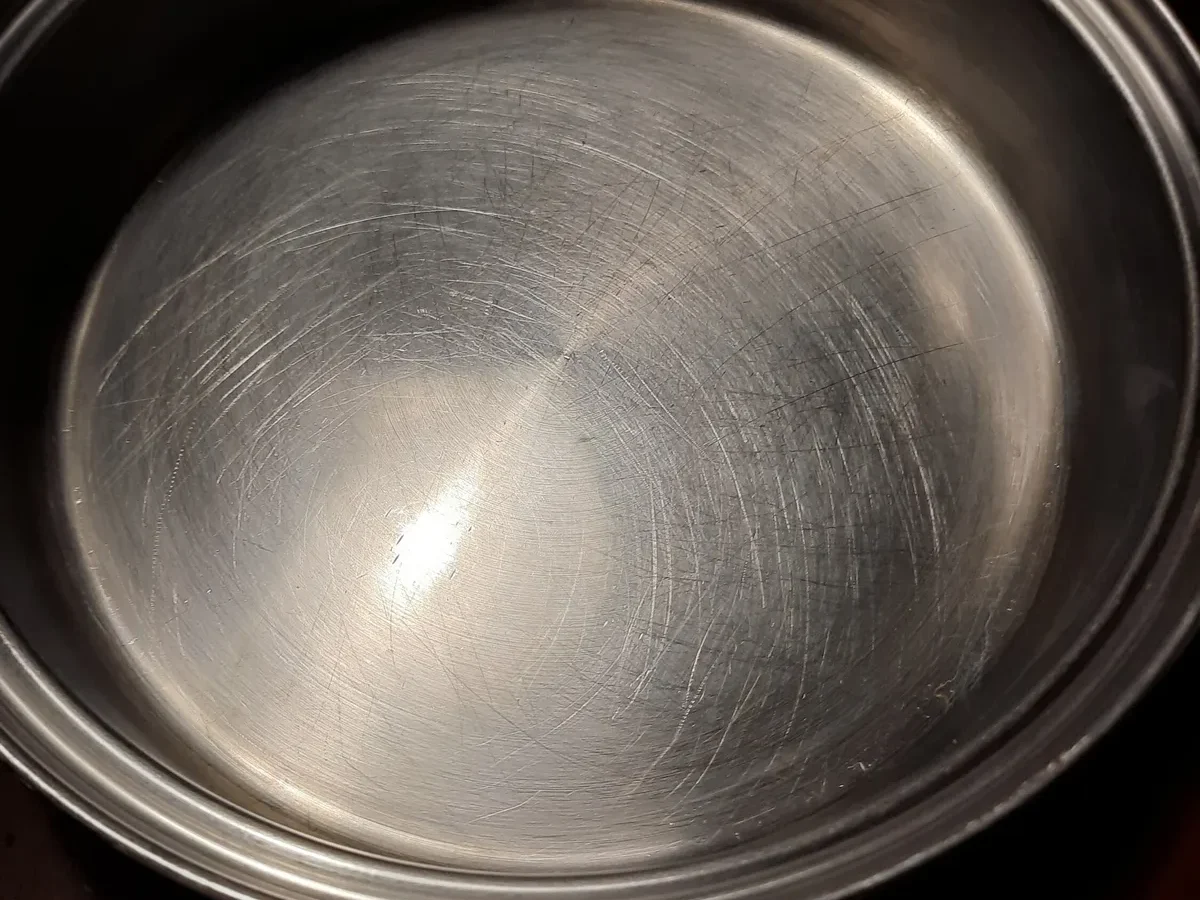
You've got a searing-hot 5-ply stainless steel skillet and a sink full of cold water waiting. So, can you put shocking hot pan in ice cold water bath in a 5-ply stainless steel skillet safely? Not really, at least not the way most people picture it.
Done wrong, you're looking at a warped pan, a steam burn, or both.
Material science explains why. Aluminum expands at roughly 23 micrometers per meter per degree Celsius, while stainless steel expands closer to 17. That thermal expansion gap is the difference between a quick rinse and a ruined pan.
As of 2026, major cookware manufacturers still treat thermal shock as abuse, so read this before you open the faucet.
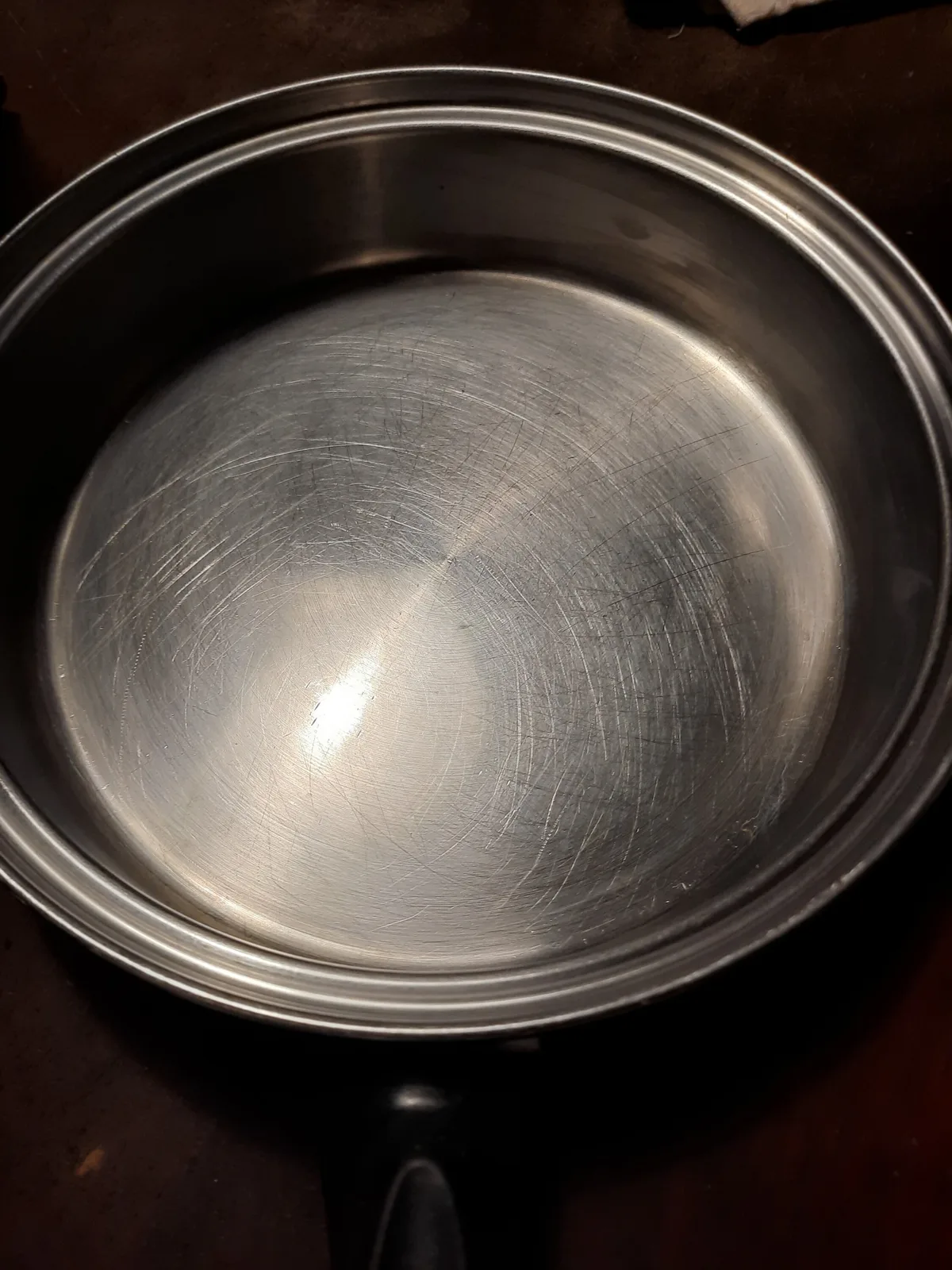
Quick Answer: Don't Shock It, Here's What To Do Instead
No, shocking a hot 5-ply skillet in ice water is not safe. The temperature change is too fast. Warping and delamination can happen.
Let the pan cool on a trivet first. Then use lukewarm water to rinse.
Think of it as a decision tree. If the pan is just warm, a lukewarm rinse is fine. If it's hot enough to sizzle when water touches it, that's the danger zone.
Park it on a trivet for a minute and come back when the surface has dropped below 200°F. That single habit saves you from most of the damage people accidentally cause.
Why Thermal Shock Is a Real Problem for 5-Ply Stainless Steel
Thermal shock happens when a material changes temperature too quickly for its own structure to keep up. Heat expands metal. Cold contracts it.
When those two processes happen almost at once, the metal takes a beating.
A 5-ply skillet is particularly vulnerable because it's not one solid sheet. It's a sandwich of aluminum and stainless steel bonded together. Those metals have different physical properties.
Aluminum wants to grow and shrink faster than stainless steel does.
So when you hit a 450°F pan with 32°F water, the outer stainless shell tries to slow everything down while the aluminum core pulls in the opposite direction. That internal fight is called thermal stress. Manufacturer care guidance, including All-Clad's official instructions, warns against plunging hot cookware into cold water.
As of 2026, that warning is still front and center.
It's not just cosmetic damage either. A subtle warp changes how the pan sits on the stove, which means hot spots and uneven browning. And once a 5-ply pan warps, it doesn't unwarp.
If you're already careful about your cookware, you probably keep the rest of your kitchen running with the same care. The same logic applies to cleaning a Ninja air fryer properly: never hit hot parts with water before they cool.
What Actually Happens Inside the Pan: Aluminum Core vs. Stainless Steel Cladding
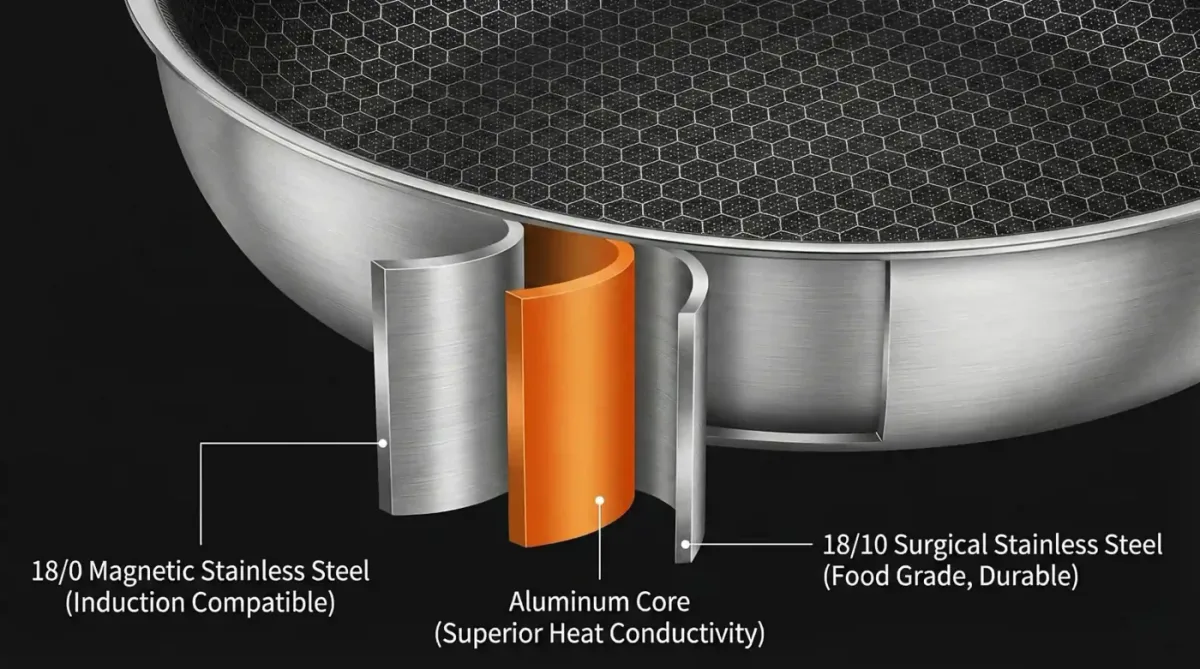
Here's what the construction actually looks like. A 5-ply stainless steel skillet has five alternating layers. You get a stainless steel exterior, an aluminum core, and additional aluminum and steel layers that bring the total to five.
The aluminum is the workhorse. It spreads heat quickly and evenly across the pan. The stainless steel gives the pan a durable, non-reactive surface that won't leach into food.
The catch is thermal expansion. Per the ASTM E831 standard, linear thermal expansion is measured in micrometers per meter per degree Celsius. Aluminum runs around 23.
Stainless steel runs around 17. That difference doesn't matter at room temperature. It matters a lot at 450°F.
Imagine gluing two different rubber bands together. Pull one harder than the other and the whole strip bends. That's what your skillet does during thermal shock.
The fast-growing aluminum stretches the stainless shell, and the steel fights back. When you drop the pan into ice water, the roles reverse instantly. The aluminum contracts fast, the stainless lags behind, and the bond line pays the price.
The Risks: Warping, Delamination, Bursts of Steam, and Voided Warranties
You're not just risking a small dent. Here's what can actually go wrong.
- Warping. The bottom bows outward or inward. On a flat stovetop, the pan rocks. Cooking becomes uneven, and the pan may never sit flat again.
- Delamination. The bonded layers separate. You'll see bubbles, bulges, or peeling on the surface. There's no repair for this.
- Steam bursts. Cold water hits hot metal and flash-boils into steam. It expands violently and can spray hot oil and droplets across the kitchen.
- Warranty denial. Most premium cookware warranties exclude thermal shock. In the warranty language, it's called "abusive use" or "improper handling."
Replacing a good 5-ply skillet costs anywhere from $100 to $300 or more. That's a lot of money to risk for the sake of saving two minutes. Kitchen safety and upkeep go together.
If you want another example of why you shouldn't shortcut the cooling process, check out how to clean a Presto deep fryer. That appliance has the same rule: never pour cold water into hot oil or hot metal.
The same heat-control thinking applies when you're choosing equipment too. Home cooks often compare a deep fryer versus a pot because they're deciding how much thermal mass they can manage. Your skillet is no different.
Respect its limits.
The Safe Way to Cool a Hot 5-Ply Skillet Quickly (Step-by-Step)
You don't need an ice bath. You need a little patience and the right sequence. This method gets a hot skillet down to a workable temperature fast, without shocking the metal.
- Move the skillet to a heatproof trivet. Don't leave it on the hot burner. Don't set it on a cold metal counter. Let it rest for 30 to 90 seconds.
- Test the heat with a drop of water. Flick a single drop at the rim. If it dances and evaporates instantly, wait longer. If it sits and rolls, you're getting closer.
- Fill the sink with lukewarm tap water. Somewhere around 100°F is perfect. Not ice water. Not boiling water.
- Tilt the pan and slide it in edge-first. This lets water run over the side instead of hitting the hot flat bottom in one full blast.
- Move the pan gently for 10 to 15 seconds. A slow swirl keeps the water moving and speeds up cooling evenly.
- Lift it out and dry it immediately. Left to air dry, stainless steel gets water spots and hard-water film.
If you hear sizzling or see angry bubbles, stop. Set the pan back on the trivet. It's still too hot to touch water safely.
For stuck-on food, don't use the cold-water trick to loosen it. Wait until the pan is fully cool, then simmer a little water in it for 3 to 5 minutes. That's the gentlest way to lift burnt bits without stressing the layers.
And once it's clean, dry the outside too. The same patience that works for your skillet also matters when you're cleaning a Cosori air fryer basket. Both jobs reward steady, careful handling.
What Manufacturers Say About Cold Water and Cookware Warranty Coverage
Every major cookware manufacturer posts a version of the same warning. Don't shock a hot pan with cold water. All-Clad publishes it directly in the care guide, and Demeyere, Made In, and Viking give similar instructions.
| Brand | Guidance on thermal shock |
|---|---|
| All-Clad | Cool the pan fully before washing. |
| Demeyere | Avoid sudden temperature changes. |
| Made In | Never place a hot pan in cold water. |
The wording matters for your warranty. Most lifetime warranties cover manufacturing defects only. Thermal shock counts as abusive use or failure to follow care instructions.
One plunge into ice water can void a pan you've owned for years.
Our research shows that most visible damage starts small. A subtle rock on the stovetop becomes a spin. Once that happens, there is no repair.
Replacement cost for a quality 5-ply skillet runs from $150 to $300.
So before you take a shortcut, read the manual that came with the pan. If it's lost, every brand also posts the care guide on its website. Brands can also inspect a warrantied pan in person.
They can tell the difference between a small manufacturing bubble and layer separation from a cold-water bath. That's a conversation you don't want to have.
The habit of checking the manual first applies beyond skillets. Proper air fryer upkeep starts with the same rule, and it prevents the same type of avoidable damage.
Quick Cooling vs. Letting It Rest: Pros, Cons, and Safer Alternatives
Speed vs. safety is the real tradeoff. Here's a side-by-side look at your cooling options.
| Method | Time to cool | Risk level | Best for |
|---|---|---|---|
| Ice-cold water bath | Seconds | High | Never |
| Lukewarm water bath | 1 to 2 minutes | Moderate | Stopping carryover cooking |
| Damp towel trivet | 3 to 5 minutes | Moderate | Reusing the pan quickly |
| Room-air rest | 5 to 10 minutes | Very low | Everyday cooking |
Ice-cold water wins on time and loses everywhere else. The dramatic steam cloud you see in videos is the pan's layers straining. That cloud is also a burn hazard.
Cold water flash-boils on contact, so you're risking the pan and your skin.
The damp towel method is the strongest alternative. Fold a thick cotton towel, soak it with cool water, and wring it out well. Set the hot pan on the towel.
The moisture pulls heat away steadily instead of violently.
For stopping carryover cooking, a lukewarm dip works. Use the edge-first entry from the step-by-step above. Keep the pan in the water for 10 to 15 seconds, then pull it out.
The center of the pan drops far enough to stop a steak from overcooking, but the metal never meets a freezing shock.
Batch cooks should keep a second trivet and a damp towel ready. It feels more professional than a sink splash. It's also much cheaper than replacing a $250 pan.
If you're cooking just one meal, patience is free. Let the pan air-rest and do something else for ten minutes.
Common Mistakes That Ruin Expensive Stainless Steel Pans
Most ruined pans fail in the five minutes after cooking. This is where all the damage happens.
- Plunging the whole pan into cold water. This warps the base and stresses the cladding. It's the number one cause of premature failure.
- Splashing cold water onto a hot surface to "clean" it. You get splatter, steam, and a sudden temperature drop. Use warm liquid and a wooden spoon instead.
- Setting a hot pan on a cold countertop. Granite and quartz pull heat fast. That localized cold contact can pop the layers apart.
- Cooling one side under a running tap. The pan contracts unevenly. Over time, it becomes asymmetrical and won't sit flat.
- Heating an empty pan on high. An empty 5-ply pan hits 500°F fast. Then any cold contact becomes a genuine thermal shock.
- Letting acidic sauces sit for hours. Acid won't warp steel, but it can etch the surface and leave permanent stains.
The big variable is water temperature. Above 400°F, every drop of cold water turns into steam instantly. Use the sizzle test to stay safe.
Flick one drop onto the pan. If the drop dances and evaporates, wait longer. If it rolls like a bead of mercury, the pan is cool enough to rinse.
Stainless steel survives scratches, heat marks, and burnt food. It does not survive warping. Once the base rocks, the pan is done.
You can't hammer it flat again. That's why small habits matter more than the pan's price tag.
The same logic holds for every hot tool in your kitchen. Let the unit cool before you clean it. A careful air fryer cleaning routine follows that exact rule, and it's why the basket stays straight for years.
Frequently Asked Questions
Will cold water damage a 5-ply stainless steel skillet?
Yes. Cold water on a hot 5-ply skillet can cause warping, layer separation, and steam burns. The aluminum core and stainless cladding expand at different rates.
Rapid temperature change creates internal stress the pan wasn't designed to handle. Let the pan cool first, then wash with lukewarm water.
How long should I wait before rinsing a hot pan?
Wait 30 to 90 seconds on a trivet for most pans. If the pan is smoking, give it 2 to 3 minutes. Test with one drop of water.
If the drop sizzles and evaporates instantly, it's still too hot. If it beads and rolls, you can use lukewarm water.
Can I deglaze with cold water?
No. Always deglaze with room-temperature or warm liquid. Cold liquid flash-boils on contact, which can warp the pan and splatter dangerously.
Add stock, wine, or water gradually. Let it simmer and lift the browned bits gently.
What does a warped pan look like?
Set it on a flat countertop. If the pan rocks diagonally or spins, the bottom has warped. You'll also see uneven browning.
The middle might scorch while the edges stay pale. No amount of hammering will fix it.
Is it safe to put a hot pan in the dishwasher?
No. A dishwasher exposes the pan to multiple heat cycles and strong detergents. Those can dull the finish and stress the metal.
Adding a hot pan makes it worse. Hand-wash with warm soapy water once the pan cools completely.
Does thermal shock affect all stainless steel pans the same way?
No. Single-ply pans warp faster than 5-ply pans. Tri-ply pans sit in the middle.
A heavier 5-ply skillet is more stable, but it can still delaminate in ice water. The thicker the build, the more forgiving it is, but no stainless pan is shock-proof.

Related posts

Sensarte Ceramic Pan: Is This Budget Buy Worth It? Reddit
You're staring at a $25 ceramic pan wondering if it'll actually hold up or if you're just throwing…
How to Fix a Wobbly Ceramic Frying Pan Handle
That wobbly handle is a real hazard, and it's one of the most common complaints about budget nonstick…
Hot Pan Under Cold Tap Water? Budget Ceramic Danger
You might be wondering if you can you put putting hot pan under cold running tap water in…