Can You Drop a Frozen Turkey in an Electric Fryer Safely?
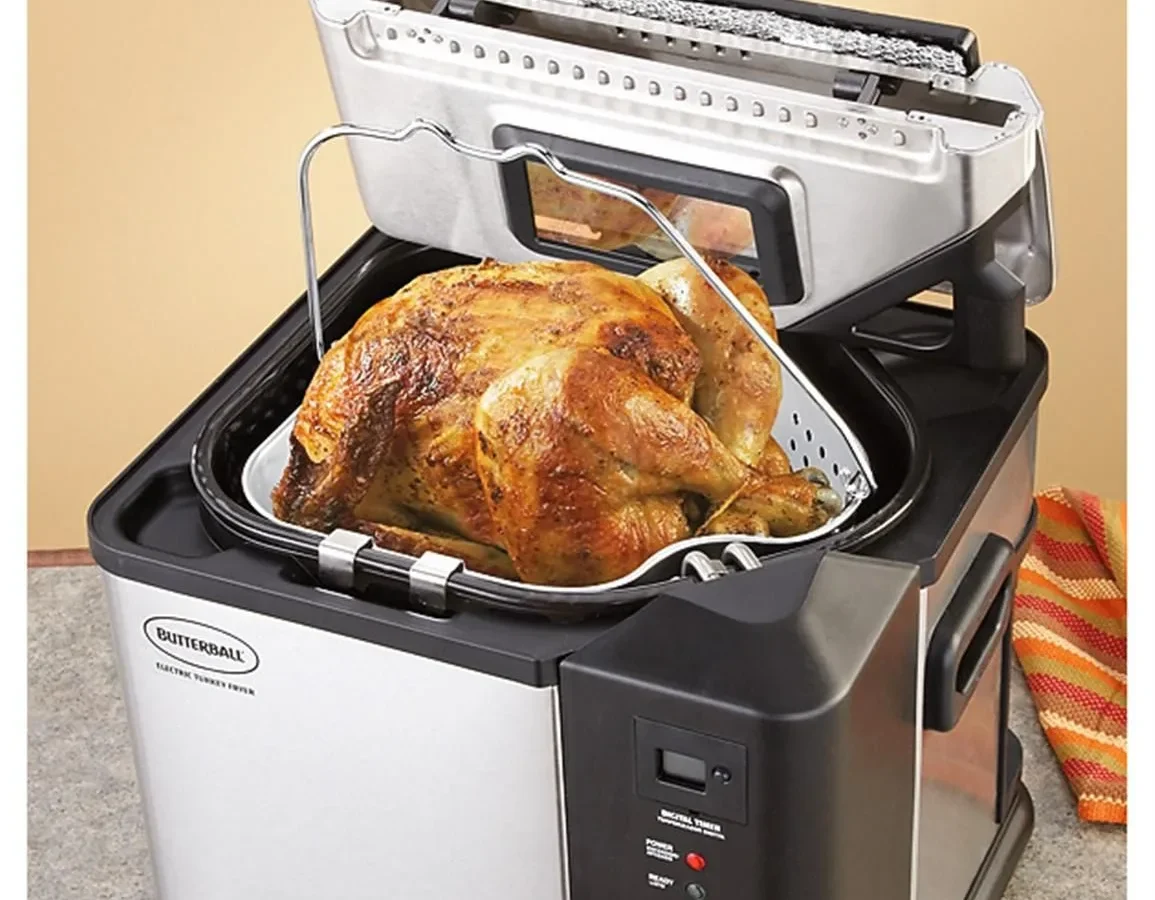
You stand there holding a rock-solid turkey, the clock ticking toward dinner. The question burning in your mind is simple: can you put dropping a frozen unthawed turkey into hot oil in a electric turkey deep fryer safely? The absolute answer is no.
It is one of the fastest ways to turn your Thanksgiving into a disaster.
The National Fire Protection Association reports that deep fryer fires cause an average of 5,000 incidents per year, resulting in tens of millions in property damage. The culprit in nearly every case is a frozen or partially frozen bird hitting hot oil. Before you even plug that fryer in, let’s walk through exactly why this is so dangerous and how to do it right.
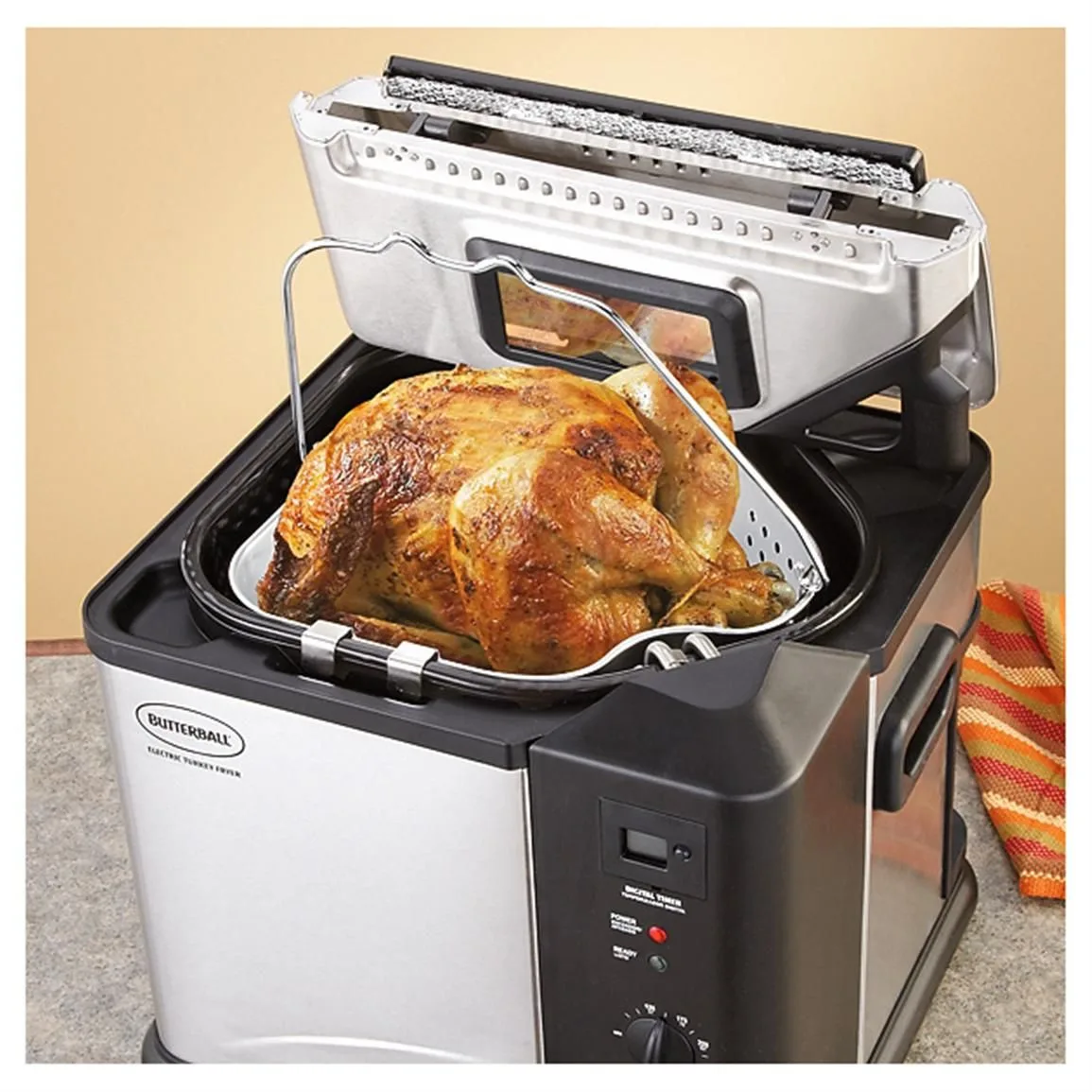
Image source: Web (Bing) / dxouxonwg.blob.core.windows.net (Web image (fair-use with source credit))
Quick Answer
No, you cannot do this safely. Dropping a frozen turkey into hot oil causes an instant explosion. The violent reaction leads to severe burns and fires.
Thaw your turkey completely before frying. There are no shortcuts that make this safe.
What Actually Happens When You Drop a Frozen Turkey into Hot Oil
Understanding the physics here is the key to keeping yourself and your home safe. It is not just a matter of "being careful." The reaction is instantaneous, violent, and completely predictable.
The Ice to Steam Explosion
A frozen turkey is full of ice crystals. Ice is just solid water. And when that solid water meets oil heated to 350°F, something dramatic happens.
Water transforms into steam almost instantly. That steam expands to about 1,700 times its original volume. To put that in perspective, a single ice cube becoming vapor fills a space the size of a basketball.
Now imagine a whole turkey coated in ice crystals. The expansion is explosive.
The steam does not bubble up gently. It erupts outward. That sudden pressure forces the hot oil out of the fryer pot in a massive displacement event.
You do not get a sizzle. You get a geyser of boiling oil.
Why This Creates a Fireball
Here is where things go from bad to catastrophic. Hot oil that gets forced upward hits the electric heating element. The heating element is already at operating temperature.
Oil instantly ignites on contact.
The fire does not start in the pot. It starts above it. You get a fireball that can reach several feet in all directions.
This is not a small flare up. It is a wall of flame that can ignite nearby walls, deck railings, clothing, and anything else within reach.
What makes this especially dangerous is that the fire tends to happen right at face level. The person operating the fryer is standing directly over the pot. A fireball at that height causes severe facial burns and eye injuries.

Image source: Web (Bing) / in.pinterest.com (Web image (fair-use with source credit))
The Thermostat Cannot Help
Some people think an electric fryer with a thermostat will somehow prevent this. It will not. The thermostat measures oil temperature in the pot.
It reacts to slow changes, not instant explosions.
By the time the thermostat registers a problem, the oil is already on fire. The heating element may switch off, but the damage is done. The reaction happens in less than a second.
No safety mechanism can respond that fast.
Hot Oil Splatter Causes Severe Burns
Even if you somehow avoid a fireball, the splatter alone is dangerous. Oil at 350°F causes third degree burns in less than a second. When that oil splashes onto exposed skin, the damage is immediate and permanent.
The steam itself is also a burn hazard. Steam at the temperature produced by this reaction causes deep tissue burns. It travels faster than oil splatter and can reach your face, arms, and chest before you can react.
Real user experiences reported in aggregate safety forums describe victims being hospitalized for weeks after a frozen turkey incident. Burns to the hands and face are the most common injuries. Some require skin grafts.
The recovery is painful and long.
What Goes Wrong: The Real Risks and Chain of Events
Let us be very clear about what is at stake here. This is not a minor kitchen mishap. This is a sequence of events that can destroy property, cause life changing injuries, and even take lives.
The Chain of Events
When you drop a frozen turkey into hot oil, the following happens in rapid succession:
- Ice on the turkey surface vaporizes instantly
- Expanding steam displaces a large volume of hot oil
- Oil overflows the pot and contacts the heating element
- The oil ignites, creating a fireball
- Flames spread to nearby surfaces and structures
- The fire grows rapidly, threatening the entire building
This entire sequence takes about two seconds from start to fire. You do not have time to react. You do not have time to move away.
You do not have time to grab a fire extinguisher.
The Specific Risks
| Risk | What Happens | Severity |
|---|---|---|
| Boiling oil overflow | Oil spills over the pot rim and onto the heating element | Immediate fire |
| Flash fire | Oil ignites in a fireball that expands rapidly | Severe burns, property damage |
| Steam burns | Steam at oil temperature causes deep tissue injury | Permanent scarring |
| Property fire | Flames spread to decks, siding, garages | Total structure loss |
| Hot oil pool | Oil on the ground causes slip and burn hazards | Leg and foot injuries |
| Electrical hazard | Oil ingress into the fryer control unit | Shock risk, short circuit |
Why Electric Fryers Are Still Dangerous
Some people think electric turkey fryers are safer than propane models. That is true in some ways. Electric fryers have no open flame.
They are less likely to tip over. They regulate temperature better.
But none of that matters when a frozen turkey hits the oil. The explosion is not caused by an open flame. It is caused by physics.
The ice to steam reaction happens regardless of what is heating the oil.
An electric fryer still contains several gallons of oil at 350°F. That oil can still overflow. That oil can still ignite.
And once it does, the fire behaves the same way whether it started with an electric element or a propane burner.
Electric fryers also have their own unique risks. If oil enters the control unit, it can cause electrical shorts. That can lead to electric shock when someone tries to unplug the fryer or touch the metal pot.
The combination of hot oil, water, and electricity is a recipe for multiple types of disaster at once.
The Property Damage Is Real
Homeowners insurance claims data shows that deep fryer fires cause an average of $15,000 to $30,000 in property damage per incident. Many policies have exclusions for certain types of cooking fires, particularly those caused by negligence.
A single mistake with a frozen turkey can destroy a deck, damage siding, break windows, and cause smoke damage throughout an entire house. The cleanup alone takes weeks. The cost of repairs often exceeds the value of everything you planned to cook that day.
As of 2026, the U.S. Fire Administration still lists turkey fryers as one of the leading causes of Thanksgiving Day fires. The warnings have been repeated for years.
Yet people still try shortcuts. The risks have not changed because the physics has not changed.
The Human Cost
Beyond property, there is the human cost. Severe burns require specialized medical care. Burn units are expensive and not available everywhere.
Recovery can take months. Many victims have permanent scarring and reduced mobility in their hands.
In the worst cases, people have died from turkey fryer fires. The combination of fire, burns, and smoke inhalation is lethal. No Thanksgiving meal is worth that.
The Key Numbers You Need to Know
Frying a turkey safely is a numbers game. If you understand the numbers, you avoid the danger. If you ignore them, you take a real gamble.
Safe Temperature Ranges
| Parameter | Safe Range | Notes |
|---|---|---|
| Oil temperature | 325°F to 375°F | 350°F is the standard target |
| Oil flash point (peanut oil) | 450°F+ | Well above frying temp, but overflow causes ignition |
| Turkey internal temp (breast) | 165°F | Minimum safe temperature per USDA |
| Turkey internal temp (thigh) | 175°F to 180°F | Dark meat needs higher temp for texture |
| Oil capacity | 3 to 5 gallons | Depends on fryer and turkey size |
| Turkey weight limit | 12 lb or less | For most consumer electric fryers |
Thawing Time Requirements
This is where most people get into trouble. Thawing takes longer than you think. You cannot rush it.
| Thawing Method | Time Needed | Notes |
|---|---|---|
| Refrigerator | 24 hours per 4-5 lb | Safest method, plan ahead |
| Cold water (sealed bag) | 30 minutes per lb | Change water every 30 minutes |
| Microwave | Not recommended | Uneven thawing, partial cooking |
A 12 lb turkey needs at least 3 full days in the refrigerator. If you have not started thawing by the Wednesday before Thanksgiving, you are already behind. The cold water method works faster but requires constant attention.
Cooking Time Guidelines
Once the turkey is fully thawed and dry, cooking is straightforward. The rule of thumb is 3 to 5 minutes per pound at 350°F.
- A 10 lb turkey takes roughly 30 to 50 minutes
- A 12 lb turkey takes roughly 36 to 60 minutes
- A 14 lb turkey is too large for most electric fryers
Always check internal temperature with a meat thermometer. Do not rely on time alone. Different fryers heat differently.
Ambient temperature matters if you are cooking outdoors.
Oil Displacement Test
This is a critical number. You need to know exactly how much oil to use. Too much oil causes overflow when the turkey is submerged.
Fill the empty pot with water. Place the thawed turkey inside. Mark the water level.
Remove the turkey. Drain the water. Dry the pot completely.
This test tells you the exact oil volume needed.
If you skip this test, you are guessing. Guessing with boiling oil is dangerous. Guessing with a frozen turkey is catastrophic.
Flash Point vs Ignition Point
One number often gets confused. The flash point of peanut oil is around 450°F. That is the temperature at which oil vapors can ignite.
But oil does not need to reach flash point to cause a fire.
When hot oil splashes onto a heating element, it ignites at well below flash point. The element itself is much hotter than the oil. The oil vaporizes on contact and burns instantly.
This is why controlled oil temperature does not prevent the fire.
Why Electric Fryers Are Not an Exemption
I hear this a lot. "But I have an electric fryer. Those are safer." That statement is half true and dangerously misleading.
What Electric Fryers Do Better
Electric turkey fryers do have real advantages over propane models.
- No open flame to ignite spilled oil
- Built in thermostat for temperature control
- Lower risk of tip over with a stable base
- No propane tank explosion risk
- Quieter operation
These features make electric fryers a better choice if you are frying a properly thawed turkey. They reduce some risks. They eliminate others.
What Electric Fryers Cannot Do
But an electric fryer cannot prevent the ice explosion. The heating element gets just as hot as a propane burner. The oil inside is just as hot.
The ice to steam reaction happens exactly the same way.
The heating element is actually a hazard in its own way. In a propane fryer, the burner is below the pot. Oil that overflows falls away from the heat source.
In an electric fryer, the heating element is inside the pot or directly below it. Overflowing oil lands right on the hot element.
This design difference makes ignition more likely with some electric fryers. The oil does not have to fall far. It spills directly onto the source of heat.
Temperature Control Is Not a Safety Feature
Some people think the thermostat will save them. It will not. The thermostat measures the temperature of the oil in the pot.
It cannot predict or prevent an explosion.
When a frozen turkey hits the oil, the temperature drops rapidly in the pot. The thermostat responds by dialing up the heat. By then, the oil is already overflowing and igniting.
The feedback loop works in exactly the wrong direction.
A fryer with a safety interlock switch is better. Some models shut off the heating element if the pot is lifted or tipped. But even that does not stop the explosion.
It only stops additional heating after the event.
Cleaning and Maintenance Still Matter
A well maintained electric fryer is safer than a neglected one. Residue buildup can cause hot spots. Oil degradation lowers the smoke point.
Proper cleaning and maintenance, like knowing how to clean a Presto deep fryer properly, helps keep your equipment in safe working condition.
But no amount of maintenance prevents the frozen turkey hazard. This is not an equipment problem. It is a procedure problem.
The Bottom Line on Electric Fryers
If you own an electric turkey fryer, that is great. It is a safer tool than propane for thawed birds. Use it properly and it will serve you well.
But do not use the electric design as an excuse to skip thawing. The physics does not care about your power source. An electric fryer will explode just as violently as a propane one when you drop in a frozen turkey.
The only safe way to fry a turkey is with a completely thawed, completely dry bird. Electric or propane, that rule does not change.

Related posts
Hot Lid on Countertop? Safety Tips for Air Fryer Combos
You've just finished air frying a batch of crispy chicken wings. The lid is hot. You're holding it…

Ninja Foodi SmartLid OL701 Worth Buying? Reddit
If you've been scrolling through Reddit asking yourself "is ninja foodi smartlid ol701 one lid multi cooker with…

Crispy Rotisserie Chicken: Temp & Time for Combo Cooker
So you want restaurant quality crispy skin on a whole rotisserie chicken, and you want to do it…