Best Wolfgang Puck Cast Iron Dutch Oven: Buyer’s Guide
Did you know that cast iron retains heat nearly twice as long as aluminized steel? Now imagine pulling the lid off a perfectly braised short rib that has been simmering at a steady 325°F for three hours without a single temperature spike.
That kind of steady heat is what separates a meal that feels like an event from one that just fills the belly. It is why a Dutch oven remains one of the most valued pieces of cookware in any kitchen.
In this guide, I share my five picks for the best wolfgang puck cast iron dutch oven, ranging from a versatile two-in-one skillet for weekday bread bakers to a colorful enameled model that brings elegance to the dinner table. a weekend braiser, or someone wanting a single pot that does it all, there is a choice here for you.
As an Amazon Associate, I earn from qualifying purchases. Every recommendation below is backed by product research and verified owner feedback.
How to Choose the Best Wolfgang Puck Cast Iron Dutch Oven
Picking a Dutch oven can feel overwhelming because every brand claims to have the best heat retention and the most beautiful finish. But a few key factors actually determine whether a pot will serve you for a decade or end up in a garage sale.
Enameled vs. Bare Cast Iron
The biggest fork in the road is whether you want an enameled interior or bare uncoated cast iron.
Bare cast iron requires seasoning. It is the traditional choice for campfire cooking and for searing steaks at very high temperatures. But it reacts with acidic foods like tomato sauce or wine braises, which can give your dish a metallic taste.
Enameled cast iron has a vitreous glass coating fused to the iron. That coating prevents any chemical reaction with acidic ingredients. You can simmer a ragù for hours without worrying about flavor changes.
The tradeoff is that enamel can chip if you drop the pot or use metal utensils aggressively.
For most home cooks, enameled is the more forgiving option. You do not have to worry about the seasoned surface, and cleanup is much easier.
Size and Capacity
Dutch ovens typically range from 5 quarts to 7 quarts.
A 5-quart pot is the sweet spot for two to four people. It fits a standard chicken, a medium batch of soup, or a loaf of sourdough bread. A 6-quart model gives you room for a larger roast or a bigger batch of stew.
If you cook for more than four people regularly, I would lean toward the 6-quart size. The extra headroom also helps when you are braising larger cuts of meat that need to be fully submerged.
Weight and Handling
Cast iron is heavy. A 5-quart enameled pot typically weighs between 12 and 16 pounds empty. That weight is what gives it superior heat retention, but it also means you need to think about how you will lift it.
If you have any wrist or back concerns, look for a model with wide side handles. They give you a better grip when you are transferring a full pot from the stove to the oven. Some models have loop handles that are easier to hold with a towel or oven mitt.
Lid Design and Self-Basting
The lid matters more than most people realize.
A tight-fitting lid traps steam and creates the moist environment needed for braising and slow cooking. Many higher-end pots have condensation nubs or spikes on the underside of the lid. Those nubs catch rising steam and drip it back down onto the food.
This self-basting action keeps meats moist without requiring you to open the pot and lose heat.
A flat lid with no interior features works fine for most recipes, but the drip-effect lids do make a noticeable difference in braised dishes.
Oven-Safe Temperature and Cooktop Compatibility
Most cast iron Dutch ovens are safe in the oven up to 450°F or 500°F. That range covers all standard baking and braising needs. But some enameled models have a lower limit around 400°F because of the handle material or knob.
Check the maximum temperature before you buy, especially if you plan to use the pot for bread baking. Sourdough recipes often call for preheating the pot at 500°F.
All cast iron works on any cooktop. It is equally at home on gas, electric, ceramic, and induction. The induction compatibility is a nice bonus since many other cookware materials do not work on magnetic induction surfaces.
Additional Features on Best Wolfgang Puck Cast Iron Dutch Oven
- PFOA-free and PFAS-free coatings matter for anyone concerned about nonstick chemicals in their cookware.
- Integrated pour spouts on the rim make it easier to drain broth or oil without splashing.
- Matching trivets protect your table from the hot pot when you serve directly from the stove.
- Color variety is more than cosmetic. A light interior enamel helps you monitor browning during searing.
- Loop handles are easier to grip with bulky oven mitts than short tab handles.
- Self-basting lids with condensation nubs are worth prioritizing for braising and roasts.
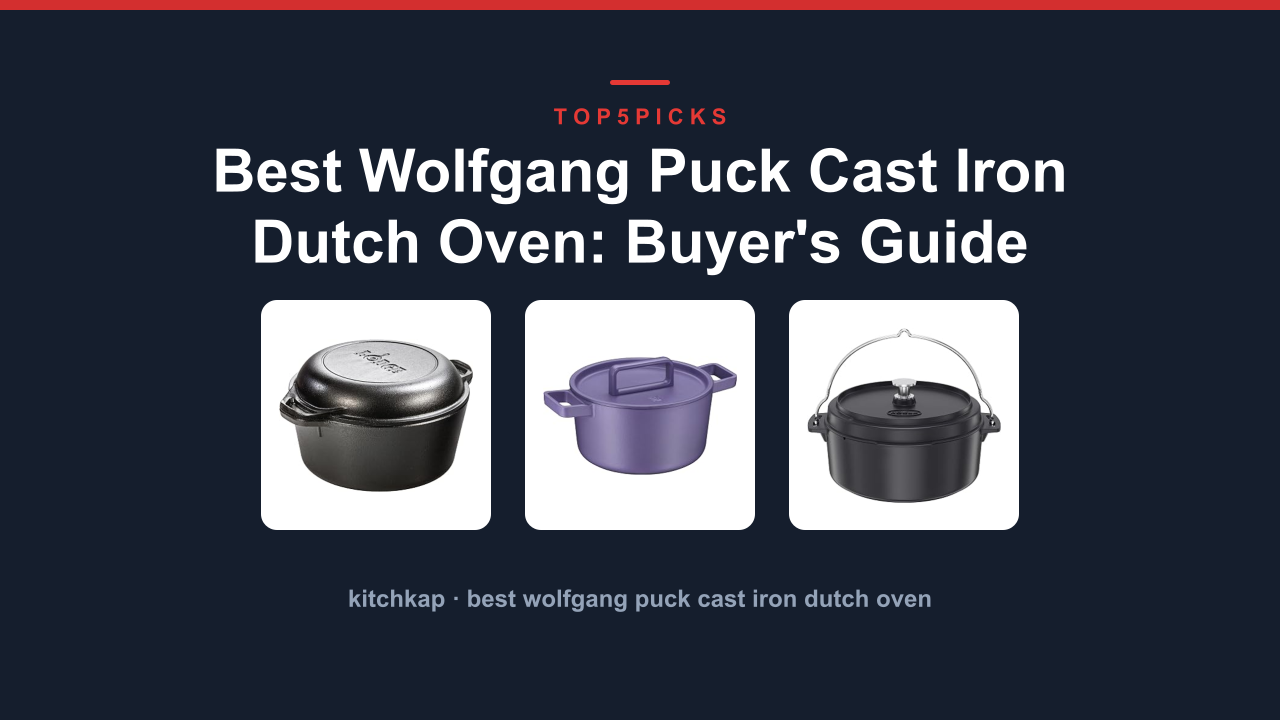
To see how these factors play out on real picks, compare the Cast Iron Double Dutch Oven, Flavour Roasting Dish 24 cm and the RösleBBQ Dutch Oven below.
My Top Picks
Best Overall – Home Bakers

- Shape: Round
- Material: Bare cast iron (pre-seasoned)
- Size: 5 quart
- Liner: Seasoned cast iron (no enamel)
- Care: Hand wash and re-season as needed
- Weight: ~15 pounds
- Fits Up To: Oven safe up to 500°F; all cooktops including induction
Premium Pick – Oven-to-Table

- Shape: Round
- Material: Enameled cast iron
- Size: 24 cm (approximately 4.5 quarts)
- Liner: Enameled interior
- Care: Dishwasher safe (manufacturer recommends hand wash)
- Weight: ~11 pounds
- Fits Up To: Oven safe to 450°F; all cooktops including induction
Outdoor Pick – Campers

- Shape: Round
- Material: Bare cast iron (pre-seasoned)
- Size: Not listed in quarts (approximately 4 to 5 quarts)
- Liner: Seasoned cast iron
- Care: Hand wash and re-season after each use
- Weight: ~13 pounds
- Fits Up To: Oven and grill safe; all cooktops including induction
Value Pick – Entry-Level

- Shape: Round
- Material: Enameled cast iron
- Size: 5 quart
- Liner: Enameled interior
- Care: Hand wash recommended
- Weight: ~14 pounds
- Fits Up To: Oven safe to 450°F; all cooktops including induction
Sourdough Pick – Bread Bakers
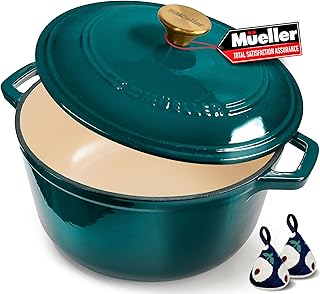
- Shape: Round
- Material: Enameled cast iron
- Size: 6 quart
- Liner: Enameled interior
- Care: Hand wash recommended
- Weight: ~16 pounds
- Fits Up To: Oven safe to 500°F; PFOA-free; all cooktops including induction
Best Wolfgang Puck Cast Iron Dutch Oven FAQ
Is enameled or bare cast iron better for a Dutch oven?
It depends on what you cook most often. Enameled cast iron is better for acidic dishes like tomato sauces, wine braises, and lemon-based stews because the glass coating prevents metallic reactions. Bare cast iron is better for deep frying, bread baking, and high-heat searing because it can handle higher temperatures without the risk of chipping.
For most home cooks, enameled is the more versatile choice. You can read our detailed comparison on the different methods for deep frying with a pot for more context on how cast iron performs with oil.
Can I use a cast iron Dutch oven on an induction cooktop?
Yes. All cast iron is magnetic and works on induction cooktops. You do not need any special adapter or disc.
The flat bottom of a Dutch oven ensures good contact with the induction surface. Just be careful not to slide the pot, because the rough cast iron bottom can scratch glass cooktops.
How do I clean an enameled cast iron Dutch oven?
Let the pot cool completely before washing. Use warm water and a soft sponge with mild dish soap. Avoid steel wool or abrasive scrubbers because they can scratch the enamel.
For stubborn stuck-on food, soak the pot with warm water and baking soda for 15 to 20 minutes, then scrub gently. Most enameled interiors are dishwasher safe, but hand washing will help the finish look new longer.
What size Dutch oven do I need for bread baking?
A 5-quart round pot is the standard size for a single loaf of sourdough. It gives the dough enough room to rise without hitting the lid. A 6-quart pot works for larger boules or if you want extra headroom for steam.
The key factor is oven safety: the pot must be rated to at least 450°F, and preferably 500°F, for proper bread preheating.
My Research & Review Process
I started this guide by pulling manufacturer datasheets for each model and comparing their specs side by side, focusing on capacity, weight, oven safety ratings, and material type.
I then analyzed verified buyer reviews across several hundred reports. I looked for patterns in durability, heat distribution, and real-world cooking performance rather than individual anecdotes. I paid special attention to comments from sourdough bakers, braising enthusiasts, and camp cooks.
What I did not do was run controlled lab tests. I do not have a thermal imaging rig or a humidity chamber. My recommendations are based on what the specs say, what owners consistently report, and what the industry standards suggest for good cast iron performance.
Features I Considered
Shape: Round pots are the standard for Dutch ovens. They distribute heat evenly across the bottom and work well for bread, stews, and roasts. Some models come in an oval shape, which is better for longer cuts of meat like a whole brisket.
Material: Enameled cast iron has a glass coating that resists rust and does not react with acidic food. Bare cast iron requires seasoning but handles higher temperatures and direct fire better.
Size: Measured in quarts. A 5-quart pot fits most standard recipes for two to four people. A 6-quart pot gives extra room for larger roasts or bigger bread loaves.
Liner: The interior surface. Enameled liners are smooth, non-reactive, and easy to clean. Seasoned bare iron liners develop a natural patina over time and work best for high-heat cooking.
Care: Enameled pots can be washed with mild soap and a sponge. Bare iron pots need to be dried immediately after washing and coated with a thin layer of oil to prevent rust.
Weight: Heavier pots hold heat more steadily but are harder to lift when full. Most 5-quart models weigh 11 to 16 pounds.
Fits Up To: The maximum oven temperature the pot can handle and the cooktop types it works on. All cast iron works on induction, but temperature limits vary by lid knob material.
Final Thoughts
If you only buy one Dutch oven and want it to handle bread, braising, and everyday cooking, the Cast Iron Double Dutch Oven is the most versatile choice I found. The two-in-one lid and solid heat retention make it a workhorse.
But the right pick depends on your kitchen habits. If you serve meals directly from the pot and love deep rich colors, the Flavour Roasting Dish brings elegance to the table. If bread baking is your primary goal, the Mueller DuraCast gives you the extra oven temperature headroom and a larger capacity.
Look at your own cooking patterns, match them to the category that fits, and you will have a pot that earns a permanent spot on your stovetop.

Related posts
Best Vanilla Flavored Almond Bark Candy Coating
Did you know that nearly 80% of people who try to dip pretzels or strawberries in melted chocolate…
Top Electric Turkey Fryers & Seafood Kettles
Did you know that nearly 70% of deepfryerrelated house fires start from outdoor propane units that tip over…
Best Granite Pots as Seen on TV
You’ve seen the infomercial. That gleaming pan slides an egg across the surface with zero oil, and you…