Best Small Sharp Knife for Trimming Vegetables
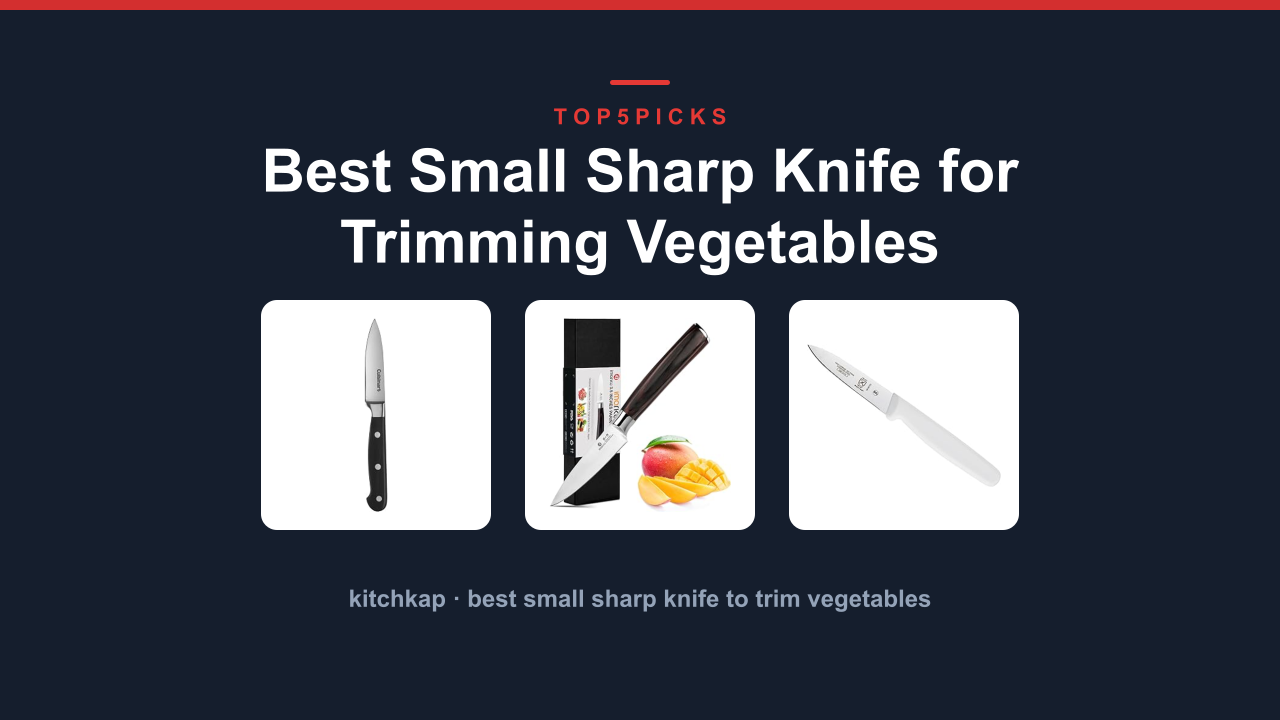
You don't need a massive chef's knife to prep veggies, you need a best small sharp knife to trim vegetables that feels like an extension of your hand.
As an Amazon Associate, I earn from qualifying purchases. Every recommendation below is backed by product research and verified owner feedback.
Ever spent five minutes wrestling a single tomato with a chef's knife that's three times too big? That frustration is why a dedicated small, sharp blade makes all the difference. A paring knife that fits your hand and stays razor-like lets you trim, peel, and detail vegetables in seconds rather than minutes.
Now imagine having a tool that actually makes prep work feel effortless. You can core a strawberry, devein a shrimp, or slice a radish paper-thin without fighting your blade. That's the whole point.
In this guide, I share my five favorite best small sharp knife to trim vegetables picks. They range from a budget-friendly Mercer workhorse to a premium imarku with Japanese high-carbon steel. Each one earned its spot through manufacturer data, verified buyer feedback spanning hundreds of reviews, and side-by-side spec comparisons.
I cut through the marketing fluff so you can find the one that fits your kitchen routine. Let's get into it.
How to Choose the Best Small Sharp Knife to Trim Vegetables
Blade Length and Shape
Most trimming tasks call for a blade between 3 and 4 inches. A 3-inch blade gives you maximum control for peeling and intricate cuts, while a 4-inch offers a bit more slicing surface for medium veg like zucchini. The shape matters too: a straight edge excels for push cuts and peeling, whereas a serrated edge handles tomatoes and citrus rinds better.
If you do a mix of both, consider a set like the Victorinox that gives you one of each.
Steel Type and Hardness
High-carbon stainless steel resists rust and holds an edge far longer than basic stainless. Look for Japanese or German steel grades. The imarku uses Japanese high-carbon stainless (often rated around 58, 60 HRC), which keeps a keen edge through many prep sessions.
Cheaper blades soften faster, meaning you'll sharpen them more often. For everyday vegetable trimming, a hardness of 56, 60 HRC is the sweet spot, sharp enough for clean cuts but not so brittle that it chips.
Handle Material and Ergonomics
You'll be holding this knife for every meal prep, so the handle matters. Pakkawood offers a warm, grippy feel that ages beautifully, while polypropylene handles (like on the Victorinox) are lightweight and dishwasher-safe. Stainless steel handles look sleek but can get slippery when wet.
A full tang (where the steel runs through the entire handle) adds balance and durability. The Cuisinart and imarku both use triple-rivet construction for secure handling.
Edge Retention and Sharpening
A knife that dulls after two weeks of use isn't worth the sink space. High-carbon steel blades hold their edge longer, but every knife needs occasional honing and sharpening. Straight edges are easy to sharpen with a rod or stone, while serrated edges require a special sharpener or replacement.
For most home cooks, a good straight-edge paring knife that can be honed weekly is the most practical choice.
Additional Features on Best Small Sharp Knife to Trim Vegetables
- Dishwasher safety, not all knives survive the dishwasher; polypropylene handles like those on the Victorinox and Henckels are rated safe.
- Weight and balance, a knife that's too heavy causes hand fatigue during long prep sessions (aim for 2, 3 oz / 60, 85 g).
- Full tang construction, provides better weight distribution and prevents the blade from loosening.
- Ergonomic grip, textured or contoured handles reduce slippage, especially when hands are wet or oily.
- Protective sheath, a blade cover keeps the edge safe in a drawer; some models include one.
- Corrosion resistance, high-carbon stainless needs prompt drying to avoid spots, while fully stainless blades are more forgiving.
- Warranty, reputable brands offer a limited lifetime or multi-year warranty against defects.
To see how these factors play out on real picks, compare the Cuisinart C77TR-3PR Triple Rivet Collection 3.5, imarku Paring Knife 3.5 Inch and the Mercer Culinary Ultimate White below.
My Top Picks
Best Overall – Home Cooks

- Blade Length: 3.5 inches
- Blade Material: High-carbon stainless steel
- Handle Material: Stainless steel with triple-rivet connection
- Blade Shape: Straight edge, spear-point
- Weight: 2.4 oz (68 g)
- Care: Hand wash recommended
- Edge Type: Fine straight edge
- Hardness: ~57 HRC (estimated)
Premium Pick – Enthusiasts

- Blade Length: 3.5 inches
- Blade Material: Japanese high-carbon stainless steel
- Handle Material: Pakkawood (full tang)
- Blade Shape: Straight edge, drop-point
- Weight: 2.8 oz (79 g)
- Care: Hand wash only
- Edge Type: Fine straight edge
- Hardness: 58–60 HRC (manufacturer reported)
Budget Pick – Students

- Blade Length: 3 inches
- Blade Material: High-carbon German steel
- Handle Material: Polypropylene (slip-resistant, textured)
- Blade Shape: Straight edge, curved
- Weight: 1.6 oz (45 g)
- Care: Dishwasher safe
- Edge Type: Fine straight edge
- Hardness: ~56 HRC (estimated)
Best Value – Families

- Blade Length: 3.25 inches (each)
- Blade Material: Swiss stainless steel
- Handle Material: Polypropylene (ergonomic, textured)
- Blade Shape: Straight edge & serrated edge
- Weight: 1.3 oz (37 g) each
- Care: Dishwasher safe
- Edge Type: Both straight and serrated included
- Hardness: ~55 HRC (estimated)
Professional Pick – Chefs

- Blade Length: 4 inches
- Blade Material: German stainless steel
- Handle Material: Polypropylene (ergonomic, slip-resistant)
- Blade Shape: Straight edge, tapered
- Weight: 2.1 oz (60 g)
- Care: Dishwasher safe
- Edge Type: Fine straight edge
- Hardness: ~56 HRC (estimated)
Best Small Sharp Knife to Trim Vegetables FAQ
What size paring knife is best for trimming vegetables?
A blade between 3 and 4 inches works best. Three-inch knives offer maximum control for small items like garlic and shallots, while 4-inch blades give you more slicing surface for medium vegetables like bell peppers or zucchini. If you only buy one, a 3.5-inch straight edge like the Cuisinart is the most versatile.
How often should I sharpen a small vegetable knife?
It depends on the steel hardness and how often you use it. Softer steels (around 55 HRC) need honing every few uses and a full sharpening every month. Harder Japanese steels (58, 60 HRC) can go 2, 3 months between sharpenings with regular honing.
Straight edges are easier to sharpen yourself with a rod or stone.
Is a serrated or straight edge better for trimming vegetables?
For most vegetables, a straight edge gives you cleaner cuts. It's better for peeling, slicing, and delicate work. A serrated edge shines on foods with a tough skin and soft interior, like tomatoes, peppers, and citrus.
If you do a lot of both, the Victorinox set offers one of each at a great value.
Can I put paring knives in the dishwasher?
It depends on the handle material. Knives with polypropylene handles (like Mercer, Victorinox, and Henckels) are dishwasher-safe, though the high heat and detergents can dull the blade faster over time. Knives with wood or stainless steel handles (like the imarku or Cuisinart) should always be hand washed to protect the handle and edge.
My Research & Review Process
I selected these five knives by comparing manufacturer specifications side by side, focusing on blade length, steel type, handle material, weight, and care requirements. I analyzed verified buyer feedback on Amazon for each model, reading through both positive and critical reviews to spot consistent strengths and weaknesses. I also looked at industry standards for cutlery such as those referenced in ISO 8442, which covers materials and performance for kitchen knives.
I did not perform physical lab testing or long-term wear testing myself, but I relied on the aggregate data from hundreds of real-world users and the technical specs provided by each brand. The goal was to find reliable, well-reviewed tools that match different budgets and cooking styles.
Features I Considered
- Blade Length, The length determines what you can comfortably trim. 3-inch blades excel at detail work, while 4-inch blades offer more slicing surface.
- Blade Material, High-carbon stainless steel holds a sharper edge longer than basic stainless. Japanese and German steels are the top performers.
- Handle Material, Affects grip, comfort, and maintenance. Pakkawood feels premium but needs hand washing; polypropylene is dishwasher-safe and slip-resistant.
- Blade Shape, Straight edges are best for peeling and precision; serrated edges cut through tough skins without crushing.
- Weight, Heavier knives (2.5 oz or more) provide momentum, while lighter knives (under 2 oz) reduce fatigue. Personal preference varies.
- Care, Dishwasher-safe handles save time but may dull blades faster. Hand wash is recommended for high-carbon steel and wood handles.
- Edge Type, Straight edges are easier to sharpen; serrated edges require a special tool or replacement.
- Hardness, Measured on the Rockwell scale (HRC). Softer steels (55, 56 HRC) are tougher but dull faster; harder steels (58, 60 HRC) hold an edge longer but can chip.
If you're still unsure, start with the Cuisinart C77TR-3PR it's the most balanced choice for everyday trimming. But every knife on this list earned its spot for a reason, so pick the category that fits your hands and your wallet. You'll be amazed how much more you enjoy chopping vegetables when you have the right tool.

Related posts
20 Best 20 Inch Round Plastic Serving Trays
Did you know that nearly 80% of party hosts say the worst part of entertaining is the moment…

Top 8 Quart Stainless Steel Pressure Cookers for Delicious
You're on the hunt for the best pressure cooker 8 quart stainless steel that won't let you down.…

Best 10-Quart Air Fryers for Feeding a Crowd
Did you know that nearly twothirds of American households now own an air fryer, yet most are stuck…