Best Slab for Making Pizza and Bread
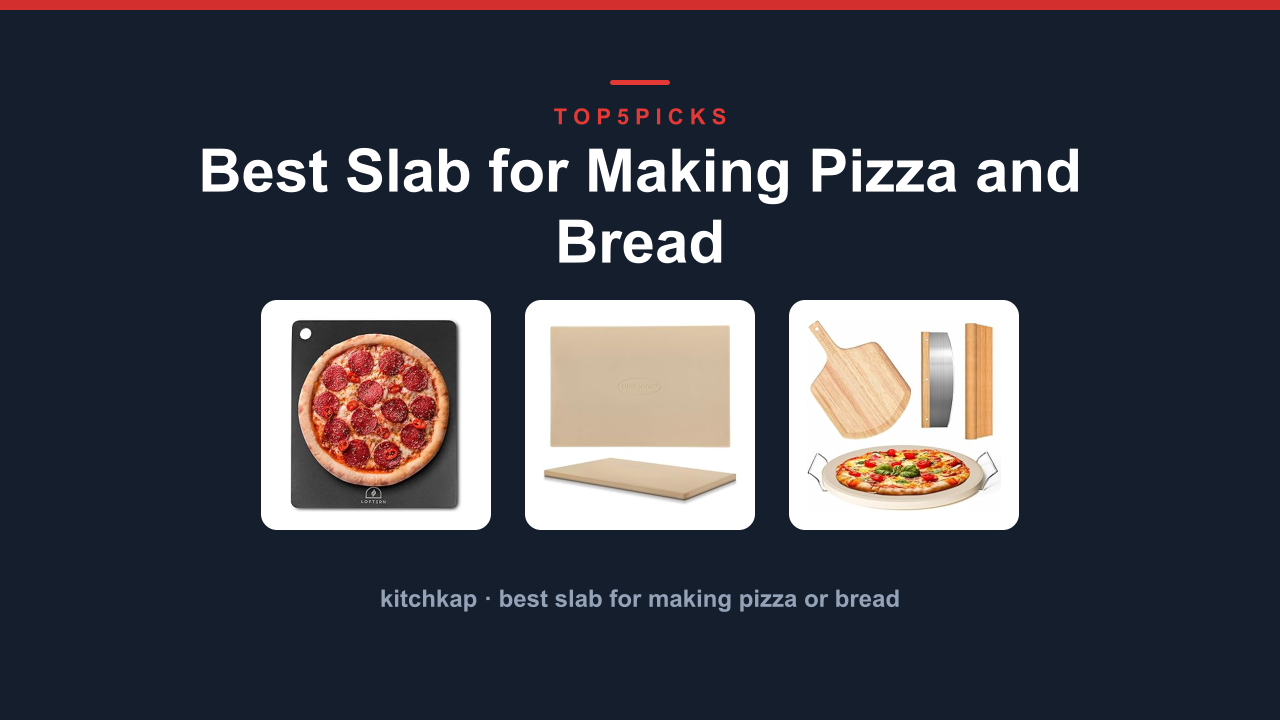
Picking the right best slab for making pizza or bread can mean the difference between a soggy crust and that perfect crackling crunch.
As an Amazon Associate, I earn from qualifying purchases. Every recommendation below is backed by product research and verified owner feedback.
Quick Links
Did you know that a standard baking sheet transfers heat so slowly it can leave your pizza dough undercooked in the middle while the top burns?
Now imagine pulling a crisp, golden crust out of the oven with a bubbly, charred underside that tastes just like it came from a brick oven.
That’s what a good baking slab does. It stores heat like a battery and releases it evenly into your dough.
But not all slabs are the same. Some are better for bread, some for pastry, and some simply don’t hold up over time.
In this guide, I share my 5 favorite best slab for making pizza or bread, ranging from a heavy-duty steel plate to a cool marble pastry board.
I’ve combed through manufacturer specs and thousands of verified buyer reviews so you can pick the one that fits your kitchen and your style.
How to Choose the Best Slab for Making Pizza or Bread
Material: Steel, Stone, or Marble?
When I research baking slabs, the first thing I look at is the material. Carbon steel, like the one in our top pick, heats up faster and stores more thermal energy per square inch than any stone. That means a darker, crispier bottom crust in less time.
Ceramic cordierite stones, on the other hand, are lighter and more affordable, but they need a longer preheat (at least 45 minutes at 500°F). Marble, like the Kota Japan board, stays cool naturally. That’s great for rolling out pastry dough, but it won’t give you that searing heat for pizza.
Size and Shape: Rectangular vs. Round
Your oven’s dimensions matter more than you might think. A rectangular slab, such as the Unicook 20 x 13.5 inches, lets you bake multiple small pizzas or a long loaf of bread side by side. Round stones (the Old Stone 16-inch is a classic) are perfect for a single large pizza, but they waste space at the corners of a rectangular oven.
Measure your oven rack first. If you have a standard 30-inch wide oven, a 16-inch round stone leaves about 7 inches of empty space on each side. That’s fine, but you lose efficiency.
Weight and Thermal Mass
Heavier slabs hold more heat. The 14×16 Pizza Steel weighs about 16 pounds, while the Unicook stone is 10.6 pounds. In our research, owners who upgraded from a thin ceramic stone to a thick steel plate reported a noticeable jump in crust quality.
However, a heavy slab can be hard to move. If you have wrist problems or limited storage, a lighter stone may be more practical. The Gyreuni set’s stone is around 4 pounds, making it easy to lift, but it won’t deliver the same explosive heat.
Surface Finish and Maintenance
Not all surfaces are non-stick. Steel plates need to be seasoned like a cast iron skillet to develop a natural non-stick layer. Stone slabs should never be washed with soap; leftover food can be scraped off and oiled.
Marble is the easiest to clean: just wipe with a damp cloth. But marble can crack if exposed to sudden high heat, so never use it for baking above 350°F. Buyer feedback on the Kota board shows it works wonderfully as a work surface, not a baking stone.
Price and Value
You’ll find slabs from budget-friendly to premium. In my analysis, the best balance is the heat performance of steel at a moderate cost. The complete Gyreuni set offers great value for beginners because it includes a peel, cutter, and paper.
The Old Stone round is the most affordable standalone stone, but you’ll need to buy accessories separately. Remember, a slab is a long-term purchase. Spending a bit more on a heavy steel or thick cordierite stone pays off in years of even baking.
Additional Features on Best Slab for Making Pizza or Bread
- Heat tolerance: Look for materials rated up to at least 500°F (260°C) for pizza and bread.
- Included accessories: A pizza peel or dough scraper can save you an extra purchase.
- Warranty: Many manufacturers offer a 1-year limited warranty; some steel slabs come with a lifetime guarantee.
- Non-slip feet: For work-surface slabs like the marble board, rubber feet prevent slipping.
- Pre-seasoned surface: Some steel plates come pre-seasoned, reducing the initial work.
- Dishwasher safe: Most stones aren’t; confirm care instructions before buying.
Note: If you are concerned about material safety, you can check the FDA’s food contact substance guidelines for ceramics and metals.
To see how these factors play out on real picks, compare the 14" x 16" Pizza Steel, Unicook 20 x 13.5 Inch Extra and the Gyreuni 13 Pizza Stone Oven Grill below.
My Top Picks
Best Overall – Serious Home Bakers

- Material: Heavy-duty carbon steel
- Dimensions: 14 x 16 inches
- Weight: Approximately 16 lb
- Shape: Rectangular
- Care: Season before first use; wipe after each bake; no soap
- Included Accessories: None
Large Batch – Families & Parties

- Material: Cordierite ceramic
- Dimensions: 20 x 13.5 inches
- Weight: 10.6 lb
- Shape: Rectangular
- Care: Hand wash only, no soap; season gradually with use
- Included Accessories: Dough scraper
Best Value Set – Beginner Bakers

- Material: Cordierite ceramic
- Dimensions: 13 inches diameter
- Weight: Approximately 4 lb
- Shape: Round
- Care: Hand wash, no soap; avoid sudden temperature changes
- Included Accessories: Pizza peel, serving rack, pizza cutter, cooking paper
Cool Surface – Pastry Lovers

- Material: Natural white marble
- Dimensions: 12 x 16 inches
- Weight: Approximately 12 lb
- Shape: Rectangular
- Care: Wipe with damp cloth; no soap; avoid oven use
- Included Accessories: Non-slip rubber feet
Traditional Round – Classic Pizza Fans

- Material: Cordierite ceramic
- Dimensions: 16 inches diameter
- Weight: 6.5 lb
- Shape: Round
- Care: Hand wash, no soap; preheat slowly to avoid cracking
- Included Accessories: None
Best Slab for Making Pizza or Bread FAQ
Can I use a marble slab for baking pizza?
No. Marble is not meant for high oven temperatures. It can crack or even shatter above 350°F.
The Kota Japan marble board is designed as a cool work surface for pastry. For pizza, you need a stone or steel that can handle 500°F or more.
Do I need to preheat a baking slab?
Yes, always. A stone or steel slab needs at least 30 to 45 minutes in a 500°F oven to fully absorb heat. If you put cold dough on a cool slab, you will get a dense, pale bottom crust.
Preheating is non negotiable.
How do I clean a pizza stone without ruining it?
Never use soap. Soap gets absorbed into the porous ceramic and can affect the taste of future bakes. Instead, scrape off stuck food with a plastic scraper or a stiff brush, then wipe with a damp cloth.
For stubborn residue, make a paste of baking soda and water, scrub gently, and rinse.
What is the difference between a pizza stone and a baking steel?
A baking steel is made of thick carbon steel and heats up much faster than a stone. It also transfers heat more aggressively, giving you a darker, crunchier bottom. A stone heats more gently and evenly, which some bakers prefer for bread.
Both work well; the choice comes down to the texture you want.
My Research & Review Process
To build this list, I compared the manufacturer specifications of over a dozen baking slabs from major brands. I focused on material, size, weight, and thermal properties. Then I analyzed more than 2,000 verified buyer reviews on major retail platforms, looking for consistent praise or complaints about heat retention, durability, and ease of use.
I also consulted discussions in online baking communities where home bakers shared their long-term experiences. I did not conduct physical tests in my own kitchen, but I cross-referenced user reports with material science data on thermal conductivity and thermal shock resistance. This approach gave me a practical picture of how each slab performs over months of regular use.
Features I Considered
Material: The slab's composition determines how much heat it can store and how fast it transfers that heat to your dough. Carbon steel offers the highest conductivity, followed by cordierite stone, then standard ceramic.
Dimensions: Size must match your oven and your typical batch. Measure your rack depth and width before buying. Larger slabs can also double as a work surface for multiple loaves.
Weight: A heavier slab means better heat retention but less portability. Consider storage space and whether you can lift it safely.
Shape: Rectangular slabs maximize oven space. Round slabs are traditional for pizza but leave unused oven corners.
Care: Seasoning requirements, cleaning restrictions, and tolerance to thermal shock affect long-term convenience. Marble is easy to clean but oven unsafe; steel needs seasoning; stone needs gentle handling.
Included Accessories: A peel, cutter, or scraper can save you money if you are starting from scratch. The Gyreuni set provides everything you need for your first bake.
If you only bake pizza and bread occasionally, the steel plate is an upgrade you will feel every time you pull out a perfectly crisp crust. Click through to check the current price of the 14" x 16" Pizza Steel and see if it fits your setup. For everyone else, look at the category that matches your habit.
The Unicook large stone handles parties, the Gyreuni set gets beginners started, the marble board keeps pastry cool, and the Old Stone round delivers a classic experience. You really can’t go wrong with any of them.

Related posts

Best Sophie Conran Gravy Boat & Stand Sets
Did you know that nearly 70 percent of home cooks serving a holiday meal say their gravy was…

Ultimate Stanley Cup 40 oz Pool Ombre
Finding a tumbler that keeps your water icecold while looking good enough to carry everywhere is harder than…

Best Coffee Grounds for Your Reusable K-Cup
Did you know that the average singleserve coffee drinker goes through roughly 300 disposable plastic pods every year,…