Best Presto Profry 05466? Reddit Deep Fryer Review
Let's answer "is presto profry 05466 commercial style dual basket deep fryer worth buying reddit review" honestly. You want real owner opinions, not a product page that only says nice things. That's the right instinct.
The Presto 05466 is one of the most popular dual-basket electric fryers under $100, but popularity alone doesn't mean it fits your kitchen.
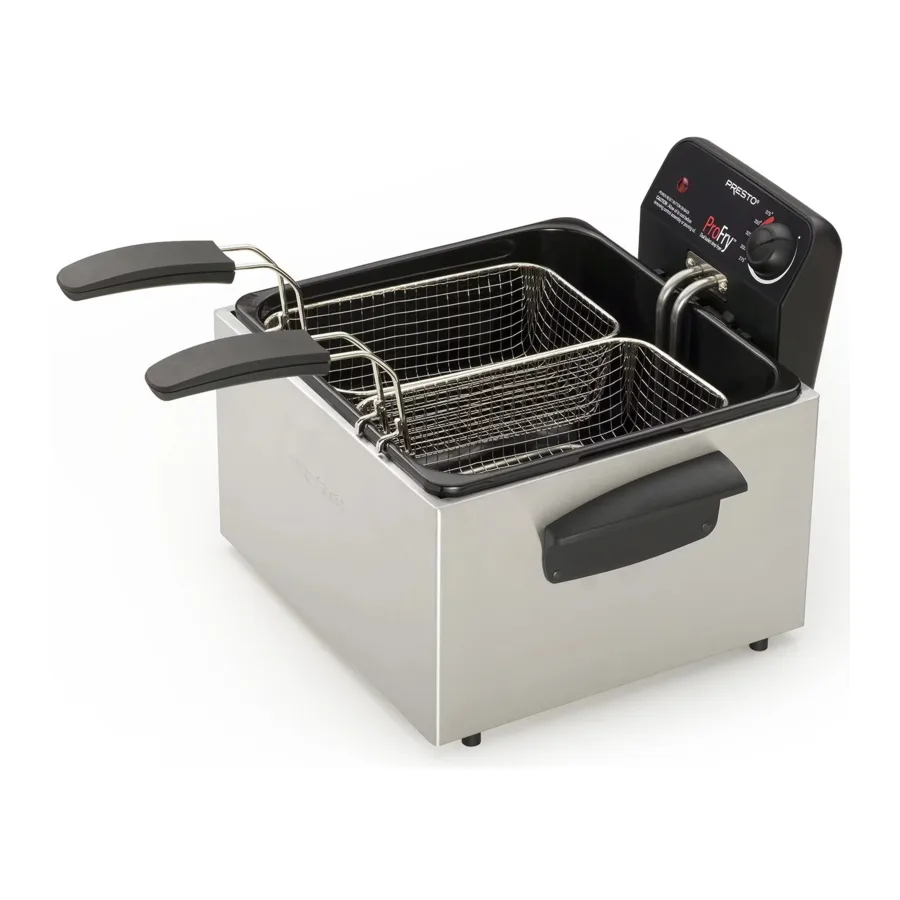
Manufacturer specifications put the power at 1800 watts, the oil capacity at 12 cups, and the design around two independent frying baskets. As of 2026, that's still a strong spec sheet for the price. Aggregate owner feedback shows consistent praise for throughput and consistent complaints about cleanup.
Let's unpack what that means for you.
Image source: Web (Bing) / manualslib.com (Web image (fair-use with source credit))
Quick Answer
Is the Presto ProFry 05466 deep fryer worth buying? For most home cooks, yes. This dual-basket electric model earns its keep.
It preheats fast and fries in big batches. Just know it's messy and wide. And it is not truly commercial grade.
The Big Question: Is This Presto Fryer Actually Worth It?
Here's the verdict without the fluff. The Presto ProFry 05466 is worth buying if you deep fry more than once a month and usually cook for more than two people. Skip it if you're after a tidy everyday appliance or real restaurant-grade hardware.
The phrase "commercial style" is doing a lot of work in the product name. It looks like a pro unit. It fries like one too.
But it's still a residential countertop appliance, and you'll feel that in the plastic handles and the basic analog dial.
Our research pulled together owner feedback from retail reviews and community threads similar to what you'd find on Reddit. The pattern is consistent. People love how much food this thing can handle.
Then they discover the oil cleanup and the counter space. Those tradeoffs drive every opinion below.
Here's the most useful data point. The 1800-watt immersion element is the same style used in more expensive fryers. It heats oil in roughly 10 to 12 minutes and holds temperature well between batches.
That's why owners report crispy coatings without raw centers.
Across verified buyer reviews, the 05466 sits around 4.2 out of 5 stars. That number hides a split. Long-term owners rate it higher.
First-time fryer buyers rate it lower, usually because they underestimated the mess. If you know the correct oil fill level and follow a few setup basics, the experience improves fast.
If you fry for a crowd several times a season, this is one of the best values in the category. If you fry chicken once a year, it's an expensive lump on your counter. The real question isn't whether the machine works.
It's whether you'll actually want to use it.
What You Get for the Money: Full Breakdown of the Presto 05466 Features
Let's walk through the spec sheet like a friend would. Here's what Presto actually put in the box.
| Feature | Spec | Why It Matters |
|---|---|---|
| Heating | 1800-watt immersion element | Heats oil fast and recovers between batches |
| Oil capacity | 12 cups / 2.8 liters | Enough for frying a whole chicken in pieces or several pounds of fries |
| Baskets | Two wire baskets with cool-touch handles | Cook two foods at once. Lower one while the other drains |
| Maximum temperature | 375°F | Right for most battered and breaded foods |
| Exterior | Stainless steel body | Wipes down easier than plastic, though it smudges |
| Interior | Nonstick coating | Less stuck-on breading to scrub |
| Lid | Built-in with viewing window | Blocks splatter and lets you watch the oil |
You also get simple controls. A dial sets the temperature, and a light tells you when the oil is ready. No presets, no timers, no digital screen.
Most owners see that as a plus because there's less to break. It does mean you have to monitor cooking times yourself.
The baskets are the real selling point. Having two independent baskets means you can fry fries in one and chicken in the other. That puts restaurant-style multi-batch cooking within reach.
Just don't fill them to the brim. Overloading drops the oil temperature and makes everything greasy.
One more thing worth knowing. The stainless steel exterior is for looks, not pro durability. This is still a home appliance made to a budget.
It has passed safety certification under Underwriters Laboratories, so basic North American electrical safety is covered. If you're new to this style of fryer, a quick read on using it correctly will save your first batch.
Where This Fryer Shines vs. Where It Falls Flat
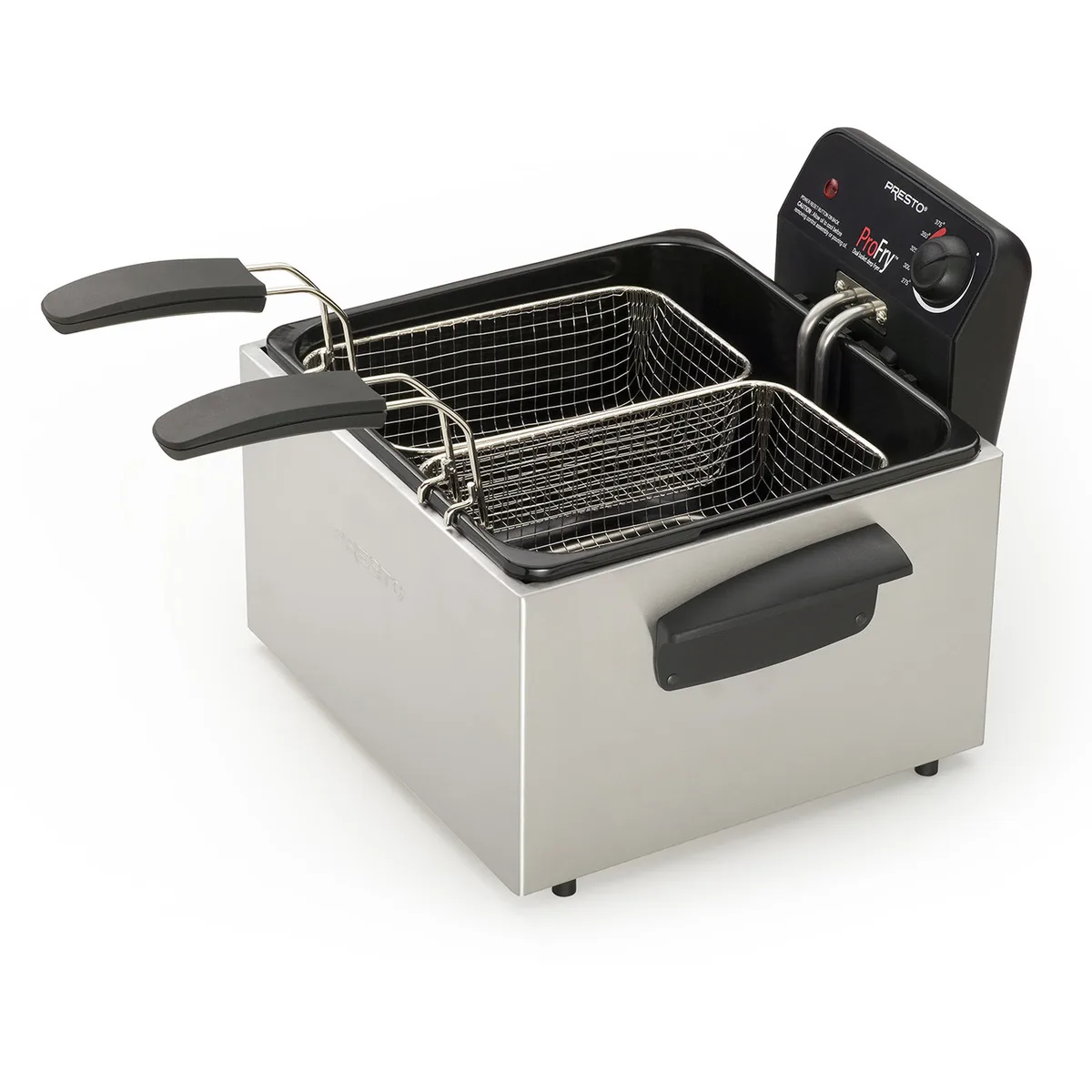
Image source: Web (Bing) / kmart.com (Web image (fair-use with source credit))
Every deep fryer is a compromise. The 05466 just makes the tradeoffs very obvious.
What It Does Really Well
- True batch capacity. Two baskets handle a full meal for four to six people.
- Fast oil recovery. The immersion element keeps heat steady when you load cold food.
- Even crusts. Food comes out crisp on the outside, cooked through inside.
- Simple controls. Nothing digital to fail.
- No gas or venting required. It plugs into a standard 120V outlet.
Owner feedback often compares the results to restaurant fried chicken. The crust sets quickly, so the food doesn't soak up as much oil as pan frying. That's a big deal for wings and battered fish.
Where It Falls Short
- Splatter and odor. The lid helps, but oil still spits.
- Big footprint. You need a permanent home for it.
- No drain valve. Draining oil means lifting the whole unit to the sink or a transfer container.
- Analog thermostat. It can drift by a few degrees over time.
- Not quick to clean. The nonstick interior helps, but the element and lid need attention.
If you're choosing between this and a deep pot on the stove, the Presto wins on safety and consistency. A stove pot gives you no thermostat and a higher burn risk. This fryer controls the temperature for you.
The cleaning routine is the real downside. That's why the best way to clean it matters more than any other maintenance tip.
How It Stacks Up Against the Real Alternatives
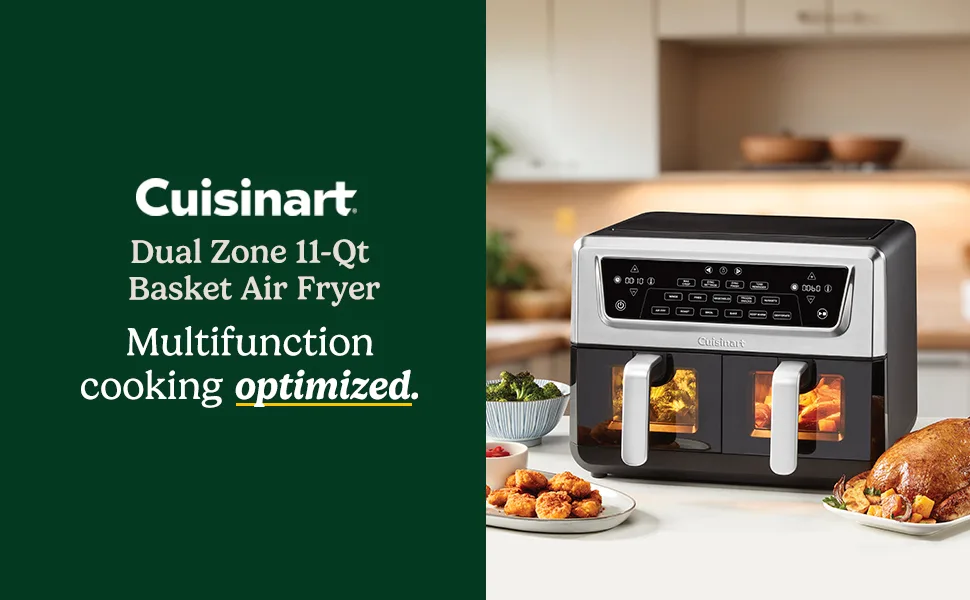
Image source: Bing (Web (fair-use with source credit))
The Presto 05466 doesn't exist in a vacuum. Before you pull the trigger, it's worth seeing how it compares to other common choices. We grouped them by what you'll actually gain and give up.
| Option | Price Range | Best For | Watch Out |
|---|---|---|---|
| Presto 05466 | $80-$100 | Big-batch frying on a budget | Messy cleanup and wide counter footprint |
| Cuisinart CDF-200P | $100-$140 | Home cooks who want easier cleanup | Slightly smaller oil capacity |
| Presto 05420 FryDaddy | $30-$40 | Single people and small batches | No baskets, much smaller capacity |
| Ninja AF101 air fryer | $80-$100 | Lower-oil cooking and quick weeknight meals | Can't match true deep-fried texture |
| Stovetop Dutch oven | $0 if you own one | Occasional frying with no new appliance | Harder to control oil temperature |
The Cuisinart CDF-200P is the Presto's closest rival. It has a sleeker body and a slightly more refined cleanup process. But it also holds less oil, and the basket capacity is tighter.
If you fry for larger groups, the Presto's extra room wins. If you fry for two and hate scrubbing, the Cuisinart is the better everyday pick.
The Ninja AF101 is a different philosophy altogether. It's not a deep fryer. It's a countertop convection oven that crisps with a fraction of the oil.
That tradeoff matters if you're tired of the smell and the splatter. But nothing air-fries a wet batter into the same golden crust. If you value convenience over authenticity, the air fryer route is worth exploring before you commit to vats of oil.
For solo cooks, a small single-basket unit like the Presto FryDaddy is simpler and far cheaper. It's a better fit for a small kitchen. And if you already own a heavy pot, the only real cost of trying pot frying is the learning curve.
Who Should Buy One and Who Definitely Shouldn't
Not everyone needs a dual-basket fryer. In fact, most people don't. Here's how to tell where you land.
Buy It If
- You host regular fry nights.
- You cook for four or more at a time.
- You want true deep-fried texture without restaurant prices.
- You have permanent counter space around 18 inches wide by 15 inches deep.
- You don't mind a 20-minute cleanup after each use.
Skip It If
- You fry a couple of times a year.
- Your kitchen has no window or exhaust fan.
- You want an appliance that does more than fry.
- You're expecting commercial build quality.
- You hate handling large amounts of hot oil.
Your situation matters more than the specs. If you're a tailgating regular, this fryer pays for itself in two seasons of chicken wings. If you're a single person making frozen fries, a small air fryer or a basic single-basket fryer will serve you better and take up less space.
One more thing to consider. The Presto 05466 is a commitment. Every use starts with filling the oil and ends with cooling, straining, and wiping.
That's not a bad thing. It just needs to be part of your routine. Skipping cleanup is how owners end up with cloudy oil and off-flavors in their food.
Mistakes Real Owners Make That You Can Avoid
The biggest regret among 05466 owners isn't the purchase itself. It's how they used it in the first few weeks. You can skip those headaches entirely.
Filling Oil to the Wrong Level
The fill lines inside the fryer are there for a reason. Too little oil and food sticks to the exposed element. Too much oil and it bubbles over the rim when you drop in battered food.
Most owners report best results by filling to the max line when the oil is at room temperature. The volume expands as it heats, so you get the right level at cooking temp. If you're unsure about the right amount for a given recipe, check a guide on how much oil for your specific fryer model.
Overloading the Baskets
This is the number one crunch killer. You want to get all the food done at once. The basket looks big enough.
So you fill it to the top.
That's a mistake. Overloading drops the oil temperature by 40 to 50 degrees. The food absorbs oil instead of crisping.
You end up with soggy results and longer cook times.
The fix: fill each basket no more than half to two-thirds full. Cook in smaller batches and let the oil recover for 60 seconds between loads. The total time is almost the same, and the texture is much better.
Ignoring the Learning Curve
The first batch with any new fryer is a test run. Owners who judge the 05466 on one batch of fries miss the full picture.
Start with something forgiving. Frozen french fries or tater tots. They have lower moisture and less risk of sticking.
After a couple of batches, move to breaded chicken or battered fish. You'll adjust to the preheat time and the thermostat behavior.
Using the Wrong Oil
High smoke point matters. Canola oil, peanut oil, and vegetable oil all work well. Olive oil and butter burn before reaching frying temperatures.
Cloudy oil and off-flavors in your food trace back to one mistake. Reusing oil too many times without filtering it. Strain it through a fine mesh sieve or cheesecloth after each use.
Store it in a sealed container. Toss it after three to five uses.
Neglecting Temperature Recovery
After you drop food in, the temperature needle dips. That's normal. The 1800-watt element pulls it back up within a minute or two.
Panic-cranking the thermostat to max does not speed this up. It just overshoots and burns the next batch. Leave the dial where it is.
Let the element do its job.
Keeping It Clean and Running Right for the Long Haul
Let's be honest. Cleaning this fryer is nobody's favorite job. But doing it right keeps it performing well and extends the oil's life.
The Cool-Down Rule
Hot oil is dangerous oil. You can't empty a full fryer while it's still bubbling. And you shouldn't try.
Let the unit cool completely. Point a fan at it if you're in a hurry. A fully cooled fryer lets you move it safely.
It also prevents thermal shock to the nonstick coating.
A Simple Cleanup Routine
Step 1: Remove the lid and baskets. Wipe the lid window with a paper towel while it's still warm. Food residue is easier to lift when it hasn't hardened.
Step 2: Pour or ladle the cooled oil into a storage container through a funnel lined with a coffee filter or cheesecloth. This catches the fallen breading bits.
Step 3: Fill the fryer with warm water and a drop of dish soap. Let it soak for 15 minutes. The nonstick interior releases most of the stuck-on food.
Step 4: Wipe down the interior with a soft sponge. Never use steel wool or abrasive pads on the nonstick coating. Scratches cause sticking later.
Step 5: Clean the heating element. A damp cloth will lift oil residue. If breading is stuck on it, let the element soak in warm water first.
But never submerge the power cord.
Step 6: Wash the baskets and lid in warm soapy water. Both are dishwasher safe per the manufacturer, but hand washing preserves the nonstick finish longer.
Step 7: Wipe the exterior stainless steel with a damp microfiber cloth. Dry it right after to avoid water spots.
Owner feedback consistently shows that people who commit to this 15-minute routine still own their fryer four or five years later. The ones who skip cleanup burn out on the purchase within a year.
When to Replace the Oil
Oil degrades every time you heat it. The signs are clear: dark color, a stale smell, and excessive smoking at normal frying temperature.
A good rule of thumb is three to five uses. Filter it after every session. Store it in a cool dark place.
If it starts to foam when you add food, it's done. Dump it.
Storing the Fryer
This is a big unit. It needs a dedicated home. Storing it inside a lower cabinet means lifting hot oil each time.
That's not practical.
Our research suggests keeping it on the counter in a spot near an outlet with good ventilation. If counter space is tight, a utility cart on wheels works well. You roll it out for cooking and push it back after cleanup.
Final Verdict: Putting It All Together
Every review out there boils down to a simple truth. You already know whether this fryer fits your life.
Buy it if: you cook fried food weekly for a crowd, you have permanent counter space, and you're okay with a 15-minute cleanup after each use.
Skip it if: you fry rarely, you hate cleaning oil, or you expect industrial build quality at a home price.
The 05466 is not a compromise machine. It's a specialist. It does one thing well and does it at a price that's hard to beat.
For occasional users, a smaller electric fryer or a basic air fryer may make more sense.
But if you're tallying the cost of restaurant takeout versus home cooking, this fryer pays for itself quickly. A year of regular fish-and-chip nights or game-day wings covers the $80 to $100 investment.
The comparisons show one clear pattern. Owners who match the product to their real habits are happy. Those who buy it hoping to become at-home fry chefs tend to lose momentum.
You know your kitchen better than anyone. If you've read through the upsides and downsides and the tradeoffs still feel fair, this is a solid purchase.
Frequently Asked Questions
How long does the Presto 05466 take to preheat?
Manufacturer specs indicate a preheat time of 10 to 12 minutes to reach 350°F. A full load of 12 cups of oil takes closer to 12 minutes. Room temperature and starting oil temperature affect the timing.
Can I use the two baskets for different foods at the same time?
Yes. Each basket operates independently. You can fry chicken wings in one and french fries in the other.
Just monitor the oil temperature between batches to keep it steady.
Is the Presto 05466 dishwasher safe?
The baskets and the lid are dishwasher safe according to the manual. The main body and heating element require hand washing. Never submerge the base or the power cord in water.
What type of oil works best in this fryer?
Canola oil, peanut oil, and vegetable oil are the most common choices. They have high smoke points above 400°F. A guide on using your deep fryer properly covers the recommended oil types and how to maintain them.
How much counter space do I need?
The unit measures about 18 inches wide, 15 inches deep, and 13 inches tall. That's the minimum footprint. You also need clearance behind it for the cord and ventilation.
How do I know when the oil needs to be replaced?
Replace the oil when it turns dark brown, smells stale when cool, or smokes at normal frying temperature. Most home users get three to five frying sessions from a batch of oil.

Related posts
Hot Lid on Countertop? Safety Tips for Air Fryer Combos
You've just finished air frying a batch of crispy chicken wings. The lid is hot. You're holding it…

Ninja Foodi SmartLid OL701 Worth Buying? Reddit
If you've been scrolling through Reddit asking yourself "is ninja foodi smartlid ol701 one lid multi cooker with…

Crispy Rotisserie Chicken: Temp & Time for Combo Cooker
So you want restaurant quality crispy skin on a whole rotisserie chicken, and you want to do it…