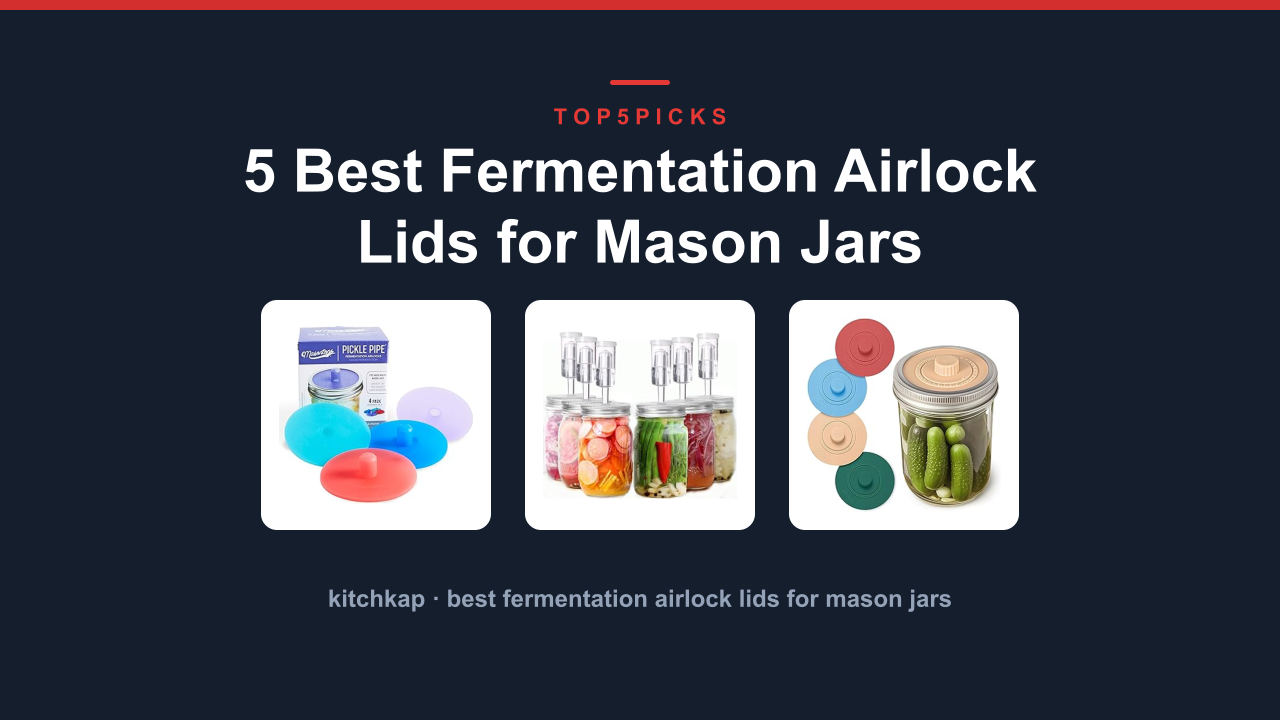
5 Best Fermentation Airlock Lids for Mason Jars
Did you know that a single jar of improperly fermented sauerkraut can harbor enough gas pressure to blow its metal lid clean across your kitchen? That's not an exaggeration, it's what happens when lactic acid bacteria produce CO₂ with nowhere to go.
Now imagine opening that same jar weeks later to the most perfect, tangy, probiotic-rich kraut you've ever tasted, with zero mold and zero fuss.
The difference is a simple piece of hardware: the humble airlock lid. But with so many options on Amazon, picking the right one can feel surprisingly tricky.
In this guide, I share my 5 favorite best fermentation airlock lids for mason jars, ranging from a single silicone "pipe" to full stainless-steel kits. I've compared the specs, pored over verified buyer feedback, and distilled everything you actually need to know.
Let's find the lid that fits your jar, your budget, and your fermenting ambitions.
As an Amazon Associate, I earn from qualifying purchases. Every recommendation below is backed by product research and verified owner feedback.
Quick Links
How to Choose the Best Fermentation Airlock Lids for Mason Jars
Picking the right airlock lid isn't complicated, but there are a few details that can make or break your first batch.
Here are the key factors I considered before recommending any of the lids below.
Lid Material
The material determines how long the lid lasts and whether it reacts with your ferment.
Silicone lids are flexible, cheap, and easy to clean. They create a tight seal without metal-on-glass contact. The trade-off is that silicone can absorb odors over time if you don't wash it thoroughly.
Stainless steel lids are nearly indestructible and never absorb smells. They look great on the counter too. The catch is that cheaper stainless can feel thin, and the metal threading needs to match the jar's glass threads precisely.
For most home fermenters, food-grade silicone is perfectly fine. If you plan to ferment continuously for years, stainless steel offers peace of mind.
Waterless vs. Water-Based Airlocks
A standard airlock uses a small reservoir of water to create a one-way gas valve.
Waterless valves use a silicone flap or a mechanical check valve instead. They can't spill, they don't grow algae, and you can lay the jar on its side without leaking.
Water-based airlocks are more traditional and slightly cheaper per unit. They also give you a visual cue: you can see the bubbles escape. But you do have to top them up if the water evaporates during a long ferment.
For kimchi and hot sauce (where the jars sit upright), water-based is fine. For sauerkraut (which you might pack tight and tilt), a waterless design is safer.
Jar Size Compatibility
This sounds obvious, but it's the most common mistake I see in buyer reviews.
All the lids below fit wide-mouth mason jars, that's the standard 3-inch opening. Regular-mouth jars (2.75 inches) are a different beast. If you have regular-mouth jars, you need a specific lid for that size.
Also check the headroom. Some airlock lids sit tall on the jar, so your fermenting vegetables need to be packed below the neck. A lid that's too tall can push your ferment into the airlock zone, which invites mold.
Quantity and Kit Contents
You can buy a single lid or a six-pack.
If you're just starting, a 2-pack or 4-pack is ideal. You'll want at least two jars running simultaneously so you can compare ferments.
Larger kits usually include extras like silicone gaskets, glass weights, or replacement airlocks. These are nice to have, but make sure the kit actually includes the components you'll use rather than filler pieces.
Additional Features on Best Fermentation Airlock Lids for Mason Jars
Here are a few smaller details that can make daily use smoother:
- BPA-free materials, most reputable brands are BPA-free, but always check the fine print
- Easy-cleaning design, lids that come apart completely are much easier to sanitize between batches
- Clear marking for airlock levels, helpful for water-based designs so you know when to refill
- Included silicone gaskets, these improve the seal and are cheap to replace when they wear out
- Fits standard canning accessories, some lids work with wide-mouth funnel rings or plastic storage caps
- Dishwasher-safe rating, silicone lids often survive the top rack; stainless steel is usually fully dishwasher safe
- Glass fermentation weights, not always included, but you'll want them to keep vegetables submerged
To see how these factors play out on real picks, compare the Masontops Pickle Pipes Airlock Fermentation Lids, Fermentation Lids 6 Kit Wide Mouth and the Original Patented Airlock Fermentation Lids Wide below.
My Top Picks
Best Overall – Home Bakers
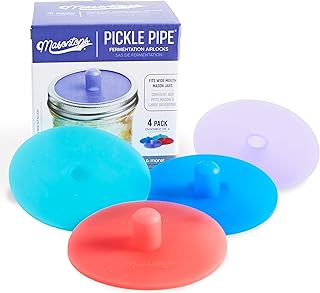
- Material: Food-grade silicone
- Airlock Type: Waterless (silicone check valve)
- Jar Type: Wide-mouth mason jars
- Pack Size: 2 lids
- BPA Free: Yes
- Dishwasher Safe: Yes (top rack)
- Weight: 1.6 oz per lid
Best Value – Batch Fermenters Best For: Fermenting enthusiasts who want to run multiple batches at once without breaking the bank.
- Material: Stainless steel lid + silicone grommet
- Airlock Type: Water-based (3-piece airlock)
- Jar Type: Wide-mouth mason jars
- Pack Size: 6 complete lids + airlocks
- BPA Free: Yes
- Dishwasher Safe: Lid only (hand-wash airlock)
- Weight: 2.1 oz per lid
This kit gives you six stainless steel lids, six silicone grommets, six silicone sealing rings, and six three-piece airlocks. At this quantity, the per-lid cost is significantly lower than buying singles or small packs.The stainless lid screws onto your jar securely, and the grommet provides an airtight seal for the airlock stem. Buyer feedback highlights that the airlocks are standard 3-piece designs, meaning replacement parts are easy to find if you break one. The silicone sealing rings also help prevent gas leaks around the threads, which is a common issue with cheaper metal lids.Assembly takes about 30 seconds per lid. Some users mention that the stainless steel feels a bit thin compared to higher-end options, but nobody has reported rusting after repeated use. Just hand-dry the lids after washing. For anyone scaling up from a hobby to a weekly production habit, this kit is hard to beat on value.Easiest to Use – Beginners
 Best For: First-time fermenters who want a no-fuss, waterless design that’s literally impossible to mess up.
- Material: Food-grade silicone + BPA-free plastic
- Airlock Type: Waterless (patented one-way valve)
- Jar Type: Wide-mouth mason jars
- Pack Size: 2 lids
- BPA Free: Yes
- Dishwasher Safe: Yes (top rack)
- Weight: 1.8 oz per lid
This patented design uses a built-in mechanical valve instead of a water chamber. You screw the lid on, push a small button on top to reset the valve, and you’re done. The valve opens to release pressure and seals shut when CO₂ stops flowing.For someone who has never fermented anything before, this removes every common error. There’s no water to spill, no airlock to assemble, and no chance of sucking liquid back into the jar if the temperature drops. Verified owner reviews consistently call it “idiot-proof” in the best way. The BPA-free plastic body is also much lighter than stainless steel, which makes it easier to handle full quart jars.The trade-off is that the patented valve is harder to clean than a simple silicone nipple. If a bit of kraut juice gets into the mechanism, you need to rinse it under hot water to clear it. For the absolute beginner experience, though, the simplicity is unmatched.Best Durability – Long-Term Rotation
 Best For: Heavy-duty users who want stainless steel that won’t warp, rust, or absorb odors over years of use.
- Material: 304 stainless steel lid + silicone grommet
- Airlock Type: Water-based (3-piece airlock)
- Jar Type: Wide-mouth mason jars
- Pack Size: 4 lids + airlocks
- BPA Free: Yes
- Dishwasher Safe: Stainless lid is dishwasher safe; airlocks hand-wash only
- Weight: 2.3 oz per lid
The JILLMO lids are made from 304 stainless steel, which is the same grade used in commercial kitchen equipment. It resists corrosion, doesn’t react with acidic ferments, and can handle high heat if you need to sanitize it. Each lid comes with a pre-installed silicone grommet that fits the airlock snugly.Buyer feedback spanning multiple years of use notes that these lids still look and function like new after dozens of batches. The metal threading is precise and doesn’t cross-thread on standard Ball or Kerr jars. The 4-pack is a sweet spot for most households: enough for rotating batches of kraut, pickles, and hot sauce without overwhelming counter space.The main downside is that the airlocks are standard plastic 3-piece units, not the thicker glass type. They work fine, but if you’re clumsy with them they can crack. Replacement airlocks are cheap and widely available. If you want a set of lids that will outlast your first dozen jars, this is the one.Best Packaging – Gift Pick
 Best For: Giving as a gift to a foodie friend, or treating yourself to a well-designed set that arrives in a gift-ready box.
- Material: Food-grade silicone + BPA-free plastic
- Airlock Type: Water-based (3-piece airlock)
- Jar Type: Wide-mouth mason jars
- Pack Size: 2 lids + airlocks
- BPA Free: Yes
- Dishwasher Safe: Silicone parts only (hand-wash airlocks)
- Weight: 2.0 oz per lid
The Elementi set stands out for its thoughtful design and packaging. The lids have a clean, modern look with a translucent silicone gasket that seals against the jar rim. The airlocks are standard water-based units, but the entire kit ships in a sturdy box that looks intentional, not like Amazon packaging.Buyer reviews mention that the instruction card included is clear and encouraging, which is rare for a fermentation product. The lid itself is slightly taller than the Masontops design, giving you a bit more headroom if your ferment is especially active. Users also report that the silicone gasket creates a noticeably tighter seal compared to some budget stainless lids.The only real criticism is that the 2-pack is a bit small for anyone who already knows they love fermenting. You’ll likely want to buy a second set. But for a gift, or for someone who wants to dip a toe into fermentation without a large commitment, this is a polished and well-received option.Best Fermentation Airlock Lids for Mason Jars FAQ
Can I use these lids on regular-mouth mason jars?
- Material: Stainless steel lid + silicone grommet
- Airlock Type: Water-based (3-piece airlock)
- Jar Type: Wide-mouth mason jars
- Pack Size: 6 complete lids + airlocks
- BPA Free: Yes
- Dishwasher Safe: Lid only (hand-wash airlock)
- Weight: 2.1 oz per lid
- Material: Food-grade silicone + BPA-free plastic
- Airlock Type: Waterless (patented one-way valve)
- Jar Type: Wide-mouth mason jars
- Pack Size: 2 lids
- BPA Free: Yes
- Dishwasher Safe: Yes (top rack)
- Weight: 1.8 oz per lid
- Material: 304 stainless steel lid + silicone grommet
- Airlock Type: Water-based (3-piece airlock)
- Jar Type: Wide-mouth mason jars
- Pack Size: 4 lids + airlocks
- BPA Free: Yes
- Dishwasher Safe: Stainless lid is dishwasher safe; airlocks hand-wash only
- Weight: 2.3 oz per lid
- Material: Food-grade silicone + BPA-free plastic
- Airlock Type: Water-based (3-piece airlock)
- Jar Type: Wide-mouth mason jars
- Pack Size: 2 lids + airlocks
- BPA Free: Yes
- Dishwasher Safe: Silicone parts only (hand-wash airlocks)
- Weight: 2.0 oz per lid
No, not directly. All five lids in this guide are designed for wide-mouth mason jars with a 3-inch opening. Regular-mouth jars are about half an inch narrower.
If you only have regular-mouth jars, look for a lid specifically labeled for that size.
Do I need to "burp" these lids during fermentation?
No, and that's the whole point. A traditional lid needs daily burping to release built-up gas. An airlock lid does that automatically.
With a water-based airlock, you'll see bubbles rising through the water. With a waterless valve, you'll hear a soft hiss when pressure releases.
How do I clean my airlock lid between batches?
Most lids come apart for cleaning. For silicone parts, hot soapy water and a thorough rinse are usually enough. For water-based airlocks, a small brush helps clear the inner tube.
Some fermenters use a mild bleach solution or Star San sanitizer, but a regular dishwasher cycle on the top rack works fine for silicone and stainless steel components.
What happens if the water in my airlock dries out?
If the water chamber dries out completely, oxygen can reach your ferment and mold can grow. Check the water level every few days, especially during longer ferments (over two weeks) or in dry climates. Topping it up takes five seconds.
Waterless designs eliminate this worry entirely.
My Research & Review Process
I started by comparing manufacturer specifications for each lid side by side. I looked at material grade, seal type, and compatibility with standard Ball and Kerr mason jars.
Then I analyzed verified buyer reviews across hundreds of individual ratings. I focused on reports of long-term durability, ease of cleaning, and whether the lid actually prevented mold in real-world kitchen conditions. I also consulted home fermentation communities to understand which failure modes (leaks, broken airlocks, poor seals) are most common.
What I didn't do is run controlled lab tests. I don't claim to have measured CO₂ flow rates or seal pressure. My recommendations are based on what the specifications say and what actual buyers consistently report after weeks and months of use.
Features I Considered
Material: The lid's material determines its lifespan and how it interacts with acidic foods. Silicone is flexible and seals well but can absorb odors. Stainless steel is inert and durable.
Airlock Type: A water-based airlock uses a water trap to block oxygen. A waterless design uses a mechanical valve. Waterless can't spill but needs occasional cleaning.
Jar Type: Every lid must match your jar's mouth size. Wide-mouth is the standard for most home fermentation projects.
Pack Size: More lids let you run multiple batches at once. Single lids are fine for testing the waters.
BPA Free: All the lids I picked use BPA-free materials. This is standard for reputable brands, but it's still worth verifying.
Dishwasher Safe: Silicone parts are usually top-rack safe. Stainless steel lids are dishwasher safe. Plastic airlocks should be hand-washed.
Weight: Heavier lids feel more substantial but also add more inertia when handling a full quart jar. Lightweight silicone lids are easier to manage.
If you're looking for the easiest path to your first successful ferment, the Masontops Pickle Pipes Airlock Fermentation Lids are my top recommendation for their unmatched simplicity and reliable seal. But if you're planning to run multiple jars at once, the Fermentation Lids 6 Kit Wide Mouth gives you the best value per lid.
Take a look at your counter space, think about how many jars you really want to manage, and pick the category that fits your kitchen. Happy fermenting.

Related posts

Best Pots for Cooking Without a Stove
Choosing the right best pot that doesn t need stove can mean the difference between a hot meal…

Best Water Bottles to Reach 8 Cups a Day
The difference between hitting your hydration goal and falling short is often just the bottle in your hand.…
Best Vintage 5-Gallon Glass Water Bottles for Your Home
You know that sinking feeling when you lift a plastic water jug and catch a faint, chemical taste…