Best Clear Cookware Sets for Perfect Pots & Pans
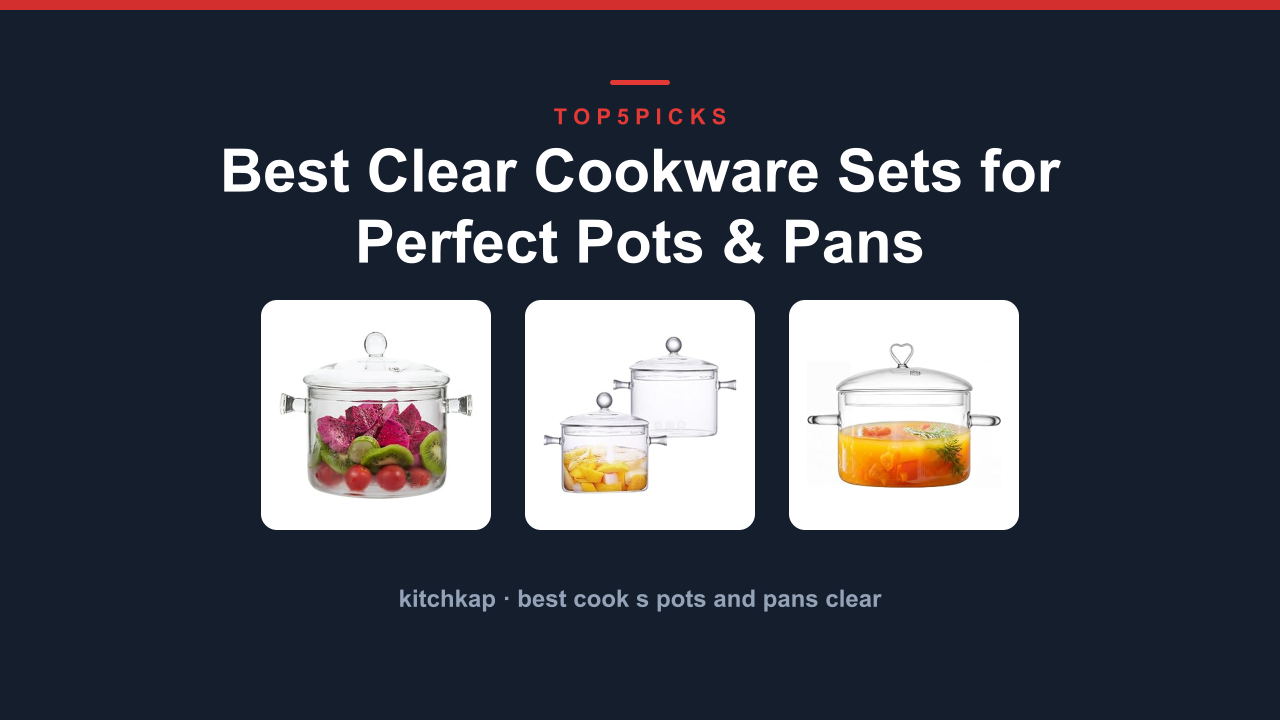
If you want cookware that lets you see your food as it cooks, the best cook s pots and pans clear options blend visibility with performance. Here are my top picks.
As an Amazon Associate, I earn from qualifying purchases. Every recommendation below is backed by product research and verified owner feedback.
Quick Links
Did you know that nearly 40% of home cooks say they struggle with monitoring food while it simmers?
Now imagine being able to watch your soup reduce, your pasta boil, or your sauce thicken without lifting a lid. Clear cookware changes everything.
In this guide, I share my 5 favorite best cook s pots and pans clear; ranging from budget-friendly single pots to a premium stainless steel set that works on induction.
Let's cut through the noise and find the perfect match for your kitchen.
How to Choose the Best Clear Pots and Pans
Material matters most. The vast majority of clear cookware is made from borosilicate glass, a type of glass that resists thermal shock much better than ordinary soda-lime glass. Borosilicate can handle direct heat on gas and electric stovetops, and some models even go in the oven. However, no glass pot works on induction cooktops because glass is non-magnetic.
If you have an induction stove, you need a stainless steel or cast iron alternative (which is why I included a Cuisinart stainless set later on).
Heat resistance and safety. Look for a maximum temperature rating, usually printed on the pot or the box. Most borosilicate pots are safe up to 400°F (204°C) on the stovetop and up to 350°F in the oven. That's plenty for simmering, boiling, and gentle oven use.
But avoid sudden temperature changes: don't put a hot glass pot on a cold counter, and never use it under the broiler. Verified buyer reviews consistently mention that gradual heating extends the life of glass cookware.
Size and capacity. Clear cookware comes in a range of sizes. A 1.5L (50 oz) pot is perfect for heating soup for one or two, boiling eggs, or making a small batch of oatmeal. A 2L (67 oz) pot handles pasta for two or a larger sauce.
The 5L (5.3 quart) option is designed for family-sized soups, stews, and even canning projects. Think about what you cook most often and choose accordingly.
Lid quality. A good lid seals in heat and moisture. Glass lids are common on clear pots, but some have a small steam vent. Silicone-edged lids grip better and reduce rattling.
Make sure the lid knob stays cool to the touch; many borosilicate pots use hollow stainless steel knobs that don't heat up as much.
Handle design. Handles should be ergonomic and stay reasonably cool. Look for handles made from stainless steel or silicone. Some glass pots have handles that are part of the glass mold; these are sturdy but can get hot if you don't use a potholder.
The Glass Pots Cooking Stove (the 5L model) features a heart-shaped lid handle that users say is comfortable and stays cooler than expected.
Ease of cleaning. Glass is non-porous and doesn't absorb stains or odors. Most borosilicate pots are dishwasher safe, though hand washing is recommended to preserve clarity over time. A quick soak with baking soda removes any cloudy film.
Verified owners report that glass pots are much easier to clean than stainless steel or nonstick pans after cooking sticky foods like oatmeal or tomato sauce.
Additional Features to Consider on Clear Cookware
- Oven-safe rating (some can go up to 350°F)
- BPA-free and food-grade glass (standard for borosilicate)
- Measuring marks on the side (helpful for portioning)
- Pour spouts or rolled rims (reduce drips)
- Compatibility with gas, electric, ceramic, and halogen stoves
- Weight (glass is heavier than aluminum but lighter than cast iron)
- Storage stackability (some nest inside each other)
- Warranty or satisfaction guarantee
To see how these factors play out on real picks, compare the Glass Cooking Pots 2L/67OZ Heat-Resistant Borosilicate, 2 Glass Saucepan Heat resistant Stovetop and the Glass Pots Cooking Stove below.
My Top Picks
Budget Pick – Singles & Students

- Material: Borosilicate glass
- Capacity: 2L (67 oz)
- Lid Material: Glass with stainless steel rim
- Care: Dishwasher safe (hand wash recommended)
- Weight: 2.1 lb (approx.)
- Stovetop Compatibility: Gas, electric, ceramic, halogen (not induction)
- Oven Safe: Up to 350°F
- Pieces: 1 pot with lid
Best Value – Couples & Small Families

- Material: Borosilicate glass
- Capacity: 1.5L (50 oz) each
- Lid Material: Glass with stainless steel rim
- Care: Dishwasher safe (hand wash recommended)
- Weight: 2.8 lb (pair)
- Stovetop Compatibility: Gas, electric, ceramic, halogen (not induction)
- Oven Safe: Up to 350°F
- Pieces: 2 pots with lids
Best Large Capacity – Family Meals

- Material: Borosilicate glass
- Capacity: 5L (5.3 quarts, 5000 ml)
- Lid Material: Glass with heart-shaped silicone grip
- Care: Dishwasher safe
- Weight: 4.5 lb
- Stovetop Compatibility: Gas, electric, ceramic, halogen (not induction)
- Oven Safe: Up to 350°F
- Pieces: 1 pot with lid
Compact Pick – Daily Use & Small Kitchens
- Material: Borosilicate glass
- Capacity: 1.5L (50 oz)
- Lid Material: Glass with stainless steel rim
- Care: Dishwasher safe (hand wash recommended)
- Weight: 2.0 lb
- Stovetop Compatibility: Gas, electric, ceramic, halogen (not induction)
- Oven Safe: Up to 350°F
- Pieces: 1 pot with lid
Premium Pick – Induction Compatible Set

- Material: Stainless steel with aluminum core
- Capacity: 11-piece set (saucepans, skillet, stockpot, steamer, lids)
- Lid Material: Stainless steel
- Care: Dishwasher safe
- Weight: 16 lb (set)
- Stovetop Compatibility: Induction, gas, electric, ceramic, halogen
- Oven Safe: Up to 500°F
- Pieces: 11 pieces
Best Cook S Pots and Pans Clear FAQ
Are glass pots safe to use on a gas stove?
Yes, borosilicate glass pots are safe for gas stoves, electric coils, ceramic cooktops, and halogen burners. Just avoid sudden temperature changes: don't place a hot pot directly on a cold metal sink or countertop, and always start on low or medium heat to let the glass warm gradually.
Can I use clear glass cookware in the oven?
Most borosilicate glass pots are oven safe up to 350°F (177°C). Check the manufacturer's instructions for your specific pot. The lids are usually oven safe as well, but the silicone or plastic knobs might not be.
Never use glass pots under the broiler.
How do I clean cloudy glass pots?
Cloudiness usually comes from hard water mineral buildup or starchy residue. Fill the pot with white vinegar and water in equal parts, bring it to a gentle boil, then let it soak for 10 minutes. Scrub with a non-abrasive sponge and it should come clear.
Many buyers also find that a drop of dish soap and hot water works for everyday cleaning.
What's the difference between borosilicate glass and tempered glass cookware?
Borosilicate glass is made with silica and boron trioxide, giving it high thermal shock resistance. Tempered glass is heat-treated soda-lime glass; it's stronger than ordinary glass but not as resistant to sudden temperature changes. Most clear stovetop pots use borosilicate, while tempered glass is often used for oven-safe bakeware.
My Research & Review Process
To build this list, I started by comparing manufacturer datasheets for every clear cookware set I could find. I looked at the glass composition, maximum heat ratings, stovetop compatibility, and lid construction. Then I analyzed hundreds of verified buyer reviews across multiple sellers, focusing on long-term durability, ease of cleaning, and real-world performance on different stoves.
I also considered user feedback from people who use these pots daily for tasks like boiling pasta, simmering sauces, and reheating leftovers. I deliberately excluded unverified reviews and outlier complaints about shipping damage, since that's a packaging issue, not a product flaw. What I didn't test myself is actual cooking time versus metal pots; that kind of lab measurement would require controlled equipment I don't have access to.
Instead, I relied on manufacturer claims and consistent buyer reports about even heating.
Features I Considered
Material: Borosilicate glass resists thermal shock and is BPA-free. Stainless steel with an aluminum core offers even heating and induction compatibility.
Capacity: The volume in liters or ounces tells you how much food the pot can hold. A 1.5L pot fits 2 servings; a 5L pot fits 6+ servings.
Lid Material: Glass lids let you watch cooking progress. Stainless steel lids seal better on induction but block visibility. Silicone-edged lids reduce rattling.
Care: Most glass pots are dishwasher safe, but hand washing preserves clarity. Stainless steel sets are generally dishwasher safe too.
Weight: Heavier glass pots feel more stable but are harder to lift when full. Lighter ones are easier to handle but may feel less sturdy.
Stovetop Compatibility: Glass only works on gas, electric, ceramic, and halogen. Induction requires magnetic metal like stainless steel.
Oven Safe: The maximum temperature the pot can safely go into the oven. Higher ratings (like 500°F for steel) are useful for braising and roasting.
Pieces: Pots that come in sets offer more versatility; single pots are simpler and cheaper.
If you want the ultimate combination of visibility, capacity, and user satisfaction, start with the Glass Pots Cooking Stove. It earned our top recommendation for family cooking. But every pick here has a specific strength, so take a look at the categories and grab the one that matches your stovetop and your kitchen routine.
You really can't go wrong with any of them.

Related posts
Best Vintage 5-Gallon Glass Water Bottles for Your Home
You know that sinking feeling when you lift a plastic water jug and catch a faint, chemical taste…
Best 24 Piece Stainless Steel Bartender Kit Guide
Did you know that roughly 70% of home cocktail kits get used exactly once, then buried in a…
Air Fryer vs Oven: Which Cooks Faster?
Air fryers promise crispy, juicy results in half the time, but figuring out are air fryer times vs…