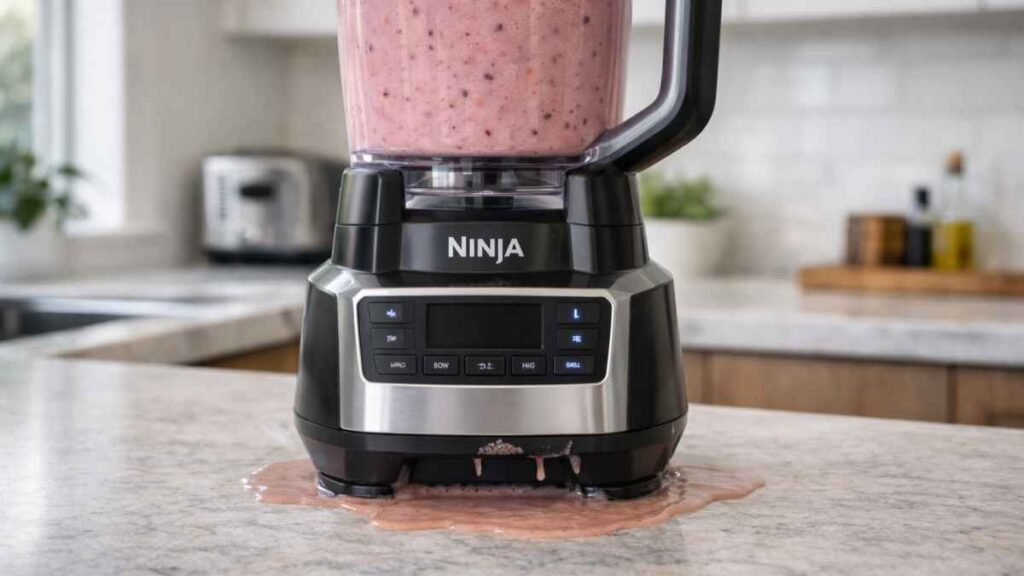
I remember the first time I asked why does my ninja blender leak. A smoothie ran across my counter, and I just stood there staring at it. Later, I learned that a ninja blender leaking is very common and often easy to fix. After dealing with my ninja blender leaks more than once, I found that most problems come from simple seals or pressure. In this guide, I’ll show you why leaks happen, how to spot risky signs, and when it’s smarter to stop and replace your Ninja blender.
Why Does My Ninja Blender Leak? Understanding the Real Reason
Your blender leaks because pressure always escapes through the weakest seal. A Ninja blender holds liquid with tight seals around the blade base and lid. When those seals weaken, liquid finds a way out, often during blending and not before.
From my own use, leaks usually come from pressure mixed with seal failure. Thick smoothies, frozen food, or hot liquids raise pressure fast. If the gasket is worn or not seated right, even a tiny gap will leak.
This is not a flaw unique to Ninja blenders. All high-speed blenders work this way. Strong motors create force, and seals must hold it back every time you blend.
Before fixing anything, always find where the leak starts. A bottom leak points to the blade seal. A top leak points to the lid or overfilling. Finding the leak spot first saves time and avoids wrong repairs.
Where Is Your Ninja Blender Leaking From?
Finding the leak spot is the fastest way to fix the problem. A Ninja blender usually leaks from one clear area, not everywhere at once. Once you know where liquid escapes, the cause becomes much easier to understand and fix.
Ninja Blender Leaking From the Bottom
If liquid pools under the blender, this is the most common issue. A ninja blender leaking from bottom almost always points to the blade base. In my case, this happened when the gasket was slightly out of place.
Most bottom leaks are tied to a worn blade gasket or internal bearing failure. When the seal under the blade weakens, pressure pushes liquid down. That’s why people often ask why is my ninja blender leaking from the bottom after blending thick drinks.
Ninja Blender Blade Leaking
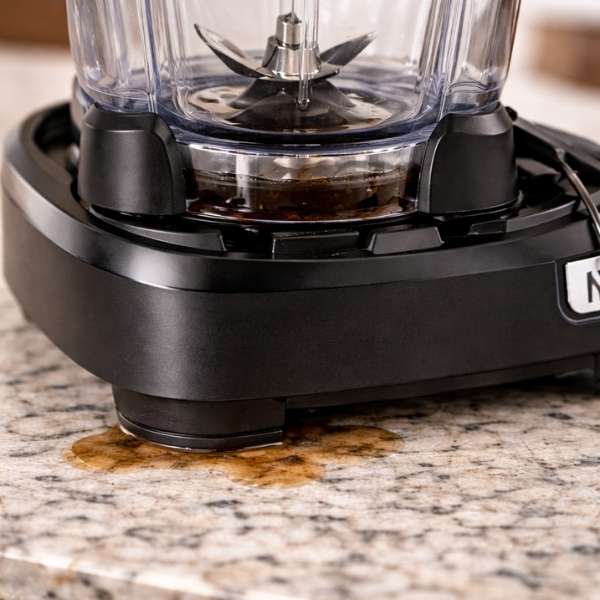
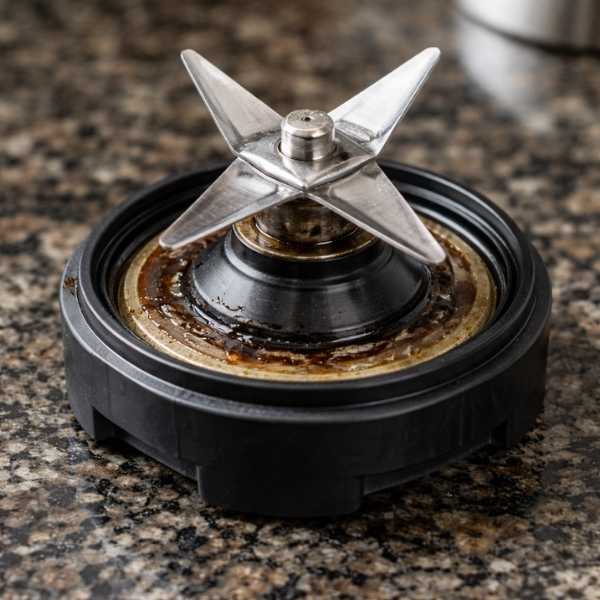
A blade leak can look small but tell a big story. Sometimes it is just a gasket leak, which is easy to fix. Other times, it is a shaft or bearing leak inside the blade assembly.
Warning signs matter here. Brown liquid or oily drops mean internal damage. When I saw this once, I knew my ninja blender blade leaking was not a simple seal issue anymore.
Ninja Blender Cup Leaking
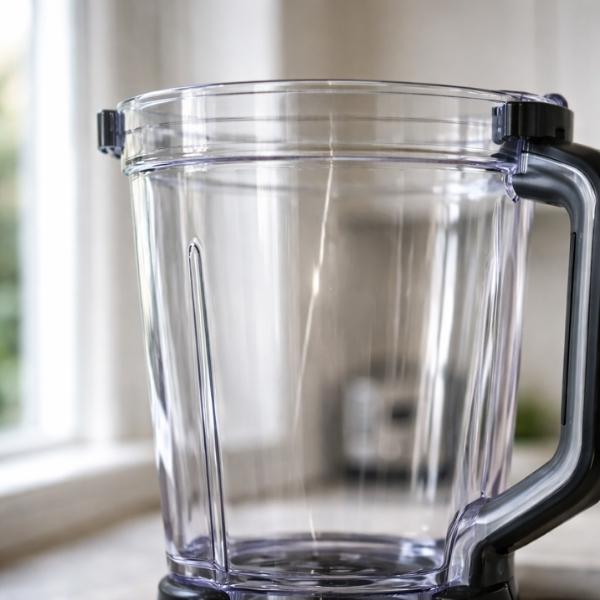
If the cup itself leaks, the problem is usually physical damage. Tiny cracks can form from drops, heat, or over-tightening. These cracks are hard to see but easy to feel once liquid escapes.
Warped plastic also causes leaks. This is common when cups are washed in hot water often. If my ninja blender leaks even with a tight blade base, the cup is the first thing I inspect.
Ninja Blender Leaking From the Top
Top leaks feel messy but are often the easiest to fix. A ninja blender leaking from top usually means the lid seal is not seated right. Overfilling also plays a big role here.
Hot liquids create steam pressure. That pressure pushes liquid upward and out. Once I stopped blending hot soups right away, top leaks stopped completely on my Ninja blender.
Common Reasons a Ninja Blender Leaks (From Real-World Use)
Worn, Dirty, or Missing Gasket
Most leaks start with the gasket. This small rubber ring makes the seal tight. When food dries on it, the seal breaks and liquid slips through. Over time, heat and use make gaskets stiff, so age alone can cause leaks.
Loose or Misaligned Assembly
Sometimes nothing is broken at all. The blade base may not be seated straight, or the lid may not be fully locked. I’ve had leaks stop just by taking everything apart and putting it back together with care.
Overfilling Past the Max Line
Overfilling creates pressure fast. When liquid has nowhere to go, it pushes against the seals. Even a good gasket can fail if the cup is filled too high, especially with thick blends.
Internal Bearing Failure (The Serious One)
Some leaks come from inside the blade unit. Dishwashers wash away grease that protects the bearing. When that happens, brown or oily liquid may appear, and the blender becomes unsafe to use.
Cracks in Plastic Components
Small cracks cause big leaks. A tiny split in the cup or blade housing opens wider under pressure. I always check parts under light because cracks are easy to miss but impossible to fix.
These issues happen with regular use and are not unique to Ninja blenders. Once you know the cause, choosing the right fix becomes much easier.
How to Fix a Leaking Ninja Blender (Step-by-Step)
Fixing a leak often takes less time than making the smoothie that caused it. I’ve fixed most leaks at home with no tools and no stress. The key is to go step by step and not skip checks.
Step 1: Inspect and Reseat the Gasket
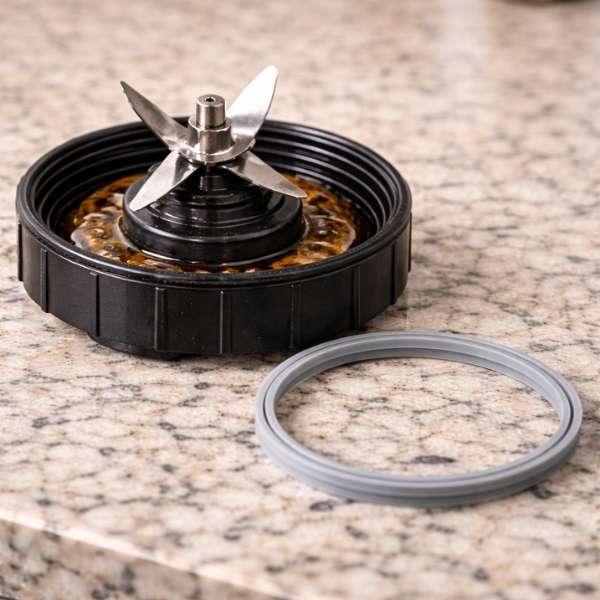
Start with the gasket because it causes most leaks. It sits inside the blade base and forms the seal. If it looks flat, cracked, or sticky, that alone explains the leak. Even a good gasket will leak if it is twisted or not seated evenly.
Step 2: Deep Clean the Blade Base and Threads
Dried food breaks seals faster than people think. Tiny bits hide in the threads and push the gasket out of place. I use warm water, soap, and an old toothbrush. After cleaning, many leaks stop right away.
Step 3: Test for Cracks Using Light
Cracks are sneaky but easy to spot with light. Hold the cup and blade base near a window or phone flashlight. Small lines that glow are cracks. If you see them, the leak will not stop until the part is replaced.
Step 4: Decide When to Replace the Blade Assembly
Some leaks should not be repaired. Brown liquid, oily drops, or grinding sounds mean internal failure. When that happens, replacing the blade assembly is the safe choice. Knowing how to fix leaking ninja blender issues also means knowing when to stop and protect your Ninja blender and your kitchen.
Most leaks are simple. Slow down, inspect each part, and trust what you see. This approach saves money and avoids repeat leaks later.
When a Leaking Ninja Blender Should NOT Be Fixed
Some leaks are warning signs, not repair jobs. When brown or oily liquid shows up, it means fluid is coming from inside the blade unit. I learned this the hard way once, and fixing it only delayed the real problem. At this point, using the blender is unsafe.
Grinding or loud scraping noises are another clear stop sign. That sound usually means the internal bearing is failing. Even if the blender still runs, damage is already done, and continued use can lead to motor failure.
Liquid near the motor is the biggest red flag. If moisture reaches the base, it risks electrical damage and shock. When I see this, I unplug the blender right away and do not test it again.
Knowing when not to fix a blender is part of smart care. Stopping early protects your kitchen, your safety, and saves money in the long run.
How I Prevent My Ninja Blender From Leaking Now
I always hand-wash the blade assembly. Heat and strong soap wear seals fast. When I stopped using the dishwasher, leaks stopped too. Clean by hand keeps the gasket soft and tight.
I avoid over-tightening every part. Tight feels safe, but too tight bends plastic. A gentle, firm twist is enough. This small habit prevents cracks and warped seals.
I let hot liquids cool first. Heat makes steam, and steam raises pressure. Pressure pushes liquid past seals. Cooling for a few minutes keeps everything calm and sealed.
I use the pulse button before full speed. Pulse breaks food down slowly. This lowers stress on the seals at the start. Since doing this, I’ve had no surprise leaks at all.
Official Support: Visit the Ninja Kitchen support pages for guides and contact options.
Final Thoughts on Why My Ninja Blender Leaks
Most blender leaks are preventable once you know what to look for. Small habits like cleaning seals, watching fill lines, and listening for odd sounds make a big difference. I learned that leaks rarely happen without a warning.
Before replacing anything, slow down and inspect each part. A gasket, a crack, or a loose fit often explains the problem. Fixing the right part saves money and avoids repeat leaks.
If a repair feels unsafe, trust that feeling. Replace damaged parts early and protect your kitchen. With simple care, your why does my ninja blender leak problem can stay solved for good.
FAQs About Why Does My Ninja Blender Leak
Why does my Ninja blender leak from the bottom?
A Ninja blender leaks from the bottom when the blade gasket is worn or the bearing fails. Pressure forces liquid past the seal, especially during thick blends or overfilling.
Can I fix a Ninja blender blade leaking at home?
Yes, you can fix a Ninja blender blade leaking if the gasket is dirty or loose. If you see brown liquid or oil, the blade bearing has failed and needs replacement.
Why is my Ninja blender leaking brown liquid or oil?
Brown liquid or oil means the internal bearing seal has failed. This often happens after dishwasher use. It is unsafe to fix and the blade assembly should be replaced.
Why does my Ninja blender leak from the top?
A Ninja blender leaking from top usually comes from a loose lid seal or overfilling. Hot liquids create steam pressure that pushes liquid up and out during blending.
How do I know if my Ninja blender leak is repairable?
A leak is repairable if it comes from a loose gasket, dirty threads, or overfilling. If liquid reaches the motor or smells oily, replacement is the safer option.
Read related Post:
- How To Clean Presto Deep Fryer
- Ninja AF101 Air Fryer Toxic
- How to Use Presto Deep Fryer
- How to Clean Hamilton Beach Air Fryer
- is the cuisinart air fryer toxic
- ninja air fryer making noise
- why won’t ninja blender work

Hi, I’m Rob Newaz Khan. I share practical, experience-based guidance on kitchen appliances such as air fryers and coffee makers. My content is built around real home use, common user questions, and manufacturer best practices, with the goal of helping readers use their appliances safely, fix everyday issues, and make better decisions in the kitchen.