Many people ask, “Is the Ninja AF101 air fryer toxic?” I asked the same question before buying mine. I wanted quick, crispy meals, but I didn’t want to worry about hidden health risks or unsafe materials touching my food.
The truth is, not all air fryers are created equal. Some models still use traditional non-stick coatings or plastic parts that raise valid safety questions. That’s why I took the time to research the Ninja AF101 carefully—and then test it in my own kitchen.
In this guide, I’ll share what I found, explain what really matters when it comes to air fryer safety, and clear up common myths. If you’re wondering “Is my Ninja air fryer safe?”, you’ll find a clear, honest answer here.
Is the Ninja AF101 Air Fryer Toxic?
No. The Ninja AF101 air fryer is generally considered non-toxic and safe for everyday cooking when used properly. It uses a ceramic-coated basket, is PTFE/PFOA-free, and is made with BPA-free materials, according to Ninja.
What Is the Ninja AF101 Air Fryer?
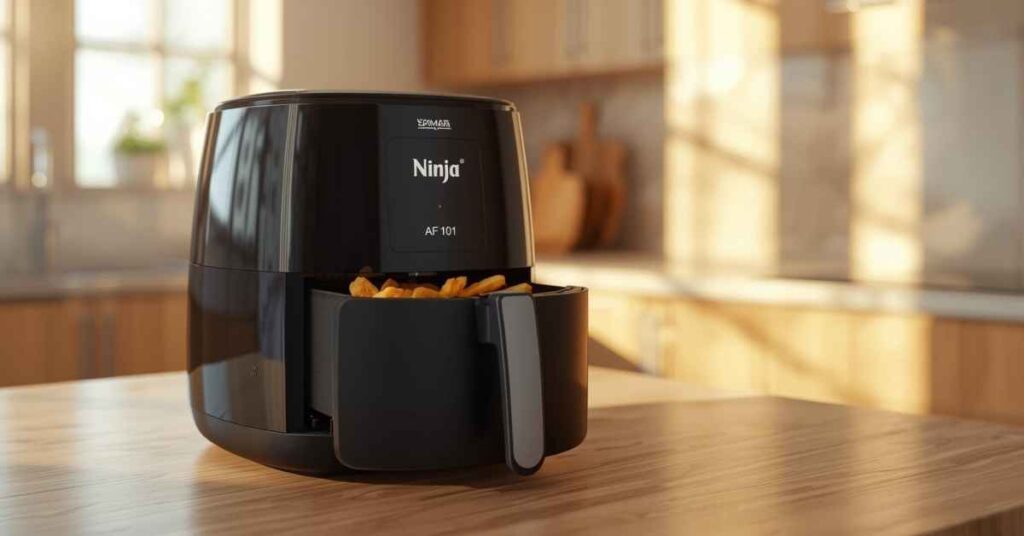
The Ninja AF101 is one of the most popular air fryers available today. It’s a 4-quart air fryer, which means it can cook around 2 pounds of fries or wings at once. That size makes it ideal for individuals, couples, or small families, while still fitting easily on a kitchen counter.
If you’re asking “What is the AF101?”, think of it as Ninja’s reliable, entry-level model. It focuses on core cooking functions without unnecessary extras. You get four modes:
- Air Fry
- Roast
- Reheat
- Dehydrate
For most home cooks, that’s more than enough.
The AF101 is often compared to the Ninja AF161 Max XL. The AF161 is larger (5.5 quarts) and reaches higher temperatures, which can speed up cooking. Still, many people prefer the AF101 because it’s more compact, more affordable, and easier to store.
Performance-wise, it delivers crispy fries, juicy chicken, and evenly cooked vegetables. But performance alone isn’t enough. Safety is what really matters—and that’s where most questions come in.

Are Ninja Air Fryers Toxic?
This is where confusion often starts. When people ask “Are Ninja air fryers toxic?”, they’re usually worried about three things:
- Non-stick coatings
- Plastic parts
- General air fryer health myths
Let’s break each one down clearly.
Non-Stick Coating Concerns
Many older or cheaper air fryers use PTFE (Teflon) coatings. When overheated or damaged, PTFE can release fumes. That’s why so many people worry about toxicity.
The Ninja AF101 does not use Teflon. Instead, it uses a ceramic-coated basket and crisper plate, which is widely considered a safer alternative.
Plastic Parts
Yes, the AF101 has a plastic outer housing—like nearly all air fryers. During my first use, I noticed a faint “new appliance” smell. That’s common with new electronics and faded quickly after a couple of test runs. Since then, I haven’t noticed any unusual odors.
This type of initial smell is not the same as ongoing chemical release.
General Air Fryer Myths
Air fryers often get lumped into online health scares. In reality, Ninja states that the AF101 uses FDA-approved, BPA-free materials. When used as intended, there’s no solid evidence showing Ninja air fryers release harmful toxins.Bottom line: Ninja air fryers, including the AF101, are generally safe and non-toxic when used and maintained correctly.
Is the Ninja AF101 Air Fryer Safe?
Before buying mine, this was my biggest concern. After researching manufacturer details, user reports, and hands-on use, I’m comfortable saying the Ninja AF101 is safe for regular home cooking.
The basket and crisper plate are:
- Ceramic-coated
- BPA-free
- PTFE and PFOA-free
That means no traditional Teflon coating, which is a major win for safety-focused buyers.
The outer body does include heat-resistant plastic, but in real use, I haven’t experienced ongoing odors or signs of chemical off-gassing. After the break-in period, it felt completely normal.
As for aluminum concerns, the metal basket is fully coated, so food doesn’t come into contact with bare aluminum. With proper care—avoiding scratches and overheating—the coating remains intact.In practical terms: The Ninja AF101 isn’t a “perfectly pure” appliance, but it’s a safe, modern option that balances performance and peace of mind.
Risks of Using Any Air Fryer (Including Ninja)
No air fryer is completely risk-free. Most issues come from misuse, not design.
Overheating
Running an air fryer empty at high heat can cause smells or stress the materials. Light preheating is fine, but don’t leave it running empty for long periods.
Scratching the Coating
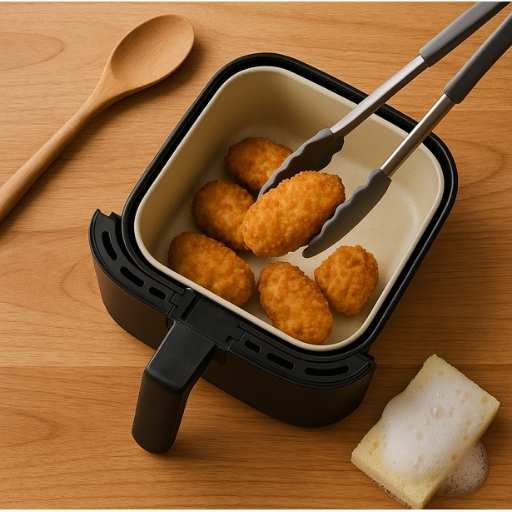
Ceramic coatings are safer than PTFE, but they can still wear down if scraped. I only use silicone or wooden utensils, and that has kept my basket looking almost new.
Improper Use of Liners
Loose parchment or foil can blow into the heating element. Always weigh liners down with food and follow airflow guidelines.
Oil Choice
High heat breaks down delicate oils. I stick with avocado oil or refined olive oil for best results and less smoke.
My Personal Experience With the Ninja AF101
I’ve used the Ninja AF101 for over a year, and it’s one of my most-used kitchen tools. I was cautious at first, especially about smells and coating durability.
The initial “new appliance” smell disappeared after the first use. Since then, I haven’t noticed anything concerning.
The ceramic coating has held up very well. I cook several times a week, and there’s no peeling or flaking. Gentle cleaning and the right utensils make all the difference.
Food quality is excellent. Fries come out crisp, chicken stays juicy, and leftovers reheat better than in a microwave. Most importantly, I never feel like I’m trading safety for convenience.
My simple care tips:
- Don’t overheat it empty
- Use silicone or wooden tools
- Wash gently with a soft sponge
Non-Toxic Air Fryer Alternatives
If you want to avoid coatings entirely, there are options.
Glass Air Fryers
Glass air fryers eliminate coating concerns completely. They’re bulkier but offer full visibility and peace of mind.
Stainless Steel Basket Air Fryers
Stainless steel is durable and non-toxic, though food may stick more. You may need liners or a bit more oil.
If you like Ninja as a brand, models like the AF161 offer the same ceramic safety with more capacity.

Final Verdict: Is the Ninja AF101 Air Fryer Toxic?
No. The Ninja AF101 is not toxic when used properly. It’s ceramic-coated, Teflon-free, and made with food-safe materials. While no appliance is perfect, this model strikes a strong balance between safety, performance, and convenience.
I use mine confidently every week, and it has earned its place on my counter.
visit official website
FAQs: Is Ninja AF101 Air Fryer Toxic?
Is the Ninja AF101 air fryer toxic?
No, the Ninja AF101 is not toxic. It has a ceramic-coated basket and FDA-approved materials. You don’t need to worry about harmful chemicals. I’ve used mine often and never noticed odd smells or unsafe signs.
Is the Ninja AF101 safe to use daily?
Yes, it’s safe every day. I cook with mine several times a week. Just avoid scratching or overheating the basket. With proper care, it works perfectly for daily meals.
Is the Ninja AF101 air fryer non-toxic?
Yes, it is non-toxic. The AF101 uses a ceramic coating instead of Teflon. This makes it safer and food-grade. Use it correctly, and it’s a healthy way to cook with less oil.
Does the Ninja AF101 use Teflon?
No, it doesn’t. The basket and crisper plate are ceramic-coated. This is safer and easier to clean than old Teflon. That’s why I felt confident buying this model.
Is the Ninja AF161 Teflon-free?
Yes, it is Teflon-free too. Like the AF101, it uses ceramic coating. The AF161 is bigger and stronger. Choose between them based on size, not safety.
Read related Post:
- Ninja SP351 Review
- presto 05420 frydaddy electric deep fryer review
- Ninja SP151 Review
- How Much Oil For Presto Deep Fryer
- How To Clean Presto Deep Fryer
- Ninja AF101 Air Fryer Toxic

Hi, I’m Rob Newaz Khan. I share practical, experience-based guidance on kitchen appliances such as air fryers and coffee makers. My content is built around real home use, common user questions, and manufacturer best practices, with the goal of helping readers use their appliances safely, fix everyday issues, and make better decisions in the kitchen.